
Your service business runs on a tangle of tools, texts, and tribal knowledge. These five partners help you connect the dots without ripping out the systems you already trust.
The state of service business automation in 2026
Service businesses in the US are caught between two worlds. On one side, customers expect instant responses, accurate arrival windows, and follow-ups that feel personal. On the other, the average plumbing, roofing, or HVAC company still runs on a mix of phone calls, spreadsheets, and whoever remembers to check the shared inbox. The tools exist to close that gap, but most platforms solve one slice of the problem. Job software handles dispatch. A CRM handles leads. Ads platforms handle demand. Nobody handles the handoffs between them. That is where managed automation partners come in. They map the workflow, connect the tools you already pay for, and keep the connections running as your team and your tech stack change. The result is fewer dropped leads, cleaner job records, and an office that stops acting as human middleware.
How we evaluated these partners
We looked at five factors. First, service scope: does the partner connect the specific tools service businesses actually use, like Housecall Pro, ServiceTitan, Jobber, and Quo? Second, implementation model: is the work founder-managed and custom, or template-driven and self-serve? Third, pricing clarity: can you understand what you are buying before you commit? Fourth, local fit: does the partner understand the operational reality of a US-based plumbing, roofing, or electrical company? Fifth, proof: is there a real service business running the workflow in production? ServiceAxle stood out for its narrow focus on service businesses and its founder-managed, tool-agnostic connections. Activepieces stood out for its open-source, build-it-yourself approach. System Integration stood out for its broad automation and RPA consulting menu. Vidi Corp stood out for its enterprise-grade Power Platform and data integration depth. OrangeMantra stood out for its AI-first, global delivery model. Each has a different center of gravity, and the right fit depends on whether you want a managed partner, a platform, or a consultancy.
Here is a quick look at the five partners, what they do, and who they serve.
| Provider | Best For |
|---|---|
| Activepieces | DIY teams that want an open-source automation platform |
| ServiceAxle — Connected operations for service businesses | Service businesses that want a managed, tool-agnostic automation partner |
| System Integration | Businesses that need automation plus custom software development |
| Vidi Corp | Larger service operations with a Microsoft-centric tech stack |
| OrangeMantra | Enterprises that want AI-first automation at global scale |
The five partners worth knowing
#1 Activepieces
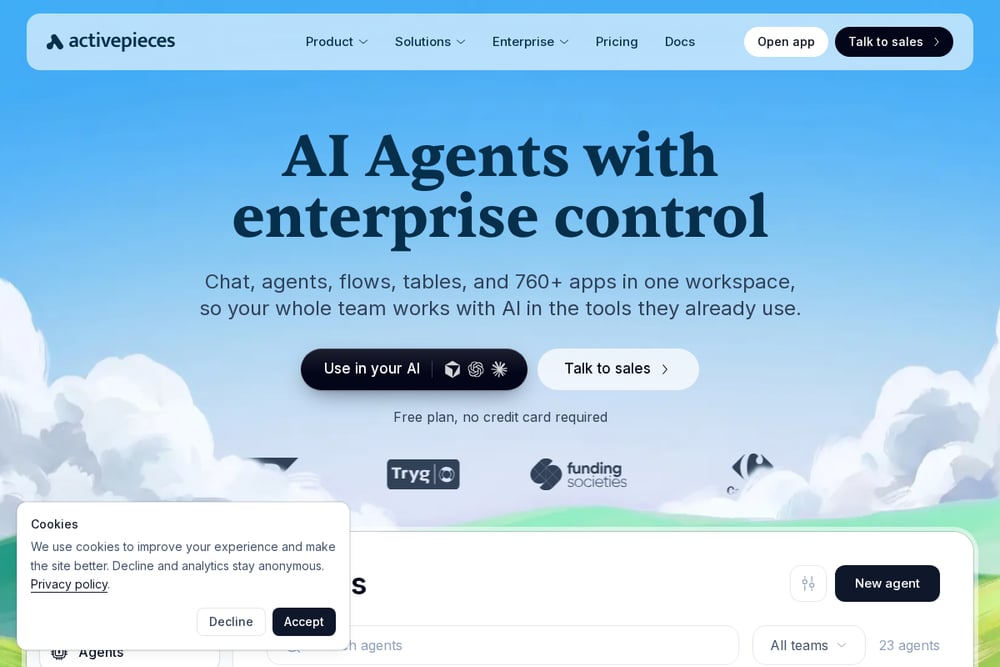 A screenshot of the Activepieces website.
Activepieces is an open-source automation platform that lets you build workflows across your CRM, email, accounting, and project management tools. You get triggers, rules, actions, and integrations in a visual builder, plus the option to self-host or use their cloud. For a small service business, that means you can wire up lead follow-ups, invoice reminders, and review requests without hiring a developer. The trade-off is that you own the build. There is no founder calling you to map your dispatch workflow. If you have someone on your team who enjoys tinkering, or you want to start free and scale, Activepieces gives you the raw materials. Their guide to workflow automation for small business is a useful starting point for understanding what to automate first.
#2 ServiceAxle — Connected operations for service businesses
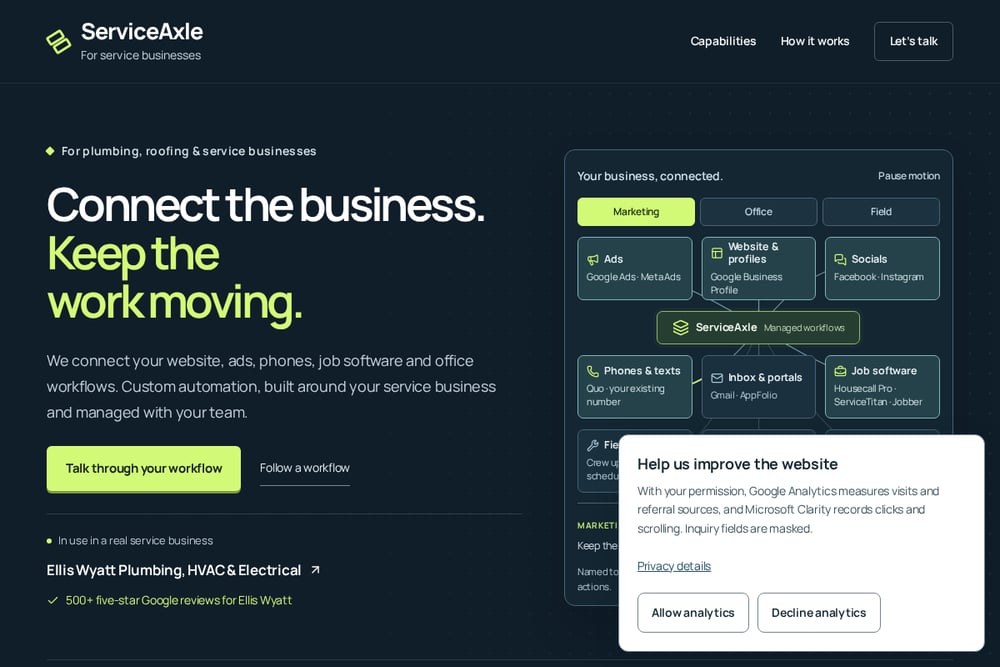 A screenshot of the ServiceAxle — Connected operations for service businesses website.
ServiceAxle is built for one thing: connecting the tools a service business already uses. They link your website, Google Ads, Meta Ads, phone system, job software, and office inbox so an inquiry keeps its source all the way to the office. The work is founder-managed, which means you talk through your actual workflow before anything gets built. They are tool-agnostic in practice, with current operating paths through Housecall Pro and Quo, and scoped connections to ServiceTitan, Jobber, FieldEdge, AppFolio, QuickBooks, Square, and Stripe. The proof point is Ellis Wyatt Plumbing, HVAC & Electrical in Colorado Springs, a real service business running the connected workflow with over 500 five-star Google reviews. If you want a partner who understands the gap between your ads and your dispatch board, this is the closest fit.
#3 System Integration
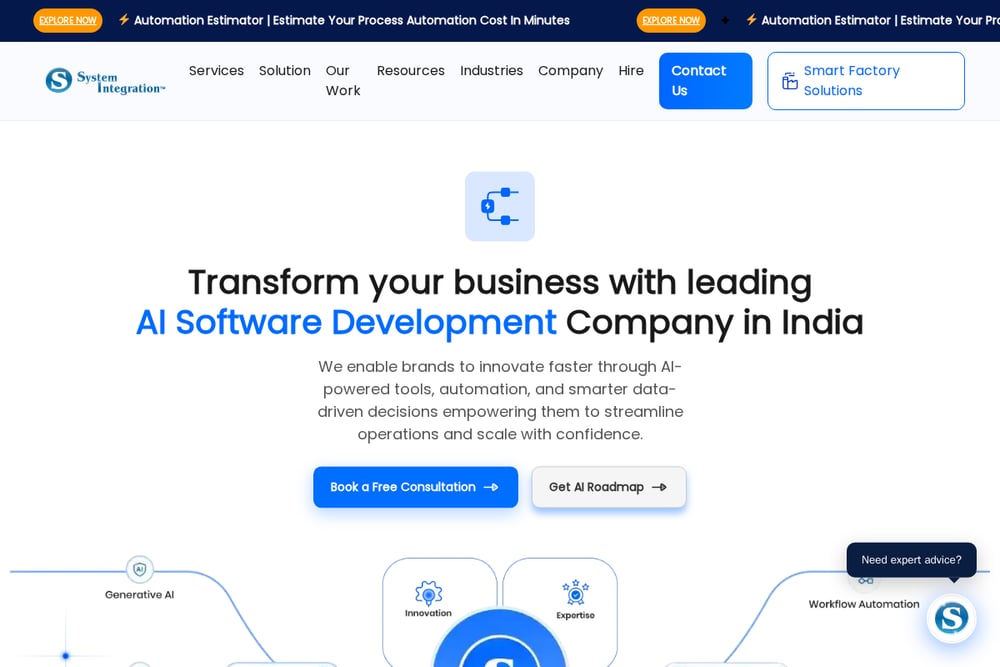 A screenshot of the System Integration website.
System Integration is a business process automation company with a broad services menu that includes workflow automation, RPA consulting, AI automation, and custom software development. They also offer an automation estimator, which is a rare bit of pricing transparency in this space. For a service business, the appeal is the breadth: if your workflow problem touches ERP, mobile apps, or a custom portal, they can scope it. The trade-off is that service businesses are not their only focus. You are one of many industries they serve, so you may need to bring a clear brief and a willingness to pay for discovery. If your automation needs spill into custom development, their range is an advantage.
#4 Vidi Corp
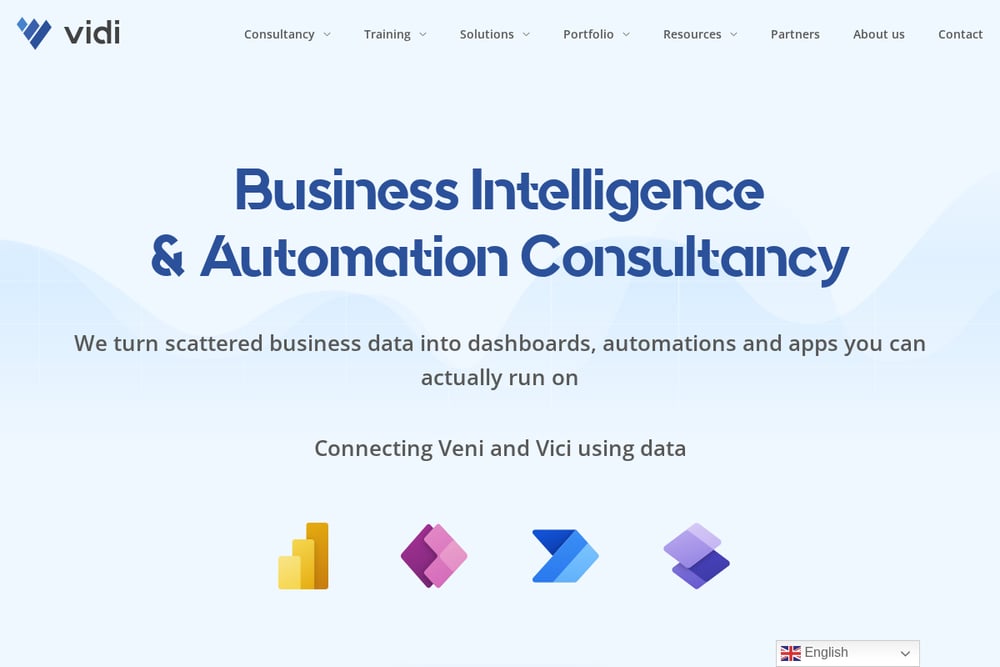 A screenshot of the Vidi Corp website.
Vidi Corp is an enterprise-focused consultancy with deep expertise in Microsoft Power Platform, Power BI, Power Automate, and data integration. They help larger operations connect data across SharePoint, SQL Server, QuickBooks Online, Xero, and custom databases. For a service business that has outgrown off-the-shelf tools and needs reporting that spans field, office, and finance, their Power BI and Power Automate practices are relevant. The fit is best for companies with an existing Microsoft stack and internal IT capacity. If you are a two-truck plumbing shop, this is likely more horsepower than you need. If you are a multi-location service company with a data warehouse ambition, Vidi Corp is worth a conversation.
#5 OrangeMantra
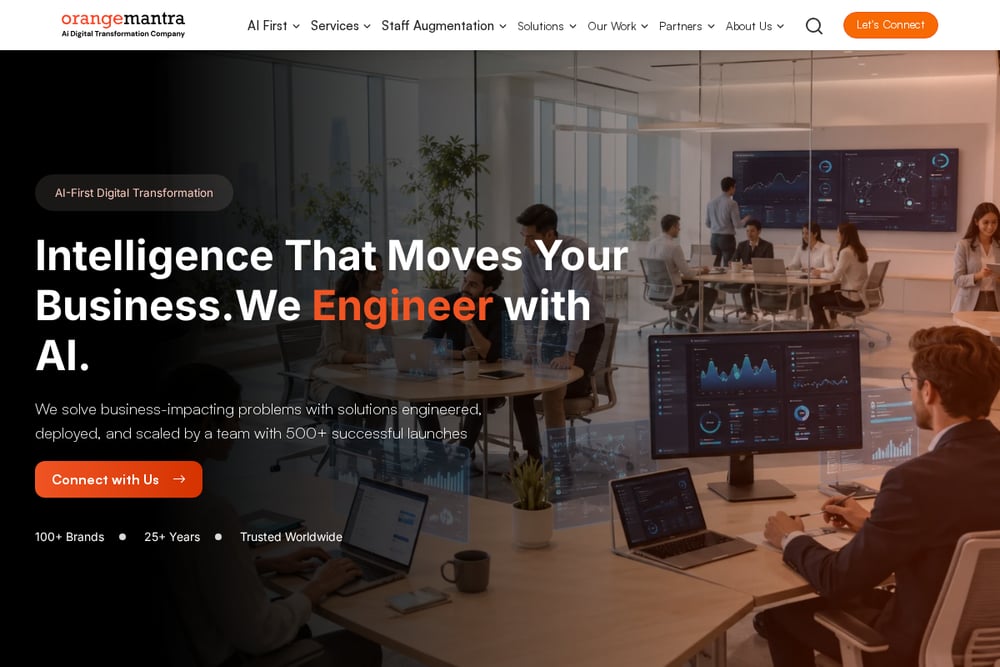 A screenshot of the OrangeMantra website.
OrangeMantra is a global digital transformation company with an AI-first services portfolio that spans generative AI, AI agents, eCommerce, cloud, and managed services. They build custom AI chatbots, predictive analytics, and workflow automation for industries including retail, BFSI, logistics, and customer service. For a service business, the relevant pieces are their AI support advisors and process automation capabilities. The scale is enterprise-oriented, and the delivery model is global, so you should expect a structured engagement rather than a founder-led sprint. If your roadmap includes AI-driven customer support or inventory forecasting alongside workflow automation, OrangeMantra can cover that ground. For a straightforward connect-my-tools project, a more focused partner will likely move faster.
How to choose the right automation partner
Start with your bottleneck, not the tool. If leads are falling through the cracks between your ads and your job software, you need a partner who specializes in that handoff. If your problem is reporting across finance and field operations, you need data integration depth. If you want to build automations yourself and keep the keys, an open-source platform is the better path. Ask three questions of every partner. First, what do you need from me to scope this? Second, who owns the workflow after launch? Third, what happens when I change one of my tools? The answers will tell you whether you are buying a project or a relationship. For service businesses, the relationship matters more, because your tools and your team will change faster than any one-time integration can absorb.
A simple automation workflow to start with
Pick one high-friction handoff and connect it end to end. A common starting point: when a lead comes in from Google Ads or your website, capture the source, create the job in your job software, send an immediate text acknowledgment from your existing number, and drop a note in the office inbox with the source attached. That single workflow eliminates the copy-paste step that causes most missed follow-ups. Once it runs clean for two weeks, add the next handoff, like review requests after job completion or invoice reminders after service. The goal is not to automate everything at once. It is to give your office one less thing to hold together by hand.
The bottom line
The right partner depends on how much of the work you want to own. Activepieces gives you the platform and the freedom to build. ServiceAxle gives you a managed partner who understands service business workflows and connects the tools you already use. System Integration and Vidi Corp bring consulting depth for companies with custom software or Microsoft-centric needs. OrangeMantra brings AI-first scale for enterprise roadmaps. If you run a plumbing, roofing, or HVAC business and your office is still the integration layer, start with the partner whose model matches your appetite for ownership. The tools will keep changing. The handoffs are what cost you jobs.