
Workers' comp and benefits shouldn't eat your week. These five brokerages help employers hand off the paperwork, the claims, and the renewals so you can get back to running the business.
The state of employer risk and benefits in 2026
Workers' compensation is a mandatory expense for most US employers, and premiums are priced on class code, payroll, and your experience modification. That means a handful of bad claims can follow you for years in the form of higher premiums. Meanwhile, group health and life renewals keep landing on the same desk, usually the owner's or the office manager's. The result is a market full of employers paying more than they should because nobody is actively working the problem. Brokerages have responded by bundling comp, claims advocacy, safety support, and benefits coordination under one roof. Some focus on small business, some on specific states, and some on mid-market employers with 50 or more employees. Knowing which model fits your headcount and your risk profile is the whole game.
How we looked at these brokerages
We evaluated each business on the same factors: service scope, meaning how much of the comp and benefits workload they actually take off your plate; pricing clarity, or how openly they talk about how premiums and fees are set; local and regional fit, including which states they can write; claims and safety support, since that is where your mod is won or lost; and the quality of the human contact, because a call center is not the same as a person who knows your account. Each of these five stood out somewhere different. Some lean on carrier access and market breadth, others on hands-on claims work, and others on serving a specific size of employer. We describe what stood out for each rather than crowning a winner, because the right fit depends on your headcount, your state, and how much you want to hand off.
Here is the short version. Five brokerages, five different strengths, one decision: how much of this work do you want off your desk?
| Provider | Best For |
|---|---|
| Capstone Brokerage | Employers who want comp bundled with broad commercial coverage and risk management |
| Anvil Employer: Workers' Comp, Group Health & Life for Employers | Mid-market employers with 50+ employees who want comp and benefits under one contact |
| Cennairus | Hard-to-place comp risks and agencies needing broad carrier access |
| Compeo | Trades and contracting businesses that want comp plus payroll and HR in one place |
| Preferred Employers Insurance | California employers who prioritize claims service from a dedicated comp carrier |
The five brokerages in detail
#1 Capstone Brokerage
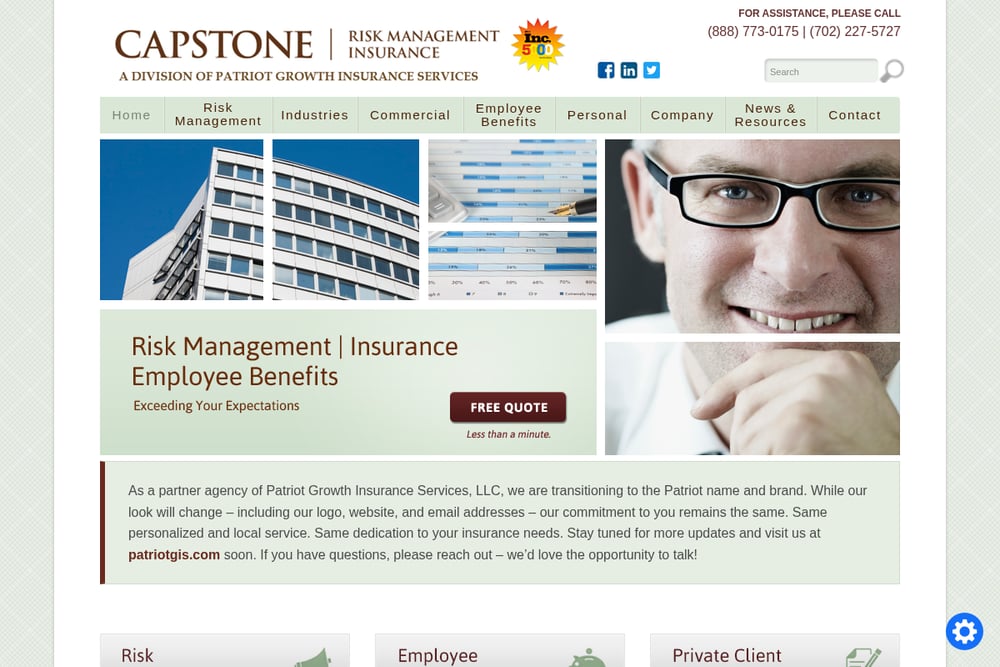 A screenshot of the Capstone Brokerage website.
Capstone Brokerage is a full-service agency with a deep risk management bench, and workers' comp sits inside a much broader commercial lineup. The firm frames comp as a cost you can control through risk management programs rather than a fixed line item, which is a useful mindset if your mod has been drifting upward. You also get access to commercial auto, property, general liability, D&O, and surety under one roof, so a growing employer can consolidate more of its insurance spend. Industry-specific pages cover construction, healthcare, hospitality, manufacturing, and transportation, which helps if your class code is a tricky one. It is a strong pick when you want a traditional agency relationship with risk management depth behind it. See the firm's workers' compensation page for how it frames cost control.
#2 Anvil Employer: Workers' Comp, Group Health & Life for Employers
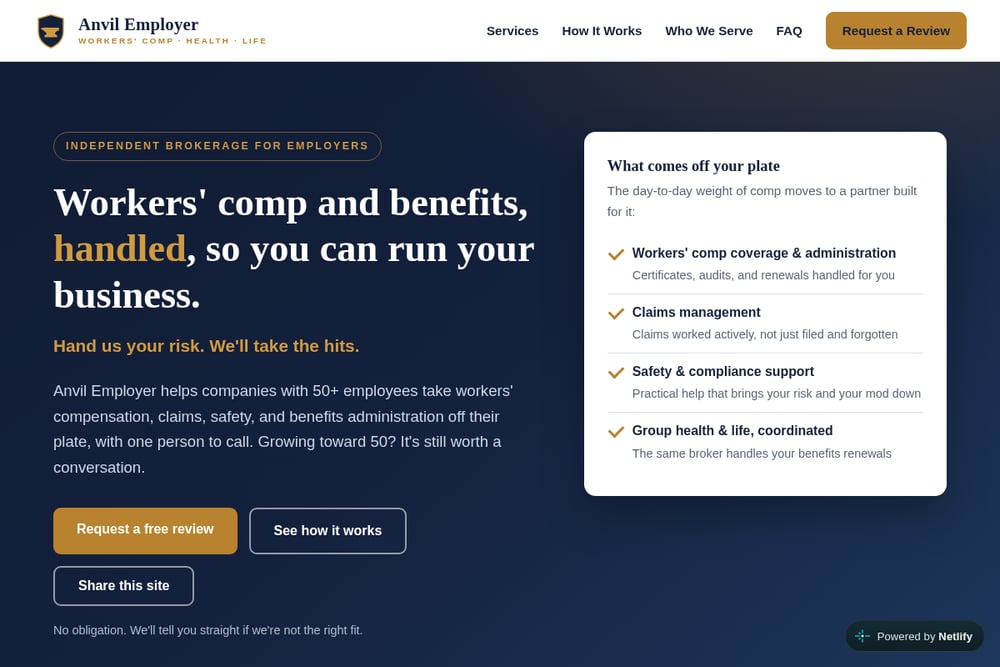 A screenshot of the Anvil Employer website.
Anvil Employer is an independent brokerage built specifically for employers with 50 or more employees, and that focus shows in how it packages the work. You get workers' comp coverage and administration, certificates, audits, and renewals handled for you, plus claims that are actively worked rather than filed and forgotten. Safety and compliance support is included with the goal of bringing your risk and your mod down, and the same broker coordinates your group health and life renewals. The pitch is one point of contact, a person rather than a call center, which matters when an injury lands on a Friday afternoon. Workers' comp is available in 47 states, with group health and life in all 50. If your headcount is climbing toward 50, the firm says it is still worth a conversation. Start with a free review and they will tell you straight if they are not the right fit.
#3 Cennairus
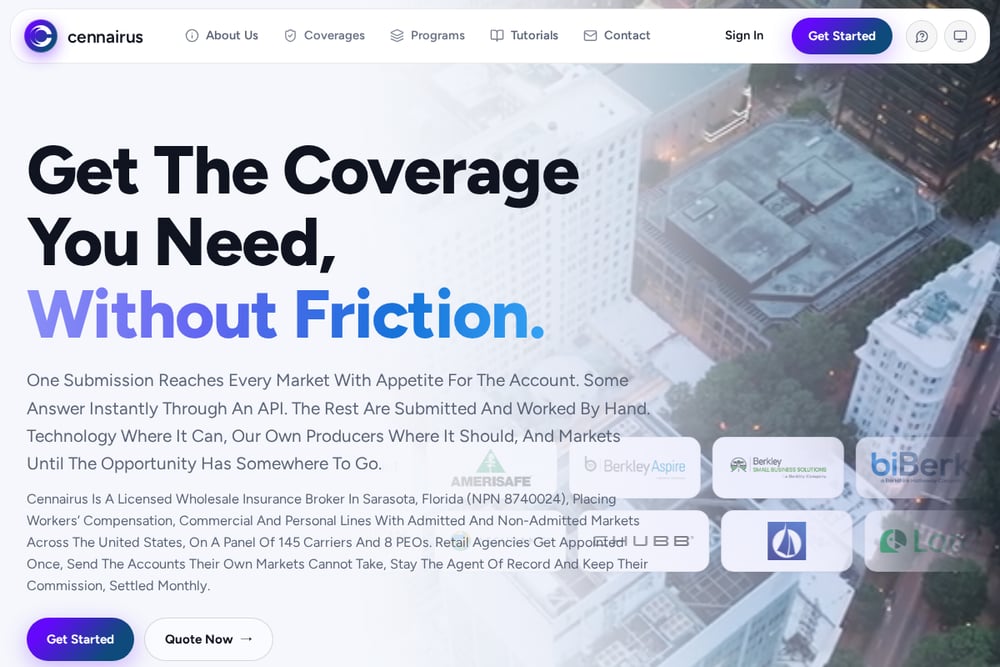 A screenshot of the Cennairus website.
Cennairus operates as a licensed wholesale broker with a panel of roughly 145 carriers, and it is built for speed on hard-to-place comp. One submission reaches every market in appetite for your class code and state, and each carrier answers with a quote, an underwriting review, or a decline. High mods, specialty classes, residual market, and employee leasing are worked by hand rather than pushed through a portal. The model is aimed at retail agencies and HR administrators who need market access without giving up the agent-of-record relationship. If your comp program has been declined or you are stuck in the assigned risk pool, this is the kind of shop that earns its keep. The California HR administrator page shows how the submission process works.
#4 Compeo
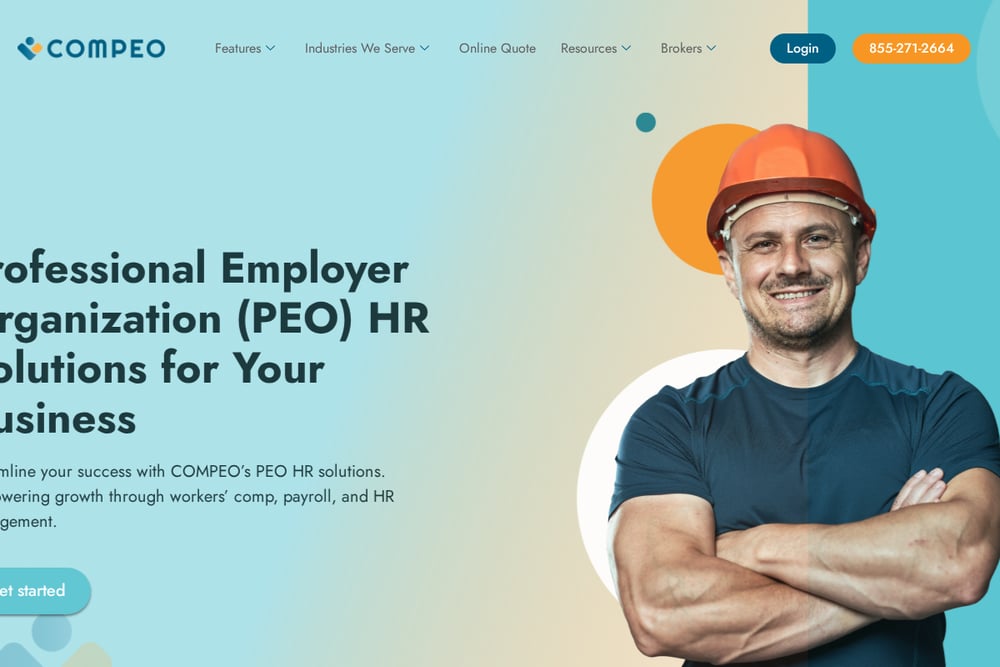 A screenshot of the Compeo website.
Compeo pairs workers' comp with PEO-style services, which means payroll, HR administration, and compliance can ride alongside your coverage. That combination is appealing if you would rather hand off the back office entirely than manage three separate vendors. The firm leans hard into trades and contracting, with dedicated pages for roofing, plumbing, HVAC, carpentry, excavation, painting, and general contractors. Safety programs and state-mandated poster resources are part of the package, which helps small crews stay compliant without hiring an HR person. It also runs a broker program for agents who want to place business through the platform. If you run a construction or trades business and want comp, payroll, and HR in one place, this is worth a look. The workers' comp services page lays out the full stack.
#5 Preferred Employers Insurance
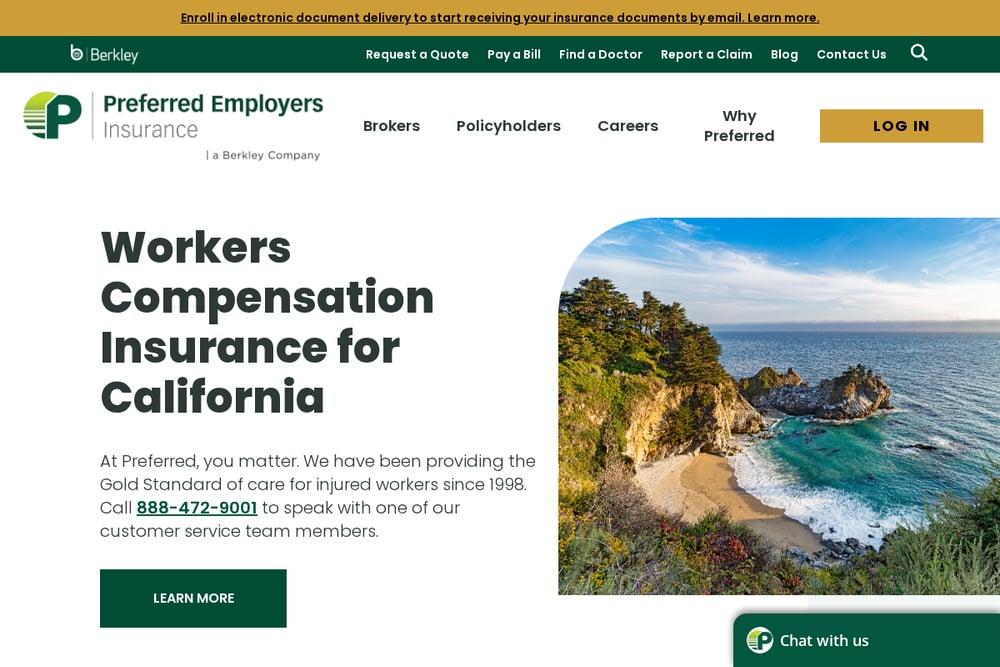 A screenshot of the Preferred Employers Insurance website.
Preferred Employers Insurance is a California-focused workers' comp carrier rather than a brokerage, and it has built its reputation on claims service. The firm markets a gold standard of care for injured employees, with a claims team, a doctor-finding tool, and workplace safety resources available through an online portal. Policyholders get self-service tools for payroll audits, bill payment, and claims reporting, which cuts down on the back-and-forth that eats your week. Brokers have their own portal for quoting and managing client status. The tradeoff is scope: this is a single-state, single-line specialist, so it fits employers with California exposure who want a carrier that owns the claims experience. The policyholder resources show what the portal actually includes.
How to pick the right fit
Start with your headcount and your states. If you have 50 or more employees and want comp, claims, safety, and benefits handled by one person, a mid-market specialist like Anvil Employer is built for exactly that. If you want a traditional agency that also writes your property, auto, and liability, a full-service shop like Capstone fits better. If your comp has been declined or your mod is a mess, market access matters most, and a wholesale broker like Cennairus is the lever. If you are a contractor who would rather hand off payroll and HR along with comp, Compeo bundles it. And if you are a California employer who cares most about who handles the claim after an injury, a dedicated carrier like Preferred Employers is the conversation. Ask each one the same three questions: who actually answers when I call, how do you work a claim, and what will you do about my mod? The answers will sort themselves out fast.
Where automation actually helps
Most of the pain in comp is not the policy, it is the workflow around it. Certificates of insurance requested by customers, payroll audits, renewal questionnaires, and claims follow-up all follow predictable patterns, and every one of them can be templated or automated. A good brokerage will already have this running: certificate issuance on request, audit prep handled before the notice arrives, and renewal packets assembled without you chasing documents. On the benefits side, enrollment and renewal comparisons can be standardized so you are reviewing options instead of rebuilding spreadsheets. The test is simple. Ask a prospective broker to walk you through what happens the day an employee gets hurt, from first report to return to work. If the answer involves you filling out forms and making phone calls, the automation is not there yet.
The bottom line
Workers' comp rewards the employer who works the problem and punishes the one who ignores it. A few bad claims turn into years of higher premiums, and nobody hands that money back. The five businesses here solve that in different ways: broad agency depth, mid-market focus, carrier access for hard risks, a bundled PEO-style stack, or dedicated claims service in one state. None of them is universally right. Your job is to match the model to your headcount, your states, and how much of the day-to-day you are ready to hand off. Make the call, ask who picks up the phone, and get your mod moving in the right direction.