
You wrote the book. Now you need bookstores to actually stock it. These five services help self-publishers get their paperbacks into more hands without losing their rights.
The Self-Publishing Distribution Landscape
Self-publishing has exploded, but getting your paperback into physical bookstores remains the hardest part. Most indie authors rely on Amazon KDP, which limits their reach to one retailer. Wholesale distributors and specialized services bridge that gap by making your book available to thousands of bookstores, libraries, and retailers. The challenge is finding a partner that fits your goals, budget, and tolerance for complexity. Some services offer broad global reach, while others focus on niche markets or education. Understanding the different models—from full-service distribution to wholesale catalog placement—helps you choose wisely.
How We Evaluated These Services
We looked at five key factors: service scope (how many bookstores and countries you can reach), pricing clarity (whether costs are transparent and predictable), rights and control (who keeps copyright and how easily you can exit), ease of use (how much technical or marketing work falls on you), and support for independent authors (invitation-only vs. open access, educational resources). Each service has a different strength. ShelfPublisher stands out for its invitation-only model and no upfront printing costs. IngramSpark offers a massive global wholesale network. Asterism Books serves the indie press community with a curated approach. AuthorImprints provides consulting and education for distribution decisions. Publish a Profitable Book focuses on realistic expectations and practical guidance. None is universally better; the right fit depends on your book and your goals.
Here is a quick comparison of the five services, followed by a deeper look at each.
| Provider | Best For |
|---|---|
| IngramSpark | Authors seeking maximum global wholesale reach |
| ShelfPublisher: 50,000+ bookstores can order your book | Self-publishers who want bookstore reach without printing costs |
| Asterism Books | Indie authors with literary or niche titles |
| AuthorImprints | Authors who need guidance on distribution strategy |
| Publish a Profitable Book | Authors seeking realistic advice on bookstore placement |
A Closer Look at Each Service
#1 IngramSpark
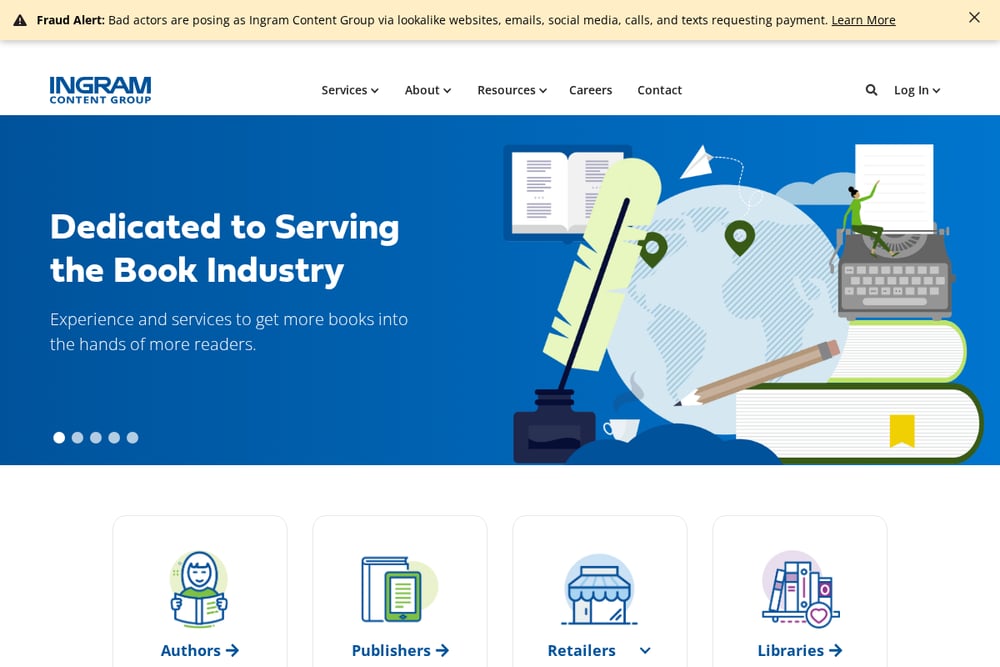 A screenshot of the IngramSpark website.
IngramSpark is the self-publishing arm of Ingram Content Group, the world's largest book wholesaler. When you publish through IngramSpark, your book becomes available to over 39,000 retailers and libraries worldwide. You get access to both print-on-demand and wholesale distribution, but you pay setup and revision fees. The platform is open to all authors, no invitation required. However, you are responsible for formatting, cover design, and marketing. IngramSpark is a solid choice if you want broad global reach and are willing to handle the technical details. Learn more about their distribution model on their blog.
#2 ShelfPublisher: 50,000+ bookstores can order your book
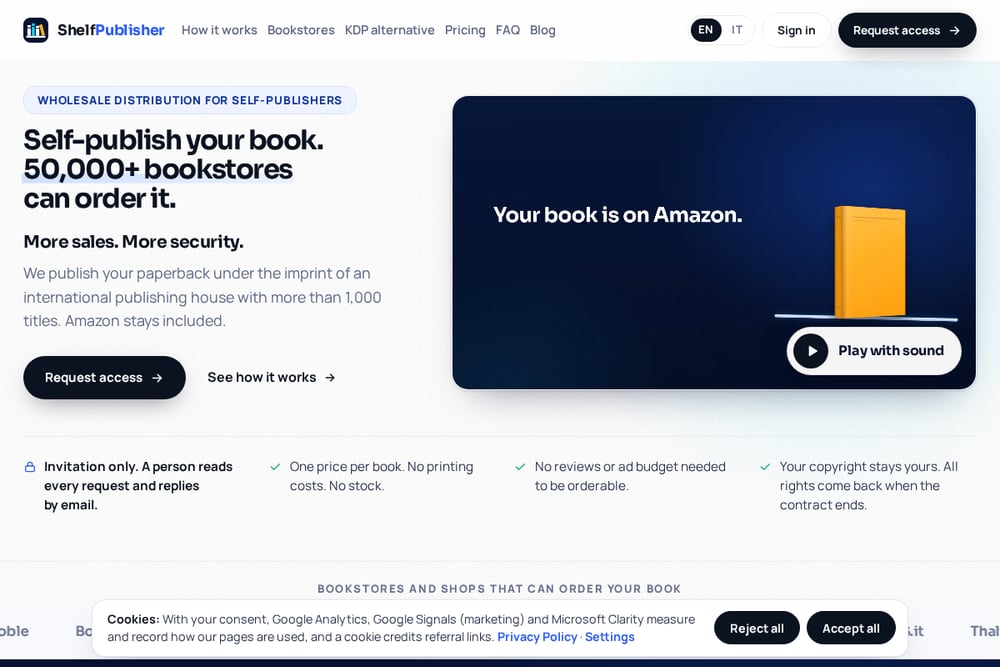 A screenshot of the ShelfPublisher website.
ShelfPublisher takes a different approach: it publishes your paperback under the imprint of an international publishing house with over 1,000 titles. That makes your book orderable from more than 50,000 bookstores in 18 countries, including Barnes & Noble, Bookshop.org, Walmart, Foyles, Blackwell's, and Amazon. There are no printing costs, no inventory, and no need for reviews or ad budget to be orderable. The service is invitation-only, and a real person reads every request. You keep your copyright, and all rights return to you when the contract ends. It is ideal for authors who want wide distribution without losing control.
#3 Asterism Books
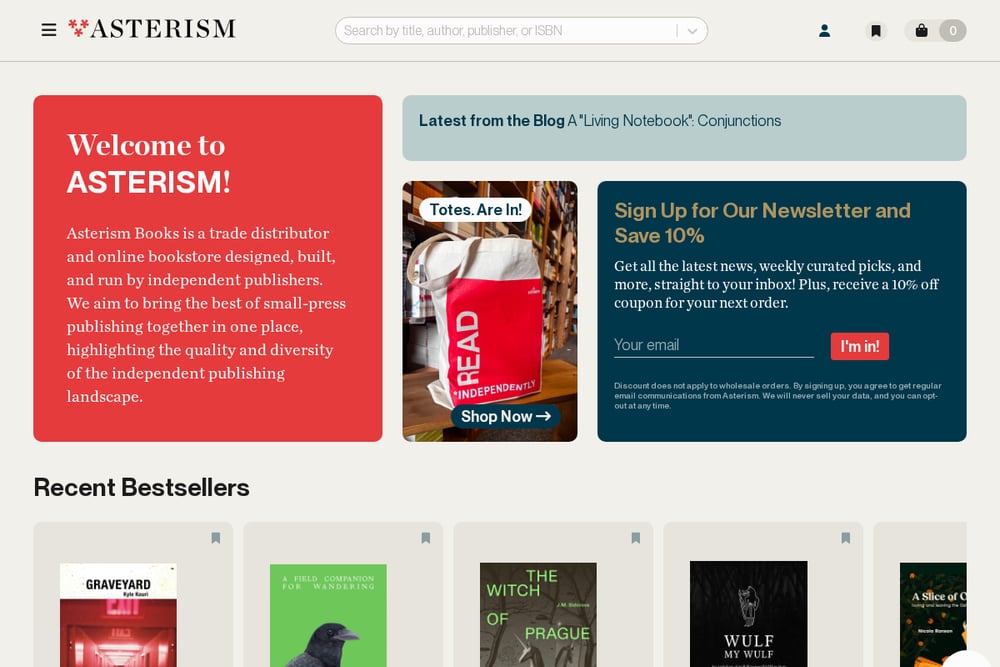 A screenshot of the Asterism Books website.
Asterism Books is a trade distributor and online bookstore run by independent publishers. It focuses on small-press and indie titles, offering a curated selection that highlights quality and diversity. If your book fits their aesthetic, they can distribute it to bookstores and libraries while also selling it directly through their online store. They provide a community-oriented approach, with newsletters and blog features. However, their reach is narrower than global wholesalers, and they are selective about the titles they accept. This is a good fit for literary fiction, poetry, and experimental works.
#4 AuthorImprints
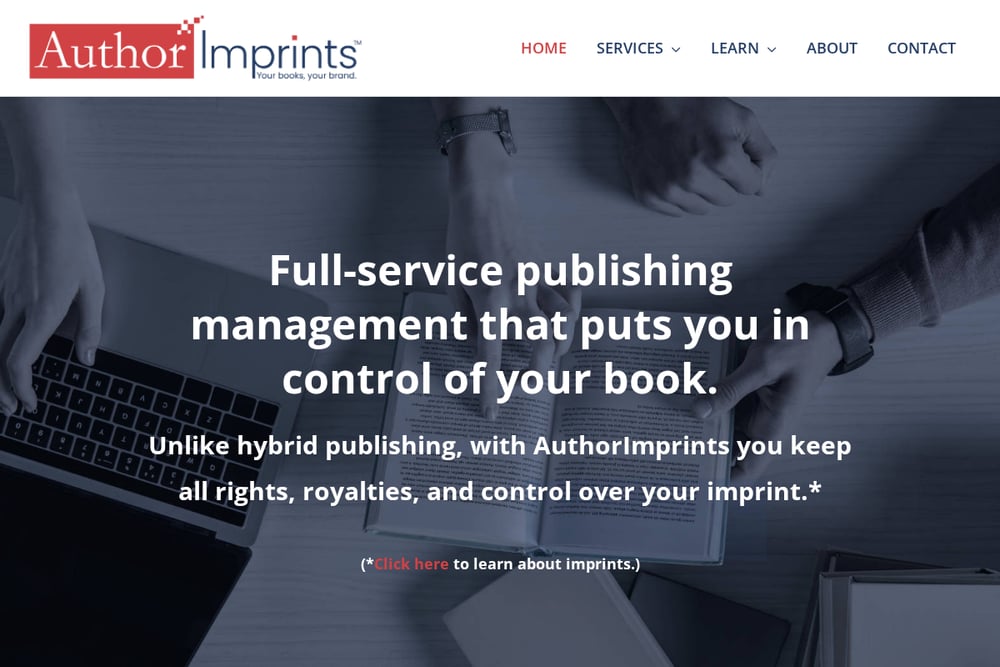 A screenshot of the AuthorImprints website.
AuthorImprints is not a distributor itself but a consulting service that helps authors navigate distribution options. They explain the differences between full-service distribution, wholesale distribution, and print-on-demand. Their learning center offers articles and flowcharts to help you decide whether to pursue bookstore distribution at all. They also provide publishing services like republishing and consulting. If you are overwhelmed by the choices, AuthorImprints can give you the clarity you need. They are best for authors who want education before committing to a distribution path.
#5 Publish a Profitable Book
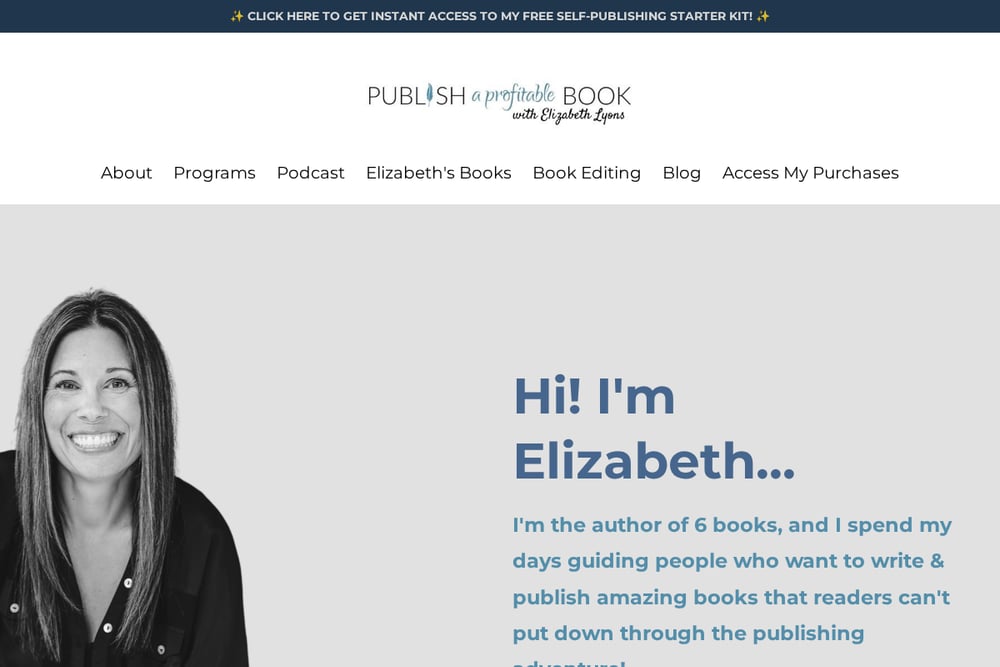 A screenshot of the Publish a Profitable Book website.
Publish a Profitable Book is a resource hub by Elizabeth, offering a reality check on getting self-published books into bookstores. Through blog posts, podcasts, and a starter kit, she explains the challenges and practical steps for bookstore placement. She emphasizes that bookstore presence is not the only measure of success and helps authors set realistic expectations. While not a distribution service, her guidance can save you from costly mistakes. This is ideal for authors who want honest advice before spending money on distribution.
How to Choose the Right Distribution Partner
Start by defining your goals. Do you want to see your book in as many bookstores as possible, or are you targeting a specific niche? If you want global reach and are willing to handle setup, IngramSpark is a strong option. If you prefer a hands-off approach with no printing costs, consider ShelfPublisher. For literary titles, Asterism Books offers a curated community. If you need education first, AuthorImprints and Publish a Profitable Book provide valuable insights. Also consider your budget: some services charge upfront fees, while others take a cut of sales. Check the contract terms carefully, especially regarding rights and termination. Finally, think about your marketing efforts—most distributors do not promote your book, so you will still need to drive awareness.
Automating Your Distribution Workflow
Once you choose a distributor, you can streamline your workflow. Use a central spreadsheet to track ISBNs, metadata, and submission deadlines. Set up Google Alerts for your book title to monitor online listings. Connect your distributor's dashboard to a project management tool like Trello or Asana to track approvals and payments. For marketing, schedule social media posts about your book's availability in stores. If you use ShelfPublisher, their invitation-only process means you will communicate via email, so keep a dedicated folder for correspondence. Automate royalty tracking by linking your bank account to accounting software like QuickBooks. These small steps save time and reduce errors.
The Bottom Line on Book Distribution
Getting your self-published book into bookstores is possible, but it requires choosing the right partner. IngramSpark offers the widest wholesale network, while ShelfPublisher provides a unique invitation-only model with no printing costs and broad international reach. Asterism Books serves the indie literary community, AuthorImprints educates on distribution strategy, and Publish a Profitable Book gives you a reality check. Evaluate your goals, budget, and willingness to handle logistics. Remember, distribution is just one piece—marketing and persistence matter too. With the right approach, your book can find its way onto shelves far beyond Amazon.