You built a real business, so why is your digital foundation still rented? These five services help you own your website, your data, and your keys instead of leasing them from a platform.
The ownership shift in web services
A quiet revolt is underway in web services. Business owners are waking up to the fact that hosted builders and agency arrangements often leave them holding content but not the site itself. The new wave of providers sells portability: source code you control, domains in your own registrar account, and hosting you can move. The pitch is simple. Stop renting, start owning.
How these services were evaluated
Each provider was weighed on ownership depth (domain, code, hosting, and data), pricing transparency, migration support, and how cleanly you can walk away. We also looked at service scope beyond the build, from SEO to CRM, and whether the offer fits small businesses without a technical team.
Here is the short version before the deep dive. Each entry below takes a different angle on the same promise: your website should be an asset you control, not a subscription you survive.
| Provider | Best For |
|---|---|
| Content Management | Owners who want full source code in hand |
| Own Your Website, Stop Renting It | Keyholder Sites | Businesses escaping vendor lock-in entirely |
| Looops | Owners comparing builders before switching |
| vaza.ai | Technical owners planning an open-source build |
| TopDevs | Buyers who want an ownership checklist first |
The five services in detail
#1 Content Management
 A screenshot of the Content Management website.
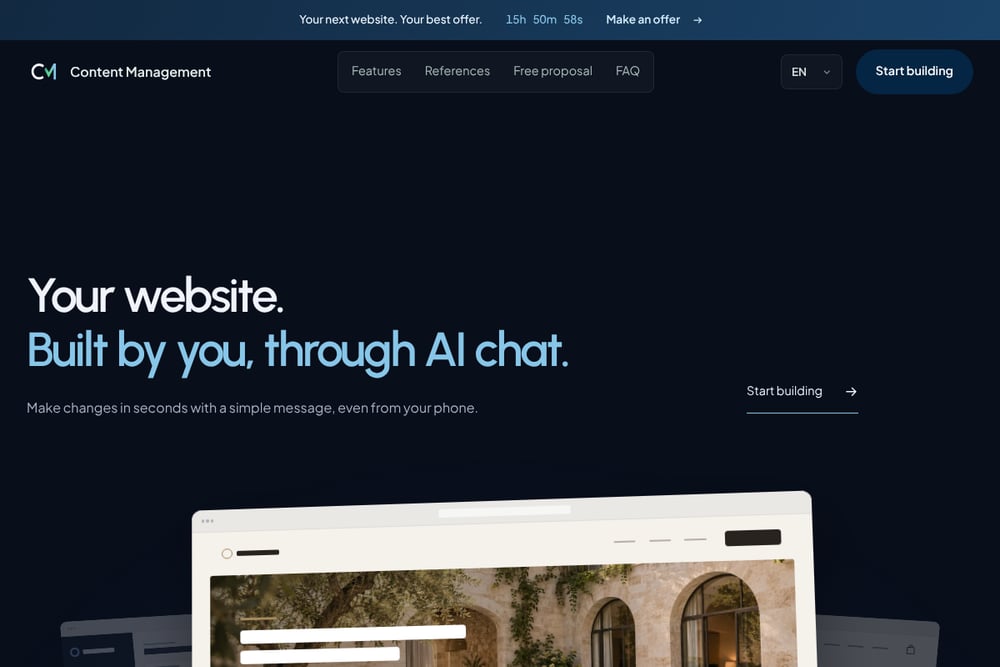
Content Management puts the complete source project in your hands, not just the rendered pages. That means components, styles, scripts, and configuration stay available to you rather than hiding inside a proprietary editor. If you ever want to switch technical partners, another developer can pick up the existing code instead of forcing a rebuild. The company frames ownership as a business relationship change, where continuity becomes a choice rather than a constraint. It is a strong fit if you want a managed build now but full portability later.
#2 Own Your Website, Stop Renting It | Keyholder Sites
 A screenshot of the Keyholder Sites website.
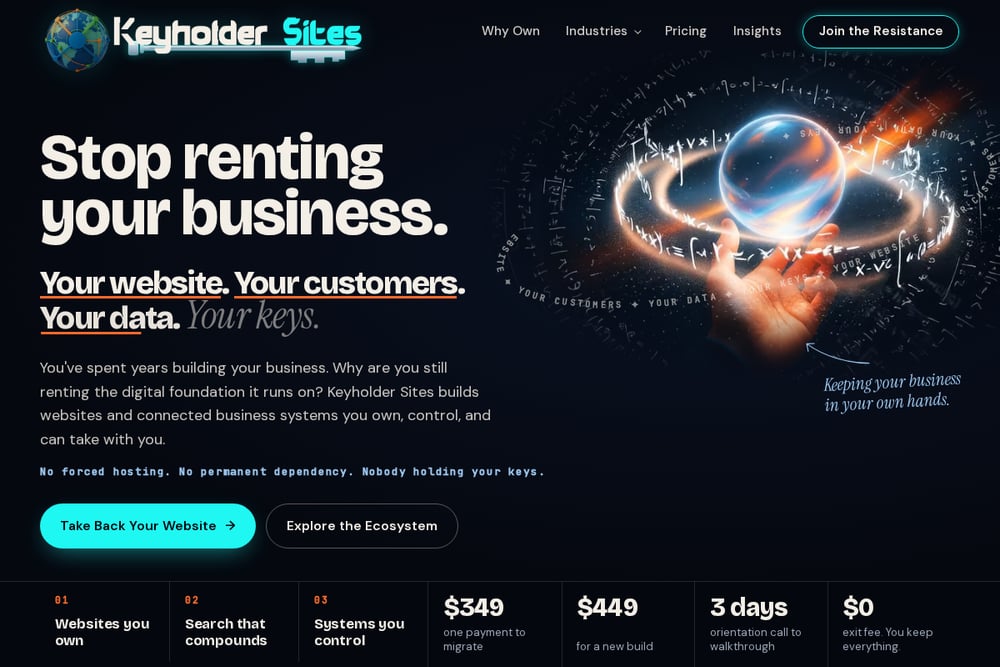
Keyholder Sites builds websites and connected business systems you own outright, led by owner Grace. You get your domain, files, data, and keys, with no forced hosting and no permanent dependency. Pricing is refreshingly blunt: $349 in one payment to migrate or $449 for a new build, plus a three-day orientation call and a $0 exit fee. The ecosystem extends past the site into SEO, CRM integration, direct reservations, and an AI phone, all built on open-source tools you control. If vendor lock-in has burned you before, this is the resistance you join.
#3 Looops
 A screenshot of the Looops website.
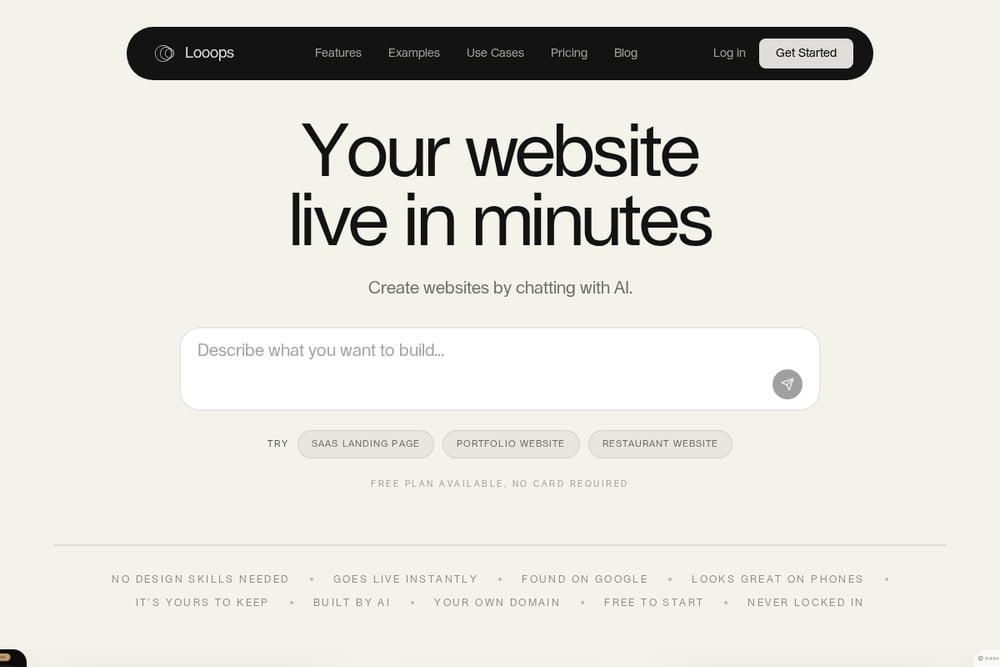
Looops makes the ownership question concrete by explaining what you actually own on common builders. Its breakdown shows that on Wix and Squarespace you keep your text and images but cannot download the site or host it elsewhere. Looops positions itself as the alternative where you own everything and can take the complete site to any host. The educational angle is useful if you are still deciding whether to leave a hosted platform. It suits owners who want clarity before they commit.
#4 vaza.ai
 A screenshot of the vaza.ai website.
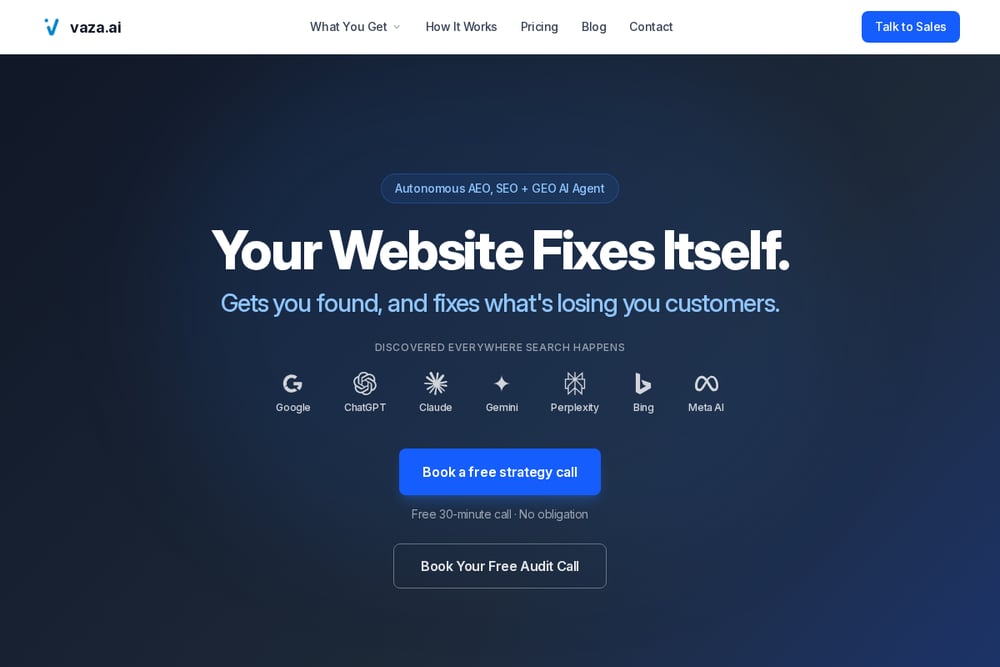
vaza.ai defines true ownership as possessing every file, hosting anywhere, and hiring any developer you like. It walks through the traps that create lock-in, including platform shutdown risk, unavoidable price increases, and features that quietly disappear. The recommended path leans on open-source frameworks, Git repositories you control, and commodity hosting. It also stresses keeping your domain registered separately from your provider. This is a good read if you want the technical blueprint for a zero-lock-in build.
#5 TopDevs
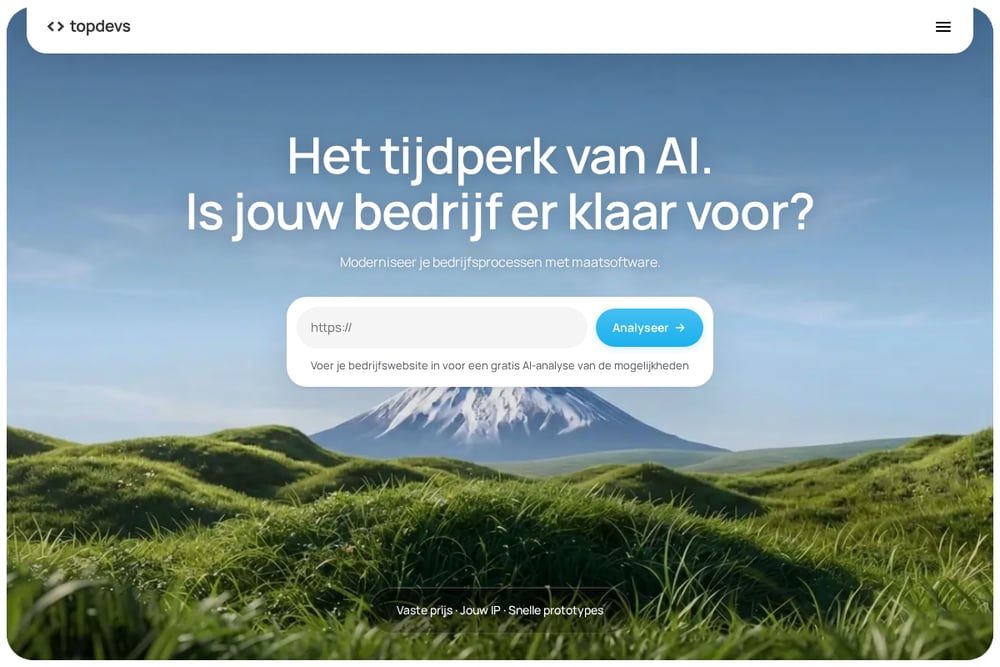 A screenshot of the TopDevs website.
TopDevs breaks ownership into four layers: domain, hosting, source code, and content. That framing is genuinely useful, because most owners hold one or two layers and rent the rest without realizing it. The guidance is practical: demand a Git repository under your own account, a domain in your own registrar account, a full content export, and a handover document. It also covers red flags to spot before you sign and how to recover a site you are already stuck with. It fits owners who want a checklist before commissioning a custom build.
Choosing the right fit for your situation
Start with where you are today. If you are stuck on a hosted builder, prioritize a provider with a clear migration path and a flat fee, like Keyholder Sites. If you are commissioning something new, ask for the source code, the domain credentials, and a handover document before you sign anything. Match the service scope to your needs too. A simple brochure site needs less than a business with bookings, CRM, and local SEO demands. Finally, check the exit terms. A provider confident in its work will not punish you for leaving.
Where automation fits into ownership
Ownership and automation reinforce each other. When you control your CRM and booking tools, you can connect forms, follow-ups, and reminders without asking a platform for permission. An AI phone or automated reservation flow only pays off if the customer data lands in a system you own. Build the foundation first, then layer automation on top of systems that stay yours.
The bottom line on owning your foundation
The lesson across all five is the same: ownership is not one thing but several layers, and you need to hold them yourself. Content Management and TopDevs give you the framework and the checklist. Looops and vaza.ai show you what lock-in costs and how to avoid it. Keyholder Sites packages the whole idea into a one-time build with a $0 exit fee and systems you keep. Pick the entry point that matches your situation, and stop renting the foundation your business runs on.