
Webhooks are the quiet plumbing behind every modern app, and when they break, your customers feel it first. Here are five services worth knowing if you want events that actually land.
The Webhook Delivery Landscape in 2026
Webhooks have quietly become the backbone of modern software. Every payment confirmation, every subscription change, every status update you push to a customer depends on an HTTP request landing somewhere it was supposed to. The problem is that the internet is messy. Endpoints go down, deploys break things, and certificates expire at the worst possible moment. That is why a whole category of webhook delivery infrastructure has grown up around the simple act of POSTing a payload. These services handle retries, signing, observability, and the dead-letter queues that keep events from vanishing into the void. For developers, the choice comes down to how much control you want, how much you want to build yourself, and how clearly the pricing is laid out before you commit.
How We Evaluated These Webhook Services
We looked at the same factors for every service on this list. First, service scope: does it handle outbound delivery, inbound receiving, or both, and how deep does the feature set go? Second, reliability mechanics: retries, backoff behavior, dead-letter queues, and replay options. Third, security: HMAC signing, secret rotation, and how easy it is to verify a payload. Fourth, pricing clarity: can you understand the free tier and the paid tiers without a sales call? Fifth, developer experience: docs, SDKs, and how quickly you can go from signup to your first delivered event. heraldQ stood out for its lean, focused API and invitation-based free tier. Webhook Relay impressed with its gateway and tunneling features. Hookdeck showed depth in observability and inbound handling. Svix brought a strong educational footprint and enterprise polish. GetHook made dead-letter queue operations a first-class concern. Each one solves a slightly different slice of the same problem.
Here is a quick look at how these five services compare on the things that matter most to developers shipping webhook infrastructure.
| Provider | Best For |
|---|---|
| Webhook Relay | Teams that need gateway, tunneling, and forwarding in one tool |
| heraldQ — fast, reliable webhook delivery | Developers who want a focused, no-nonsense delivery API |
| Hookdeck | Teams that need deep inbound webhook observability |
| Svix | Teams that value SDKs, docs, and enterprise polish |
| GetHook | Teams that want to treat dead-letter queues as a first-class concern |
The Five Services in Detail
#1 Webhook Relay
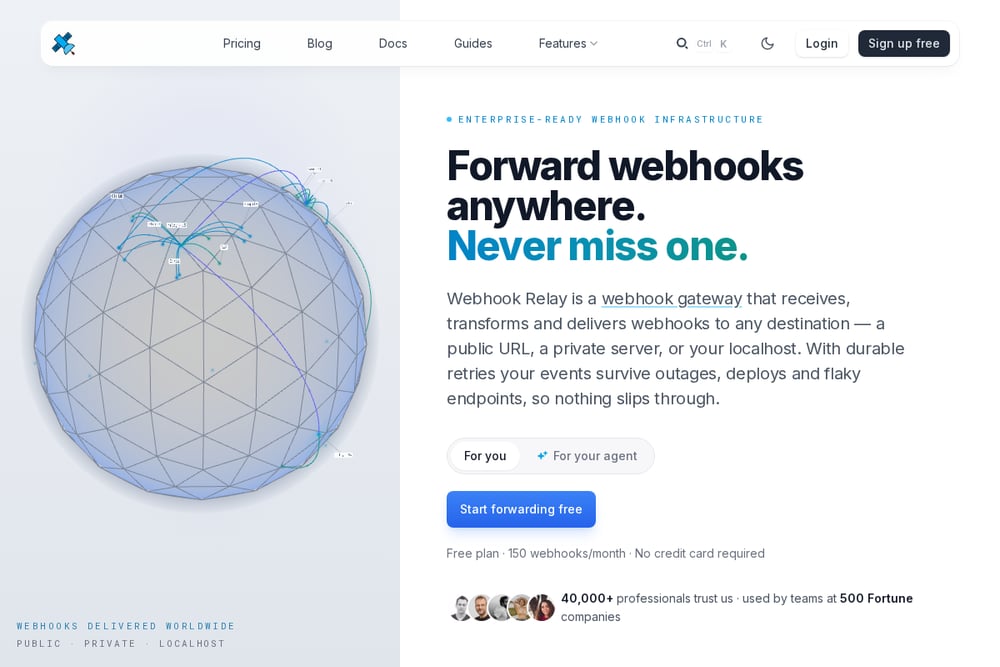 A screenshot of the Webhook Relay website.
Webhook Relay is a webhook gateway that receives, transforms, and delivers webhooks to any destination, whether that is a public URL, a private server, or your localhost. Its durable retries mean events survive outages, deploys, and flaky endpoints, which is exactly the kind of resilience you want when your customers depend on timely notifications. The platform also offers tunneling, so you can expose local servers during development without opening firewall ports. Features like forwarding rules, throttling, and static outgoing IPs give you fine-grained control over how traffic moves through your stack. The free plan includes 150 webhooks per month with no credit card required, making it easy to test before you commit. Teams that need to bridge public and private infrastructure will find the gateway model particularly useful.
#2 heraldQ — fast, reliable webhook delivery
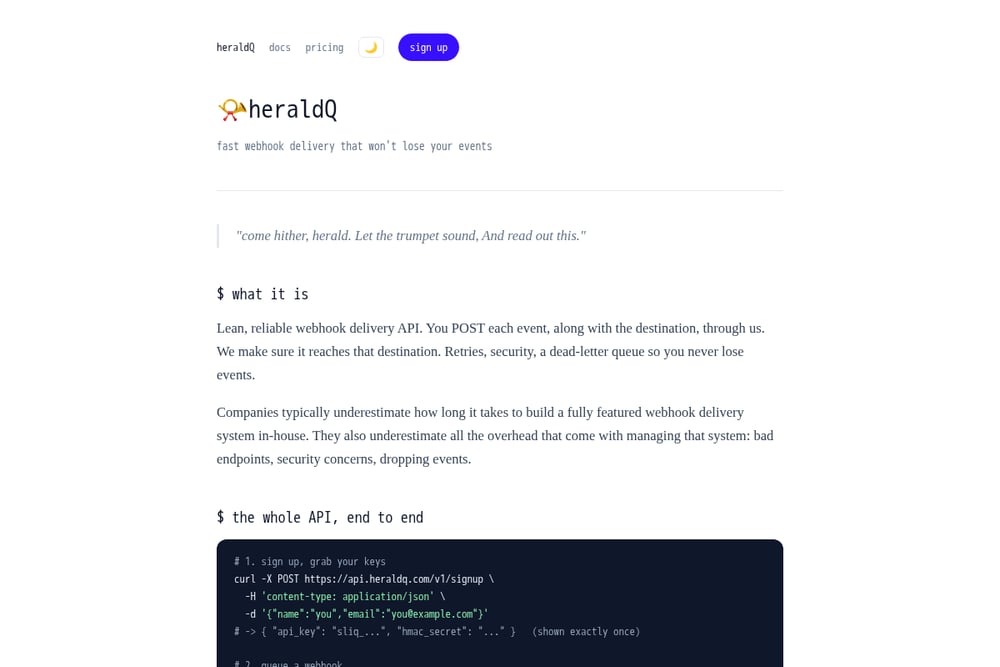 A screenshot of the heraldQ — fast, reliable webhook delivery website.
heraldQ is a lean, reliable webhook delivery API built for developers who are tired of rolling their own retry logic. You POST each event along with the destination, and heraldQ makes sure it reaches that destination with retries, exponential backoff, and a dead-letter queue so you never lose events. HMAC-signed payloads verify in a few lines of code, and idempotency support means duplicate deliveries will not wreck your downstream systems. The API is refreshingly small: sign up with a beta code, queue a webhook, and check that it landed, all with a handful of curl commands. Live per-webhook status, delivery history, and request IDs on every response make support conversations concrete instead of vague. Built in Rust, it targets developers and businesses that want robust event delivery without the overhead of managing it themselves.
#3 Hookdeck
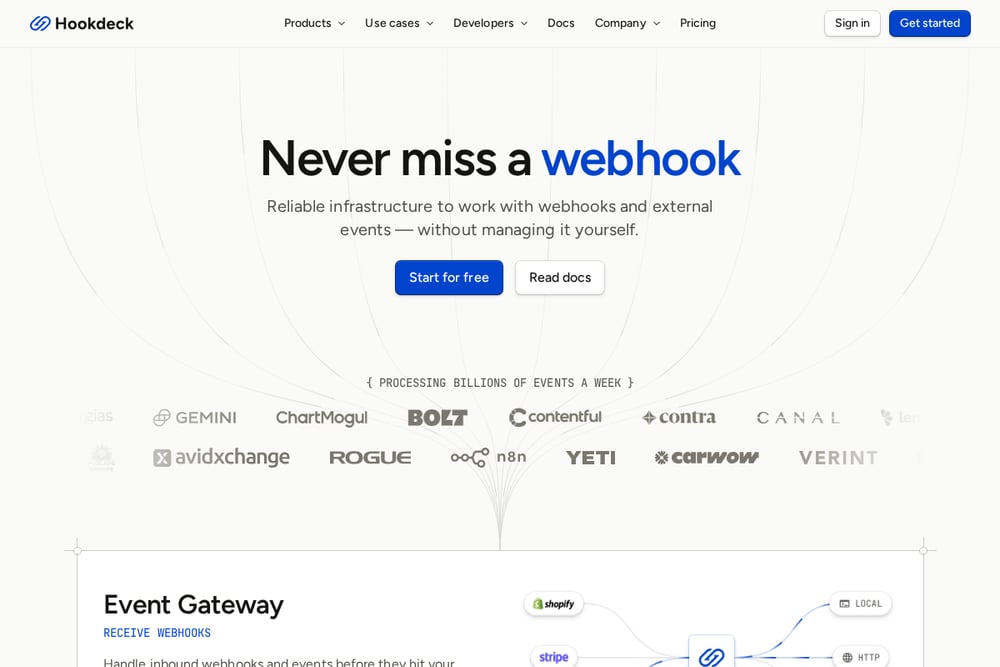 A screenshot of the Hookdeck website.
Hookdeck positions itself as an event gateway for receiving webhooks, with a strong emphasis on observability and operational safeguards. Its platform covers routing and filters, queueing and rate limiting, delivery groups, and detailed logs, which makes it a solid choice if inbound webhook chaos is your main pain point. The company also publishes extensive educational content on webhook reliability, including guides on dead-letter queues and delivery guarantees, which is useful when you are still figuring out your architecture. For teams that need to inspect, replay, and debug third-party webhooks at scale, the console and CLI tools are a real asset. Hookdeck also offers an outbound product called Outpost for sending webhooks and events to your own customers. If you want a single place to see everything flowing in and out, this is a strong contender.
#4 Svix
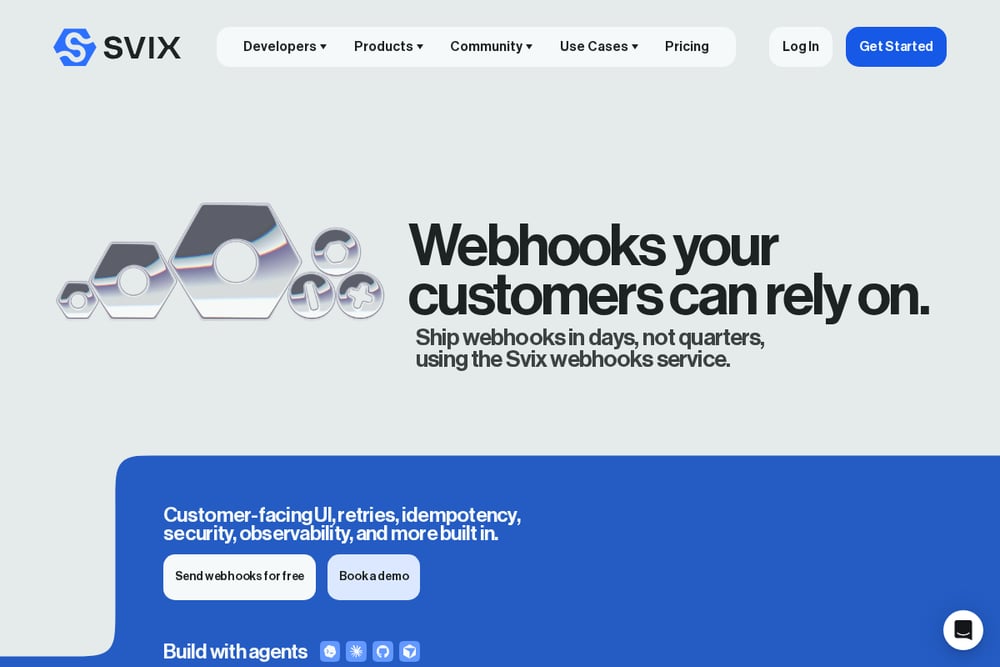 A screenshot of the Svix website.
Svix has built a reputation as a webhook infrastructure provider with a strong educational footprint, including a glossary that explains concepts like dead-letter queues, HMAC, and idempotency in plain language. The platform offers SDKs and libraries across multiple languages, which shortens the path from signup to production for teams that want to send webhooks to their own customers. Its documentation and webhook university resources make it a good fit if you are still learning the space or need to bring less experienced engineers up to speed. Svix also provides tooling like Svix Play for inspecting and debugging webhook payloads during development. For companies that want enterprise-grade webhook delivery with a mature ecosystem around it, Svix is worth a serious look.
#5 GetHook
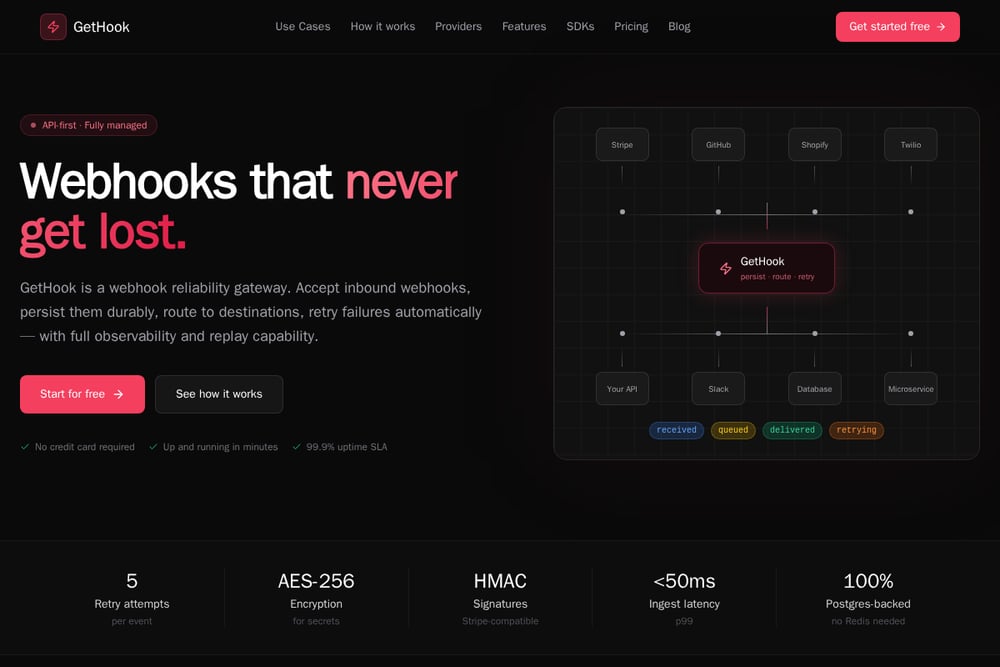 A screenshot of the GetHook website.
GetHook focuses on the operational side of webhook reliability, with a particular emphasis on what happens after retries are exhausted. Its blog and product materials treat the dead-letter queue as a first-class concern, covering how to triage dead-letter events, diagnose root causes, and replay safely without triggering unintended side effects. The default retry schedule runs five attempts over roughly ninety minutes before an event is marked as dead_letter, which gives you a clear window to fix transient issues before they become permanent. If your team has ever ignored DLQ accumulation until it became a crisis, GetHook's approach will feel familiar and useful. It is a good fit for teams that want to be deliberate about failure handling rather than hoping retries are enough.
How to Choose the Right Webhook Delivery Service
Start by deciding whether you need outbound delivery, inbound receiving, or both. If you are sending events to your customers, a focused delivery API like heraldQ or Svix will get you there fastest. If you are drowning in third-party webhooks coming at you, Hookdeck's gateway and observability tools are built for that. Next, look at how each service handles failure. Retries with exponential backoff are table stakes, but you also want a dead-letter queue with replay, because eventually something will fail permanently and you will need a way to recover. Security matters too: HMAC signing, secret rotation, and idempotency support should be on your checklist. Finally, check the pricing page before you fall in love with the docs. Some services offer generous free tiers, while others gate features behind sales conversations. Pick the one whose constraints you can live with.
Where Automation Fits In
Webhook delivery is one of those problems that looks simple until you add retries, backoff, signing, and a dead-letter queue. That is exactly the kind of work you should not be doing by hand. A delivery service automates the boring parts: it queues your event, attempts delivery, backs off on failure, and moves exhausted events into a DLQ where you can inspect and replay them. You still own the payload and the business logic, but the transport layer becomes someone else's problem. For teams shipping fast, that trade-off is usually worth it. The key is to pick a service that gives you enough visibility to trust it, which means live status, delivery history, and request IDs you can quote in a support ticket.
The Bottom Line
Webhook delivery is infrastructure, and infrastructure should be boring in the best way. The five services here each take a slightly different angle on that goal. Webhook Relay gives you a gateway that bridges public and private networks. heraldQ strips the API down to the essentials and focuses on reliable delivery with retries and a dead-letter queue. Hookdeck shines when you need to observe and debug inbound webhooks at scale. Svix brings a mature SDK ecosystem and strong educational resources. GetHook makes dead-letter queue operations a deliberate part of your workflow. Whichever you choose, the important thing is to stop rolling your own retry logic and start treating event delivery as a solved problem.