Your website has one job: turn a search into a phone call. These five studios understand that better than most.
The state of local service web design
Local service businesses live and die by inbound calls and quote requests. A homeowner searching for an HVAC repair or a solar installer is comparing several providers within minutes, usually on a phone. That means your site needs to load fast, make the call button obvious, and earn trust at a glance. The studios below build around that reality rather than around pretty templates.
How we evaluated these studios
We looked at service scope, pricing clarity, local fit, speed of delivery, and what happens after launch. We also weighed how well each studio handles the specific mechanics of service businesses: tap-to-call, quote forms, booking, and service-area pages. The detail on each studio is in its description below.
Here is the short version before the deep dive. Each studio below serves a slightly different slice of the local service market, so match the one that fits how you actually win work.
| Provider | Best For |
|---|---|
| WebsiteForces | Trades and repair services that depend on calls |
| Websites built on solid ground – Dhauni | Solar, HVAC, and clinics wanting fixed-price speed |
| Think Different Designs | Family-owned businesses avoiding tech jargon |
| Miller Media 7 | Owners wanting strategy-led, scalable builds |
| OneLocal | Trades wanting a productized builder platform |
The five studios in detail
#1 WebsiteForces
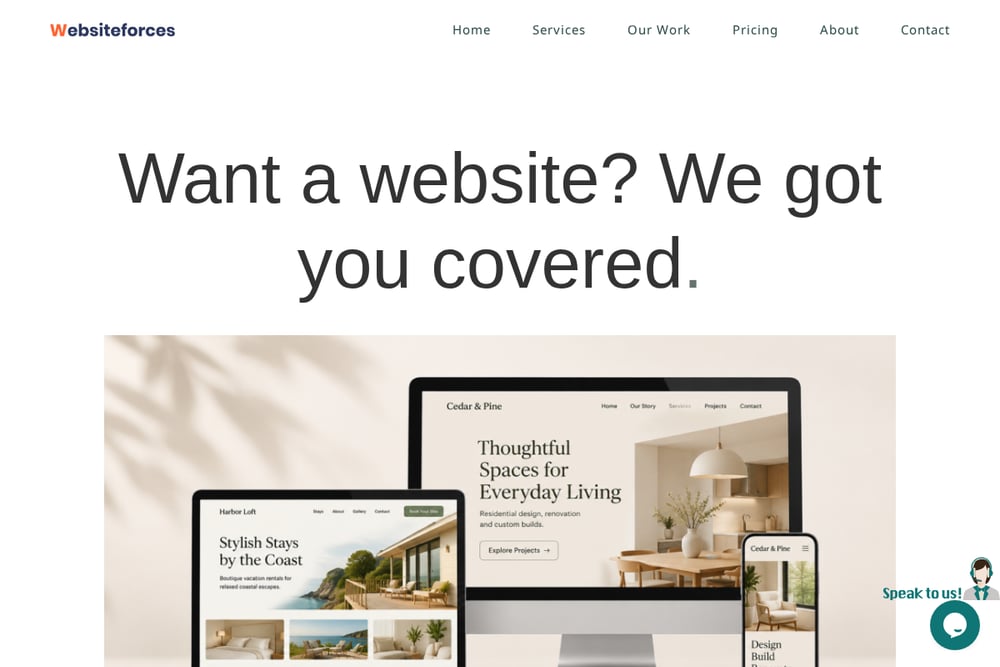 A screenshot of the WebsiteForces website.
WebsiteForces runs a dedicated service business web design track aimed squarely at plumbers, electricians, contractors, and repair services. The studio frames the problem clearly: service searches carry strong intent, so your site has to support calls, bookings, and local visibility without friction. It calls out the common failure points, from relying on directories to slow mobile experiences, and builds around fixing them. If you want a partner who already speaks the language of trades, this is a natural starting point.
#2 Websites built on solid ground – Dhauni
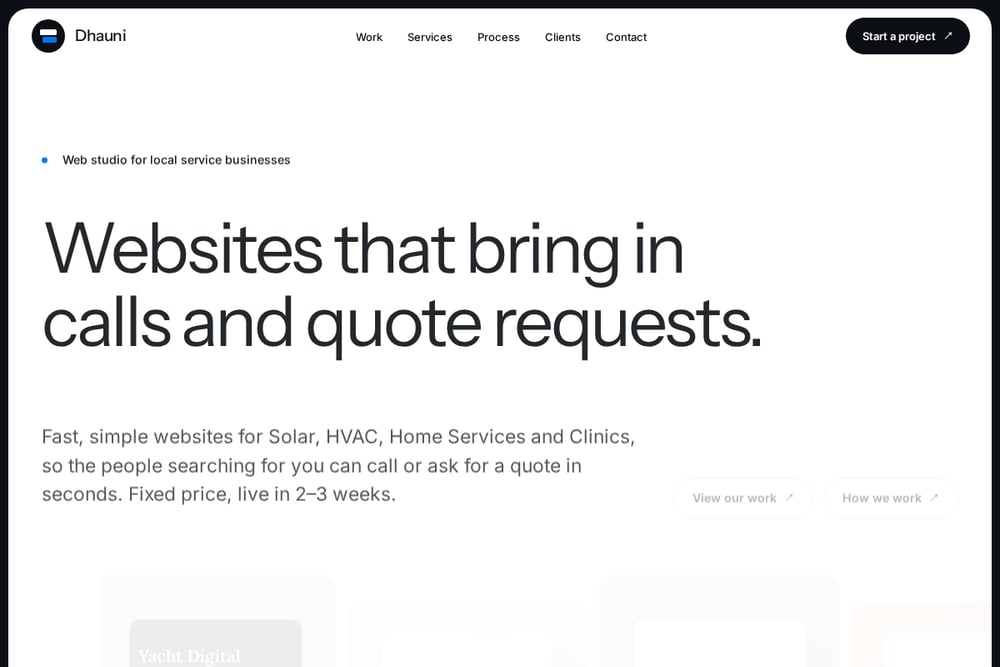 A screenshot of the Websites built on solid ground – Dhauni website.
Dhauni is an independent web studio that designs and builds fast, measurable WordPress sites for local service businesses, with a focus on solar, HVAC, home services, and clinics. Projects are fixed price and typically live in two to three weeks, which is a rare promise in this space. Every build includes the mechanics that drive inquiries: quote forms, tap-to-call, online booking, and service-area pages. What sets Dhauni apart is the after-launch layer, with care and support, analytics around the actions that matter, and automation that wires forms and follow-ups into the tools you already use. Recent work includes a booking-first plumbing site and a lead-generation site with CRM-ready forms.
#3 Think Different Designs
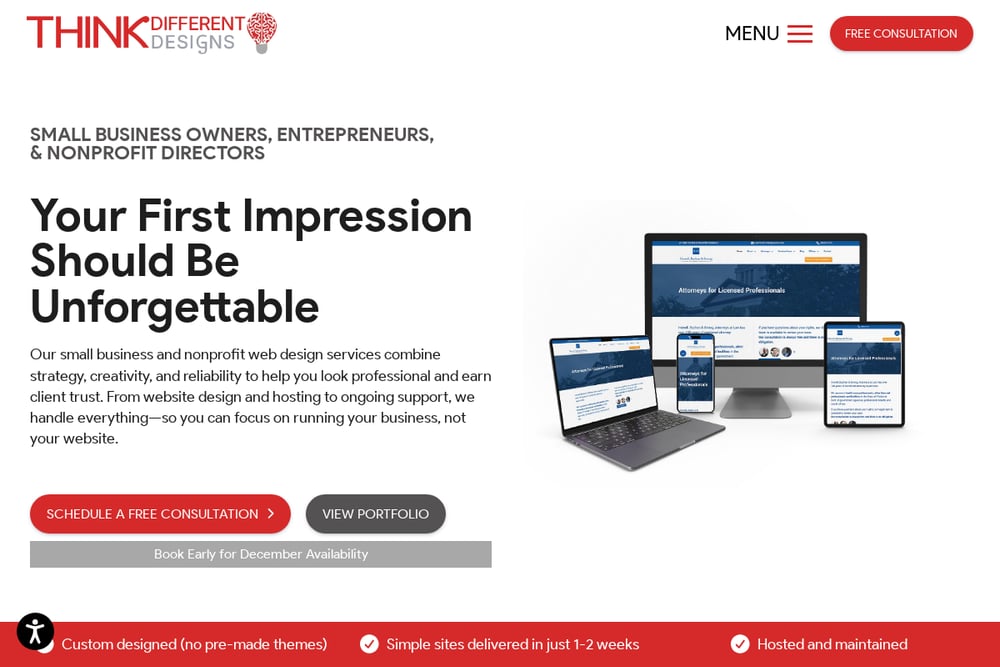 A screenshot of the Think Different Designs website.
Think Different Designs positions itself for small, local, and family-owned businesses that do not want to learn code or manage complicated systems. The pitch is refreshingly plain: simple, effective websites that bring in customers without the tech overwhelm. The studio offers a free consultation and walks owners through the process in non-technical terms. If you are replacing an outdated site and want a straightforward partner, this is a solid fit.
#4 Miller Media 7
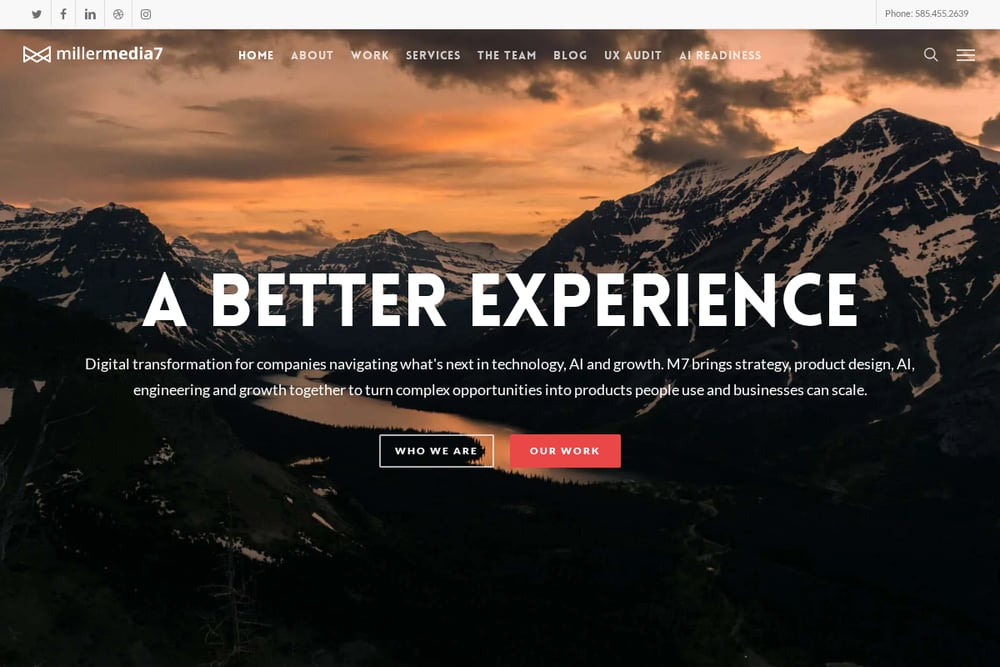 A screenshot of the Miller Media 7 website.
Miller Media 7 treats design as function, flow, and purpose rather than decoration. The studio blends user experience, SEO, and scalable development so your site grows with the business. Its writing on small business web design covers the practical essentials: fast load times, clear calls to action, and easy content updates. Strategy comes first in their process, which suits owners who want a considered foundation rather than a quick template swap.
#5 OneLocal
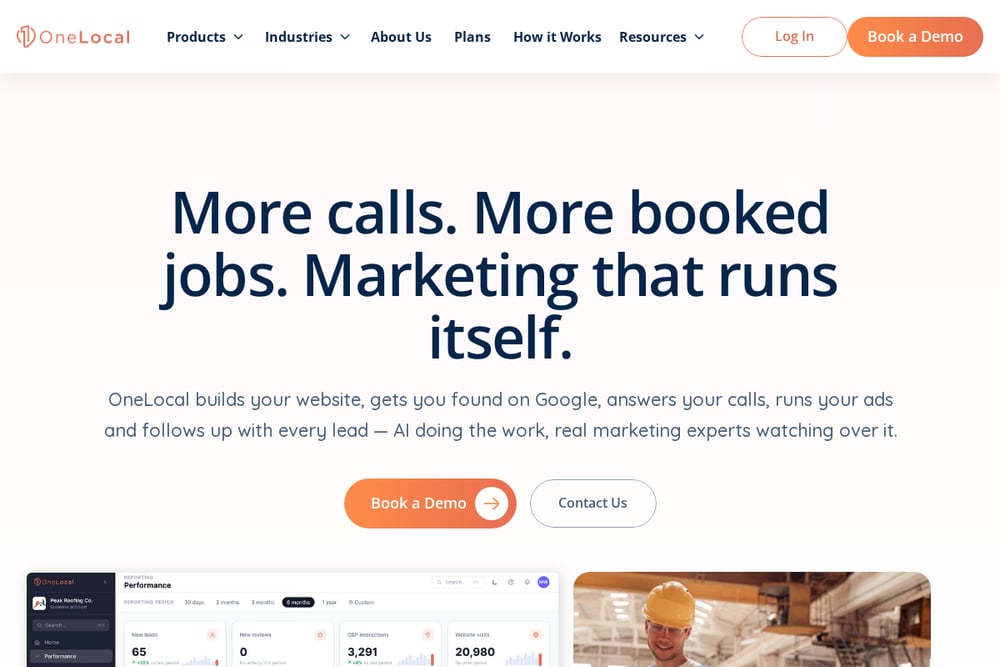 A screenshot of the OneLocal website.
OneLocal takes a platform approach, pitching OneSite as a service-based website builder built for SMBs and trades. It leans on local SEO, AI-driven automation, and brand-focused onboarding to help providers launch and maintain an online presence. The team cites consumer review behavior to make the case that your site has to earn trust at a glance and reinforce what people see on Google. If you prefer a productized system over a bespoke studio engagement, this is worth a look.
How to choose the right studio
Start with how you win work. If most of your leads come from phone calls, prioritize tap-to-call and mobile speed above everything else. If you sell bigger jobs like solar or HVAC replacements, quote forms and service-area pages matter more. Then ask about pricing structure and timeline, because a fixed price and a two-to-three-week launch changes your planning entirely. Finally, ask what happens after launch. Updates, backups, security, and analytics are not extras for a service business; they are what keeps the leads coming.
Wiring your site into your follow-up
A website that collects a lead and then does nothing with it is a leak. Map the path: form submission triggers an instant confirmation to the customer, a notification to your team, and a record in your CRM. Follow-up sequences should fire automatically for quotes that go quiet. The studios that build this wiring in from day one, rather than bolting it on later, save you from chasing leads by hand.
The bottom line
Every studio here can build you a website. The difference is whether that website is engineered to produce calls and quote requests, and whether anyone is looking after it after launch. Match the studio to your trade, insist on clarity around price and timeline, and treat analytics and automation as part of the build rather than an afterthought. Do that, and your site stops being a brochure and starts being a sales channel.