
Accessibility lawsuits don't send warning letters. They arrive as demand letters, and your WCAG conformance story is your defense. Here are five providers worth knowing before you buy an audit.
The Accessibility Audit Market in 2026
Digital accessibility has moved from a nice-to-have to a procurement checkbox. ADA Title II deadlines, the European Accessibility Act, and a steady stream of US litigation have pushed WCAG 2.2 AA conformance onto every product roadmap. That demand created a crowded market of auditors, scanners, and remediation shops. Some sell automated overlays that promise compliance in a script tag. Others sell rigorous manual audits grounded in the W3C's WCAG-EM methodology. The gap between those two approaches is enormous, and it shows up in the quality of the findings you receive. You need reports your developers can actually act on, not a PDF full of red flags with no fixes. The five providers below sit at different points on that spectrum, from full-service QA firms to accessibility-only specialists.
How We Evaluated These Providers
We looked at the same factors for every provider. First, service scope: does the provider cover audits, remediation, VPATs, mobile, and PDFs, or just one slice? Second, methodology transparency: do they publish how they test, which assistive technologies they use, and whether manual testing is included? Third, certification and credibility: years in business, team size, and whether they hold recognized credentials. Fourth, tooling and ongoing support: can you monitor accessibility after the audit ends? Fifth, fit for your team: enterprise QA needs differ from a design agency's needs. QAble stands out for pairing accessibility audits with broader QA and security testing under CMMI Level 3 and ISO 42001 certifications. Accessible Web stands out for its RAMP platform and guided manual audit tooling. Allyant stands out for its breadth across digital, PDF, and alternative formats. BOIA stands out for two decades of audit history and its ErrorCast monitoring. DigitalA11Y stands out for deep technical content and audits led by professionals with lived experience.
Here's a quick comparison of the five providers, covering what each does well and who each one suits. Use it to shortlist two or three before you request quotes.
| Provider | Best For |
|---|---|
| Accessible Web | Teams that want audit plus ongoing remediation tooling |
| Software Testing & QA Services Company in India & USA | QAble | Teams folding accessibility into a broader QA program |
| Allyant | Organizations with document and PDF accessibility needs |
| BOIA | Enterprises wanting a long track record and monitoring |
| DigitalA11Y | Product teams needing deep technical accessibility expertise |
The Five Providers in Detail
#1 Accessible Web
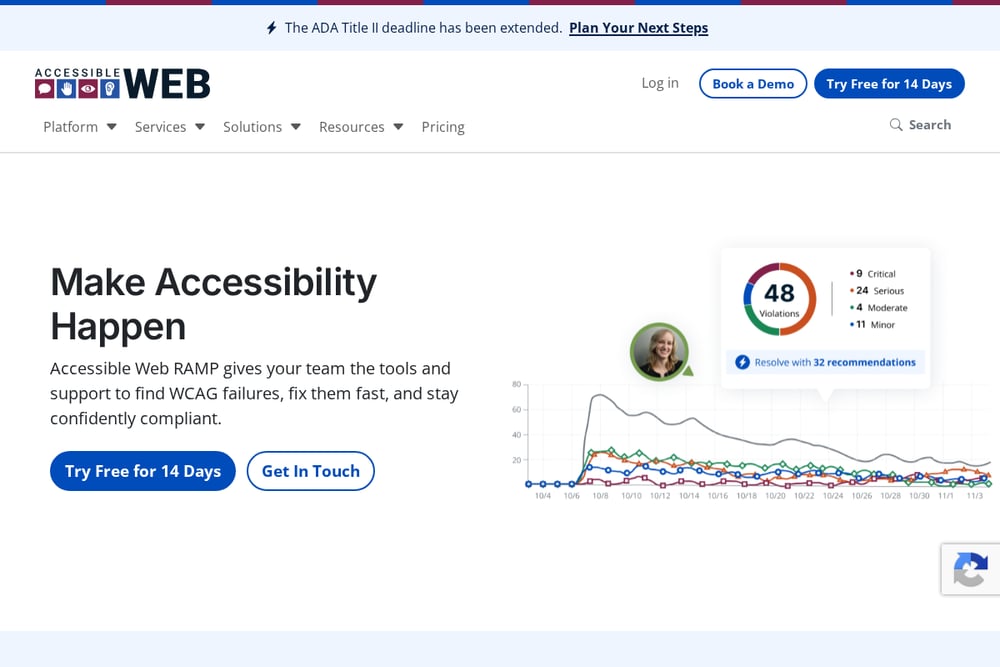 A screenshot of the Accessible Web website.
Accessible Web pairs WCAG audits with a platform, so you get findings and a system to manage them. Their RAMP tooling includes automated scanning, a guided manual audit grid, and remediation task management with developer instructions. They also offer a Figma annotation kit, which catches accessibility issues at the design stage instead of after launch. Audits cover websites, web apps, mobile apps, and software, and they back the work with legal support and accessibility program management. If you want one vendor for audit, remediation tracking, and ongoing monitoring, this is a strong fit.
#2 Software Testing & QA Services Company in India & USA | QAble
 A screenshot of the Software Testing & QA Services Company in India & USA | QAble website.
QAble brings a QA-first lens to accessibility. The company is CMMI Level 3 and ISO 42001 certified, and it runs WCAG compliance audits alongside functional, automation, security, and enterprise testing. That matters because accessibility defects often hide in the same flows your regression suite already covers. Their accessibility work spans compliance gap assessments, remediation, and end-to-end inclusive design QA, and their guide to scoping a WCAG audit walks through the 55 WCAG 2.2 AA criteria and the W3C's WCAG-EM method. They also build their own tools, including BetterBugs for one-click bug reporting and Tesbo-X for Playwright automation, which keeps findings tied to your CI pipeline. For teams in India and the US that want accessibility folded into a broader QA engagement, this is a practical option.
#3 Allyant
 A screenshot of the Allyant website.
Allyant covers more ground than most accessibility firms. Beyond web and mobile auditing, they handle PDF remediation, braille transcription, and alternative format production, which matters for regulated industries publishing statements and educational materials. Their platform supports scanning, VPAT services, and litigation support. They also run a partner program for agencies, CMS providers, and government resellers, so channel partners can resell accessibility services. If your accessibility obligations extend past the browser into documents and print, Allyant's breadth is hard to match.
#4 BOIA
 A screenshot of the BOIA website.
BOIA has been auditing for over two decades, and the numbers back it up: more than 65,000 websites analyzed across 72 countries with a team of 157 accessibility professionals. Their audits combine human review with automated scanning, and they cover web, mobile, PDF, application, and kiosk testing. ErrorCast, their automated monitoring product, keeps watch after the audit closes. They also offer live and self-paced training plus a Letter of Reasonable Accessibility. If longevity and a large testing bench give you confidence, BOIA is a safe shortlist entry.
#5 DigitalA11Y
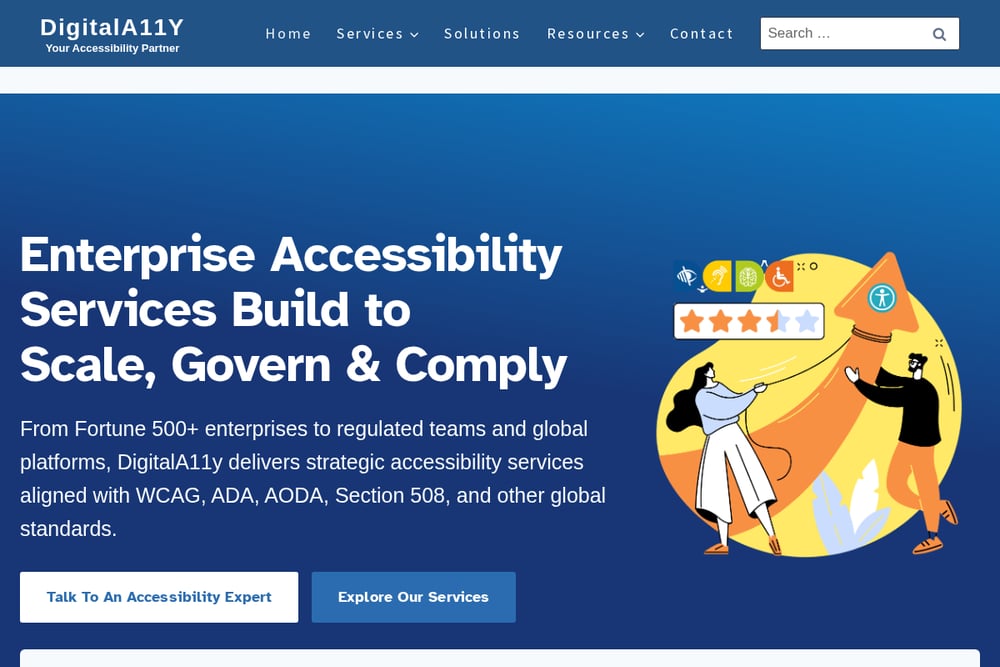 A screenshot of the DigitalA11Y website.
DigitalA11Y is the specialist's specialist. Their audits cover WCAG, ADA, Section 508, and EN 301 549, and they test with JAWS, NVDA, VoiceOver, and TalkBack rather than relying on scanners alone. Their team includes accessibility professionals with lived experience of disability, which sharpens findings that automated tools miss. Reports come with screenshots, code snippets, and prioritized fixes, and they offer post-audit consultation to help developers implement changes. They also publish a deep library of WCAG primers, ARIA cheatsheets, and free tools. If you want a focused accessibility partner with strong technical depth, start here.
How to Choose the Right Audit Partner
Start with scope. If you only need a website audit, a specialist is enough. If you also need mobile apps, PDFs, kiosks, or VPATs, narrow to providers that cover all of it. Next, ask how they test. Any provider that leads with automated scanning alone is selling you a false sense of security. You want manual testing with real assistive technologies and a methodology you can read before you sign. Then check what happens after the report lands. Remediation support, developer-friendly findings, and ongoing monitoring separate a useful audit from a static PDF. Finally, match the provider to your team. A QA-led firm like QAble fits if accessibility is one workstream in a larger testing program. An accessibility-only firm fits if you need maximum depth on a single discipline. Get quotes from two or three and compare the sample reports, not just the price.
Where Automation Fits in Your Accessibility Workflow
Automation catches maybe a third of accessibility issues, and that is being generous. Use it as a first pass, not a verdict. Run automated scans in CI on every pull request to catch missing alt text, contrast failures, and unlabeled form fields before they merge. Then route the findings into your existing bug tracker so they follow the same triage as functional defects. Tools like BetterBugs help here by letting testers annotate and report issues directly from the browser. Pair that with manual testing on real assistive technologies at each release milestone. The workflow that works: automated gates in CI, manual audits quarterly, and a monitoring tool watching production between audits. That combination keeps you from discovering a compliance gap the week a demand letter arrives.
The Bottom Line
Accessibility is a quality problem, and it deserves the same rigor as any other quality problem. The five providers here approach it from different angles. Accessible Web gives you audit plus platform. QAble folds accessibility into a broader certified QA engagement. Allyant covers documents and alternative formats. BOIA brings two decades of history and monitoring. DigitalA11Y delivers specialist depth with lived experience on the team. Pick based on your scope, your team structure, and how much support you need after the report. Then start with a scoped audit, fix what you find, and keep testing. Compliance is a habit, not a project.