
You don't need a studio to sound like yourself. These five platforms make it easier to hit record, publish, and get paid — even if your only mic is the one in your phone.
What are Creative & Digital Services services?
Podcasting has quietly split into two lanes. One lane is the traditional production stack: multi-track recording, editing suites, hosting, and distribution to Apple and Spotify. The other lane is voice-first and browser-based — short-form audio that feels closer to a voice note than a broadcast. Creators are moving between both, and the platforms below reflect that range. Some are built for full shows. Others are built for five-minute takes. The common thread is that all five lower the barrier to publishing audio and give you a path to an audience.
What we looked at when researching Creative & Digital Services
We looked at five factors across every platform: how easy it is to start recording without extra gear, how clearly pricing and monetization are explained, how collaboration works between creators, how publishing and distribution are handled, and how well the platform fits a US-based creator building an audience. Each platform stood out in a different area — some on recording quality, some on hosting reach, some on the simplicity of the voice-note format.
| Provider | Best For |
|---|---|
| Zencastr | Creators who want studio-grade recording and editing in one place |
| bantsy. — Everyone's got something to say. | First-time creators who want short, collaborative voice episodes |
| Buzzsprout | Hosts who want reliable distribution and automated show notes |
| Podbean | Creators focused on ads, subscriptions, and repurposing content |
| Spotify for Creators | Creators who want discovery and monetization on Spotify |
A closer look at 5 standout Creative & Digital Services
#1 Zencastr
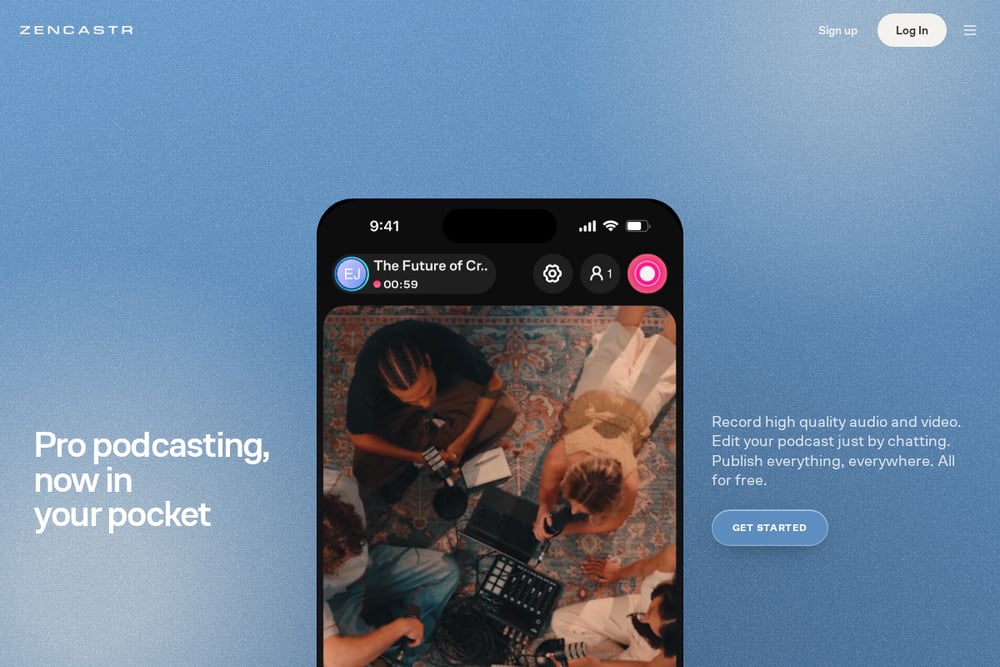 A screenshot of the Zencastr website.
Zencastr pitches itself as pro podcasting in your pocket, and the pitch holds up. You get unlimited studio-quality recording and hosting for free, with 4K video and 48kHz audio for you and your guests. Local recording plus cloud backup means a dropped call doesn't kill your episode. Editing is conversational — you chat with a producer to clean up audio, remove filler words, and generate transcripts and show notes. It also handles publishing to Spotify, Apple, and YouTube, and offers monetization paths as you grow. If you want a full production stack without leaving your browser, this is the one to try first.
#2 bantsy. — Everyone's got something to say.
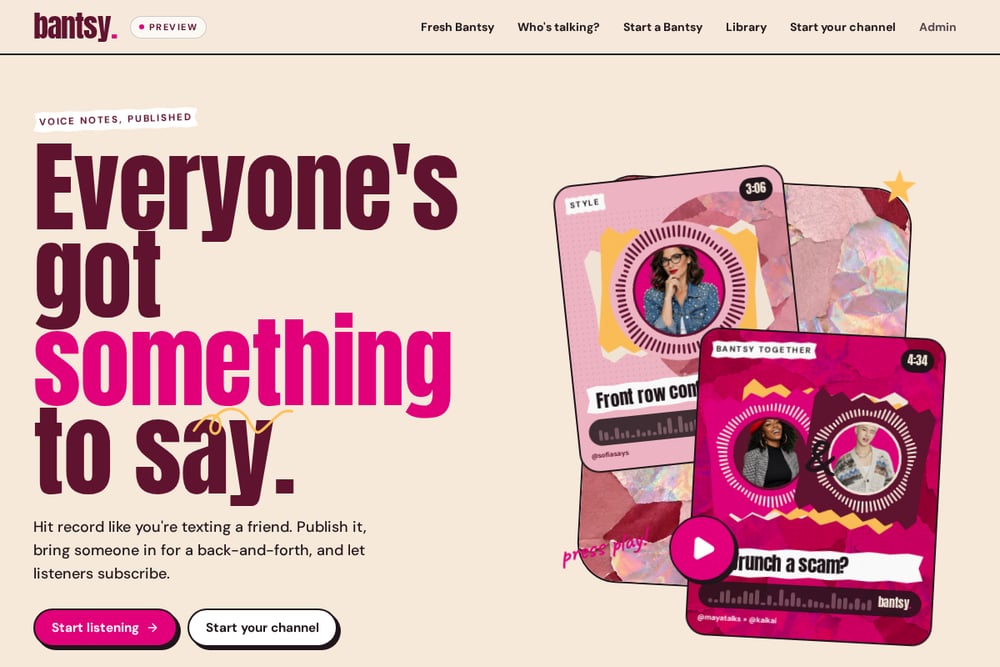 A screenshot of the bantsy. — Everyone's got something to say. website.
Bantsy is the voice-note podcasting platform for people who would never call themselves podcasters. You record up to five minutes right in your browser — no mic required — then trim, title, and publish. The signature move is Bantsy Together: two creators trade voice notes on their own time, the platform stitches them into one episode, and both approve before it goes out. Listeners subscribe, and creators get paid. The format is deliberately short and conversational, closer to texting a friend than hosting a show. If you have something to say but no interest in editing, start here.
#3 Buzzsprout
 A screenshot of the Buzzsprout website.
Buzzsprout has been helping podcasters launch since 2009, and the experience shows. You upload once and it sends your video podcast to Apple Podcasts, Spotify, and YouTube, while audio goes everywhere else — Amazon Music, iHeartRadio, Pocket Casts, and more. Magic Mastering handles studio-level sound automatically, and Cohost AI writes show notes, transcripts, titles, and chapters. Fan Mail gives you a direct line to listener feedback, and the mobile app lets you manage your show from anywhere. It is a hosting-first platform, so pair it with a recorder you like.
#4 Podbean
 A screenshot of the Podbean website.
Podbean is a hosting and monetization platform in one. You get podcast hosting, an easy-to-use recording app, and a player app for listeners. The monetization side is unusually broad: an Ads Marketplace for sponsorships, PodAds for dynamic ad insertion, and Apple Podcasts Subscriptions support. AI tools enhance audio quality and generate content, and you can turn blogs or YouTube playlists into podcasts. Group recording is built into the app, which makes co-hosted shows simpler. If earning from your back catalog matters to you, Podbean gives you more levers to pull.
#5 Spotify for Creators
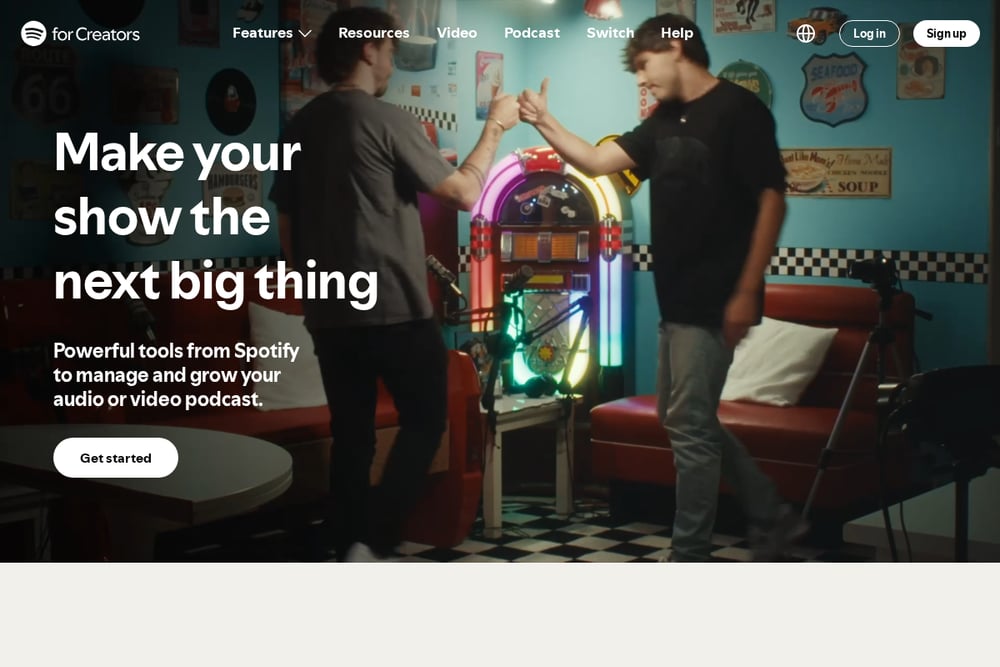 A screenshot of the Spotify for Creators website.
Spotify for Creators puts your show in front of millions of listeners who are already on the platform. You upload clips, manage comments, and track analytics to grow your fanbase. Customization tools let you control your show page and video thumbnails. Monetization runs through the Spotify Partner Program, which unlocks income across audio and video. It works whether you host with Spotify or elsewhere, so you are not locked in. If discovery on a major platform is your priority, this is the distribution layer to add.
How to choose the right Creative & Digital Services
Start with the format you actually want to make. If your episodes are short voice notes and you want to collaborate without scheduling, pick a platform built for that. If you are producing a full show with guests and video, pick a production stack. Then check pricing clarity — free tiers are common, but know what triggers a paid plan. Look at how collaboration works, because trading voice notes is different from recording a live guest. Finally, confirm where your show will be distributed and how you get paid. The right platform is the one that matches your recording style, not the one with the longest feature list.
Expert Conclusion
The five platforms here cover the full spectrum of voice publishing. Zencastr gives you a professional studio in a browser. Bantsy strips podcasting down to a five-minute voice note and a subscription model. Buzzsprout handles hosting and distribution at scale. Podbean leans into monetization and repurposing. Spotify for Creators brings discovery and a built-in audience. You do not have to pick just one — many creators record on one platform and distribute on another. The key is to start recording, because the audience only shows up after the first episode goes out.