Your brand lives or dies in the first 50 milliseconds. That split-second judgment is shaped by visual identity and interface design, so who you hire matters more than most founders admit.
The State of Visual Identity and Digital Design
Design services have split into two camps. On one side sit full-service agencies that bundle branding, web development, and strategy under one roof. On the other, leaner studios and solo creatives who go deep on identity systems and interface craft. Buyers increasingly want both: a distinctive visual language and a digital experience that converts. Research from Neuron notes that users form judgments about digital products within 50 milliseconds, and that consistent visual systems reduce cognitive load across every touchpoint. That puts pressure on studios to think beyond logos. Typography hierarchies, iconography libraries, spacing rules, and interaction patterns now define whether a brand feels coherent or cobbled together. The result is a crowded market where scope, process transparency, and fit matter more than a flashy portfolio grid.
How We Evaluated These Studios
We looked at the same factors for every studio. First, service scope: does the studio cover visual identity, UX/UI, and digital design, or only one slice? Second, depth of process: how clearly does the site explain strategy, collaboration, and handoff? Third, positioning clarity: can you tell within seconds who the studio serves and what it delivers? Fourth, proof of work: case studies, named clients, or a portfolio that shows range. Fifth, engagement model: solo creative, boutique team, or large agency, and what that means for your timeline and budget. Biata stands out for a tightly focused personal portfolio spanning visual identity, UX/UI, and digital design. Flexy Global impresses with a broad service menu and published case studies. Curran & Connors shows deep branding strategy and implementation support. League Design Agency signals an integrated brand, web, and UI/UX offer. Neuron leads with research-backed thinking on how visual identity elevates digital experiences.
Here is a quick look at how the five studios differ before you dig into the details. Compare scope, engagement style, and the type of client each one serves best.
| Provider | Best For |
|---|---|
| Flexy Global | End-to-end brand and product builds |
| Biata — Graphic Design & Creative Thinking | Personal, direct collaboration on identity and UX |
| Curran & Connors | Corporate identity and reporting-heavy brands |
| League Design Agency | Brand and web refreshes in one engagement |
| Neuron | Enterprise software and AI product design |
The 5 Studios in Detail
#1 Flexy Global
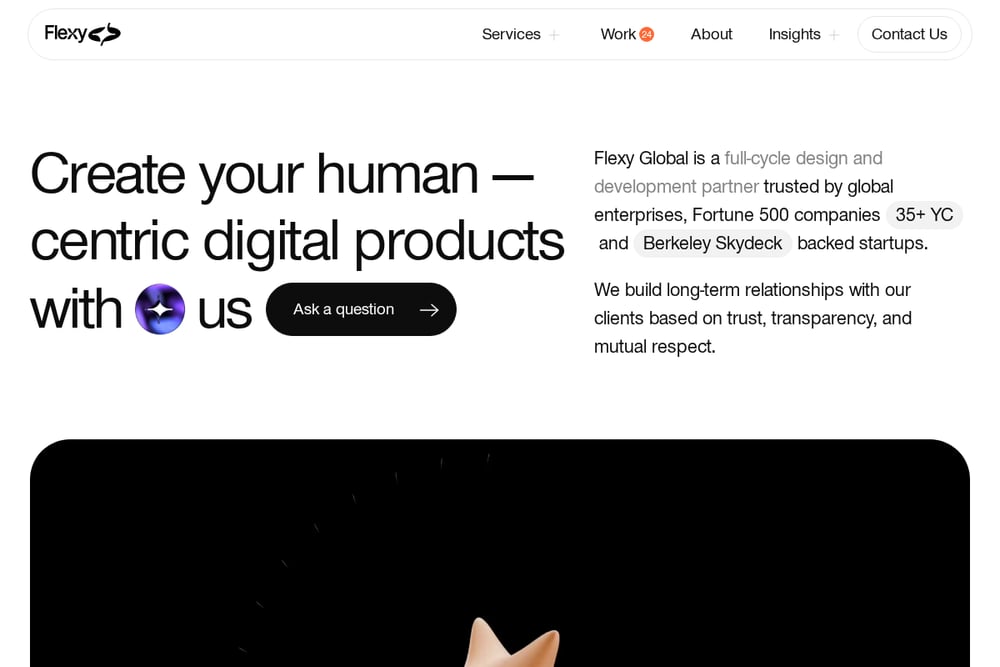 A screenshot of the Flexy Global website.
Flexy Global runs a wide service menu that spans UI/UX design, mobile app design, no-code development, software development, and branding. That breadth means you can take a brand from identity through product build without stitching together multiple vendors. The studio publishes case studies such as a rebranding project for Equip and a repositioning of Maven Bio from a complex intelligence platform to a clear decision engine. It also maintains an insights library covering digital transformation, SaaS design, digital product design, and interface design. If you want one partner across brand and product, this is a strong fit.
#2 Biata — Graphic Design & Creative Thinking
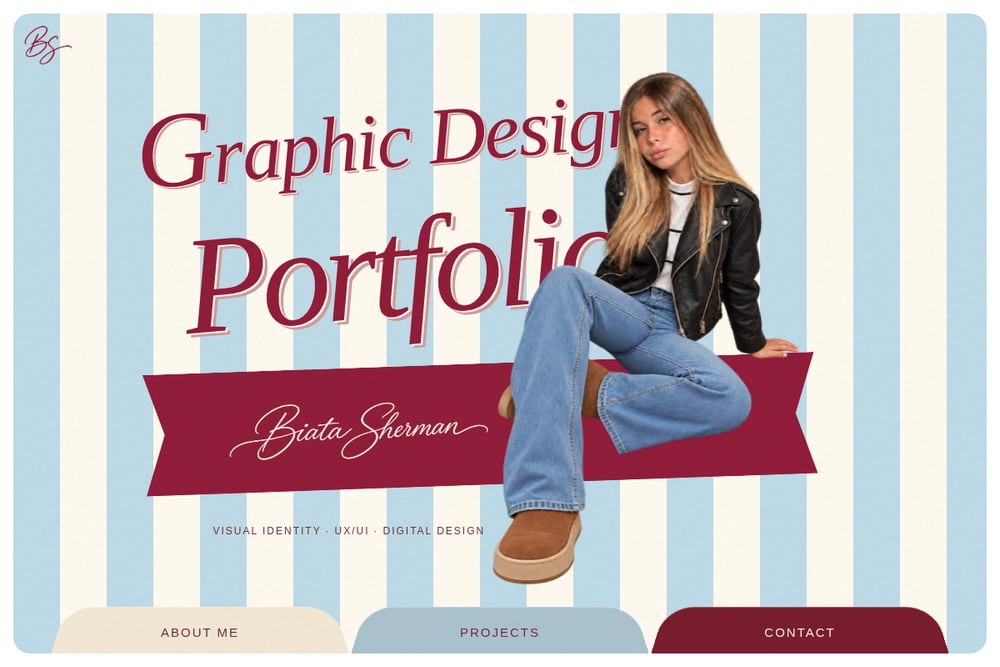 A screenshot of the Biata — Graphic Design & Creative Thinking website.
Biata's portfolio is a focused personal brand built around visual identity, UX/UI, and digital design. The site keeps things simple: a projects section, a brief about page, and direct contact through email, Instagram, and WhatsApp. That directness is the point. You work with the designer, not an account layer, which tends to mean faster feedback loops and more personal creative direction. The portfolio framing signals a solo creative professional offering design services rather than a full-stack agency. For founders and small teams who want distinctive identity work paired with interface thinking, this is a compelling option.
#3 Curran & Connors
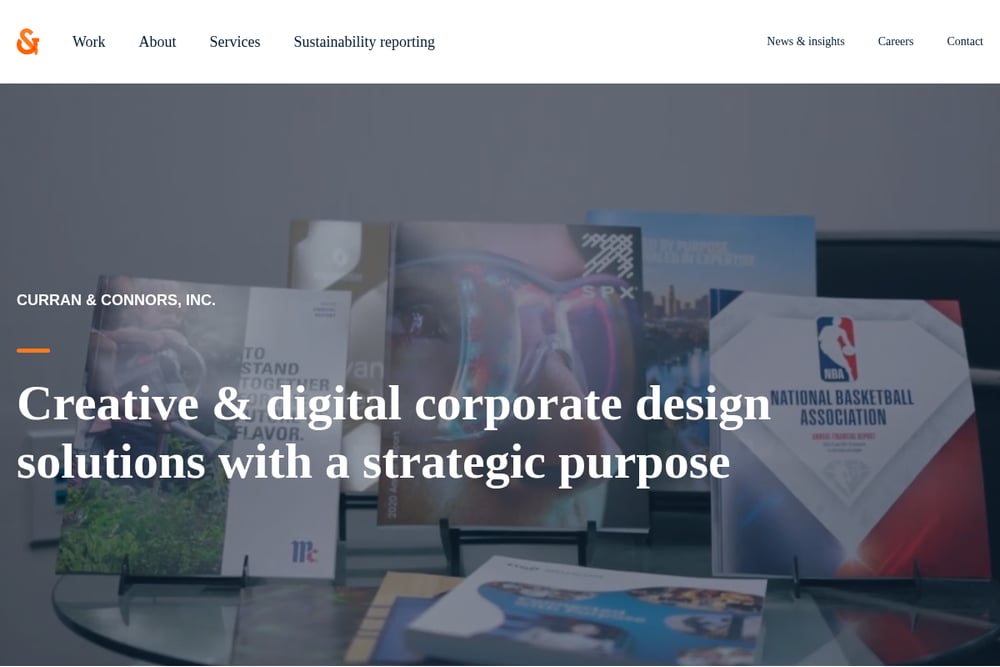 A screenshot of the Curran & Connors website.
Curran & Connors positions itself as a visual identity agency with a strong corporate and sustainability reporting background. The firm describes crafting branding strategies that reflect your vision and enhance market position, then tailoring the identity to your target audience. It goes beyond logos into messaging, values, and consistent visual systems. The team includes project managers, designers, developers, and strategists, so implementation support runs alongside design. If your brand needs to hold up in investor materials, annual reports, and corporate communications, this studio's background is relevant.
#4 League Design Agency
League Design Agency presents an integrated offer across brand, web, and UI/UX digital design services. The positioning suggests you can move from brand identity into a designed and built web presence with one team. That combination suits companies that need a cohesive look and a functional site rather than a logo dropped into a template. The site leans on a modern agency presentation, which makes it easy to scan the service range before reaching out. For mid-sized businesses refreshing both brand and web at once, it is worth a look.
#5 Neuron
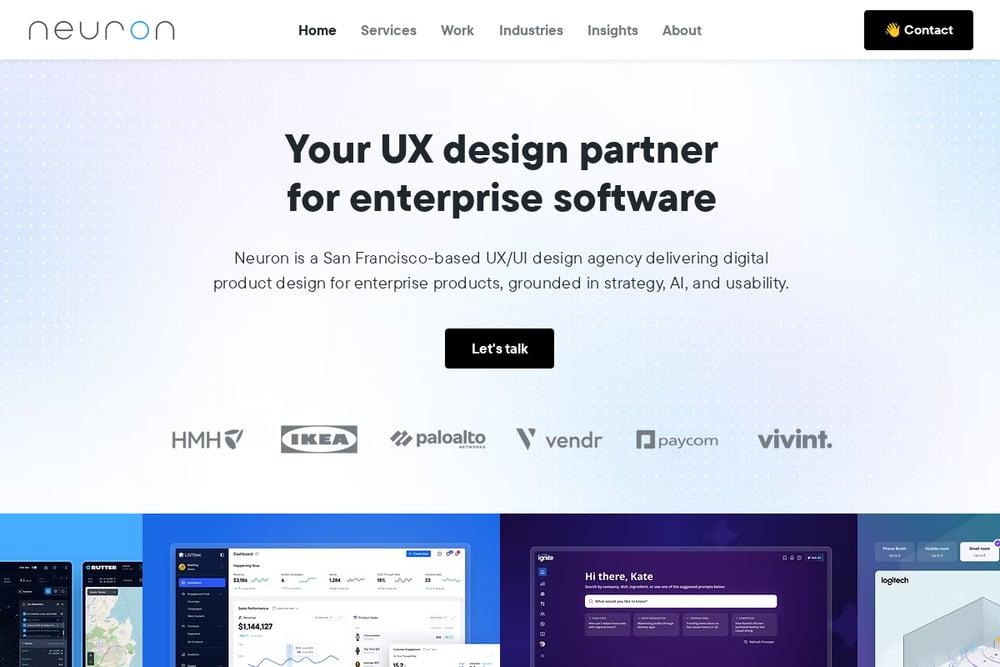 A screenshot of the Neuron website.
Neuron approaches design through a product strategy and UX/UI lens, with services spanning product strategy, UX/UI design, and DesignOps. Its writing makes the case that a strong visual identity elevates digital experiences, citing how users judge products in milliseconds and how consistent visual systems reduce cognitive load. The studio serves enterprise software and AI clients, which shapes its emphasis on complex interfaces and scalable design operations. If your product is dense, technical, or growing fast, Neuron's research-driven framing will resonate. It is less a logo shop and more a partner for interface-heavy digital products.
How to Choose the Right Design Partner
Start with scope. If you need a logo, a website, and a product interface, decide whether you want one integrated team or a specialist for each phase. Full-service agencies reduce vendor juggling but can cost more and move slower. Solo creatives and boutique studios offer direct access and sharper focus, though capacity may be limited. Next, check the proof. Look for case studies that resemble your problem, not just attractive screenshots. Ask how the studio handles strategy, feedback rounds, and handoff to developers. Then consider communication style. A personal portfolio with direct WhatsApp contact feels different from an agency with project managers, and neither is wrong. Finally, be honest about budget and timeline up front. The right partner is the one whose process matches how you actually work.
Where Automation Fits Into Your Design Workflow
Design work still runs on judgment, but the surrounding workflow benefits from automation. Use a shared intake form to capture brand assets, audience notes, and references before kickoff so your designer starts with context instead of a blank page. Automate feedback collection with a structured form or comment tool that tags each note by page and priority. Set up scheduled status updates so you are not chasing progress across email threads. Route invoices and contracts through a simple approval flow to keep admin off the critical path. For handoff, automate asset export and naming conventions so developers receive consistent files. None of this replaces creative thinking. It just clears the clutter so the design work gets the attention it deserves.
The Bottom Line
There is no single right studio here, only the right fit for your situation. Flexy Global suits teams that want brand and product under one roof. Biata offers a direct, personal partnership for identity and UX work. Curran & Connors brings corporate and reporting depth. League Design Agency fits brand-plus-web refreshes. Neuron is built for complex, interface-heavy products. Match the studio's scope and working style to your actual needs, and the first 50 milliseconds of your next launch will work in your favor.