
You need digital help, but your budget is already stretched thin. These five platforms connect you with skilled volunteers who can build your website, boost your visibility, and get your back office running smoothly.
The Rise of Skills-Based Virtual Volunteering
Small businesses and nonprofits are increasingly turning to virtual volunteering platforms to access professional digital services without the agency price tag. These platforms match organizations with skilled volunteers who offer expertise in web development, marketing, design, and operations. The model has grown as remote work normalizes distributed collaboration and as more professionals seek purpose-driven side projects. For you, this means you can get a polished website or a social media strategy from someone who does this for a living, often at no cost beyond hard expenses like domain registration. The landscape includes generalist volunteer marketplaces, nonprofit-focused networks, and corporate social responsibility tools. Each has a different sweet spot depending on your size, cause, and timeline.
How We Evaluated These Platforms
We looked at five factors that matter when you are choosing a volunteer partner. First, service scope: does the platform cover websites, marketing, operations, and strategy, or just one narrow area? Second, pricing clarity: is it truly free for your organization, and what costs might you still incur? Third, local fit: can you find volunteers who understand your community and customers? Fourth, volunteer quality: how are skills verified, and what support exists if something goes wrong? Fifth, ease of use: how quickly can you post a request and get matched? TechProudly stood out for its community-first model and LGBTQIA+ volunteer network. Catchafire impressed with its structured project templates and broad skill categories. Idealist showed strength in its massive reach across nonprofits and volunteers. Points of Light offered a do-it-yourself project framework for grassroots efforts. Goodera delivered corporate-backed volunteering at scale for teams and enterprises.
Here is a quick look at how these five platforms compare on the factors that matter most to small organizations.
| Provider | Best For |
|---|---|
| Catchafire | Nonprofits needing structured, project-based skilled volunteer support |
| TechProudly — free tech help for small businesses | Small businesses and charities wanting free, community-driven digital help |
| Idealist | Organizations seeking broad reach for general and skilled volunteers |
| Points of Light | Grassroots groups designing their own volunteer projects |
| Goodera | Nonprofits partnering with corporate volunteer teams |
The 5 Platforms in Detail
#1 Catchafire
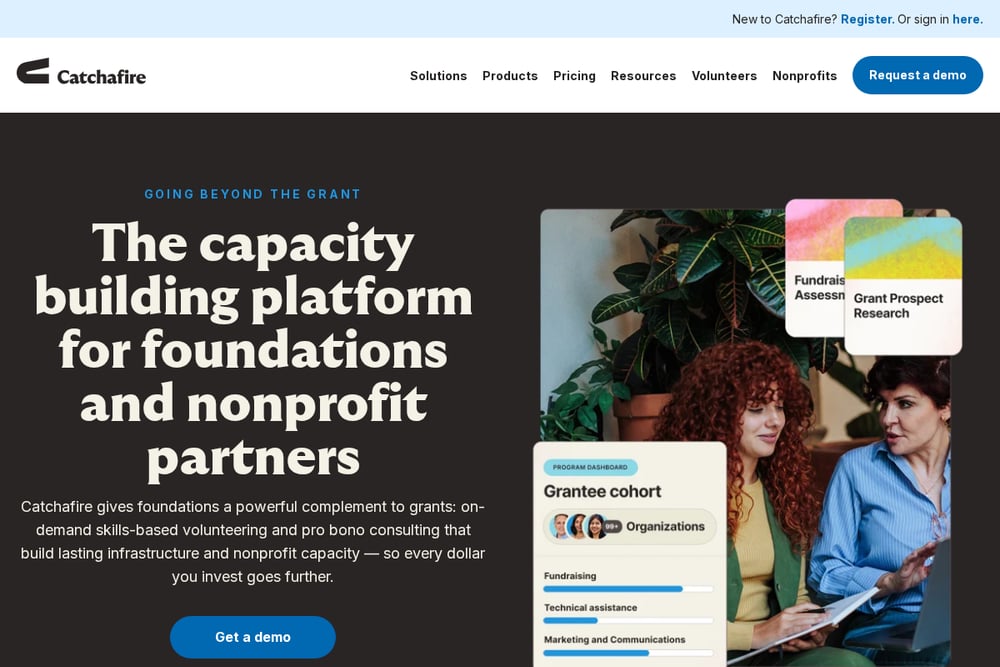 A screenshot of the Catchafire website.
Catchafire is a virtual skills-based volunteering platform that connects nonprofits with professionals across marketing, design, finance, HR, and IT. You can browse hundreds of open projects or post your own request, and volunteers apply to help. The platform provides project templates and scoping guides so you can define what you need before you start. It is particularly strong for nonprofits that need structured, time-bound projects like a website refresh or a fundraising plan assessment. With over 200 active opportunities listed at any given time, you have a good chance of finding a match. The model works best when you can commit to a clear brief and a few weeks of collaboration.
#2 TechProudly — free tech help for small businesses
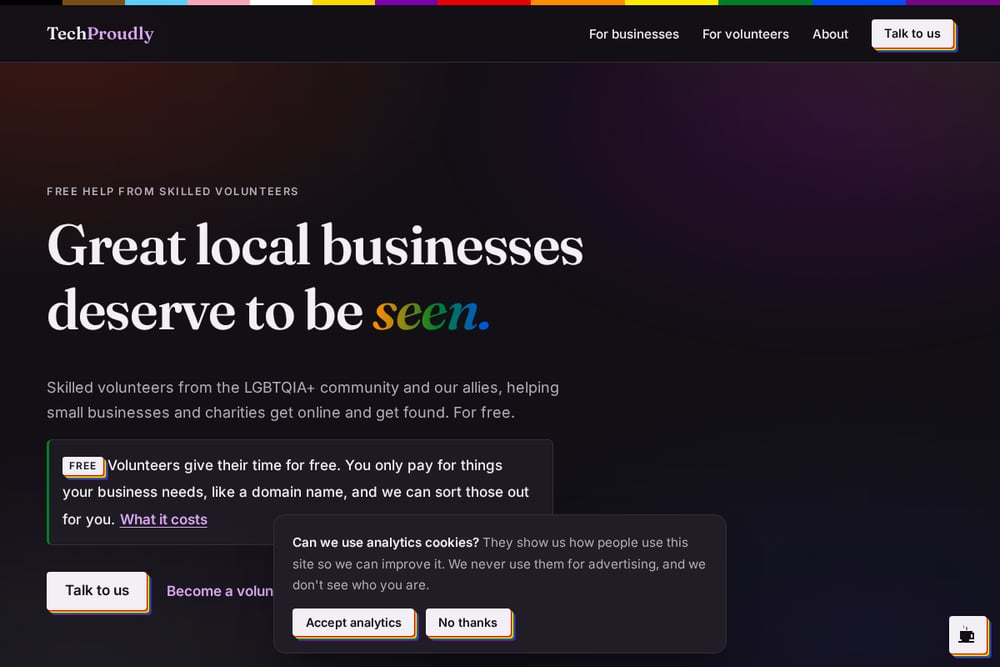 A screenshot of the TechProudly website.
TechProudly is a community platform that connects small businesses and charities with skilled LGBTQIA+ volunteers and allies for free digital support. You start by answering a few quick questions about your organization and what you need help with, then TechProudly shares your request with checked volunteers. Someone with the right skills picks it up, and you are introduced directly so you can agree on scope and timeline. Volunteers help with websites, getting found online through search and maps, booking and selling online, and making sensible use of AI. You only pay for hard costs like a domain name, and TechProudly can help you sort those out. It operates as a non-profit volunteer network rather than a commercial agency, so the focus stays on community benefit.
#3 Idealist
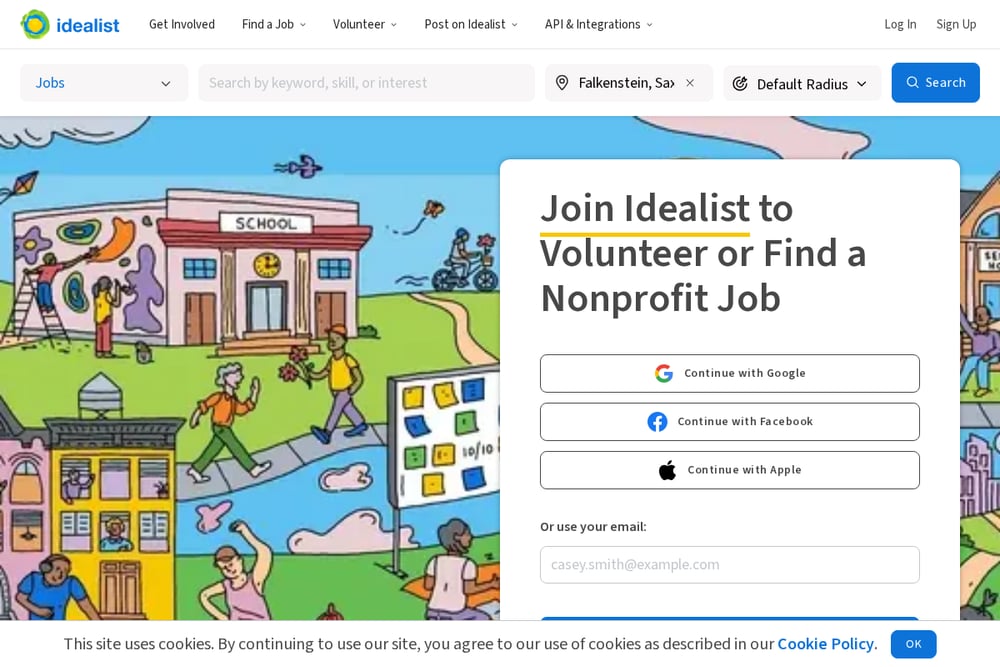 A screenshot of the Idealist website.
Idealist is a broad platform connecting more than 200,000 organizations with millions of people looking for social-impact jobs and volunteer opportunities. Its volunteer section lets you search by keyword, skill, or interest, and filter by radius or remote options. You can post a volunteer opportunity and reach a large audience of motivated individuals, though the platform is less specialized in skills-based matching than some alternatives. It works well if you need general volunteers or board members alongside digital help. The sheer scale means you may get many inquiries, so a clear listing is essential. Idealist also offers resources on volunteer engagement to help you manage the process.
#4 Points of Light
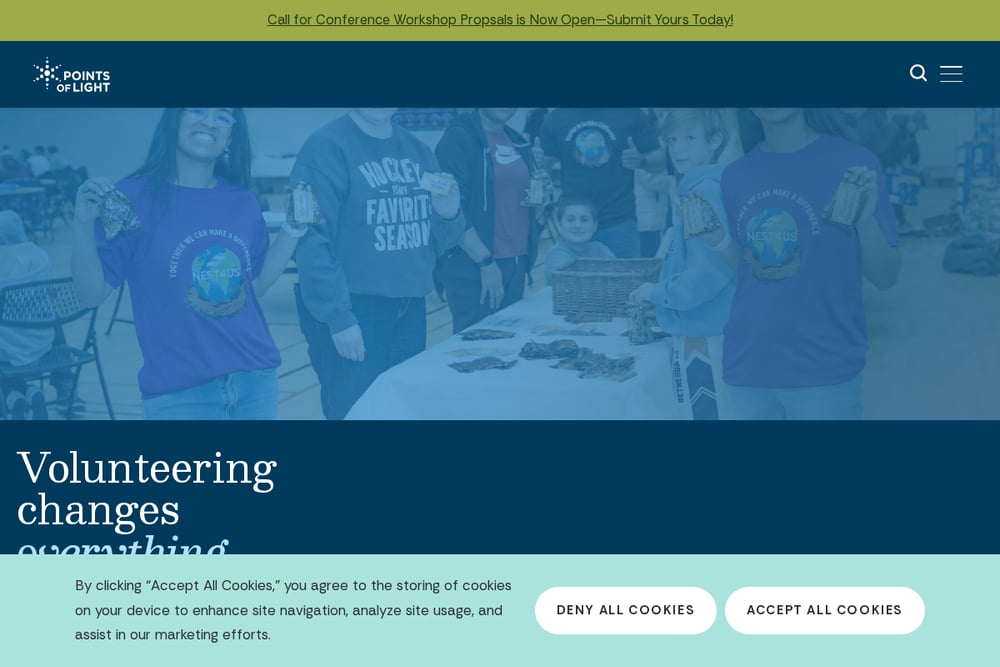 A screenshot of the Points of Light website.
Points of Light focuses on mobilizing people to take action through service, with a strong emphasis on do-it-yourself volunteer projects. Its Start a Volunteer Project hub guides you to connect with a nonprofit or community leader first, then explore project ideas for different age groups and time commitments. While not a dedicated digital services marketplace, it provides a framework for grassroots efforts and can be useful if you want to organize a community tech drive or a skills-sharing event. The platform also runs global networks and recognition programs that can amplify your cause. It is best for organizations that want to design their own volunteer initiative rather than be matched with a single skilled volunteer.
#5 Goodera
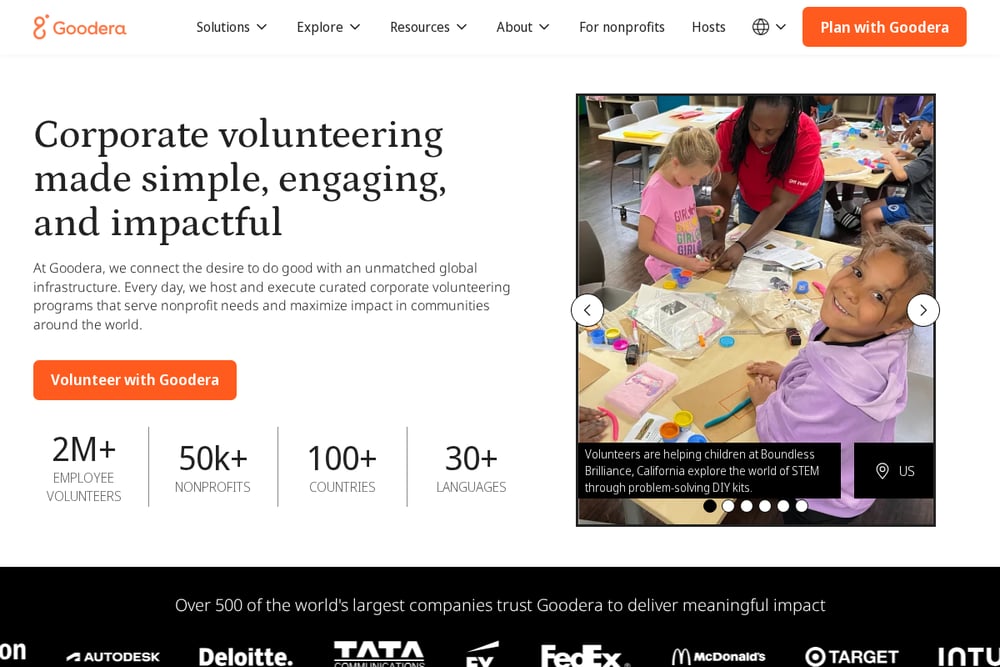 A screenshot of the Goodera website.
Goodera is a corporate volunteering and social impact platform that helps companies plan volunteering events at scale, including virtual opportunities. It connects enterprises with nonprofits for team-based volunteering, which can bring a group of skilled employees to work on your digital project. The platform offers curated experiences for employee resource groups, HR teams, and CSR leaders. If your organization can partner with a corporate team, you might get a concentrated burst of help over a day or a few weeks. However, it is less suited for individual small businesses seeking one-on-one ongoing support. Goodera is best when you have a specific project that fits a corporate team's skills and timeline.
How to Choose the Right Platform for Your Needs
Start by defining what you actually need. If you want a new website or help getting found online, look for platforms with digital marketing and web development volunteers. If you need ongoing support, a community-based model like TechProudly may fit better than a one-off project marketplace. Consider your capacity to manage a volunteer: structured platforms like Catchafire require you to write a clear brief and stay engaged. If you lack time, a platform that handles matching and introductions can reduce your workload. Check the cost model carefully. Most are free for nonprofits, but you may still pay for domains, hosting, or software. Finally, think about cultural fit. If you serve LGBTQIA+ communities or want volunteers who understand your context, a network like TechProudly offers that alignment. For broad reach, Idealist and Points of Light can amplify your request. For corporate team support, Goodera is worth exploring.
Automating Your Volunteer Matching Workflow
You can streamline your volunteer search by setting up a simple workflow. First, create a one-page brief that outlines your organization, your digital challenge, and your ideal outcome. Second, use platform filters to narrow by skill, availability, and remote options. Third, set up email alerts on platforms like Catchafire and Idealist so you are notified when relevant volunteers or projects appear. Fourth, use a shared calendar to schedule introductory calls and project milestones. Fifth, keep a simple CRM or spreadsheet to track volunteer contacts and follow-ups. Finally, after a project ends, ask your volunteer for a testimonial and a referral to others in their network. This turns a one-time match into a repeatable pipeline of support.
The Bottom Line on Virtual Volunteering
Virtual volunteering platforms have matured to the point where you can get real digital work done without hiring an agency. The five platforms here each serve a different need: Catchafire for structured projects, TechProudly for community-driven free tech help, Idealist for broad reach, Points of Light for DIY initiatives, and Goodera for corporate team partnerships. Your best choice depends on your budget, timeline, and the kind of relationship you want with a volunteer. Start with a clear brief, be responsive, and treat your volunteer as a collaborator. Do that, and you can build a website, improve your online visibility, and strengthen your operations without draining your bank account.