
You can watch users struggle and still miss the reason why. The right research partner connects what people say with what they actually do, so your team fixes the real friction instead of guessing.
The State of UX Research and Behavioral Science
UX research has moved from a nice-to-have to a core input for product, design, and engineering teams. Companies now expect research to explain behavior, not just describe it. That means usability testing, competitive analysis, mixed-methods studies, and survey design all need to tie back to decisions you can act on.
Behavioral science is shaping that shift. Buyers want to know why a flow feels effortful, not only where people click. Firms that blend cognitive insight with hands-on testing are in demand across ecommerce, healthcare, education, and enterprise software.
The market splits into three camps. Boutique consultancies offer senior attention and tailored protocols. Platform players bring scale, panels, and AI-assisted analysis. Full-service product development shops fold research into broader engineering work. Knowing which camp fits your project is half the battle.
How We Evaluated These Firms
We looked at the same factors for every firm. Service scope mattered: does the provider cover usability testing, interviews, surveys, benchmarking, and behavioral analysis, or only one slice? Methodological depth mattered too, especially whether findings connect stated preferences to observed behavior.
We also weighed how clearly each firm explains its process and deliverables. Transparency about protocols, reporting, and who does the work tells you a lot about what you will get. Fit for different buyers counted as well, from solo researchers and startups to universities and regulated industries.
Finally, we considered evidence of real outcomes. Case studies, launched redesigns, and implemented recommendations show whether research actually moved a product forward. Each firm below stood out on different factors, and your priorities should decide which ones matter most to you.
Here is a quick look at the five firms in this roundup. Each one approaches user friction from a different angle, so scan the summaries and then dig into the details that match your project.
| Provider | Best For |
|---|---|
| UX Firm | Hands-on usability testing with senior researchers |
| Elizabeth Haseltine | UX Research Portfolio | Behavioral science depth for product teams |
| Userlytics | Scaled testing with AI-assisted analysis |
| Cardinal Peak | Research tied to hardware and connected products |
| Material | Behavioral science at the strategy level |
The Five Firms in Detail
#1 UX Firm
 A screenshot of the UX Firm website.
UX Firm is an Atlanta-based boutique consultancy that has built its reputation on usability testing and hands-on research. The team covers ecommerce testing, medical device usability, expert reviews, ethnographic research, diary studies, and usability lab design. What stands out is the boutique model: senior researchers stay involved from protocol development through final reporting, which keeps data integrity high. The firm publishes case studies for each service line, so you can see the method and the outcome before you commit. If you need a specialist who will run the study personally rather than delegate it, this is a strong place to start.
#2 Elizabeth Haseltine | UX Research Portfolio
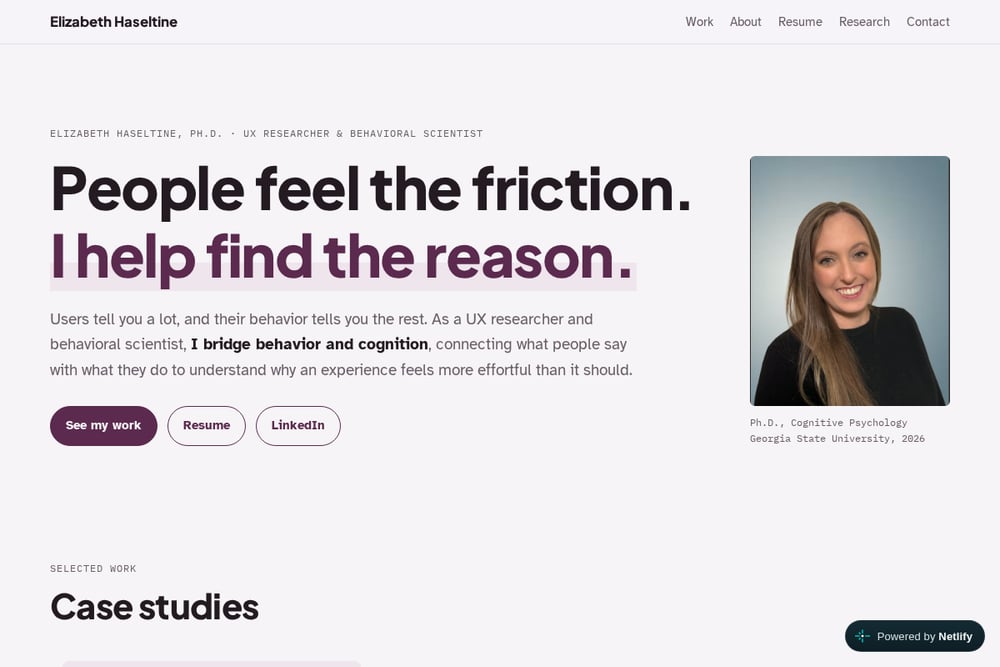 A screenshot of the Elizabeth Haseltine | UX Research Portfolio website.
Elizabeth Haseltine, Ph.D., is a UX researcher and behavioral scientist whose portfolio centers on one idea: people feel the friction, and she finds the reason. Her work bridges behavior and cognition, connecting what users say with what they do. The case studies show range. She ran competitive analysis and interviews for ezCater to ease workflow friction for restaurant delivery drivers, and usability testing for Market Movers that informed a launched app redesign. A mixed-methods project with BoodleBox helped educators use AI, with most recommendations implemented in the course. Her benchmarking and survey design work for Georgia State University found no existing AI learning tool fit, so the university is building its own. With a Ph.D. in Cognitive Psychology from Georgia State, she brings a research-first lens to product teams that want to understand why an experience feels more effortful than it should.
#3 Userlytics
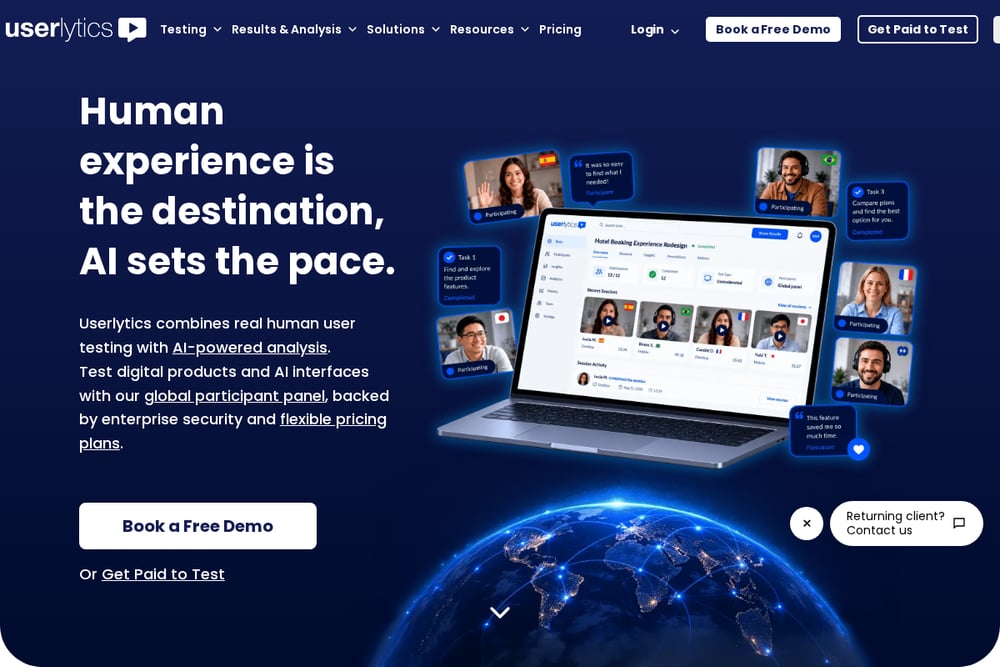 A screenshot of the Userlytics website.
Userlytics is a research platform with a consulting arm, built for teams that want to test at scale. You can run moderated or unmoderated studies on websites, apps, prototypes, accessibility, and content, and tap a global participant panel or bring your own users. The platform adds AI moderation, AI insights, sentiment analysis, and automated reports, which speeds up analysis on large studies. It also supports benchmarking tools like the System Usability Scale, useful when you need to compare across releases. The tradeoff is that you are working within a platform model, so the deepest custom methodology work may need the expert services team. For volume and speed, it is hard to match.
#4 Cardinal Peak
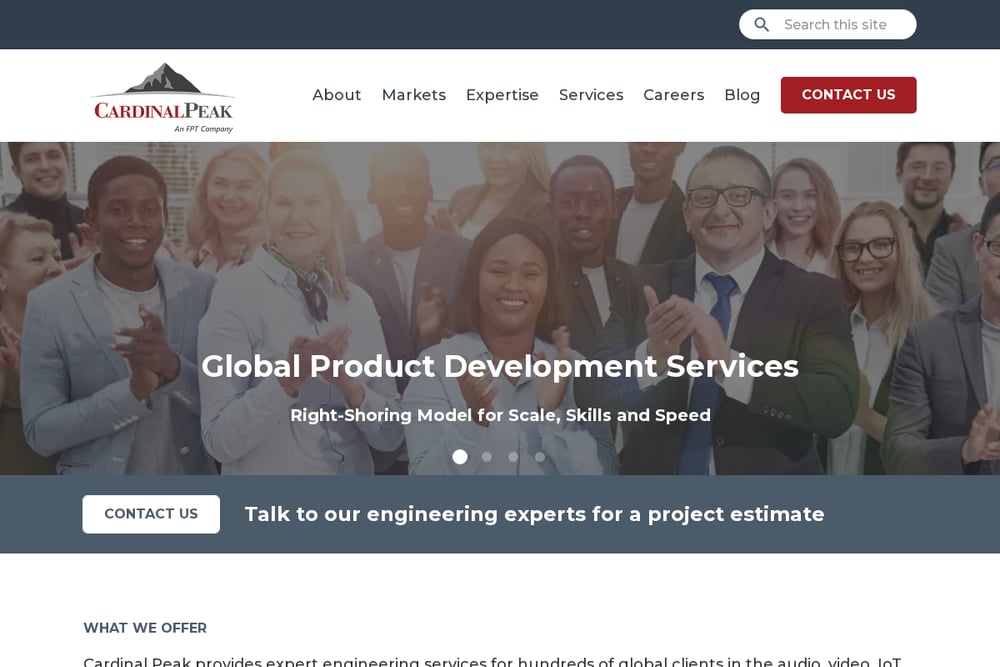 A screenshot of the Cardinal Peak website.
Cardinal Peak is a product development firm that folds UX research into broader engineering work. Its UX design services include user research, usability testing, UX design workshops, and UX audits, all sitting alongside embedded software, cloud, and hardware engineering. That combination helps when research findings need to flow straight into development without a handoff gap. The firm works across consumer electronics, healthcare, IoT, audio, and streaming video, so it understands regulated and technical products. If your usability questions are tangled up with device constraints or embedded systems, having research and engineering under one roof saves time. It is a fit for teams building physical or connected products, less so for pure digital research engagements.
#5 Material
 A screenshot of the Material website.
Material is a large growth strategy and consulting firm with a dedicated behavioral science practice. Its consultants dig into the conscious and unconscious drivers of behavior to explain why people do one thing but say another. The firm applies scientifically informed tools to replicate consumer decision-making in survey environments, then shapes strategy around how humans actually think and act. That makes it a fit for brand, marketing, and product teams that need behavioral insight at the strategy level rather than a single usability study. The breadth is real, spanning consumer products, technology, financial services, healthcare, and more. If your question is about changing consumer behavior at scale, this is the kind of partner to consider.
How to Choose the Right Research Partner
Start with the question you need answered. If you want to know why a specific flow feels effortful, a behavioral scientist who runs interviews and usability tests will get you further than a platform. If you need to test twenty variations across five markets by next month, scale and speed matter more.
Then look at who does the work. Boutique firms keep senior researchers on your project from start to finish. Platforms give you tooling and panels, with expert help layered on. Full-service shops bring research and engineering together, which helps when findings must survive technical constraints.
Check the evidence. Ask for case studies where recommendations were actually implemented, not just delivered. Look for launched redesigns, adopted findings, and decisions that changed. Finally, match the firm's domain experience to yours. Medical devices, education, and consumer apps each carry different constraints, and a partner who has been there will move faster.
Where Automation Fits in Your Research Workflow
AI is changing how research gets done, but it does not replace the thinking. Use it for the parts that slow you down. Platforms like Userlytics show how AI moderation, sentiment analysis, and automated reports can compress analysis time on large studies.
A practical workflow looks like this. Define your research question and protocol with a human researcher. Run the sessions, moderated or unmoderated depending on depth. Let AI handle transcription, tagging, and first-pass pattern spotting. Then bring a behavioral scientist back in to interpret what the patterns mean and connect them to cognition and context.
The risk is treating AI summaries as findings. They are inputs. The value comes from a researcher who can explain why users behaved the way they did and what to change. Automate the sorting, keep the judgment human.
The Bottom Line
You have five solid options, and the right one depends on the question in front of you. UX Firm brings senior, hands-on usability expertise. Elizabeth Haseltine offers behavioral science depth that connects what users say with what they do, backed by case studies where recommendations were implemented. Userlytics gives you scale and AI-assisted analysis. Cardinal Peak ties research to hardware and connected products. Material applies behavioral science at the strategy level.
Do not pick by brand size. Pick by fit. Write down the decision you need to make, the timeline, and who will act on the findings. Then choose the partner whose strengths line up with that list. The best research is the kind your team actually uses.