
Your portfolio is your 24/7 sales agent. If it doesn't convert in seconds, you're losing high-budget leads. I've analyzed five standout UX designer portfolio sites that prove you can showcase your work and win clients. Whether you're a freelancer or
Why Your Portfolio Matters More Than Ever
The UX design field is crowded. In 2026, hiring managers and freelance clients don't have time to dig through generic galleries. They want proof you can solve real business problems. A strong portfolio site does three things: it qualifies leads in under 10 seconds, shows your process and outcomes, and reduces perceived risk. The best portfolios are clean, accessible, and tell a story. They get out of the way and let your work shine. If your site doesn't do that, you're leaving money on the table.
How I Ranked These Portfolios
I evaluated each portfolio on four criteria: clarity of specialization (can you tell what they do in 5 seconds?), quality of case studies (do they show decisions and impact, not just screens?), evidence of collaboration (do they prove they can work with teams?), and overall user experience (is the site itself a showcase of great UX?). These are the same signals premium clients use when hiring.
Here's a quick look at the five portfolios and what each does best. Use this to find the one that matches your goals.
| Provider | Best For |
|---|---|
| Simon Pan | Case study storytelling |
| Buzz Usborne | Design leadership positioning |
| Aarron Walter | Clean, accessible design |
| Home - | Freelance UX designer starting out |
| Robin Nogiuer | Visual and interaction design showcase |
The Top 5 UX Designer Portfolios in 2026
#1 Simon Pan
Simon Pan's portfolio is the gold standard for case studies. His deep dives on projects like Uber Magic 2.0 and Amazon Prime Music show exactly how he thinks, what tradeoffs he made, and what impact he delivered. Every case study follows a structure that hiring managers love: context, problem, role, process, key decisions, and outcome. If you want to learn how to write a case study that lands interviews, study his site. It's no wonder he's shaped the future of news at Google.
#2 Buzz Usborne
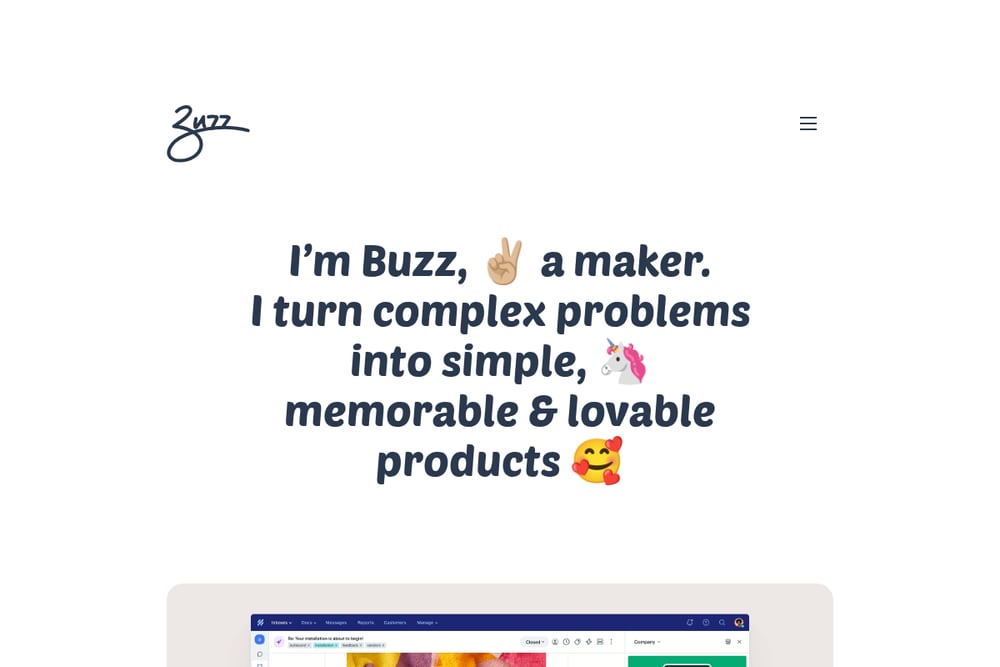 A screenshot of the Buzz Usborne website.
Buzz Usborne's portfolio reflects his experience leading design at Atlassian, Skype, and Campaign Monitor. He focuses on remote collaboration, career progression, and building creative teams. His site is clean and direct, making it easy to see his specialization in design leadership. He also shares advice on building sustainable design practices, which adds credibility. If you're a senior designer or consultant, his approach is worth emulating.
#3 Aarron Walter
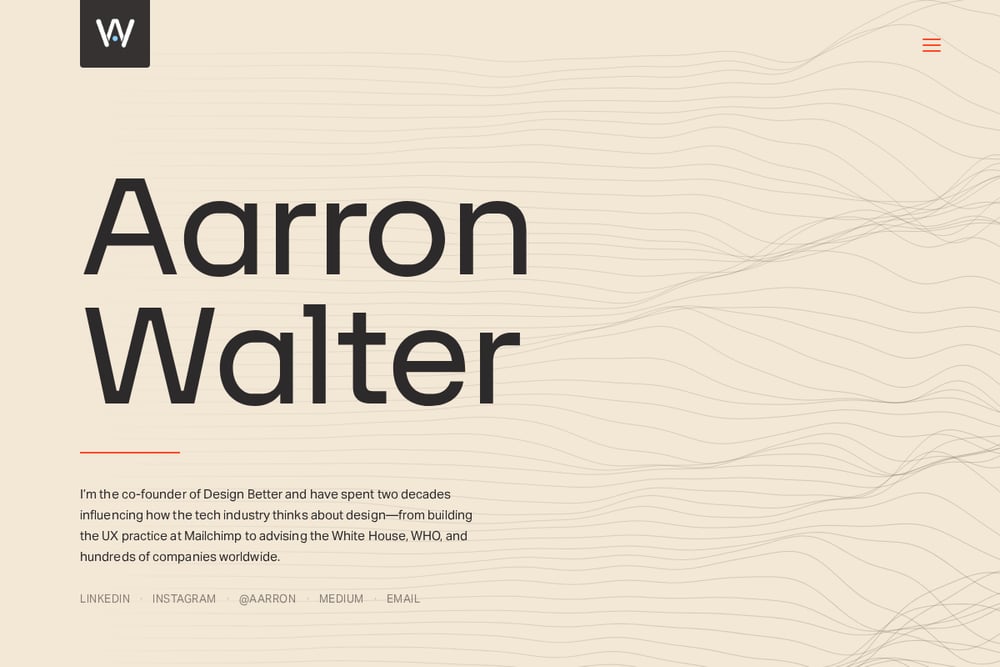 A screenshot of the Aarron Walter website.
Aarron Walter's portfolio is built on Squarespace and emphasizes simplicity and accessibility. He's known for his work on design systems and user experience strategy. His site gets out of the way and lets his projects speak for themselves. Each case study includes clear context and outcomes, making it easy for clients to understand his value. It's a great example of how a clean, minimal design can still convey deep expertise.
#4 Home -
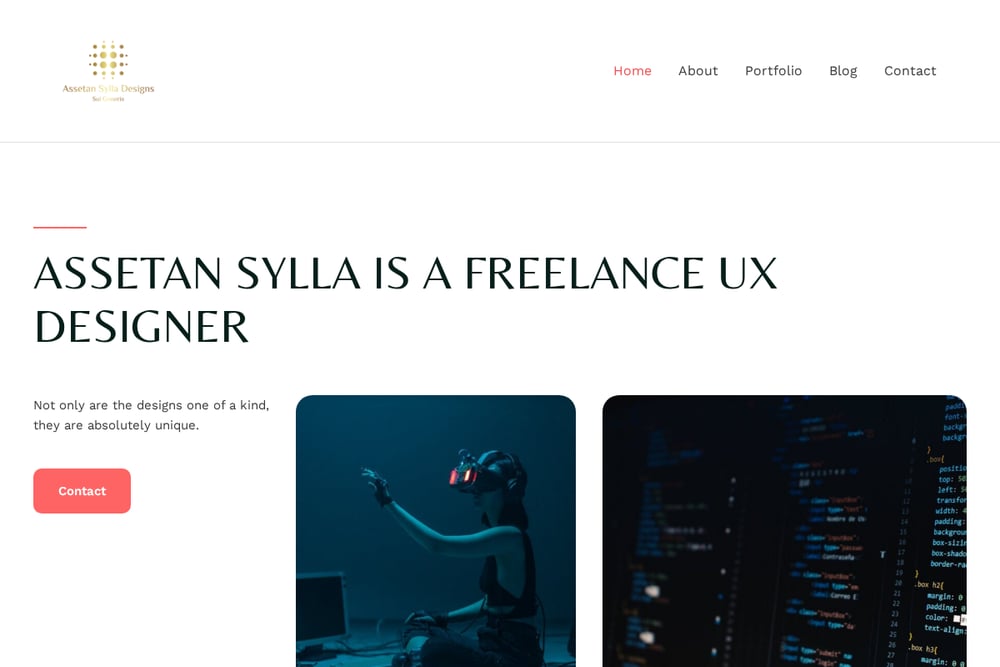 A screenshot of the Home - website.
Assetan Sylla's portfolio showcases her freelance UX design work with a focus on unique, user-centric digital solutions. The site highlights her collaborative process and innovative approach to enhancing user experiences. While the portfolio is still growing, it clearly communicates her specialization and design philosophy. For a freelancer starting out, it's a solid foundation that can be built upon with more detailed case studies. Her emphasis on uniqueness and user focus is a strong differentiator.
#5 Robin Nogiuer
Robin Nogiuer's portfolio is a visual treat that emphasizes interaction and brand design. His site uses playful animations and a clean layout to showcase his projects. While the case studies could benefit from more detailed decision rationale, the overall experience is engaging and memorable. It's a good example of how to use design itself to impress visitors. If you want to see how to blend creativity with usability, his site is worth a look.
How to Pick the Right Portfolio Style for You
Start by asking yourself: who do you want to attract? If you're after senior design roles, study Simon Pan's case study structure. If you're a consultant, look at Buzz Usborne's leadership focus. For a clean, accessible approach, Aarron Walter's site is a great template. If you're a freelancer building your brand, Assetan Sylla's portfolio shows how to start strong. And if you want to wow with visuals, Robin Nogiuer's site is your inspiration. Match your portfolio style to your career goals.
Automate Your Portfolio Workflow
You can streamline your portfolio updates with a simple workflow. Use a tool like Notion to draft case studies, then export them to your website builder. Set a recurring monthly reminder to review and update your projects. Automate screenshots of your work using a tool like Cleanshot. Finally, use a scheduling tool to share new case studies on LinkedIn or Twitter. This keeps your portfolio fresh without eating up your design time.
Your Portfolio Is Your Best Sales Tool
In 2026, a great UX portfolio is more than a gallery. It's a strategic asset that qualifies leads, proves your value, and builds trust. The five portfolios here show different paths to that goal. Whether you're a freelancer like Assetan Sylla or a design leader like Buzz Usborne, the principles are the same: be clear, show your process, and demonstrate impact. Start by auditing your own site against these examples. Then make one improvement this week. Your next client is waiting.