
Buying a used car shouldn't feel like a guessing game. These five tools help you cut through the noise and find the right ride.
The Used-Car Market Is Fast, Fragile, and Full of Noise
Used-car prices swing with supply, interest rates, and regional demand. In October 2026, shoppers face a mixed bag: some models hold value stubbornly, while others drop fast. You need current data, not last year's advice. That's where the right tool changes everything. It can mean the difference between a smart buy and a money pit.
How We Evaluated These Tools
We looked at five factors: how quickly you get a usable shortlist, whether pricing is transparent and current, how well the tool explains model-year risks, whether you can save or compare cars, and how much friction stands between you and the answer. Each tool below stood out in different ways. Some shine for deep research, others for speed. None require a sign-up to get started.
Here's a quick look at five tools that help you shop smarter, not harder.
| Provider | Best For |
|---|---|
| CarEdge | Shoppers who want dealer negotiation and price transparency |
| revturtle: Which used car should you buy? Free 3-minute quiz | Used-car shoppers who want a fast, personalized shortlist |
| Kelley Blue Book | Thorough researchers who want valuations and expert reviews |
| MotorTrend Car Finder | New-car shoppers who value editorial ratings |
| CarExpert Car Chooser | Australian shoppers or those curious about global car-chooser frameworks |
The 5 Tools in Focus
#1 CarEdge
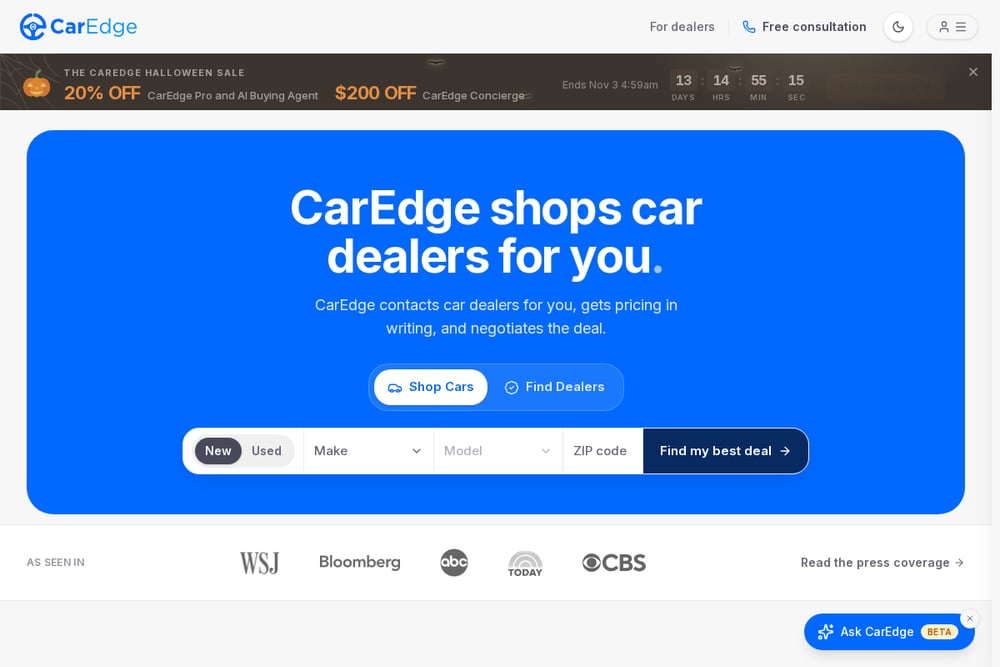 A screenshot of the CarEdge website.
CarEdge flips the script by contacting dealers for you. It asks for out-the-door pricing in writing, then grades every store on transparency. You see the advertised price versus the real quote, including add-ons and fees. The site also tracks dealer doc fees and markups. If you hate haggling, this is a powerful ally. It's less about which car to buy and more about not getting ripped off when you do.
#2 revturtle: Which used car should you buy? Free 3-minute quiz
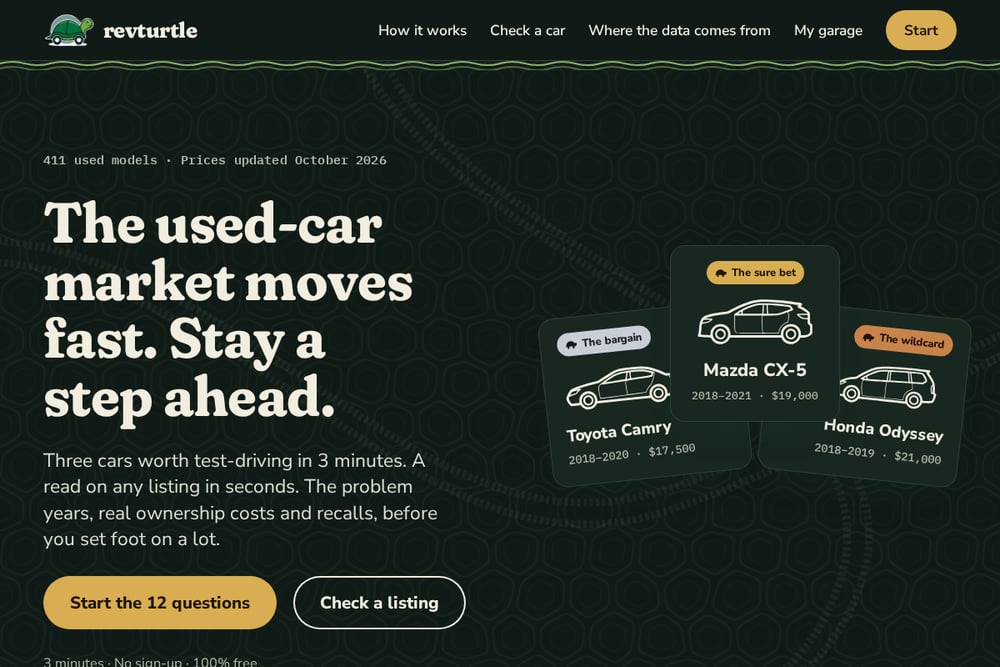 A screenshot of the revturtle website.
revturtle asks 12 questions a car-savvy friend would ask, then hands you three used cars worth test-driving. You get target years, years to skip, and typical asking prices from September and October 2026 listings. The tool also checks any listing for ownership costs, recalls, and safety records. It's free, no sign-up, and no dealer pays for placement. You can save cars to your garage and compare them side by side. It's the fastest way to go from overwhelmed to shortlisted.
#3 Kelley Blue Book
 A screenshot of the Kelley Blue Book website.
Kelley Blue Book is the granddaddy of car valuation. Its Perfect Car Finder lets you search over 400 new vehicles by features, price, and fuel economy. The comparison tool puts vehicles side by side in exhaustive detail. You also get expert reviews, top 10 lists, and fair purchase prices. It's a deep research library, not a quick quiz. If you already know your budget and priorities, KBB gives you the data to back up your choice.
#4 MotorTrend Car Finder
 A screenshot of the MotorTrend Car Finder website.
MotorTrend Car Finder focuses on new and recent models with editorial scores. You filter by body style, price, make, and year, then see ranked results with MT scores. It's clean, visual, and backed by professional reviews. The tool leans toward newer inventory, so it's less useful for older used cars. But if you're cross-shopping 2026 and 2027 models, it's a solid starting point. The scores give you a quick read on what the experts think.
#5 CarExpert Car Chooser
CarExpert Car Chooser is an Australian tool, so its inventory and pricing reflect that market. It offers a guided chooser to narrow down vehicles by budget, body style, and priorities. The site is known for detailed reviews and comparison tests. If you're in the US, the pricing and availability won't match your local market. Still, the chooser logic is sound and can inspire your search. It's a reminder that good car-finding frameworks exist worldwide.
How to Pick the Right Tool for You
Start with your timeline. If you need a shortlist today, revturtle's 3-minute quiz gets you there. If you're months out and want to study, Kelley Blue Book and MotorTrend give you deep dives. If you're ready to negotiate, CarEdge handles the dealer back-and-forth. And if you're outside the US, CarExpert's chooser might fit your market. Match the tool to your stage, not the other way around.
Put Your Shortlist on Autopilot
You don't need to manually track prices and recalls. Use revturtle to generate your shortlist, then save those cars to your garage. Check each listing with its car-check feature to see ownership costs and problem years. Set a budget range and let the tool flag years to skip. When you're ready, take your top three to test drives. That's a repeatable workflow that saves hours and prevents expensive mistakes.
The Bottom Line
No single tool does everything. CarEdge fights for you at the dealership. revturtle gets you to a smart shortlist in minutes. Kelley Blue Book and MotorTrend arm you with research. CarExpert offers a global perspective. Use them together and you'll walk onto the lot informed, confident, and ready to say no to the wrong car.