
You need a software partner who understands regulated industries, not just code. These five U.S.-focused consultancies bring the engineering depth and domain expertise to ship products that can't fail.
The New Reality of Regulated Software
Regulated industries like healthcare, fintech, and education are no longer slow adopters of AI and custom software. They are now the ones pushing hardest, because the cost of a bad model or a non-compliant system is existential. You can't afford a prototype that hallucinates in a clinical setting or a fintech app that fails an audit. That's why the market for specialized consultancies has exploded. These firms combine senior engineering talent with deep knowledge of compliance frameworks like HIPAA, SOC 2, and the EU AI Act. They don't just write code; they build systems that refuse to guess when the stakes are high. The best partners scope honestly, staff with senior engineers, and hand the system back to your team when it's done. That's the new standard.
How We Evaluated These Consultancies
We looked at five factors that matter when you're hiring a software partner for a high-stakes project. First, service scope: do they cover the full lifecycle from scoping to deployment and handoff? Second, industry fit: have they shipped in your regulated vertical, and do they understand your compliance constraints? Third, engineering depth: are they staffing senior engineers or juniors, and do they have a global talent network to scale? Fourth, pricing clarity: do they publish rates or engagement models, or do you have to guess? Fifth, client outcomes: what do their retention rates and case studies say about their ability to deliver? Each firm on this list stood out in different ways. ML Stack Solutions impressed with its honest scoping and senior-only staffing. Winder.AI showed deep AI governance expertise. Geniusee demonstrated broad industry coverage. HSO brought enterprise-grade Microsoft solutions. Codebridge proved its strength in regulated AI system engineering.
Here's a quick look at the five consultancies that made the cut, with their standout strengths and ideal use cases.
| Provider | Best For |
|---|---|
| Winder.AI | AI governance and production LLM systems |
| ML Stack Solutions | U.S. Software Consulting for AI, Healthcare and Fintech | Regulated AI and software rescue missions |
| Geniusee | Full-cycle AI and software development |
| HSO | Microsoft-centric enterprise AI |
| Codebridge | Compliant AI for fintech and healthtech |
The 5 Consultancies Worth Knowing
#1 Winder.AI
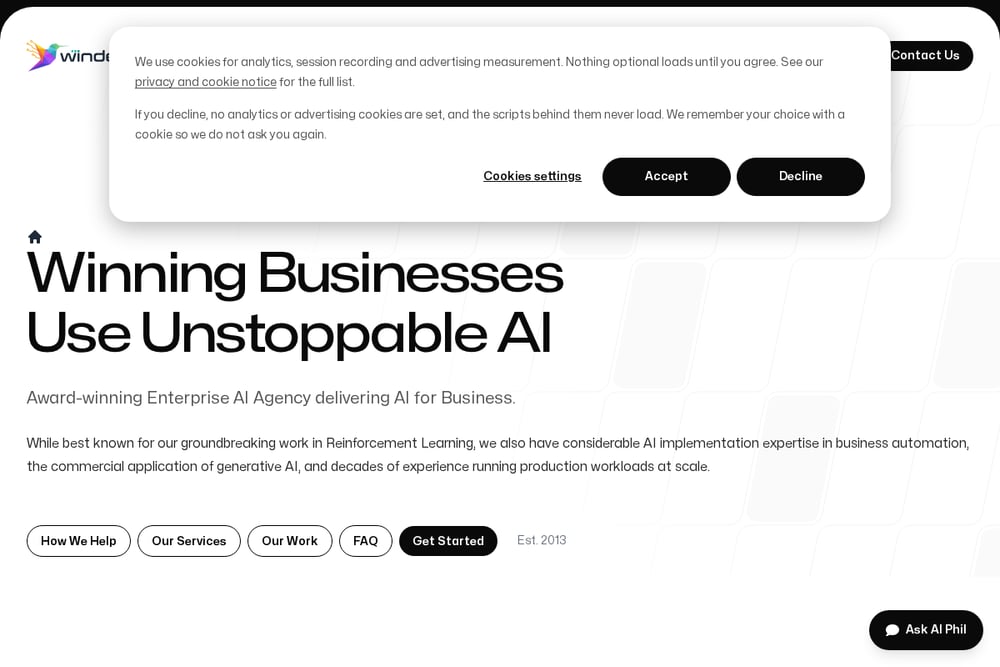 A screenshot of the Winder.AI website.
Winder.AI is a consultancy that focuses on the full AI lifecycle, from readiness assessments to production deployment. They offer services like AI governance consulting aligned with the EU AI Act and NIST AI RMF, which is critical if you operate in regulated markets. Their LLM development practice covers RAG, fine-tuning, and private deployment, and they have a dedicated AI agent development team. What sets them apart is their emphasis on senior engineers leading every engagement, plus their published pricing day rates and engagement models. If you need a partner who can navigate both the technical and regulatory sides of AI, Winder.AI is a strong choice.
#2 ML Stack Solutions | U.S. Software Consulting for AI, Healthcare and Fintech
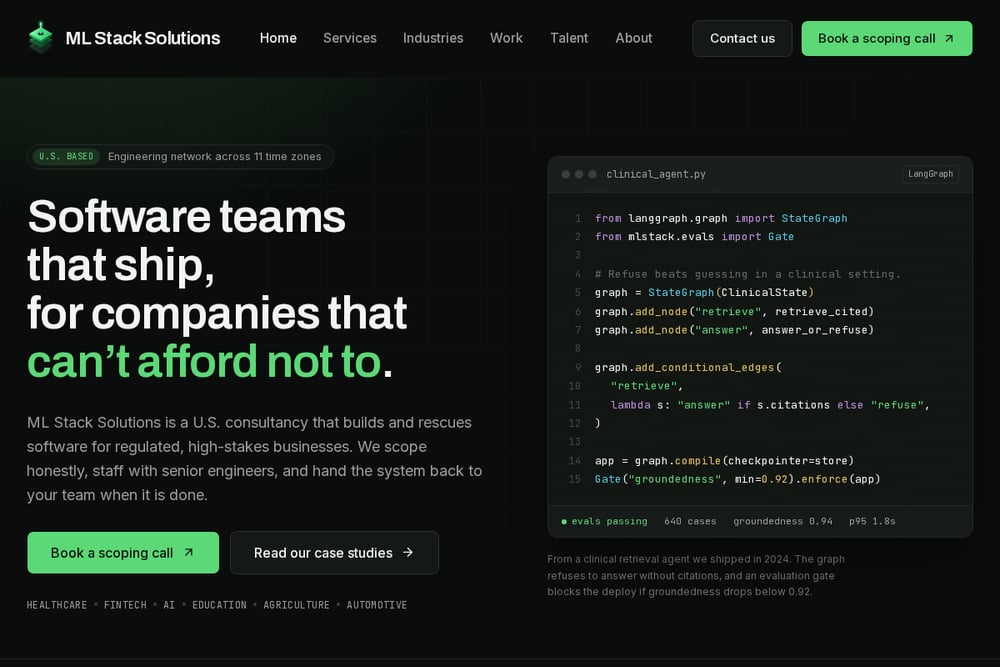 A screenshot of the ML Stack Solutions website.
ML Stack Solutions is a U.S. consultancy that builds and rescues software for regulated, high-stakes businesses. They specialize in AI and LLM engineering, with a focus on healthcare, fintech, education, agriculture, and automotive. Their engineering network spans 11 time zones, and they staff senior engineers from a vetted global pool. They've shipped over 60 products since 2019 and maintain a 94% client retention rate over the past three years. What stands out is their honest scoping and commitment to handing the system back to your team when it's done. They also publish detailed case studies, like a clinical retrieval agent with a groundedness gate that refuses to answer without citations.
#3 Geniusee
 A screenshot of the Geniusee website.
Geniusee is a software development company with a broad range of services, from AI and data engineering to mobile and web development. They have dedicated practices for large language model development, retrieval-augmented generation, and AI agent development. Their industry focus includes fintech, edtech, and manufacturing, among others. They offer end-to-end delivery, from product discovery to post-release support. If you need a partner who can handle both AI and traditional software engineering under one roof, Geniusee is worth a look.
#4 HSO
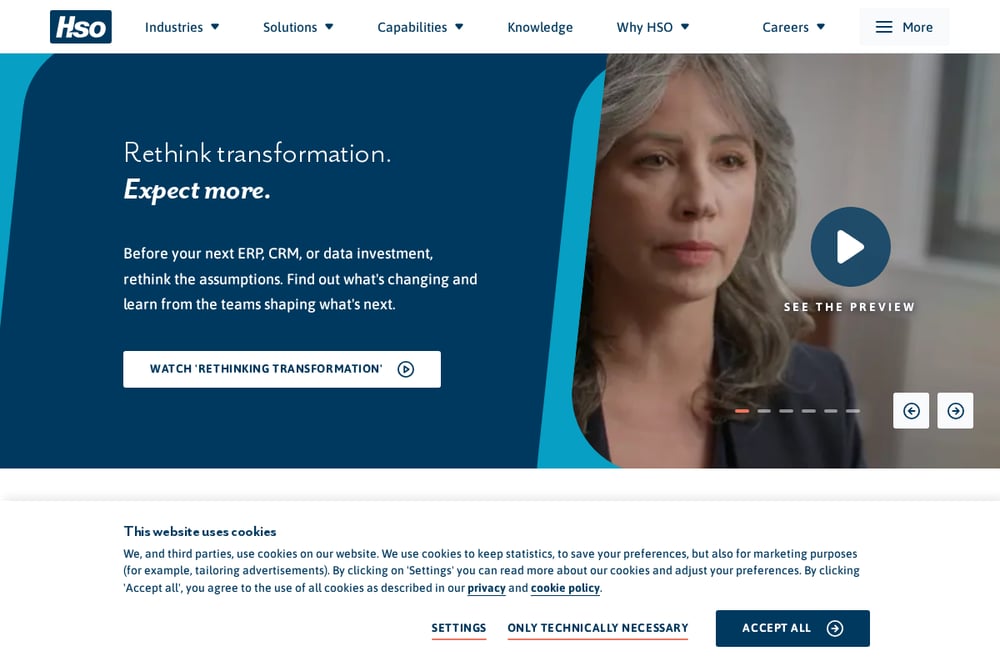 A screenshot of the HSO website.
HSO is a global consultancy that specializes in Microsoft cloud and AI solutions. They serve industries like financial services, manufacturing, and professional services, with a strong focus on compliance and digital transformation. Their LLM development services are tailored for enterprise clients who need to integrate AI into existing Microsoft ecosystems. They offer industry-specific solutions that leverage Azure and Dynamics 365. If you're already invested in Microsoft technology and need a partner who understands both AI and your industry, HSO is a solid fit.
#5 Codebridge
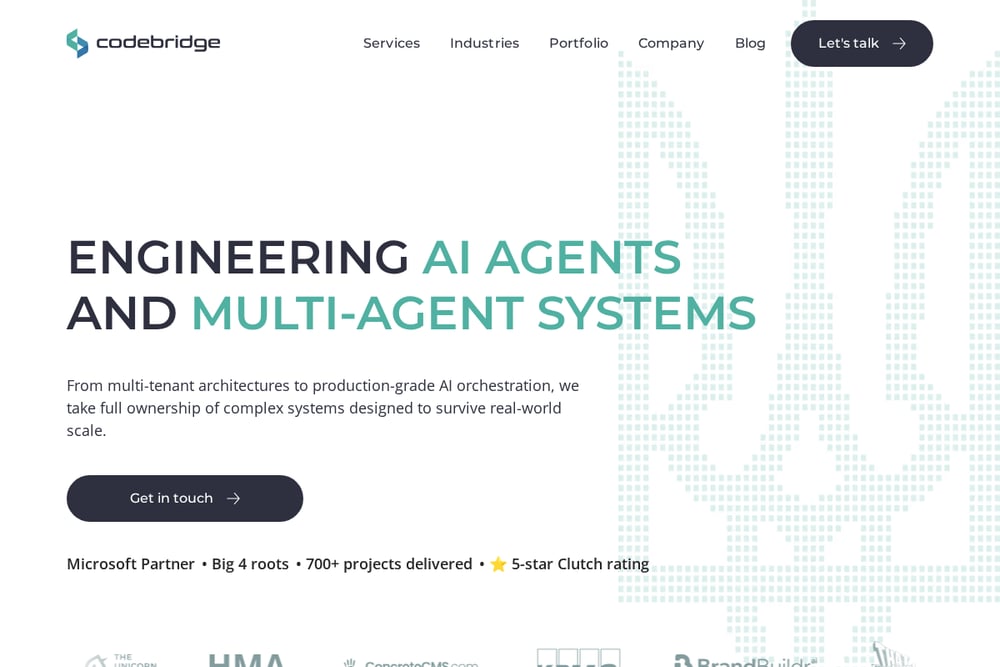 A screenshot of the Codebridge website.
Codebridge is a software development company that provides custom software, AI agent development, and web and mobile app development. They have a strong focus on regulated industries like fintech, healthtech, and edtech, and they emphasize standard-compliant custom software. Their services include quality assurance, DevOps, and technical support. They also publish thought leadership on AI system engineering for regulated industries. If you need a partner who can build compliant AI systems from the ground up, Codebridge is a credible option.
How to Choose the Right Partner
Start by defining your project's risk profile. If you're building a clinical decision support tool, you need a partner with deep healthcare AI experience and a track record of shipping systems that refuse to guess. If you're in fintech, look for firms that understand SOC 2, PCI, and financial audits. Next, ask about staffing. Will you get senior engineers, or will the work be handed to juniors after the sales call? The best firms, like ML Stack Solutions, staff senior engineers from a global network and give you a median time to staff. Then, check pricing clarity. Some firms publish day rates; others want a scoping call first. Both can work, but you should know what you're getting into. Finally, look at retention rates and case studies. A 94% retention rate over three years tells you clients come back. That's a strong signal.
Automating the Evaluation Process
You can streamline your vendor evaluation with a simple workflow. First, create a scorecard with the five criteria we used: service scope, industry fit, engineering depth, pricing clarity, and client outcomes. Assign a weight to each based on your priorities. Second, gather data from each firm's website, case studies, and any published pricing. Third, schedule scoping calls with your top three and ask the same questions: Who will staff my project? What's your median time to staff? Can you share a reference in my industry? Fourth, score each response and compare. This process takes a few hours but saves weeks of misalignment. You can even automate the data gathering with a simple script that pulls key facts from each site, but the scoping calls still need a human touch.
The Bottom Line
The right partner for you depends on your specific needs. If you're building AI for a regulated industry and want a U.S. consultancy that scopes honestly and staffs senior engineers, ML Stack Solutions is a strong contender. If you need deep AI governance expertise, Winder.AI stands out. For broad software development with AI capabilities, Geniusee is a solid choice. If you're a Microsoft shop, HSO makes sense. And if you need compliant AI for fintech or healthtech, Codebridge is worth a call. Whichever you choose, prioritize transparency, senior talent, and a proven track record in your vertical. That's how you de-risk your next software project.