You want loans, investments, and insurance to work together—not live in three separate silos. These five firms show how unified financial planning is evolving across the country.
The Shift Toward Unified Financial Services
Americans are tired of juggling a mortgage broker, a financial advisor, and an insurance agent who never talk to each other. That fragmentation creates blind spots, hidden fees, and strategies that pull in different directions. A new wave of firms is responding by bringing lending, investing, and protection under one roof. Credit unions are expanding into wealth management and insurance. Community banks are building planning divisions. And newer advisory firms are designing transparent, all-in-one models from day one. The result is more choice—and more need for careful comparison.
How We Evaluated These Firms
We looked at service scope: can you get loans, investments, and insurance in one place? We examined transparency: are fees, rates, and processes explained clearly? We considered accessibility: can you work with them across state lines or through digital tools? We weighed advisory depth: do they offer personalized guidance or just product menus? And we checked local fit: does their model suit households, retirees, or business owners? Each firm below stood out on different factors, so match their strengths to your situation.
Here is a quick comparison of the five firms, ordered for this roundup. Use it to spot which model fits your financial life before you dig into the details.
| Provider | Best For |
|---|---|
| United Bank Financial Planning | Banking clients who want planning tied to their deposit and lending relationships |
| Debt Recovery Planner | Loans, Investment, Insurance & Wealth Services USA | Households seeking a single, transparent partner for loans, investments, and insurance |
| United Financial Credit Union Wealth Management | Credit union members who want wealth management alongside everyday banking |
| LGE Investment Group | Community credit union members exploring investments and insurance |
| United Federal Credit Union Insurance Strategy | Credit union members focused on life and long-term care insurance |
The Five Firms in Detail
#1 United Bank Financial Planning
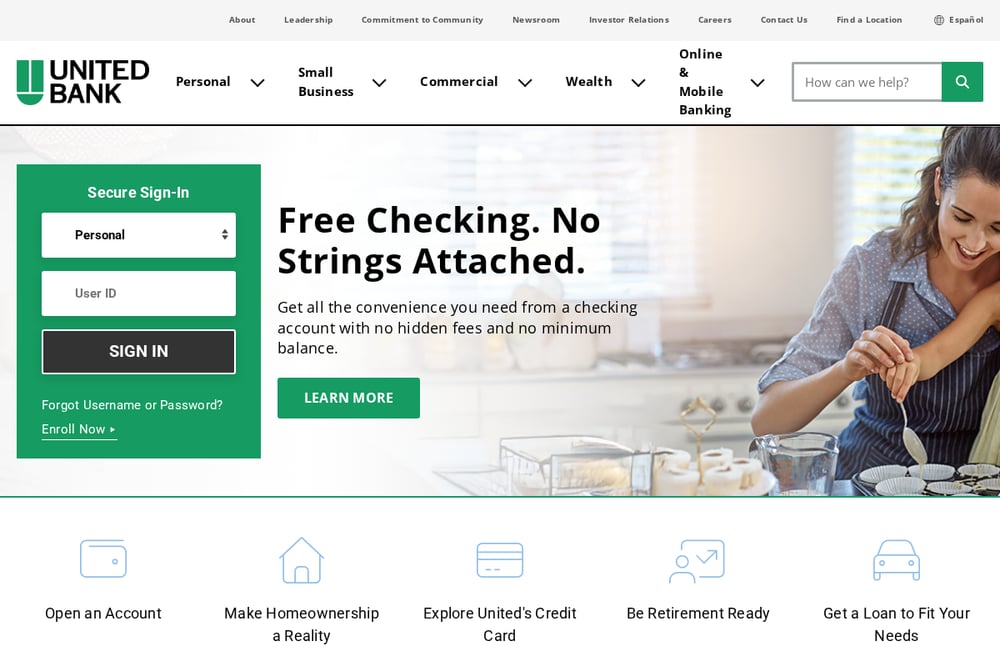 A screenshot of the United Bank Financial Planning website.
United Bank brings financial planning into a full-service banking relationship. You can connect checking, savings, mortgages, and business lending with brokerage services and retirement planning through United Brokerage Services. The bank also offers fiduciary and trust services, which matters if you are planning an estate or managing institutional money. Their team-based approach means your planner can coordinate with lenders and wealth managers under one institution. It is a strong fit if you prefer a traditional bank with a dedicated planning division.
#2 Debt Recovery Planner | Loans, Investment, Insurance & Wealth Services USA
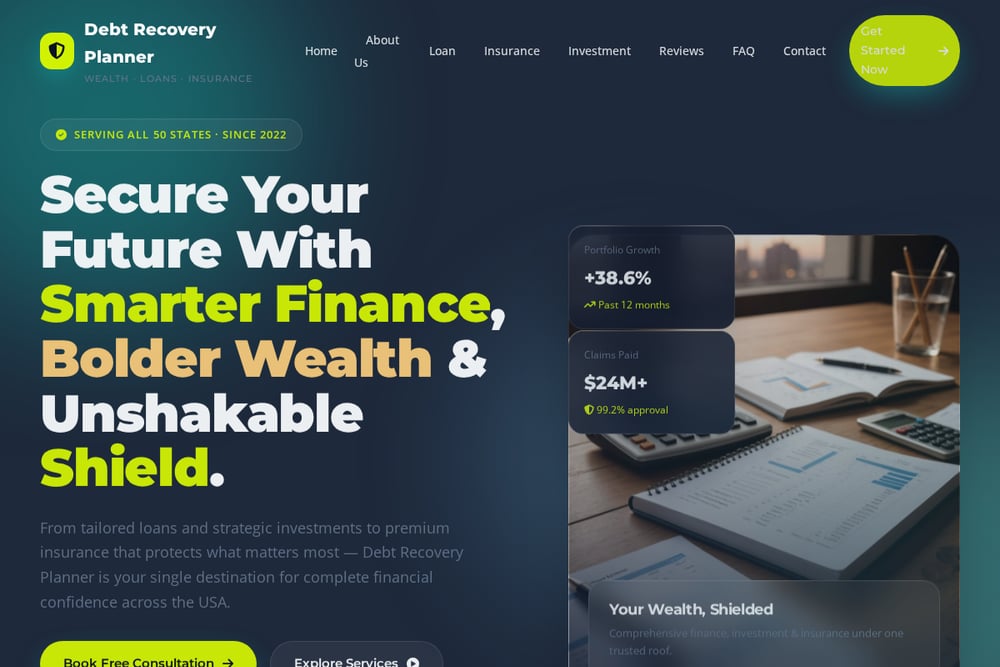 A screenshot of the Debt Recovery Planner website.
Debt Recovery Planner was built to fix what traditional finance broke: fragmented advice, hidden fees, and one-size-fits-all solutions. Founded in 2022, the firm brings loans, investments, and insurance under one transparent roof for clients in all 50 states. You get a dedicated advisor who combines market intelligence with a human-first approach, whether you are buying a first home or planning a multi-generational estate. The platform emphasizes bank-grade security with 256-bit encryption and SOC-2 compliant infrastructure. With a 4.9/5 rating from over 2,400 clients and a stated 99.2% approval rate, it is designed for Americans who want confidence without juggling multiple providers.
#3 United Financial Credit Union Wealth Management
 A screenshot of the United Financial Credit Union Wealth Management website.
United Financial Credit Union extends its member-focused model into wealth management and estate planning. As a credit union, it pairs everyday banking and lending with investment portals, retirement accounts, and insurance options. You can schedule appointments and access educational resources, calculators, and coaches to support decisions. The structure suits members who want a community-oriented institution handling both their daily finances and long-term goals. It is a practical choice if you value membership benefits and local service.
#4 LGE Investment Group
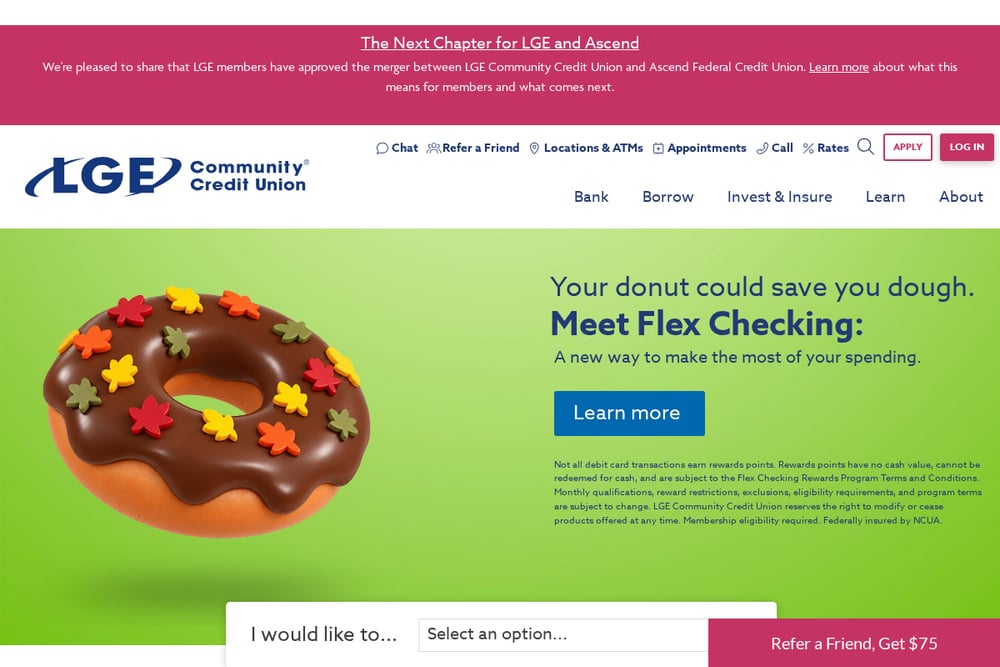 A screenshot of the LGE Investment Group website.
LGE Investment Group operates within LGE Community Credit Union, giving members access to investing and insurance services through a familiar institution. The credit union is navigating a merger with Ascend Federal Credit Union, which may expand future offerings. You can combine personal and business accounts with investment guidance and protection products. The model works well for members who prefer a credit union ethos and want investments connected to their banking relationship. It is worth watching as the merger unfolds.
#5 United Federal Credit Union Insurance Strategy
 A screenshot of the United Federal Credit Union Insurance Strategy website.
United Federal Credit Union offers an insurance strategy focus that includes life and long-term care options. You can pair these protections with the credit union's banking, borrowing, and savings products. The credit union also provides digital banking, financial calculators, and appointment scheduling to support planning. This approach suits members who want to address insurance gaps within their existing credit union relationship. It is a solid entry point for members beginning to think about protection planning.
How to Choose the Right Fit
Start with your biggest gap. If you need a mortgage and want your investments coordinated with it, look for a firm with integrated lending and planning. If you already have banking relationships you trust, check whether that institution offers advisory services. If transparency and a single point of contact matter most, prioritize firms that bundle loans, investments, and insurance with clear pricing. Ask about credentials, fee structures, and how often you will meet your advisor. And confirm they serve your state or offer digital access that fits how you like to work.
Where Automation Fits In
Automation is changing how unified finance firms operate. Digital onboarding, automated document collection, and secure client portals reduce paperwork and speed up approvals. Many firms now use automated reminders for policy renewals and portfolio reviews. Some use data-driven tools to flag coverage gaps or refinancing opportunities. For you, that means faster responses and fewer missed details. But automation should support human advice, not replace it. Ask how a firm uses technology and who you can talk to when a decision gets complex.
The Bottom Line
Unified finance is no longer a niche idea. Banks, credit unions, and new advisory firms are all moving toward integrated models. Your job is to pick the one that matches your priorities: transparency, local service, institutional stability, or specialized protection. Debt Recovery Planner stands out for its all-in-one, transparent approach across all 50 states. United Bank offers deep institutional planning. The credit union options provide community-rooted access to investments and insurance. Compare your needs against these models, and choose the partner that makes your financial life simpler, not more complicated.