
Finding freight shouldn't feel like a second job on top of the one you already have. These five dispatch services help owner-operators and small fleets keep the wheels turning without drowning in load boards and paperwork.
The State of Truck Dispatch in 2026
The spot market has been choppy, and every dollar of margin counts. That's why more owner-operators are handing off load sourcing and rate negotiation to dispatch services instead of grinding through load boards at midnight.
Dispatch is not brokering. A dispatcher finds and books freight on your authority, and the broker or shipper still pays you directly. You keep control of your MC number, your insurance, and your money.
Pricing models vary widely. Some charge a flat weekly fee, others take a percentage of gross, and a few bundle accounting, safety, and compliance on top. Knowing which model fits your operation matters as much as the loads themselves.
Equipment type also shapes who you should call. Dry van and reefer carriers have plenty of options, while hotshot, power only, and box truck operators need a dispatcher who actually understands those lanes.
How We Evaluated These Dispatch Services
We looked at the same factors for every company on this list.
Service scope came first. Does the dispatcher handle load sourcing, rate negotiation, and paperwork, or just one piece? Breadth matters when you're running lean.
Pricing clarity was next. Transparent fees, no setup costs, and no long-term contracts scored well. Percentage-of-gross models were weighed against flat fees so you can see the tradeoffs.
Equipment coverage mattered too. A dispatcher who works with dry van, reefer, flatbed, power only, box truck, and hotshot gives more carriers a reason to call.
Finally, we considered control and communication. Services that require your approval on every load, assign a dedicated dispatcher, or offer after-hours support stood out for owner-operators who don't want surprises.
Here's a quick look at how the five compare on the things that matter most: fee structure, equipment types, and the level of hands-on support you can expect.
| Provider | Best For |
|---|---|
| Fleet Care | Carriers who want dispatch plus back-office support |
| Miles Logistics | Owner-operators who want approval on every load |
| Freight Girlz | Specialized equipment haulers who want free rate tools |
| Logity Dispatch | New authorities needing setup and compliance help |
| TruckLeap | Small fleets of two to twenty trucks |
The 5 Dispatch Services, One by One
#1 Fleet Care
 A screenshot of the Fleet Care website.
Fleet Care positions itself as a full-service dispatch operation for owner-operators and small trucking companies, and the menu backs that up. Beyond dispatch, it offers accounting, safety, IFTA, logbook, and recruitment support, which makes it a fit for carriers who want one vendor handling the back office. It covers dry van, step deck, reefer, flatbed, and power only equipment, and it adds after-hours dispatch for loads that don't wait for business hours. The company also handles document management, billing, and factoring coordination. If you're scaling past a single truck and want compliance help under the same roof, this is a name to shortlist.
#2 Miles Logistics
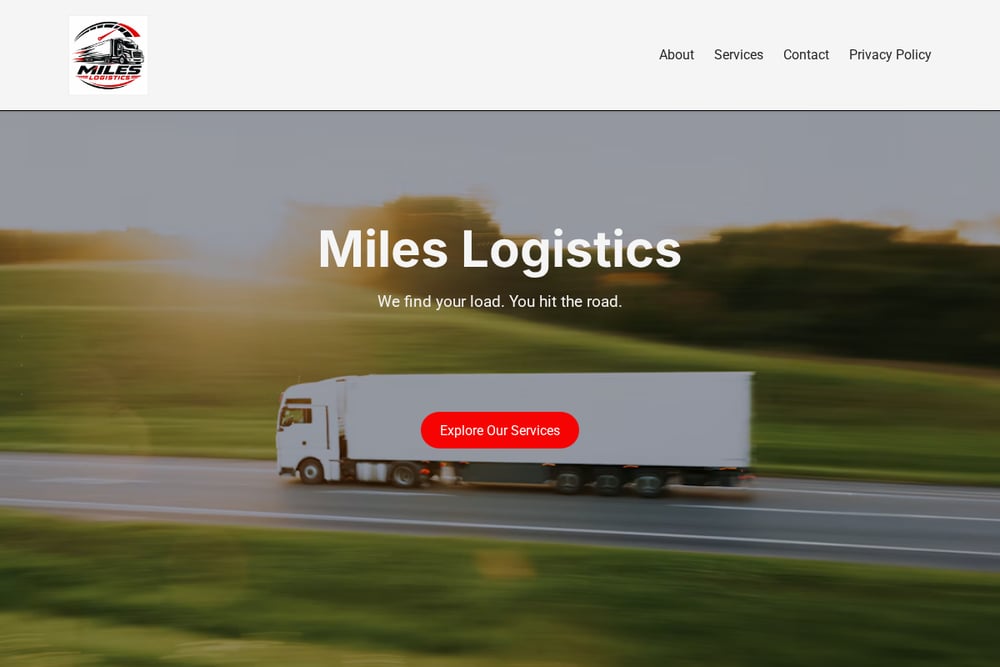 A screenshot of the Miles Logistics website.
Miles Logistics keeps the pitch simple: it finds your load, you hit the road. The service covers freight finding and booking, rate negotiation with brokers and shippers, and paperwork management, all with no setup fees and no long-term contracts. Every load needs your approval by text or email before it's booked, so you stay in control of what goes on your truck. Onboarding is straightforward: send your MC or DOT number, equipment type, and preferred lanes, then submit your operating authority, W-9, and certificate of insurance. It works with dry van, reefer, flatbed and step deck, power only, box truck, and hotshot. Brokers and shippers pay you directly, and the company is clear that it's a dispatch service, not a freight broker or motor carrier.
#3 Freight Girlz
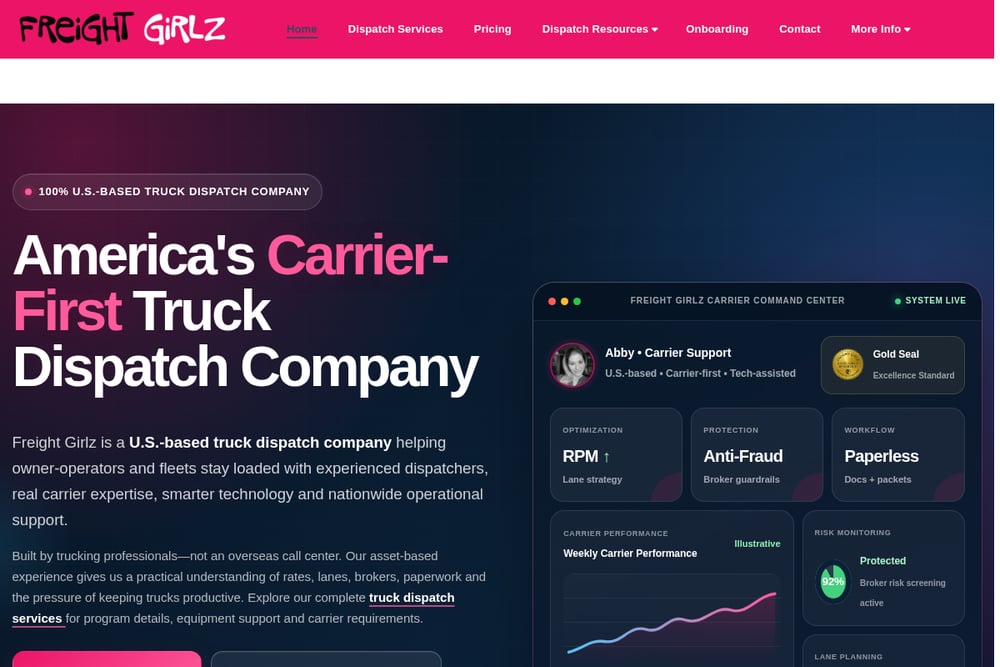 A screenshot of the Freight Girlz website.
Freight Girlz runs a dispatch operation built around owner-operators and fleets, with separate service pages for power only, dry van, reefer, flatbed, step deck, conestoga, RGN, and hot shot. That equipment-by-equipment breakdown is useful if you run something less common than a dry van. The site also leans hard into education, with free tools like a rate per mile calculator, an IFTA calculator, a carrier profitability simulator, and a spot market evaluator. There's a carrier dashboard and document management support as well. If you like to understand the numbers behind your rates, this one gives you the tools to do it.
#4 Logity Dispatch
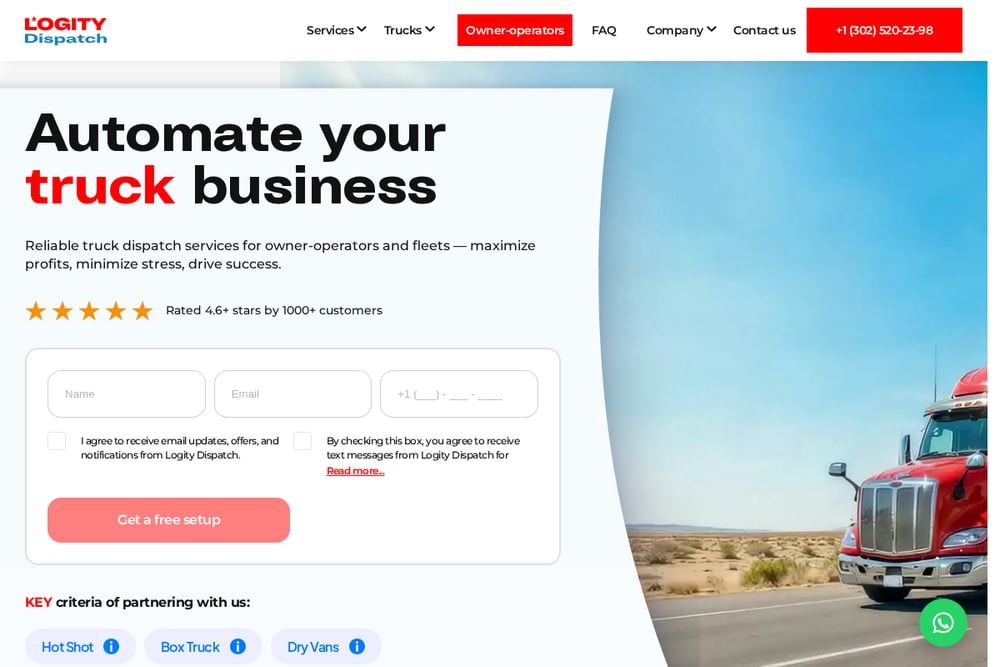 A screenshot of the Logity Dispatch website.
Logity Dispatch offers a broad dispatch package that stretches into accounting, document management, rate negotiation, factoring, safety and DOT compliance, IFTA reporting, and even company formation. It dispatches for 26-foot box trucks, dry van, step deck, reefer, flatbed, hotshot, and conestoga trailers. The company publishes clear carrier requirements by equipment type, such as minimum active MC authority and trailer length for hotshot, which helps you know upfront whether you qualify. It also markets itself on saving on dispatch rates, so cost-conscious carriers have a reason to compare. For newer authorities that need permits and setup help alongside loads, the bundled approach is appealing.
#5 TruckLeap
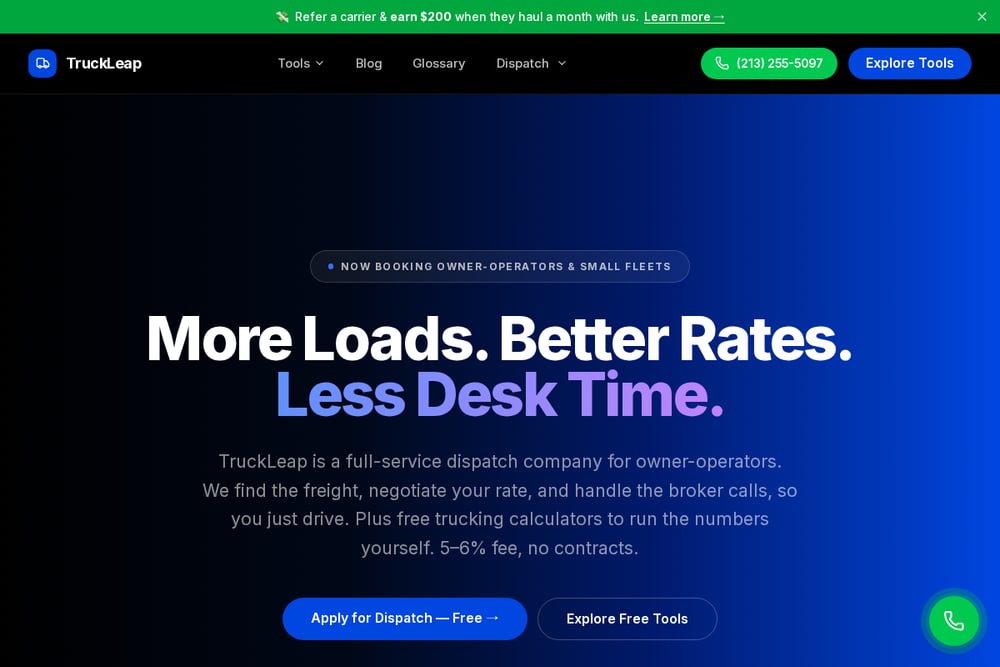 A screenshot of the TruckLeap website.
TruckLeap focuses specifically on small fleets in the two-to-twenty truck range, and its pitch is built around that. It assigns one dedicated dispatcher who learns your trucks, drivers, lanes, and preferences instead of rotating you through a call center. Pricing runs 6% of gross for one to three trucks and 5% for four to ten, with custom rates for larger fleets, and there are no minimums or per-truck charges when a truck is in the shop. Multi-truck lane coordination helps keep your drivers out of the same thin market. You also get weekly fleet performance reports and paperwork handled on every load. If you're running several trucks and tired of dispatching them yourself, this is worth a look.
How to Pick the Right Dispatcher
Start with your equipment. If you run hotshot, power only, or box truck, confirm the dispatcher actually works those lanes before you sign anything.
Then look at the fee model. A percentage of gross scales with your revenue, which is painless in slow weeks but costly in strong ones. Flat fees are predictable. Run your own numbers on a typical month before you commit.
Ask about control. Do you approve every load, or does the dispatcher book on your behalf? Most owner-operators want the final say, and the good services build that in.
Check what's bundled. Some companies throw in accounting, IFTA, safety compliance, and document management. If you're already paying for those separately, a bundled provider can save you real money.
Finally, ask about communication. A dedicated dispatcher who knows your lanes beats a queue every time. Get clarity on hours, response times, and who answers when a load goes sideways at 2 a.m.
Where Automation Fits Into Your Dispatch Workflow
Dispatch still runs on relationships, but the paperwork around it doesn't have to.
Step one: digitize your onboarding. Keep your MC authority, W-9, and certificate of insurance in a shared folder so you can send them in minutes, not days.
Step two: set up text or email approvals. Services like Miles Logistics send load details for your sign-off, which means you can approve from the cab without a phone call.
Step three: automate invoicing follow-up. Ask whether your dispatcher tracks paperwork and invoices after delivery, and use factoring if cash flow is tight.
Step four: review your numbers monthly. Track rate per mile, deadhead, and gross by lane so you can tell your dispatcher exactly what's working.
Step five: use free calculators and market tools to sanity-check rates before you accept. A few minutes of review protects your margin on every load.
The Bottom Line
There's no single right dispatcher for every carrier. The right fit depends on your equipment, your fleet size, and how much control you want to keep.
If you want a full back office in one place, Fleet Care covers a lot of ground. If you want simple terms and approval on every load, Miles Logistics keeps it clean. Freight Girlz suits specialized haulers who like free rate tools, Logity Dispatch helps new authorities get set up, and TruckLeap is built for small fleets that need a dedicated dispatcher.
Call two or three. Ask about fees, equipment, and who answers the phone at night. Then pick the one that makes your week easier.