
You bought the truck. You know the freight. What you don't have is eight hours a day to chase brokers and babysit paperwork. That's where a good dispatch partner earns its keep.
The Dispatch Market at a Glance
Owner-operators are the backbone of American freight, and most of them run lean. One truck, one authority, one person wearing every hat. Dispatch services exist to take the broker calls, rate negotiations, and document churn off your plate so you can stay focused on the wheel. The category has matured fast. What used to be a phone-and-a-spreadsheet operation now includes earnings dashboards, factoring referrals, IFTA support, and compliance help. That's good news for you, because it means you can shop for fit instead of settling for whoever answers first. The catch is that not every provider serves every equipment type or every stage of carrier. Some want a year of active authority. Some welcome brand-new MCs. Some specialize in flatbed and step deck. Knowing what you haul and where you are in your business cycle matters more than any marketing claim.
How We Evaluated These Providers
We looked at the same factors across every provider. Service scope came first: does the company cover your equipment type, and does it go beyond load booking into paperwork, billing, or compliance? Pricing clarity came next, since vague dispatch fees are a fast way to lose margin. We also weighed transparency, meaning how openly a provider shares performance data or expectations. Local and operational fit mattered too, including after-hours coverage and how the onboarding requirements line up with your authority age. Finally, we considered the depth of supporting services like factoring, IFTA, and safety support. Mae Kelker Holdings LLC stood out for its published multi-year revenue tracking across seven equipment types and its zero forced dispatch stance. Fleet Care drew attention for its broad menu spanning dispatch, accounting, safety, and recruitment. Resolute Logistics impressed with brokerage background and 24/7 support framing. Logity Dispatch showed clear published eligibility criteria by equipment. Service First Dispatch appealed with its owner-operator-first positioning and fuel card and factoring options.
Here's the short version before the details. Each of these five brings something different to the table, and the right pick depends on your trailer, your authority age, and how much back-office work you want to hand off.
| Provider | Best For |
|---|---|
| Fleet Care | Carriers who want dispatch plus back-office services in one place |
| Professional Truck Dispatch Services | Mae Kelker Holdings LLC | Owner-operators who want transparent earnings data and no forced dispatch |
| Resolute Logistics | Owner-operators who value broker-savvy negotiation and factoring access |
| Logity Dispatch | Newer authorities who want clear eligibility rules before signing up |
| Service First Dispatch | Independent owner-operators running flatbed, step deck, and specialized freight |
The Five, In Detail
#1 Fleet Care
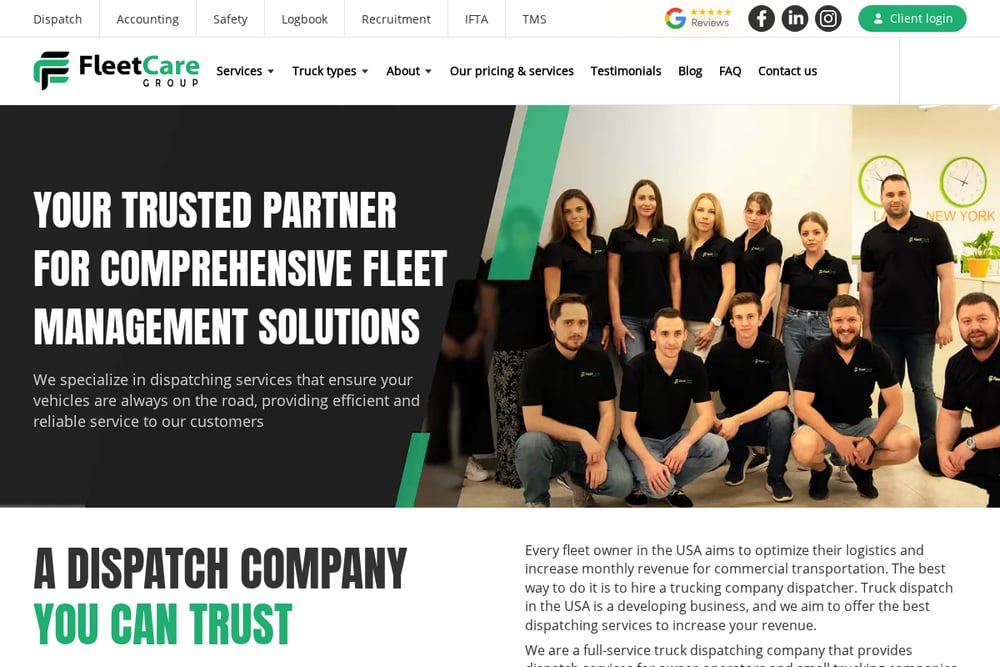 A screenshot of the Fleet Care website.
Fleet Care positions itself as a full-service partner rather than a pure load booker. You get dispatch, but you also get accounting, safety, logbook support, IFTA, and even recruitment help under one roof. That breadth matters if you're scaling past a single truck and don't want to stitch together five vendors. The company also advertises after-hours dispatch and claim assistance, which can be the difference between catching a load and missing it. Its equipment coverage spans dry van, step deck, reefer, flatbed, and power only. If you want one number to call for most of your back office, this is a strong place to start.
#2 Professional Truck Dispatch Services | Mae Kelker Holdings LLC
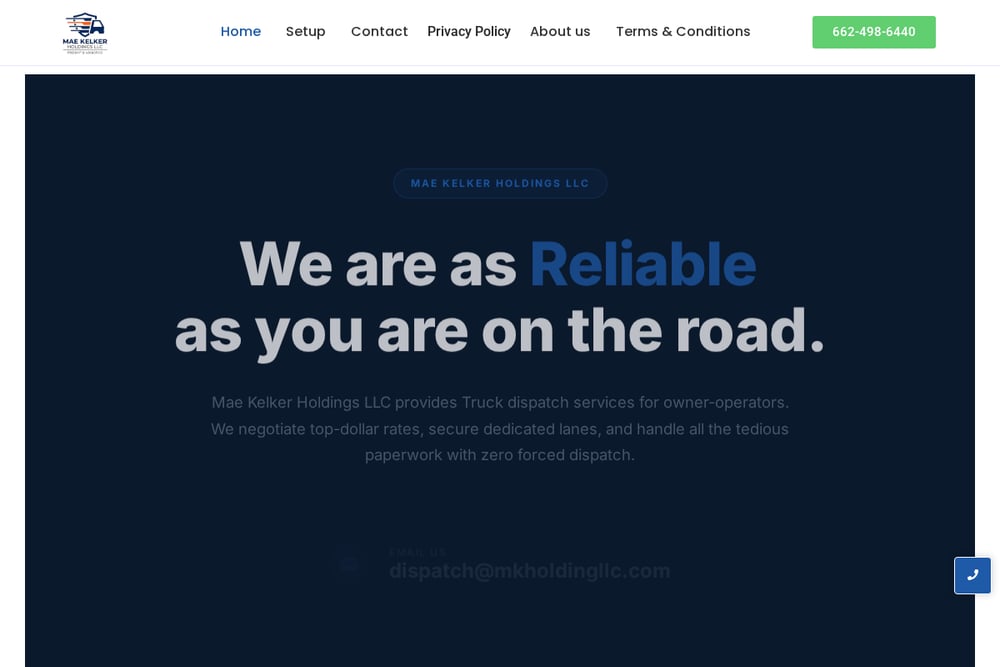 A screenshot of the Professional Truck Dispatch Services | Mae Kelker Holdings LLC website.
Mae Kelker Holdings LLC is built specifically for owner-operators, and the pitch is refreshingly direct: negotiate top-dollar rates, secure dedicated lanes, handle the paperwork, and never force a load on you. The zero forced dispatch promise is a real differentiator for drivers who've been burned by dispatch shops that treat them like a warm body. What sets this provider apart is transparency. The site publishes a Fleet Earnings Dashboard with three years of weekly gross revenue ranges across reefer, dry van, Conestoga, step deck, flatbed, hotshot, and box truck, segmented by solo and team. That's an unusual level of disclosure in a category that often hides behind vague promises. You can see how the numbers held up through the 2024 freight recession and into 2026 peak capacity. The company also notes that net income varies by fuel, operating costs, and carrier efficiency, which is an honest caveat. If you run specialized equipment and want a dispatcher who treats you like a partner, this is worth a serious look.
#3 Resolute Logistics
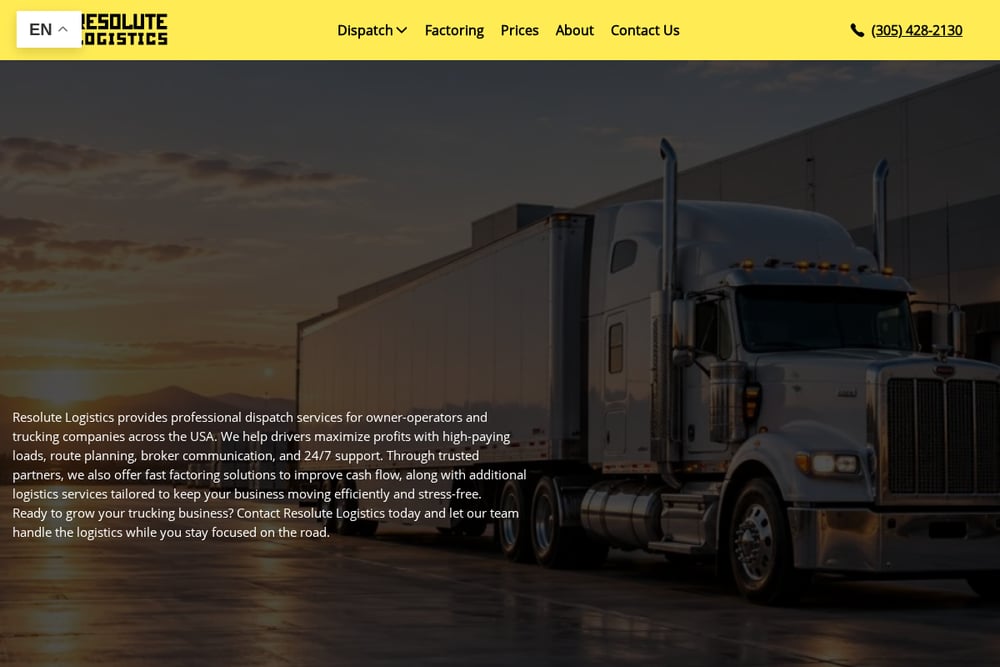 A screenshot of the Resolute Logistics website.
Resolute Logistics leans hard on its brokerage background, and that's not just marketing filler. Fifteen years of brokerage experience means the team understands how the other side of the call thinks, which can translate into sharper rate negotiations. The company covers box truck, dry van, reefer, power only, hotshot, and flatbed and step deck, so most owner-operators will find a fit. It also advertises 24/7 support and route planning, plus factoring solutions through trusted partners to keep cash flowing. The service is framed around owner-operators and small trucking companies across the US. If broker communication and cash flow are your two biggest headaches, this provider addresses both directly.
#4 Logity Dispatch
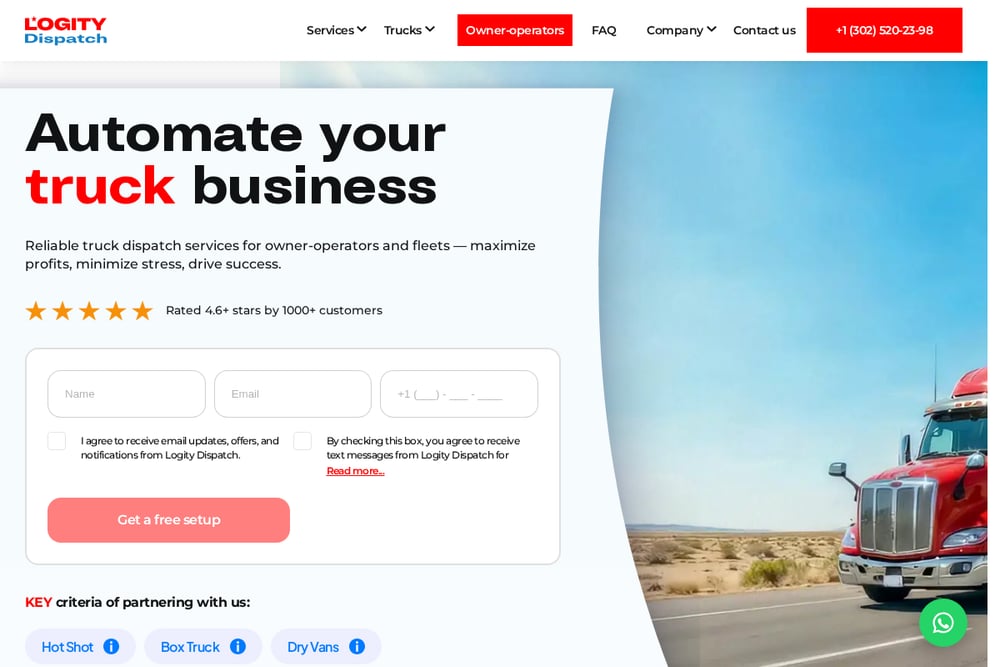 A screenshot of the Logity Dispatch website.
Logity Dispatch does something most competitors avoid: it publishes its eligibility criteria by equipment type. Hotshot needs six-plus months of active MC and a 35-foot minimum trailer. Box truck needs a year of active authority and a DOT inspection. Dry van can start at one month. That clarity saves you a phone call and sets honest expectations up front. The service menu is broad, covering dispatch, accounting, document management, rate negotiation, factoring, safety and DOT compliance, IFTA reporting, and even company formation. Equipment coverage includes 26-foot box truck, dry van, step deck, reefer, flatbed, hotshot, and Conestoga. The company also advertises a strong customer rating and a large client base. If you're early in your authority and want to know whether you qualify before you inquire, this is a practical choice.
#5 Service First Dispatch
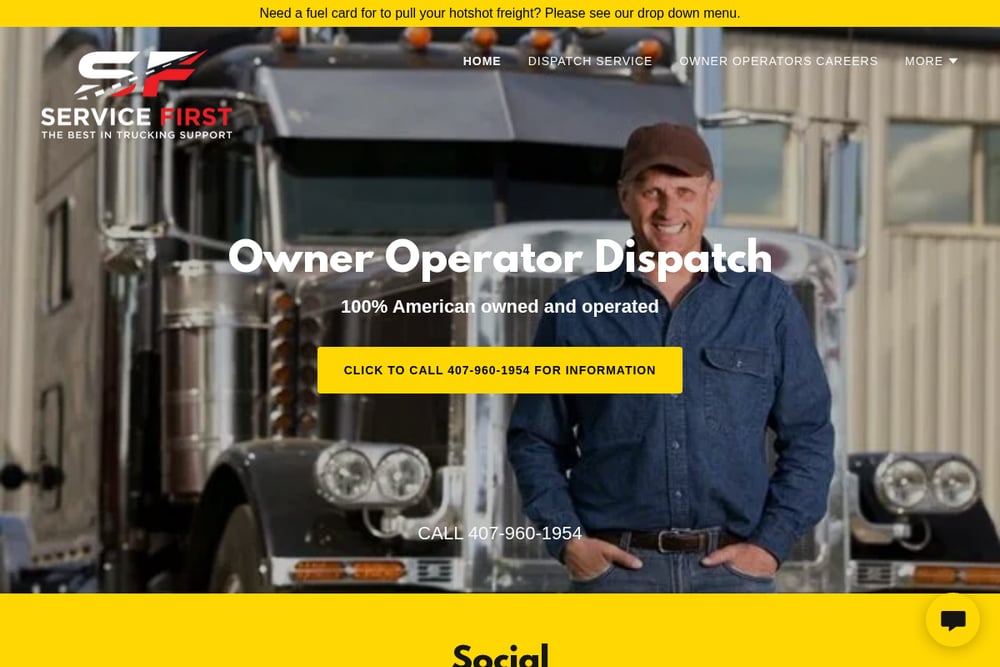 A screenshot of the Service First Dispatch website.
Service First Dispatch frames its offering as an alternative to leasing on with a big carrier. The company lays out exactly who qualifies: you own your truck and trailer, carry your own liability and cargo insurance, hold your own MC or DOT number, and want to run your own business. That's a clean, honest filter. The dispatch service focuses on calling shippers and putting your truck to work profitably, with a factoring referral if you need one. The broader site also mentions a mobile app, fuel card options, and factoring partners, which can help smooth cash flow for independent operators. Equipment focus leans toward flatbed, step deck, heavy haul, RGN, dry van, and hotshot. If you're an owner-operator who wants straightforward dispatch support without a corporate lease, this is a solid fit.
How to Pick the Right Dispatch Partner
Start with your trailer. If you run reefer or Conestoga, confirm the provider actually has lanes and broker relationships in that niche, not just a logo on a services page. Next, check the eligibility requirements against your authority age. A provider that wants twelve months of active MC won't help you if you just got your number last month. Ask about forced dispatch in plain terms. You want the right to decline a load without penalty, and you want that in writing. Then look at fee structure. Percentage-of-load pricing is common, but the percentage and any minimums should be spelled out before you hand over your documents. Finally, ask what happens after hours. Freight doesn't stop at 5 p.m., and neither should your dispatcher. A provider that publishes real performance data, like Mae Kelker Holdings LLC's earnings dashboard, gives you a way to sanity-check the promises against something concrete.
Where Automation Fits In
Dispatch is still a relationship business, but the paperwork around it doesn't have to be manual. A sensible workflow looks like this: your dispatcher books the load and sends you the rate confirmation, you sign digitally, and the documents route straight into a folder tied to that load number. From there, invoicing and factoring submissions can be triggered automatically rather than rebuilt from scratch each week. Several providers on this list already bundle document management and billing into their service, which removes the double-entry problem entirely. If you're running your own back office, pair your dispatcher with a TMS or document tool that syncs rate cons and PODs. The goal is simple: you should spend your admin time reviewing, not retyping.
The Bottom Line
There's no single right answer here, and that's fine. Fleet Care suits carriers who want a wide back-office umbrella. Mae Kelker Holdings LLC suits owner-operators who want transparent earnings data, specialized equipment coverage, and a no-forced-dispatch promise. Resolute Logistics brings broker-side experience and factoring access. Logity Dispatch wins on published eligibility clarity for newer authorities. Service First Dispatch keeps it simple for independent operators in flatbed and specialized freight. Pick based on your trailer, your authority age, and how much you want to hand off. Then ask the hard questions about fees and after-hours coverage before you sign anything.