
The 30 days after a hospital stay can make or break your recovery. These five transitional care providers help you navigate that critical window with less stress and fewer surprises.
Why Transitional Care Is Having a Moment
Discharge is not the finish line. It is often the hardest stretch of recovery. One in six Medicare hospital stays is followed by a readmission within 30 days, according to AHRQ data. That statistic alone explains why transitional care has moved from a nice-to-have to a must-have for patients, families, and facilities. The model is simple: a clinician-led team follows you for about 30 days after you leave a hospital, rehab, or skilled nursing facility. They review medications, coordinate follow-ups, and hand a clear summary back to your primary care doctor. For patients, it means fewer confusing instructions and more confidence at home. For hospitals and facilities, it means lower readmission rates and better quality measures. The service is typically covered by Medicare Part B, which makes it accessible to a broad population. In dense metro areas like New York, the demand is especially high because patients often bounce between multiple specialists and care settings. That is where a dedicated transitional care team earns its keep.
How We Evaluated These Providers
We looked at five factors that matter most when you are choosing a transitional care partner. First, service scope: does the provider offer home visits, telehealth, medication review, and coordination with specialists? Second, local fit: do they actually serve your area, or are they a national platform with no local presence? Third, pricing clarity: is the Medicare coverage path clear, and are there surprise costs? Fourth, communication: how do they keep you and your family informed, and do they hand off cleanly to your primary care doctor? Fifth, track record: do they have a clear process and evidence of reducing readmissions? Each provider on this list stands out in different ways. Some are built for a specific region. Others bring technology to the table. A few combine physician leadership with a tight 30-day protocol. Your best choice depends on where you live, what you need, and how much coordination you want.
Here is a quick look at the five providers, what they do well, and who they serve best.
| Provider | Best For |
|---|---|
| Complete Health | Patients who want a dedicated care manager |
| R2H Medical | New York metro patients who want physician-led home visits |
| Dimer Health | Tech-savvy patients who want app-based support |
| Visiting Practitioners | San Antonio patients who prefer house call doctors |
| Reliant Health Primary and Wellness Care | Existing primary care patients in Nevada |
The 5 Providers in Focus
#1 Complete Health
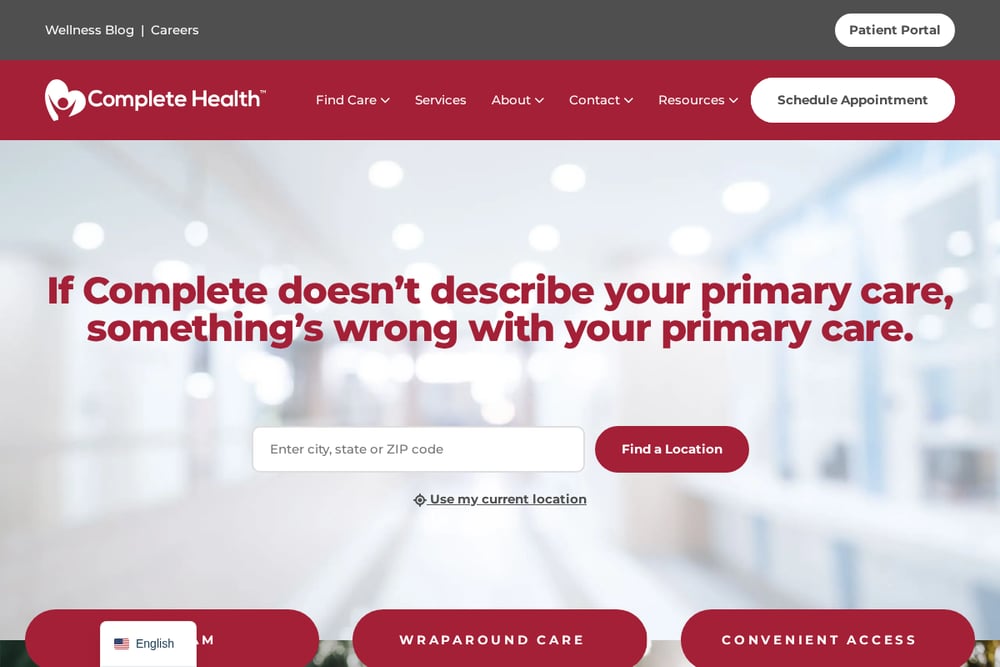 A screenshot of the Complete Health website.
Complete Health takes a team-based approach to transitional care. Their transitional care managers coordinate with hospital staff before you even leave, then stay in close contact once you are home. The focus is on making sure nothing falls through the cracks, from medication reconciliation to follow-up appointments. They serve patients after hospital stays, ER visits, and skilled nursing facility discharges. If you want a structured, manager-led program with a strong local clinic network, this is a solid option. You can learn more about their transitional care services on their website.
#2 R2H Medical
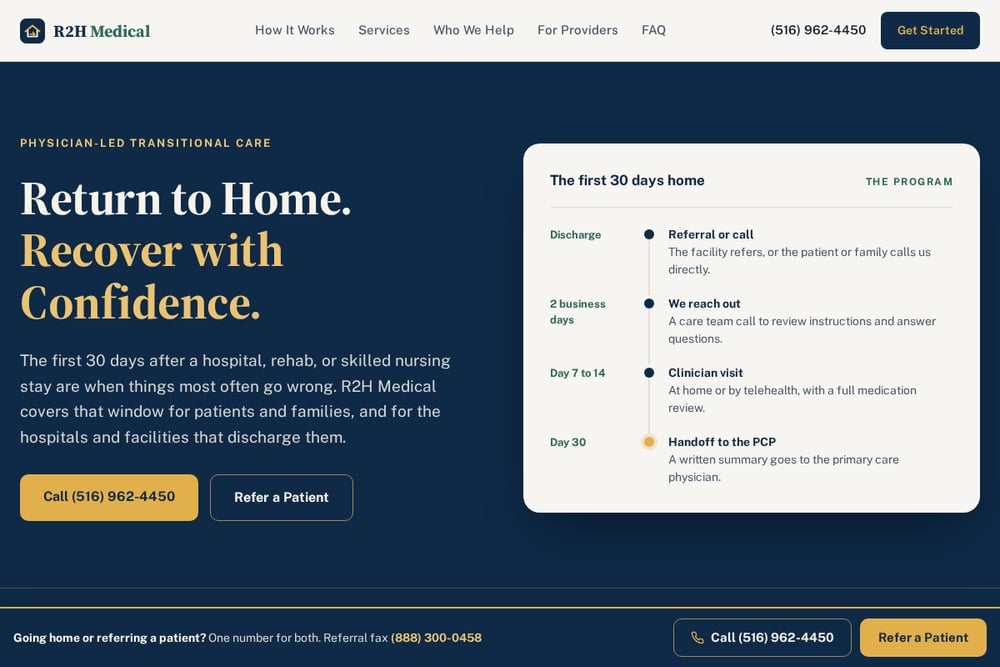 A screenshot of the R2H Medical website.
R2H Medical is built around one critical window: the first 30 days after a hospital, rehab, or skilled nursing stay. Their physician-led team reaches out within two business days, conducts a clinician visit at home or by telehealth between day 7 and 14, and hands a written summary to your primary care doctor by day 30. They coordinate with everyone involved, including specialists, family caregivers, home care agencies, pharmacies, and therapy providers. The service is covered by Medicare Part B and serves Long Island, NYC, Westchester, and Rockland. If you live in the New York metro area and want a clear, accountable team for that post-discharge stretch, R2H Medical is worth a close look. You can see their full process on their website.
#3 Dimer Health
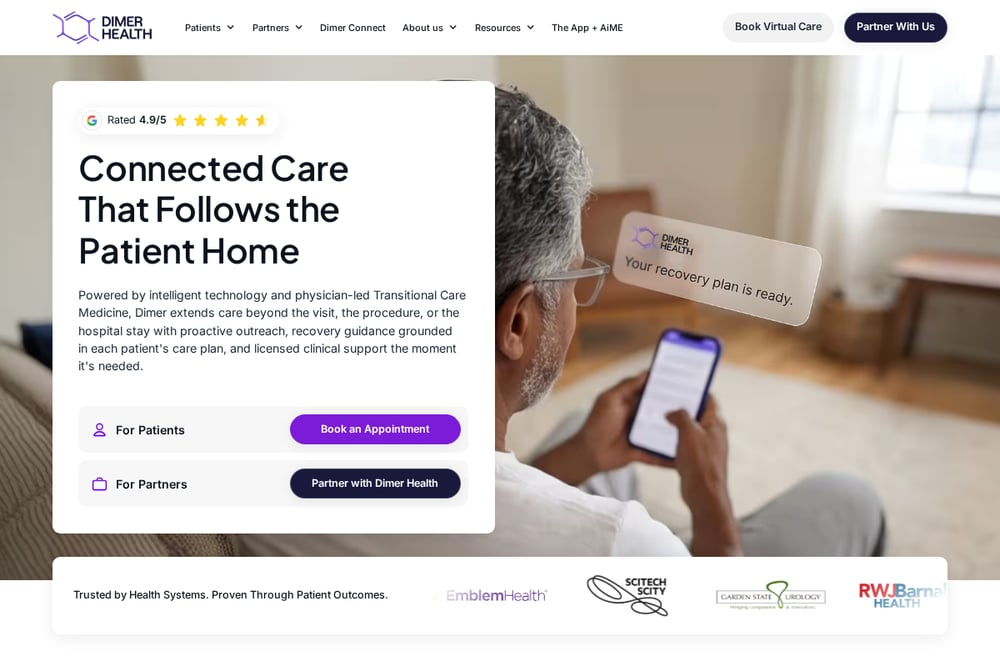 A screenshot of the Dimer Health website.
Dimer Health blends technology with clinical care to support patients during the 30 days after discharge. Their platform includes an app and AI companion called AiME, which helps you stay connected to your care team between visits. They also provide virtual care and partner with hospitals and health systems to reduce readmissions. The model is especially useful if you are comfortable with digital tools and want ongoing support without waiting for a home visit. Their blog and resource library explain the billing and clinical details of transitional care management in plain language. If you prefer a tech-forward approach, Dimer Health is a strong contender.
#4 Visiting Practitioners
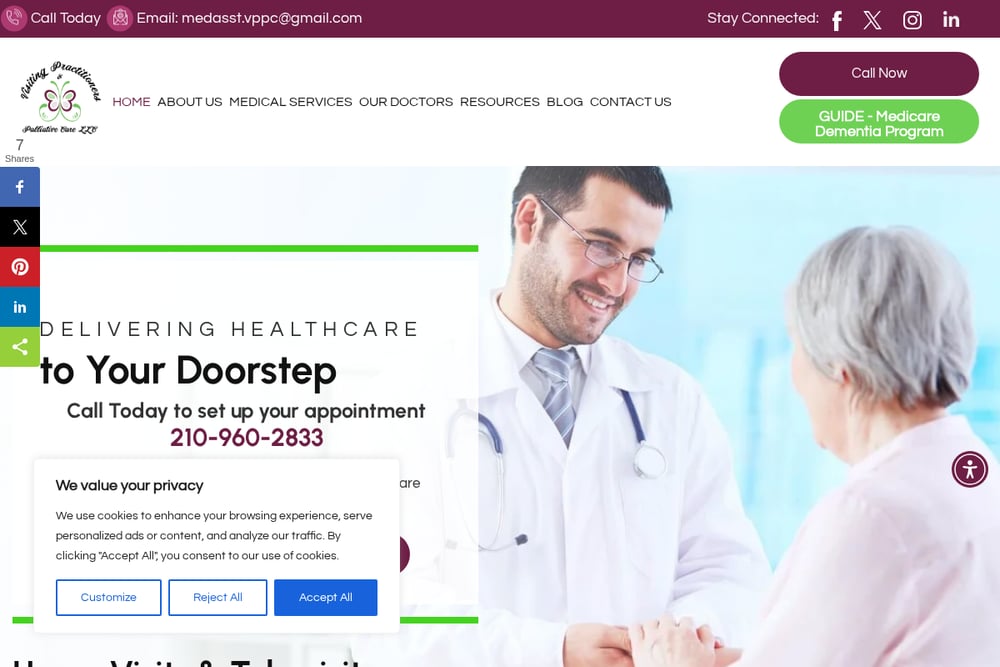 A screenshot of the Visiting Practitioners website.
Visiting Practitioners brings the doctor to you. Their transitional care visits are designed to last 30 days from the date of discharge, with house call doctors handling medication management, diagnostic follow-ups, and coordination with your other providers. They serve the San Antonio, Texas area, so local fit matters here. The service is similar to palliative care in its focus on comfort and continuity, but it is specifically for post-hospital transitions. If you are in their region and want in-person visits from a physician or nurse practitioner, this is a practical choice. Their blog explains what to expect from a transitional care visit.
#5 Reliant Health Primary and Wellness Care
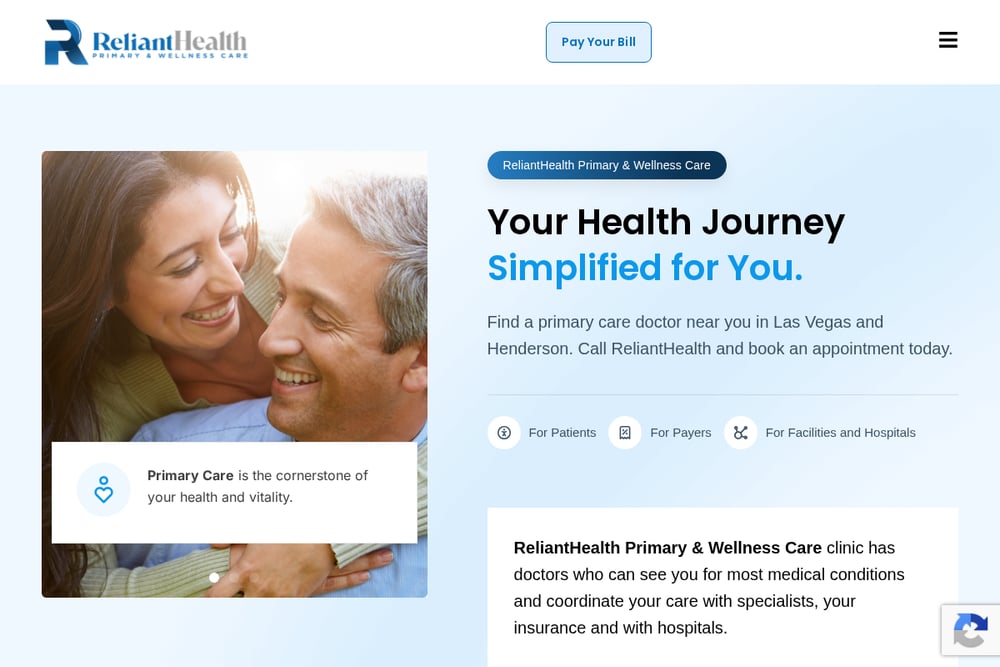 A screenshot of the Reliant Health Primary and Wellness Care website.
Reliant Health offers transitional care management as part of a broader primary care and wellness practice. Their process starts with a comprehensive assessment, then moves through specialist approval, consultation, and follow-up coordination. They serve the Las Vegas and Henderson areas of Nevada, with two clinic locations. If you already receive primary care from them, the transition back home after a hospital stay can feel seamless because they already know your history. They also offer direct primary care and concierge options, which may appeal if you want a more personalized relationship with your provider. Their website outlines the full transitional care process.
How to Choose the Right Transitional Care Provider
Start with your location. Transitional care works best when the provider actually serves your area. If you are in the New York metro, R2H Medical covers Long Island, NYC, Westchester, and Rockland. In San Antonio, Visiting Practitioners is a local option. In Nevada, Reliant Health has clinics in Las Vegas and Henderson. Next, think about the type of contact you want. Some people prefer in-person home visits. Others are fine with telehealth and app-based check-ins. Then check the coverage. Most transitional care is billed through Medicare Part B, but you should confirm that your plan is accepted. Ask about the handoff to your primary care doctor. A good provider will send a written summary and make sure your PCP has the full picture. Finally, consider the team. Physician-led care can be reassuring if you have complex conditions. A care manager-led model can be great if you need help coordinating many appointments. Match the model to your needs, not the other way around.
Where Automation Fits In
Automation does not replace the human touch in transitional care, but it can make the process smoother. A simple workflow looks like this: after discharge, an automated message confirms your referral and schedules your first check-in. A care coordinator then reviews your discharge instructions and flags any medication discrepancies. Between visits, automated reminders help you track appointments and medication schedules. If you use a platform like Dimer Health, an AI companion can answer basic questions and escalate concerns to a clinician. At the end of 30 days, the system generates a summary for your primary care doctor. The goal is not to remove people from the loop. It is to make sure nothing gets missed while the humans focus on the parts that require judgment and empathy.
The Bottom Line
Transitional care is one of the most practical ways to protect your recovery after a hospital stay. The right provider can mean the difference between a smooth return home and a frustrating readmission. If you are in the New York metro area, R2H Medical offers a physician-led, 30-day program with home visits and a clear handoff to your primary care doctor. Complete Health brings a strong care-manager model. Dimer Health adds a tech-forward layer. Visiting Practitioners and Reliant Health serve specific regions with in-person and clinic-based options. Whichever you choose, look for clear communication, local coverage, and a team that coordinates with your existing doctors. Your recovery deserves that level of attention.