
Finding a costume designer who actually understands storytelling through fabric is harder than it looks. Here are five professionals whose portfolios you should study before your next production.
The State of Costume Design in American Theatre
Costume design sits at the intersection of craft, research, and collaboration. A designer reads a script, decodes character psychology, then builds garments that carry emotion across a stage or screen. The field spans regional theatre, Broadway, opera, film, and commercial work, and the professionals who thrive tend to be versatile. Many move fluidly between sound, lighting, and wardrobe roles early in their careers. That cross-training builds a production-wide literacy that pure specialists often lack. For directors and producers, the practical question is fit: does this designer understand your budget, your timeline, and your visual language? The five profiles below answer that question in different ways.
How We Evaluated These Designers
We looked at four consistent factors across every profile. First, scope of service: does the designer handle costume only, or do they also cover lighting, sound, and production support? Second, portfolio depth: are credits listed with directors, venues, and dates, or left vague? Third, accessibility: is there a clear resume, contact path, and downloadable materials? Fourth, presentation clarity: does the site make it easy to understand the designer's aesthetic and specialties? Each profile stood out on different dimensions. Some offer deep production credits, others a clean and navigable portfolio, and others a distinctive artistic identity. Use these factors as your own checklist when you review each site.
Here is a quick comparison of the five designers, ordered for readability. Each entry notes the strongest use case so you can jump straight to the profile that matches your production.
| Provider | Best For |
|---|---|
| Susan Hilferty | Large-scale Broadway and opera productions |
| Asher Upright | Theatre Design | Emerging productions needing a versatile designer |
| Laura K. Smith | Film and TV costume work with theatre crossover |
| Marcella Caudill | Contemporary screen and commercial styling |
| Whitney Locher | Directors who value process and sketches |
The Five Designers in Detail
#1 Susan Hilferty
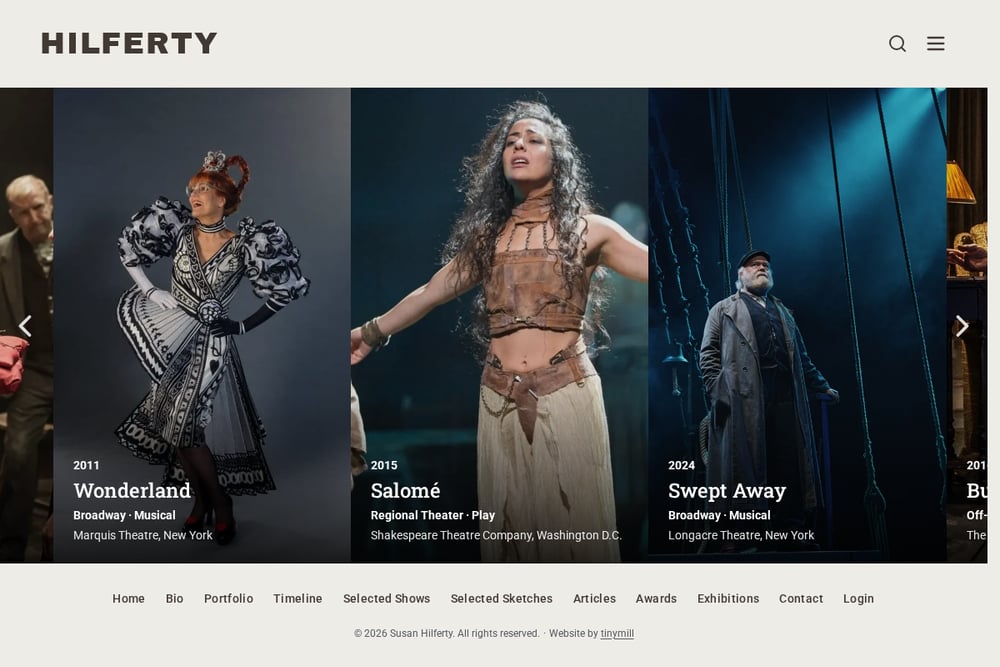 A screenshot of the Susan Hilferty website.
Susan Hilferty's portfolio reads like a history of modern American theatre. Her credits include Wicked on Broadway, multiple Metropolitan Opera productions, and Shakespeare Theatre Company work. The site organizes credits by year, venue, and production type, which makes scanning effortless. You can filter mentally between Broadway musicals, opera, and regional plays in seconds. For anyone studying how a top-tier design career is structured, this is the reference point. Her timeline and awards sections add context that most portfolios skip.
#2 Asher Upright | Theatre Design
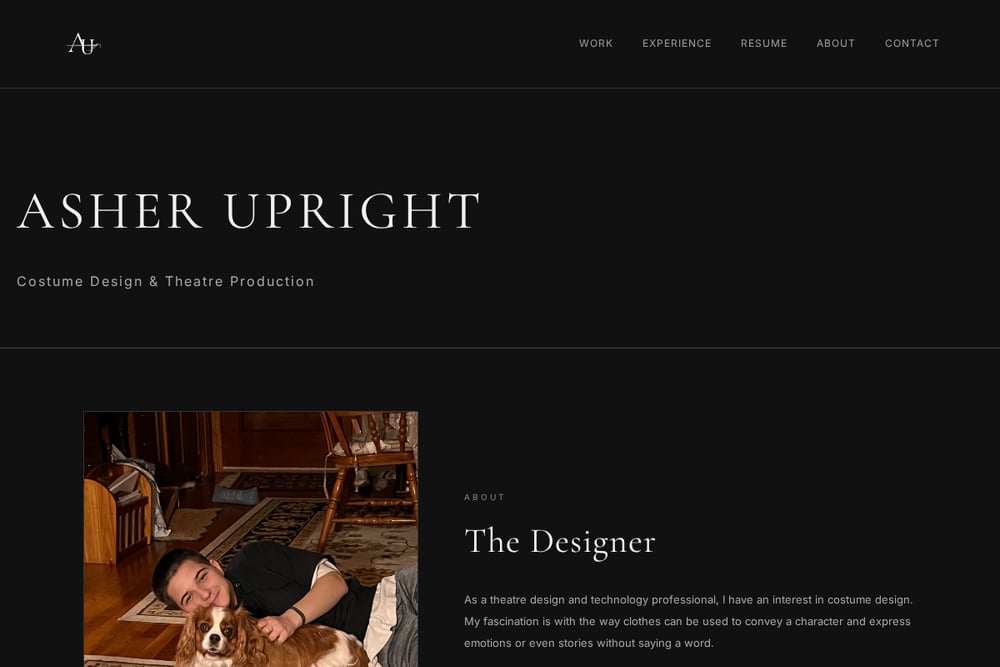 A screenshot of the Asher Upright | Theatre Design website.
Asher Upright brings a costume-first focus backed by real production breadth. The portfolio features costume design for Still Stands the House and combined lighting and costume work on Where Love Stays. What sets this profile apart is the production history: sound co-design, sound board operation, and lighting crew credits across Bloomsburg University Players and Blue Ridge Theatre. That means you get a collaborator who understands how costumes interact with sound cues and light plots. A downloadable resume and a direct contact path make inquiries simple. If you are staffing a smaller or mid-size production and need someone flexible, start here.
#3 Laura K. Smith
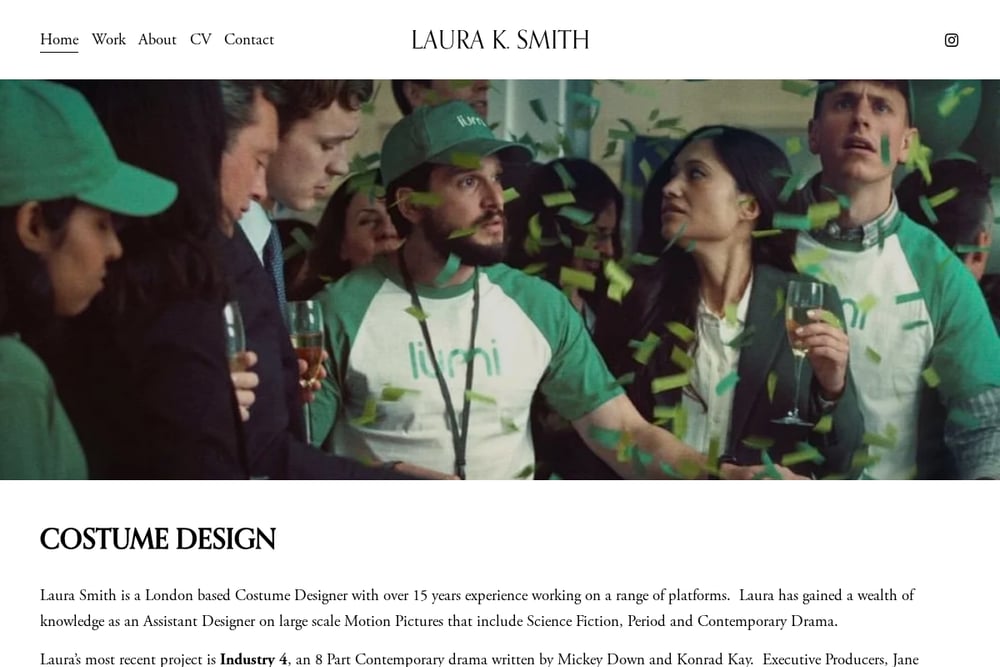 A screenshot of the Laura K. Smith website.
Laura K. Smith trained at Wimbledon School of Art and London College of Fashion, and it shows in her range. Her about page traces a path from stop-frame animation to handcraft tailoring to full costume design. She has worked as an in-house costumier at the BBC and as a freelance buyer, assistant, supervisor, and designer. Film, television, theatre, and live performance all appear in her credits, including work with Alexandra Byrne. If you need someone who can scale from a single-camera shoot to a multi-location production, her background is worth a close read.
#4 Marcella Caudill
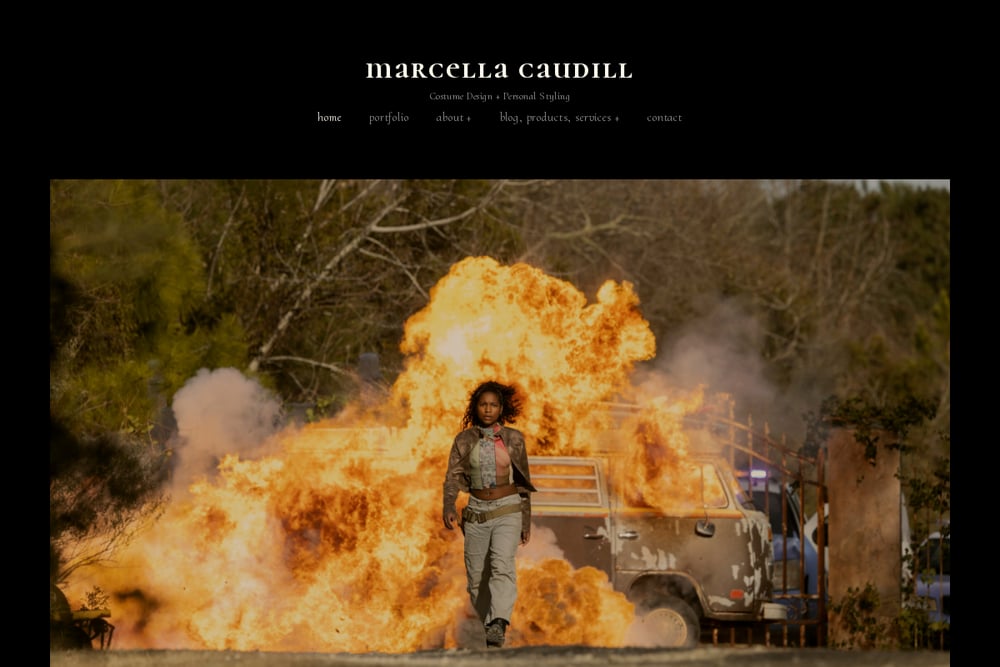 A screenshot of the Marcella Caudill website.
Marcella Caudill's portfolio leans commercial and screen-forward. Credits include costume design on Outer Banks season 5 and Driver's Ed, plus assistant costume design on Ozark season 4. The site also lists wardrobe styling for brands like Home Depot and General Electric. Her portfolio page is image-heavy, which lets you judge fabric, silhouette, and character work directly. She also offers personal styling alongside costume design, a useful hybrid for projects with talent-facing needs. Review her site if your production has a contemporary or branded visual direction.
#5 Whitney Locher
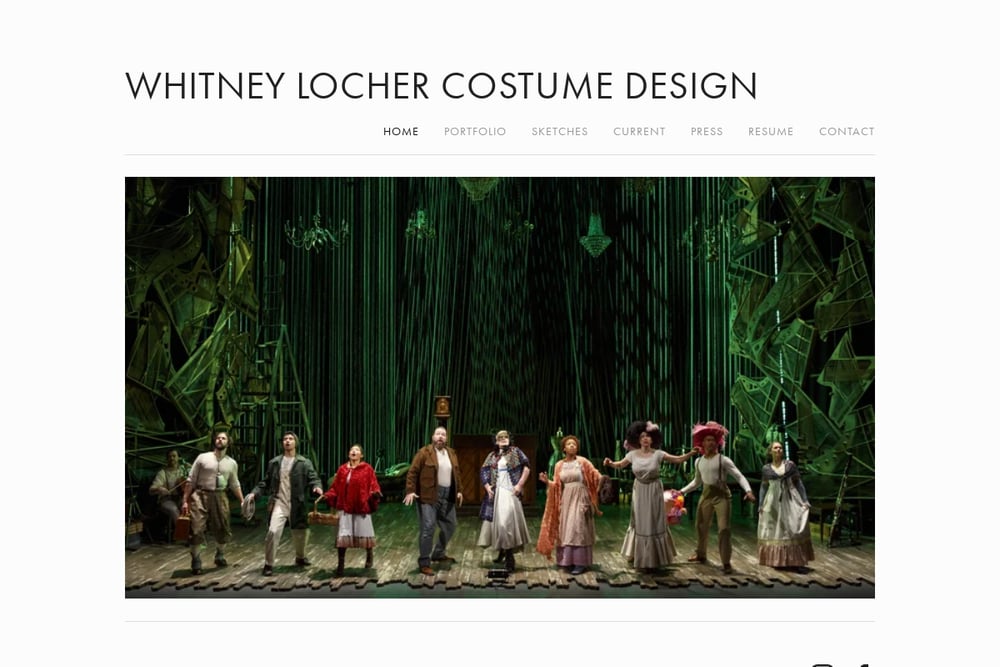 A screenshot of the Whitney Locher website.
Whitney Locher keeps things clean and focused. The site navigation is minimal: portfolio, sketches, current projects, press, resume, and contact. That structure tells you she values clarity over clutter. The sketches section is the standout, giving you a window into the design process before garments exist. For directors who want to see how a designer thinks, not just what they shipped, that page matters. Her resume and press sections round out a professional, easy-to-navigate presentation. It is a solid starting point for a first conversation.
How to Choose the Right Costume Designer
Start with your production type. A Broadway-scale musical, a regional play, a film shoot, and a branded commercial each demand different experience. Match the designer's portfolio to your format before anything else. Next, check scope. If you need someone who can also handle lighting or sound coordination, look for cross-trained credits like those on the Asher Upright site. Then review the resume. A downloadable PDF with dates, directors, and venues tells you more than a gallery of pretty images. Finally, test communication. Send an inquiry and see how fast and how clearly you get a response. The designer who answers well before the contract is the one who will answer well during tech week.
Streamlining Your Design Collaboration Workflow
You can save hours by setting up a simple intake process before you contact any designer. Build a shared folder with the script, mood board, budget range, and production calendar. Use a form to collect inquiries so nothing gets lost in email threads. When you review portfolios, keep a running comparison doc with the same four criteria for each designer. Automate follow-up reminders so no promising contact goes cold. During production, a shared spreadsheet for fittings, receipts, and cue sheets keeps costume, lighting, and sound aligned. These small systems free you to focus on the creative conversation, which is where the real value lives.
The Bottom Line
The right costume designer makes your production legible to the audience before a single line is spoken. Susan Hilferty shows what the top of the field looks like. Asher Upright offers a flexible, costume-first collaborator with genuine production breadth. Laura K. Smith brings international film and theatre range. Marcella Caudill covers contemporary screen and commercial styling. Whitney Locher gives you a clear window into process. Review each site against your production's format, scope, and timeline. Then reach out with a specific, well-organized inquiry. That first message tells both of you whether the collaboration will work.