Finding a grant you actually qualify for is harder than finding a grant. These five services do the reading so your small Texas nonprofit doesn't have to.
The grant-matching landscape in Texas
Texas nonprofits sit on top of thousands of funding opportunities, from state programs to family foundations that only fund one county. The problem is never supply. It is fit. Most databases hand you a list and let you sort out eligibility, deadlines and disqualifiers yourself. A newer wave of services flips that: they read the guidelines first and send you a short list you can act on. That shift matters most for small shops without a dedicated grant writer.
How we looked at these services
We weighed four things: how much of the work is done for you versus handed back to you, whether pricing is stated plainly, how well the service handles Texas-specific funders and local eligibility, and whether every match points back to the funder's own source so you can verify it. We also noted how quickly you get something usable.
Here is the short version before the detail. Each entry below earns its place for a different kind of Texas nonprofit, so read for fit rather than order.
| Provider | Best For |
|---|---|
| Velora | Nonprofits that want a large searchable database plus management tools |
| Post Oak Grant Desk | Grant Matching for Texas Nonprofits | Small Texas 501(c)(3)s that want three verified matches without software |
| GrantExec | Organizations blending state, federal and private funding searches |
| Instrumentl | Staffed development teams running a year-round grant pipeline |
| GrantWatch Texas | Keeping a regular watch on newly posted Texas grants |
The five services, one by one
#1 Velora
 A screenshot of the Velora website.
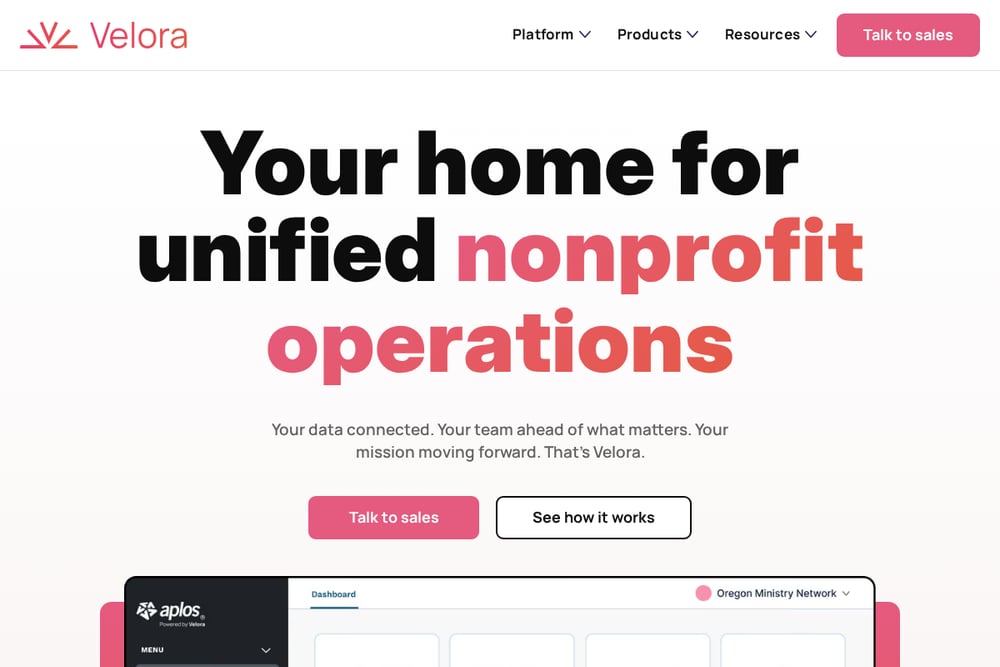
Velora is the broadest option on this list, with a Texas grants page that advertises more than 13,000 opportunities and roughly $2 billion in total funding. You filter by grant type, amount, deadline and funder type, then work through results sorted by relevance or soonest deadline. It pairs that search with grant management features, so tracking and applications live in the same place. The tradeoff is volume: you still do the eligibility reading yourself, and some listings show no deadline at all. It suits organizations that want a wide net and have someone to work it.
#2 Post Oak Grant Desk | Grant Matching for Texas Nonprofits
 A screenshot of the Post Oak Grant Desk | Grant Matching for Texas Nonprofits website.
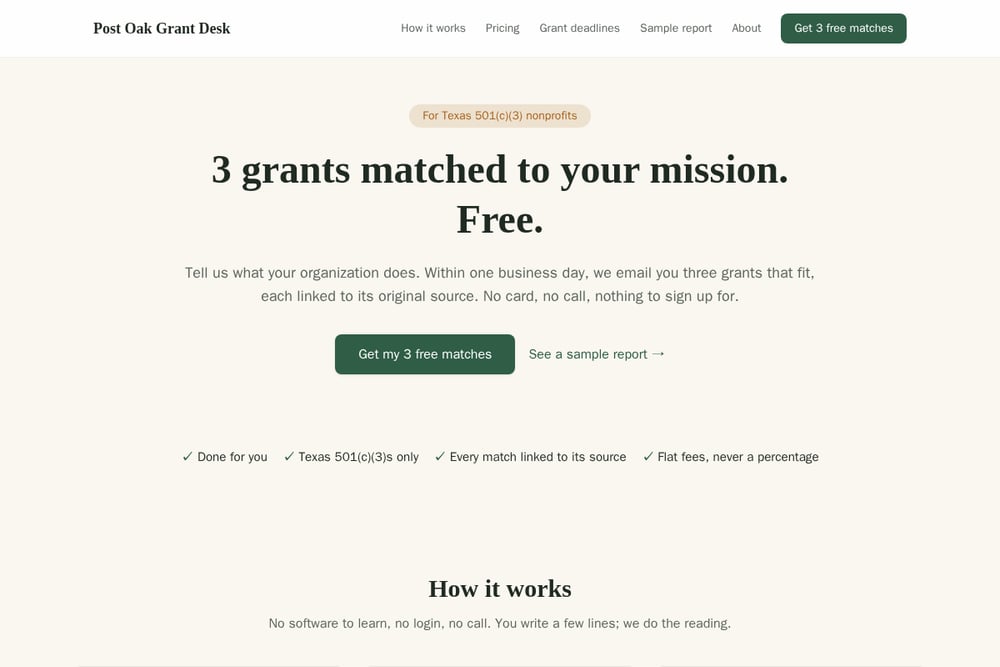
Post Oak Grant Desk is built for one thing: Texas 501(c)(3)s that need a short, checked list instead of another login. You write a few lines about your organization, the city or county you serve and what you do, and within one business day you get three matched grants by email, free, with no card and no call. Every match carries a plain-English fit note, the deadline and award range when the funder publishes them, a confidence label, and a link to the funder's own page so you can check the work in one click. It reads foundation, corporate and state guidelines one by one and throws out anything that does not fit. Pricing is flat fees, never a percentage of the award. If your board meets monthly and you need something to bring them, this is the shortest path.
#3 GrantExec
 A screenshot of the GrantExec website.
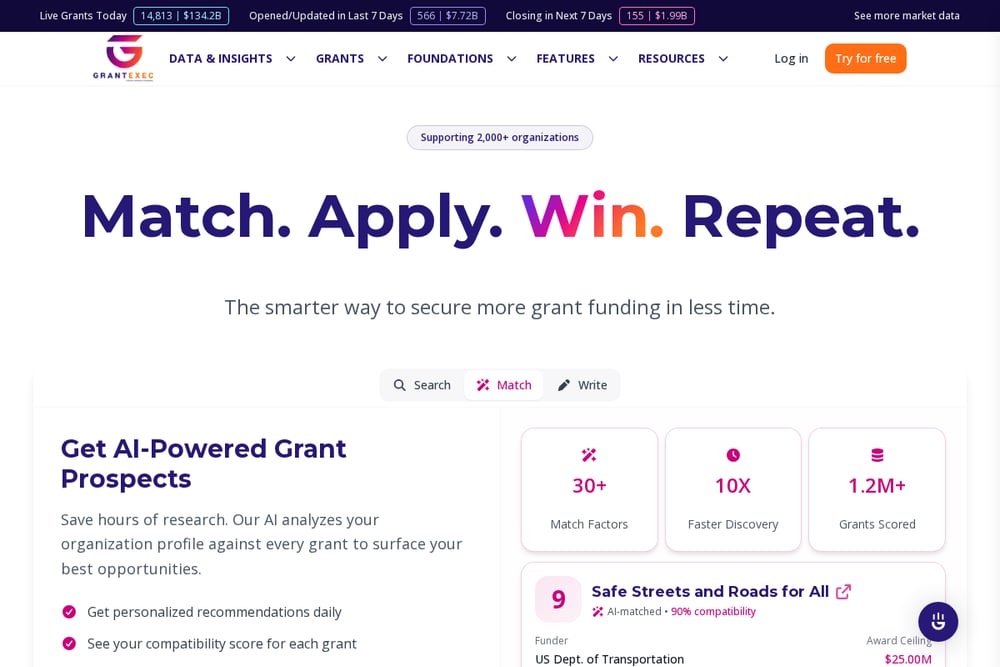
GrantExec runs a Texas nonprofits page listing hundreds of open opportunities, including large state programs and private foundations with specific geographic limits. Listings show the funder, the award amount, eligibility tags and application deadlines where available, which makes scanning fast. It sits inside a wider platform that also covers federal funding, foundation research and AI-assisted writing. That breadth is useful if grants are one part of a bigger fundraising operation. For a pure Texas local search, though, you will still spend time filtering and confirming eligibility yourself.
#4 Instrumentl
Instrumentl is the heavyweight grant discovery and tracking platform, popular with development teams that manage a full pipeline. It combines a large funder database with deadline tracking, task management and reporting in one workspace. If you have staff dedicated to grants, the structure pays off quickly. The catch is commitment: it is a subscription product aimed at organizations ready to run a process, not at a volunteer treasurer looking for three names by Friday. Smaller Texas nonprofits often find the setup heavier than their calendar justifies.
#5 GrantWatch Texas
GrantWatch Texas is a state-focused feed of grant listings, useful for keeping an eye on what is newly posted. It works well as a scanning tool when you already know your keywords and want a regular look at the landscape. Listings vary in detail, and you will usually need to visit the funder's site to confirm eligibility and deadlines. Treat it as a starting point rather than a shortlist. For a small nonprofit, that means more reading, but it is a low-cost way to stay aware.
How to pick the right one for your shop
Start with your capacity, not the size of the database. If nobody on your team has grant hours this month, a service that hands you three checked matches beats a platform with 13,000 listings. If you have a development director, the opposite is true. Next, ask whether the service respects local eligibility, because a funder that only serves one county is worthless to you if the tool ignores geography. Then check pricing: flat fees are easier to budget than percentages of an award you have not won yet. Finally, insist on source links. Any match you cannot verify on the funder's own page is a lead, not a match.
A simple workflow that keeps the pipeline moving
Request your free matches first and read the fit notes before anything else. Put the deadlines in your calendar the same day, with a reminder two weeks ahead of each. Assign one person to verify each match on the funder's site and mark it confirmed or dropped. Keep a running document of what you submitted and what you were told, because funders ask. When a cycle closes, request a fresh set of matches rather than reworking stale ones. That loop, shortlist, verify, calendar, submit, takes an hour a month and keeps you from chasing grants you were never eligible for.
The bottom line
Texas has no shortage of grant listings. What most small nonprofits lack is someone to read the guidelines and say which three are worth their time. If that is you, start with a done-for-you match and verify every source link yourself. If you have staff and a pipeline, a full platform earns its subscription. Either way, the discipline is the same: fewer, better-fit applications beat a long list every time.