
The Texas Class D water operator exam is a gate, not a formality. These five prep resources help you walk through it with your eyes open.
The State of Class D Water Operator Prep in Texas
Texas keeps adding people, and every new subdivision, well, and treatment plant needs licensed operators behind it. The TCEQ Class D license is the entry rung, and the exam pulls from a wide spread of material: 30 TAC Chapter 290 rules, drinking water standards, disinfection, sampling, groundwater and surface water basics, distribution, safety, and math. Passing takes a 70%, and a lot of candidates walk in underprepared. That gap has created a crowded prep market. You can find free question banks, paid video courses, university extension programs, and rule-cited study tools. The differences matter more than the marketing suggests. Some resources give you volume without explanation. Others give you the rule behind every answer. Your job is to figure out which style actually moves your score.
How We Evaluated These Resources
We looked at the same factors across all five. First, content scope: does the resource cover every area TCEQ lists for Class D, or just a slice? Second, answer transparency: when you miss a question, do you learn why, and is the source rule cited? Third, math support: water math sinks more candidates than any other topic, so we checked whether worked solutions are included. Fourth, pricing clarity: free tiers, paid tiers, and refund terms should be obvious before you commit. Fifth, local fit: does the material reflect Texas rules and the TCEQ exam specifically, or is it generic national content? Each resource below stood out on different factors, and your study habits will decide which combination fits you.
Here is the quick comparison before the deep dive. Each entry lists what the resource is, who it suits, and where it shines.
| Provider | Best For |
|---|---|
| American Water College | Candidates who want a guided video course with a free sample test |
| Texas Class D Water Operator Practice Test | Class D Ready | Self-directed studiers who want rule-cited answers and worked math |
| WaterOperatorPracticeTest | Test-takers who want a large randomized question bank with no signup |
| Water Nuggets | Supplemental drilling with fresh randomized question sets |
| TEEX Water Operator Test Preparation | Learners who prefer a formal, institution-backed online course |
The Five Resources in Detail
#1 American Water College
 A screenshot of the American Water College website.
American Water College runs a free Class D practice test as a front door to its paid exam prep course. The pitch is direct: most candidates fail, and the course claims a high first-time pass rate among its students. The free test gives you a sample of the question style before you spend anything. If you like structured video instruction and a guided system, this is a familiar path for Texas operators. It leans on the instructor-led model rather than rule-by-rule citations.
#2 Texas Class D Water Operator Practice Test | Class D Ready
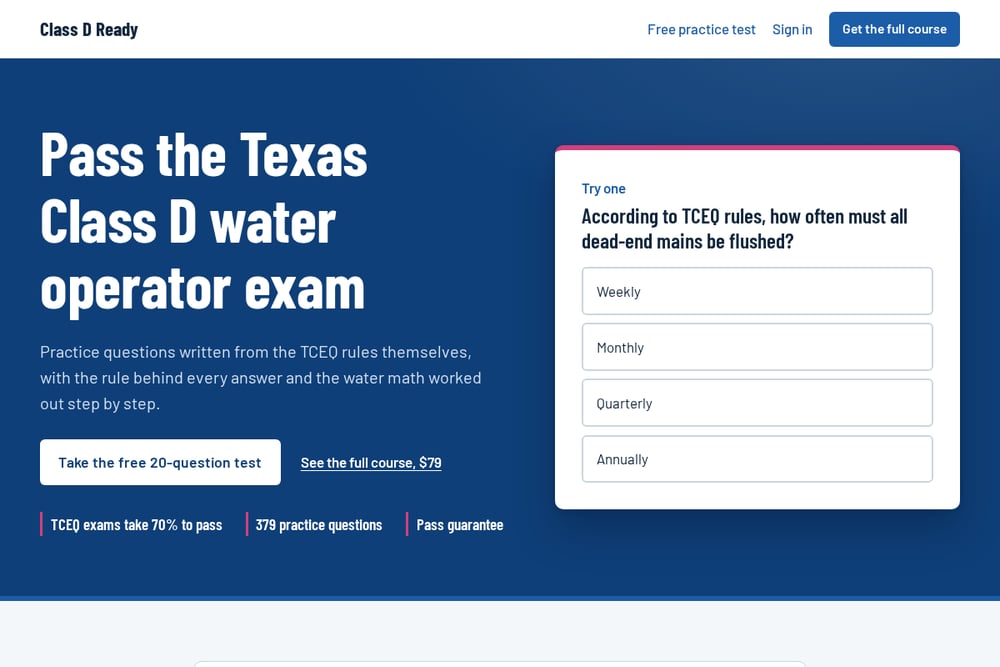 A screenshot of the Class D Ready website.
Class D Ready builds its questions from the TCEQ rules themselves, and every answer shows the rule it came from. That means when you miss a dead-end main flushing question, you see 30 TAC §290.46(l) right there. The free 20-question test covers the areas TCEQ lists for Class D, then breaks your results down by topic so you know where to focus. The full course runs $79 with 379 practice questions, timed 50-question exams, and a pass guarantee with a 14-day refund window. Water math gets fresh numbers each time with every step worked out, which is the part most candidates need most.
#3 WaterOperatorPracticeTest
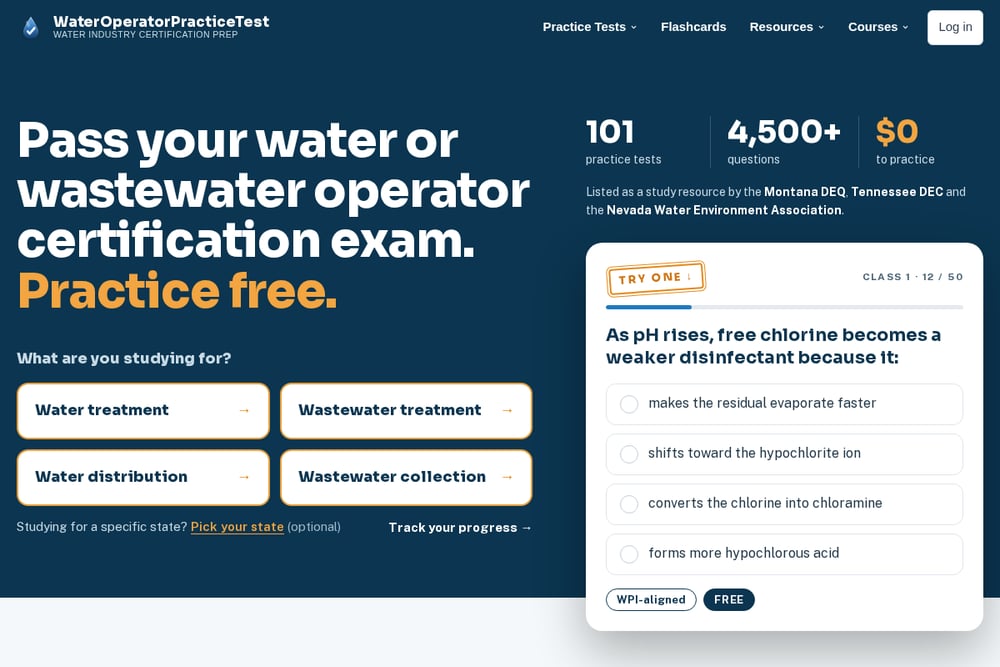 A screenshot of the WaterOperatorPracticeTest website.
WaterOperatorPracticeTest offers a 116-question bank for the Texas Class D exam, weighted by topic the way the real exam is. You get a 25-question quick quiz, a 50-question practice exam, and a full 116-question simulation, all randomized so each run feels different. No signup is required, which lowers the friction if you just want to gauge where you stand. The topic breakdown is transparent: regulations and records, sampling, disinfection, source water, distribution, math, safety, and more. It is a solid volume play for repetition-based learners.
#4 Water Nuggets
 A screenshot of the Water Nuggets website.
Water Nuggets takes a simpler approach: pools of questions that generate a unique test each time you practice. You pick 25, 50, or 100 questions for distribution or treatment topics. The focus is broader than Texas alone, covering D-1 through D-3 and T1 through T3 style exams. That makes it useful as supplemental drilling rather than a Texas-specific rule reference. If you want cheap, repeatable practice volume, it does the job without much ceremony.
#5 TEEX Water Operator Test Preparation
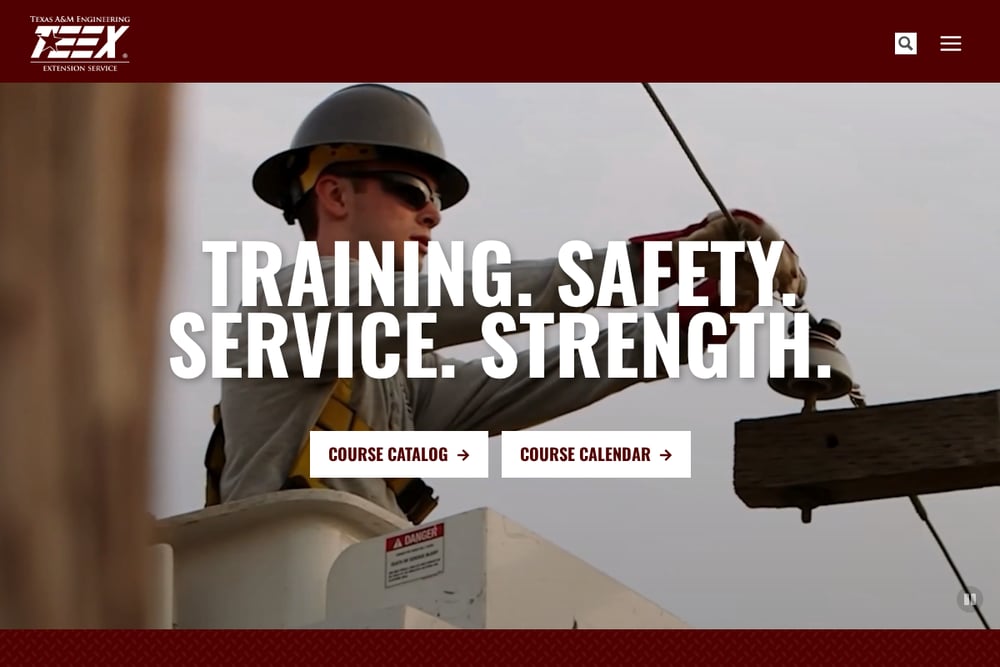 A screenshot of the TEEX Water Operator Test Preparation website.
TEEX is the Texas A&M Engineering Extension Service, and its water operator test preparation course carries institutional weight. This is an online course format rather than a free question bank, so expect a more formal structure and a registration process. It suits candidates who want a recognized Texas training provider behind their prep. The tradeoff is less flexibility than the self-paced practice sites. If you learn best in a structured course environment, it is worth a look.
How to Pick the Right Prep Resource
Start with your weak spot. If math is what worries you, prioritize a resource that works the problems step by step with fresh numbers, like Class D Ready. If you just need volume and repetition, a large randomized bank like WaterOperatorPracticeTest or Water Nuggets will serve you. If you want to be taught rather than drilled, the video course model at American Water College or the formal structure at TEEX fits better. Then check the free tier. Every resource here lets you sample before you pay, so use that. Take one free test from two or three of them and notice which explanations actually make sense to you. Finally, confirm the pricing and refund terms before you commit. A $79 course with a pass guarantee is a different risk than a subscription you forget to cancel.
Building a Study Workflow That Sticks
Prep fails when it is random. Build a loop instead. Take a diagnostic test first and write down your score by topic. Then study only your two weakest areas for a week. Retest those areas, not the whole exam. Once they improve, rotate in the next weakest pair. Use timed 50-question exams every few days to build exam stamina, and review every missed question against its source rule. Keep a running list of the rules you keep missing and reread them the night before the exam. This loop works with any of the five resources, and it beats passive video watching every time.
The Bottom Line
There is no shortage of Texas Class D prep material. The shortage is in knowing which material teaches you versus which just tests you. Free question banks are great for gauging readiness, but the resources that cite the rule behind each answer and walk the math step by step are the ones that close gaps. Start free, find your weak areas, and pay only for the tool that targets them. Do that, and the 70% pass mark stops looking like a wall.