Teen confidence doesn't build itself, and the right coach can change how your child handles pressure, school, and self-doubt. Here are five services worth a closer look.
The Teen Life Coaching Landscape
Teen life coaching has grown into its own category, separate from therapy but often sitting right beside it. Parents are searching for support with confidence, motivation, organization, and the transition out of high school, and coaches have answered with one-to-one sessions, app-based habit tracking, and school workshops. The field is broad. Some providers lean on structured systems and daily check-ins, others on deep one-to-one relationships and mindset work. Some specialize in girls, ADHD, or academic performance, while others take a holistic view that folds in stress regulation and identity. What matters most is fit. A coach who understands your teen's specific pressure points will do more than a bigger brand with a generic program. As you compare options, look at who actually delivers the sessions, how progress is tracked, and whether the approach matches what your child needs right now.
How We Evaluated These Services
We looked at the same factors across every provider. First, service scope: does the coach handle confidence, academics, career pathways, and personal development, or just one slice? Second, delivery model: one-to-one sessions, weekday check-ins, app tools, or workshops, and how much of it is human versus automated. Third, experience and credentials: years working with young people, background in education, and formal coaching certification. Fourth, clarity for parents: how easy it is to understand pricing, packages, and what a session actually looks like. Fifth, specialization: whether the provider speaks directly to a specific teen profile, such as girls, ADHD, or academic pressure. Life and Soul Teen Coach stands out for its 20-plus years of education experience and individualized support packages. Coachbit stands out for its weekday check-in system and app tools. Positively Healthy Coaching stands out for its focus on girls and enoughness. Andrew Petrillo Life Coaching stands out for relatable, ICF-certified coaching with ADHD and academic tracks. Healing Harmony Counseling stands out for blending coaching with a clinical understanding of when therapy is the better call.
Here's a quick comparison of the five services, what each does well, and who each one suits. Use it to narrow your shortlist before you book a call.
| Provider | Best For |
|---|---|
| Coachbit | Teens who need daily accountability and habit structure |
| Life Coach | Confidence Coach | Life and Soul Teen coach | Teens needing personalized confidence and academic support |
| Positively Healthy Coaching | Teen girls battling perfectionism and comparison |
| Andrew Petrillo Life Coaching | Unmotivated teens and teens with ADHD |
| Healing Harmony Counseling | Families unsure whether coaching or therapy fits |
The Five Services in Detail
#1 Coachbit
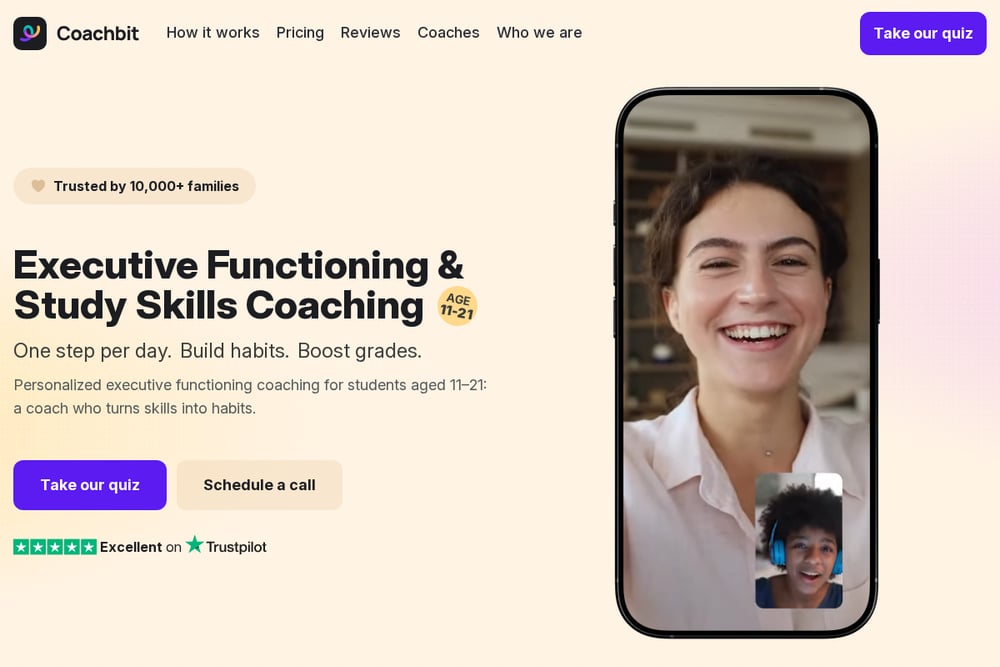 A screenshot of the Coachbit website.
Coachbit runs a structured life coaching program for teens aged 11 to 21, built around one dedicated coach who checks in every weekday. Weekly video sessions set the goal and review the wins, while app tools like a focus timer, flashcards, and calendars keep momentum between calls. Parents get visibility into progress without having to be the enforcer, which takes pressure off the relationship at home. The model is forward-looking and habit-based, so your teen learns follow-through rather than just talking about it. With 10,000-plus families and a 30-day guarantee, it's a low-risk way to test whether structured accountability clicks. Learn more at Coachbit.
#2 Life Coach | Confidence Coach | Life and Soul Teen coach
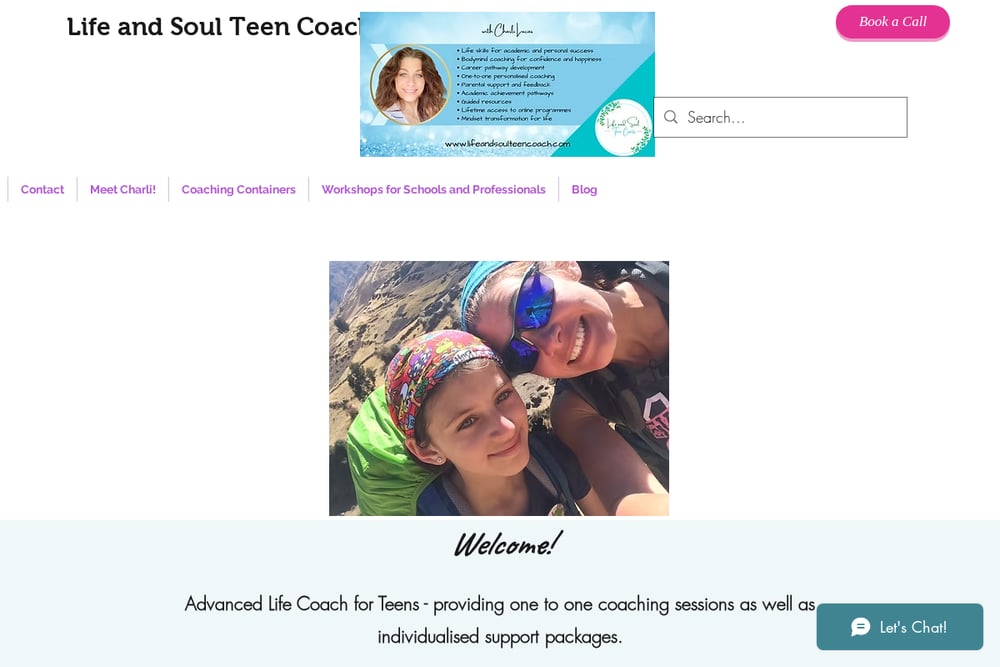 A screenshot of the Life Coach | Confidence Coach | Life and Soul Teen coach website.
Charli runs a one-to-one teen life coaching practice built on more than 20 years of professional experience with young people and a background in education. She offers individualized support packages covering confidence, academic success, revision, career pathways, personal statements, and CV writing, with everything anchored in self-understanding first. Her approach is warm but accountable: she holds space for teens, then holds them to their own empowered goals. She also runs workshops for schools and professionals, which speaks to how seriously she treats the wider ecosystem around a teen. If your child is stuck in cycles of overwhelm or self-pressure, this is a practice designed around breaking those patterns early. Visit Life and Soul Teen Coach to book a call.
#3 Positively Healthy Coaching
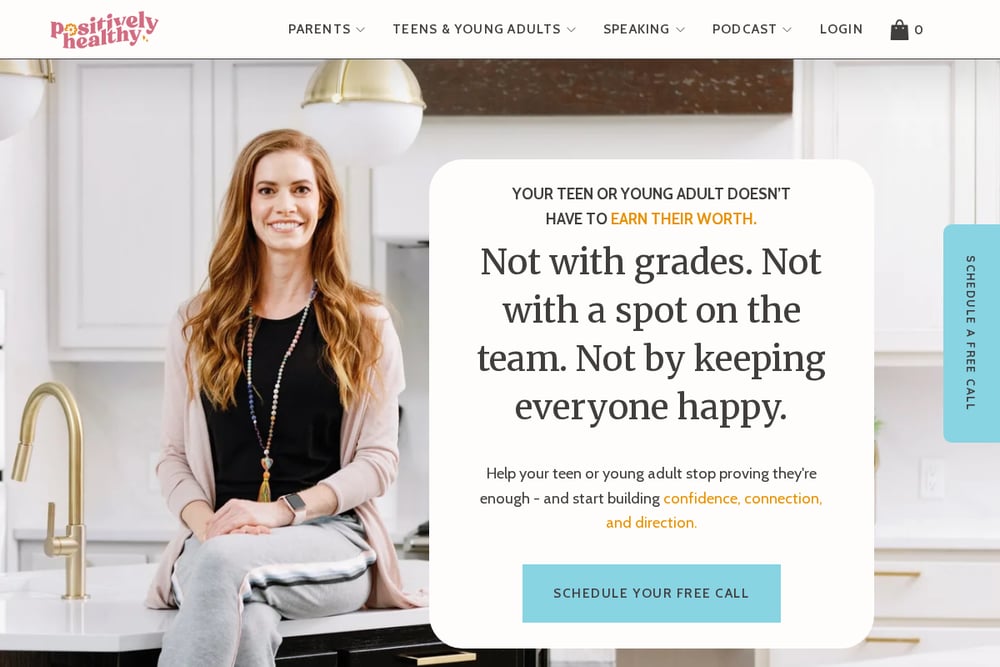 A screenshot of the Positively Healthy Coaching website.
Positively Healthy Coaching focuses on teen girls, particularly the ones who look fine on the outside and are quietly exhausted underneath. The work is built on enoughness, the settled sense of worth that doesn't have to be earned, which is a smart frame for perfectionism and comparison. Weekly one-on-one sessions teach girls to regulate stress before tests and tryouts, catch the inner critic, and separate identity from performance. It's a holistic approach that goes beyond standard life coaching training, folding in practical, science-backed tools. If your daughter redoes work that was already good or spirals after one comment, this service speaks directly to that pattern. See the approach at Positively Healthy Coaching.
#4 Andrew Petrillo Life Coaching
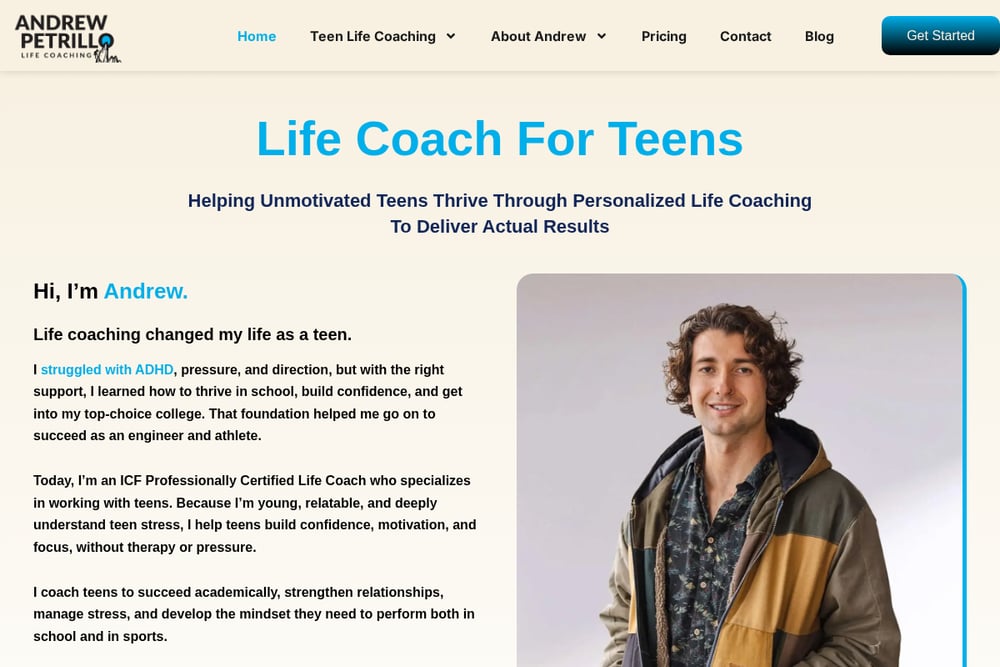 A screenshot of the Andrew Petrillo Life Coaching website.
Andrew Petrillo Life Coaching specializes in unmotivated teens, with dedicated tracks for ADHD, academic life coaching, teen girls, and parents of teenagers. Andrew is an ICF Professionally Certified Life Coach who struggled with ADHD and pressure himself as a teen, which makes him relatable in a way many adult coaches aren't. The practice offers in-person and online sessions across California, plus a team of additional coaches for families who want a specific personality fit. The focus is on confidence, motivation, focus, and taking ownership of school, relationships, and stress. If your teen shuts down around adults but opens up to someone younger, this is worth a call. Explore the team at Andrew Petrillo Life Coaching.
#5 Healing Harmony Counseling
 A screenshot of the Healing Harmony Counseling website.
Healing Harmony Counseling pairs a therapist and a life coach under one roof, offering online teen coaching for ages 13 to 25. That combination matters because it helps families tell the difference between coaching and therapy before spending months on the wrong support. The coaching itself is forward-looking and skills-based: figure out what your teen wants, break it into steps, and build habits that stick. They work with teens with ADHD, third-culture kids, and the ones who seem fine but are quietly falling apart. Sessions cover school habits, sleep, friendships, screen use, and life after high school. Learn more at Healing Harmony Counseling.
How to Choose the Right Teen Coach
Start with the actual problem, not the label. Is your teen unmotivated, overwhelmed, perfectionistic, or unsure about the future? Each of those points to a different kind of coach. Next, decide how much structure your child can tolerate. Some teens thrive with weekday check-ins and app tools, while others need a slower one-to-one relationship before they open up. Ask who delivers the sessions and what their background is. Twenty years in education looks very different from a certification and a script. Ask how progress gets measured, because confidence is hard to see but habits are not. Finally, be honest about whether you're looking at coaching or therapy. If there's anxiety, depression, or trauma in the picture, a provider who understands both will save you time. Book the free call, ask hard questions, and trust your read on whether your teen would actually talk to this person.
Where Automation Fits, and Where It Doesn't
Automation can carry the boring parts of coaching: reminders, habit streaks, session scheduling, progress dashboards, and parent updates. That's exactly what app-supported models do well, and it frees the human coach to focus on the conversation. What automation can't do is hold space. A teen who feels judged will shut down whether the check-in comes from a person or a push notification, so the human relationship stays central. A practical workflow looks like this: a short intake form captures goals and pressure points, the coach sets one weekly goal, automated nudges keep the habit visible between sessions, and the weekly call reviews what worked. Parents get a summary without becoming the enforcer. Use automation to reduce friction, not to replace the trust that makes coaching work.
The Bottom Line
There's no single right coach for every teen, but there is a right fit for yours. If structure and daily accountability matter most, a system-driven program makes sense. If your child needs someone who understands the pressure from the inside, a practice built on education experience and individualized packages is a strong starting point. If perfectionism or ADHD is the core issue, choose a specialist who speaks that language. The common thread across all five is that they treat confidence as the foundation, not an afterthought. Book a call, ask who your teen will actually be talking to, and pick the provider your child would willingly show up for. That's the one that will work.