
AI can write your code in minutes, but it can't tell you why your app buckles under load. These five platforms teach you the system design skills that keep you in the room when things break.
The New Literacy: System Design in the AI Era
Writing code is no longer the bottleneck. With AI generating production-ready code at unprecedented speed, the real challenge is knowing what to build, when to build it, and how to make it hold up when ten thousand users show up at once. System design—the discipline of specifying architecture, components, interfaces, and data flows—has become the dividing line between engineers who ship and engineers who lead. The platforms in this roundup tackle that gap from different angles: some focus on interview preparation, others on hands-on practice, and a few on making complex concepts stick through visual storytelling. Whether you're prepping for a FAANG interview or trying to keep your side project from collapsing under its own success, there's a learning approach here that fits how you think.
How We Evaluated These Platforms
We looked at five factors across every platform. First, learning approach: does it rely on passive reading or active practice? Second, content depth: does it cover fundamentals like CAP theorem and consistent hashing, or stay surface-level? Third, time commitment: can you make progress in short daily sessions, or does it demand hours of uninterrupted study? Fourth, feedback mechanisms: do you get AI-powered evaluation, peer review, or none at all? Fifth, accessibility: is there a free tier, early access, or a clear pricing path? Scalapod stood out for its visual, story-driven lessons designed for five-minute daily sessions. System Design School impressed with its structured curriculum and ex-FAANG instructor pedigree. System Design Sandbox delivered a genuinely interactive drag-and-drop environment with AI feedback. Hello Interview packed a comprehensive course into a hurry-friendly format. Codemia offered the widest range of practice problems across multiple design disciplines.
Here's a quick look at how these five platforms compare on the factors that matter most.
| Provider | Best For |
|---|---|
| System Design School | Structured interview preparation with a clear roadmap |
| Scalapod: system design, without the textbook | Visual learners who want short daily lessons |
| System Design Sandbox | Hands-on learners who want instant feedback |
| Hello Interview | Fast-track learning for busy engineers |
| Codemia | Practice-focused learners who want measurable progress |
The Five Platforms Worth Your Time
#1 System Design School
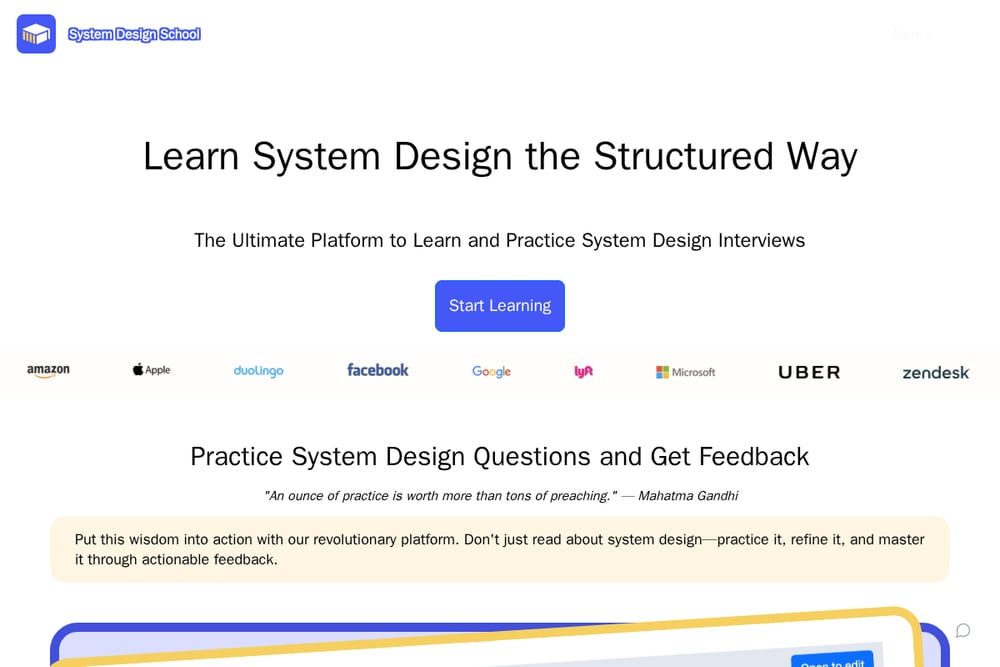 A screenshot of the System Design School website.
System Design School takes a structured, curriculum-first approach to teaching system design, built by engineers who've been through the FAANG interview gauntlet. The platform covers everything from API design and non-functional requirements to resource estimation and microservices, organized into a logical progression that mirrors how you'd actually prepare for a senior-level interview. You get a comprehensive course, common design patterns, and templates that help you solve not just one problem but a whole class of them. The emphasis is on equipping you with a conceptual toolkit rather than handing you memorized solutions. If you want a clear roadmap and don't mind following a traditional course structure, this is a strong starting point.
#2 Scalapod: system design, without the textbook
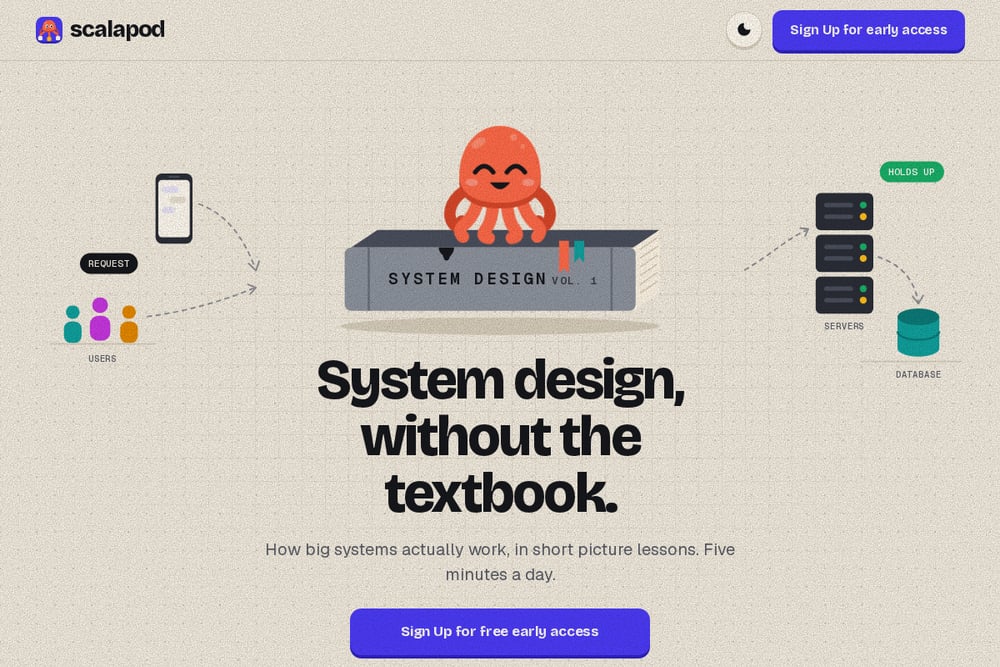 A screenshot of the Scalapod: system design, without the textbook website.
Scalapod flips the script on how system design is taught. Instead of walls of text and two-hour videos, you get one idea at a time, told as a story and drawn so you can watch it move. The lessons are designed to take about five minutes a day, making it easy to build a learning habit without blocking out hours of study time. The platform focuses on how big systems actually work—throughput, latency, availability, and the trade-offs between scaling strategies—using visual explanations that stick. It's currently in free early access on Android, so you can try it without committing a dollar. If you've ever bounced off a dense textbook or fallen asleep during a lecture, Scalapod's picture-first approach might be the unlock you need.
#3 System Design Sandbox
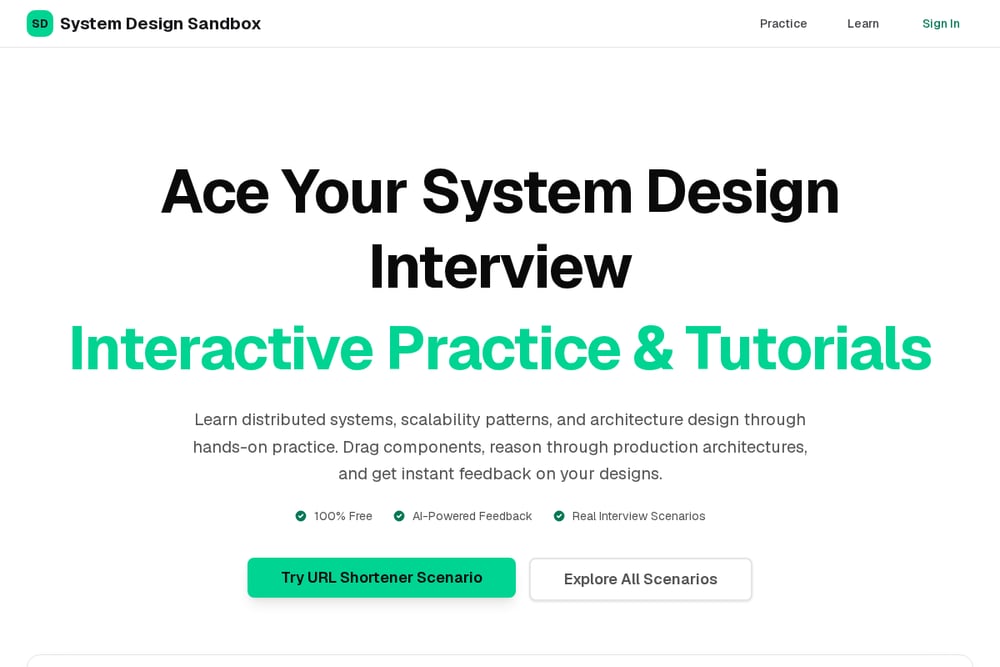 A screenshot of the System Design Sandbox website.
System Design Sandbox is exactly what it sounds like: a hands-on environment where you drag components, reason through production architectures, and get instant feedback on your designs. The platform walks you through real interview scenarios step by step, starting with functional requirements and moving through non-functional requirements, API design, and beyond. An AI interviewer guides you with follow-up questions, ensuring you cover all the essential bases before moving on. It's completely free and trusted by thousands of monthly learners from top teams. If you learn best by doing rather than reading, this interactive sandbox is worth exploring.
#4 Hello Interview
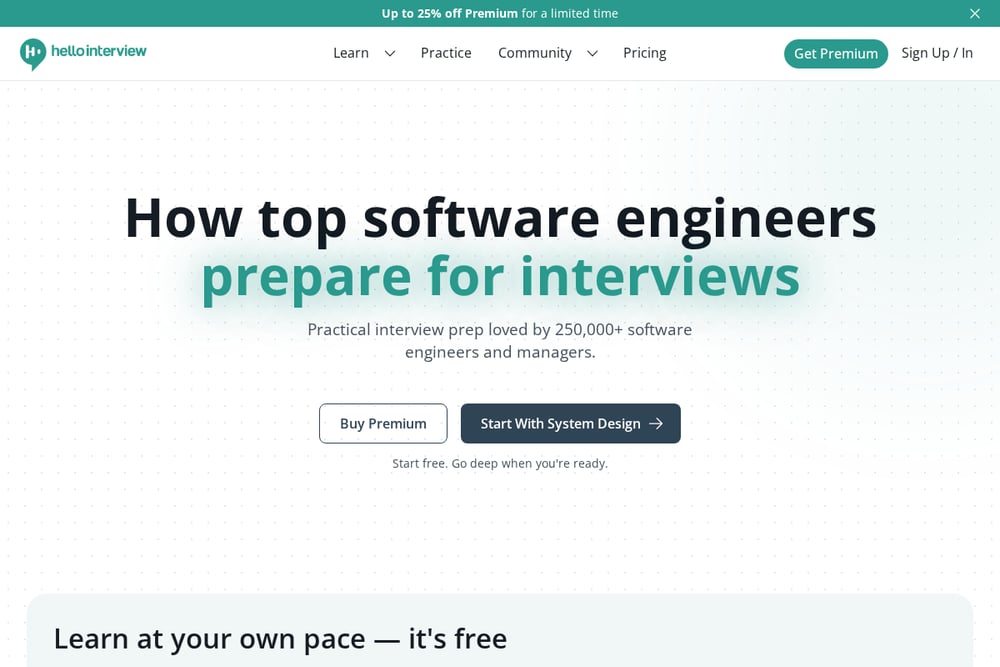 A screenshot of the Hello Interview website.
Hello Interview's 'System Design in a Hurry' course is built for engineers who need to get up to speed fast. Created by former FAANG hiring managers and staff engineers, it distills thousands of interviews worth of insight into a focused curriculum covering core concepts, key technologies, and common patterns. You'll find breakdowns of classic problems like designing Bitly, Dropbox, or Ticketmaster, along with deep dives into caching, sharding, and consistent hashing. The platform also covers advanced topics like vector databases and change data capture. If you're short on time but need comprehensive coverage, this is a solid choice.
#5 Codemia
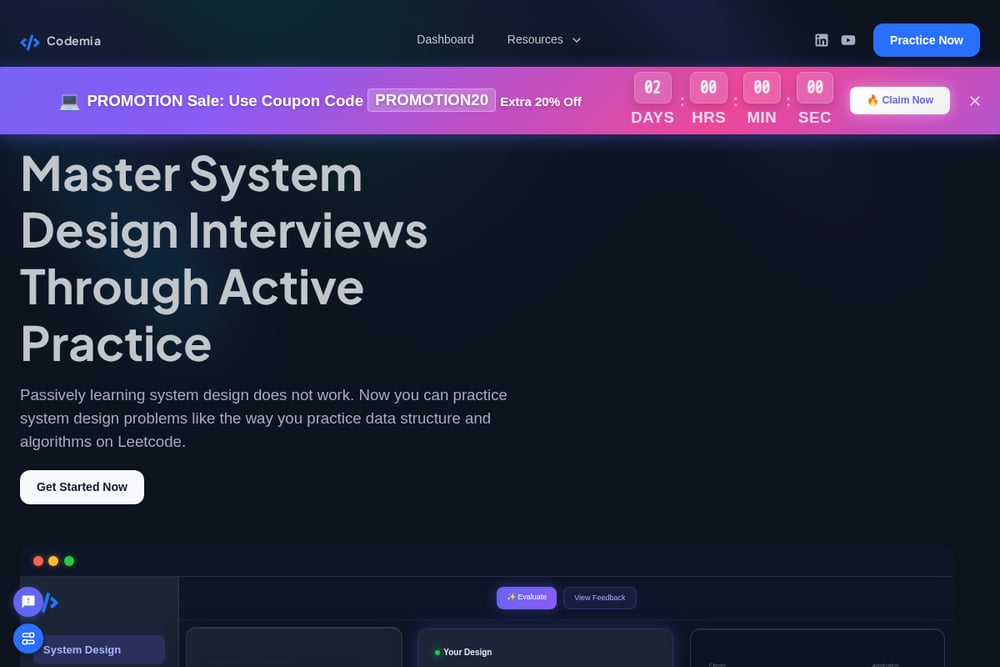 A screenshot of the Codemia website.
Codemia brings the LeetCode-style practice model to system design. Instead of passively reading about architecture, you actively solve problems like designing a file-sharing service or a rate limiter, with AI-powered evaluation and editorial solutions to check your work. The platform covers system design, object-oriented design, data structures and algorithms, ML system design, and even agentic AI design—over 200 problems in total. You get an interactive whiteboard, real-time feedback, and mock interviews with real engineers. If you thrive on repetitive practice and measurable progress, Codemia's active-learning approach will keep you engaged.
How to Choose the Right Platform for You
Start by being honest about how you learn. If you retain information better through visuals and stories, Scalapod's five-minute picture lessons will keep you consistent. If you need a structured curriculum with a clear finish line, System Design School's roadmap is hard to beat. If you learn by doing, System Design Sandbox and Codemia both offer active practice, but Sandbox leans toward guided scenarios while Codemia emphasizes volume and repetition. If you're cramming for an interview next month, Hello Interview's hurry-focused course is built for exactly that. Consider your timeline, your budget, and your attention span. Most of these platforms offer free tiers or early access, so you can sample a few before committing.
Automating Your Learning Workflow
You can pair these platforms with simple automation to stay consistent. Set a daily calendar block for Scalapod's five-minute lessons. Use a note-taking app with spaced repetition to review key concepts from Hello Interview or System Design School. If you're practicing on Codemia or System Design Sandbox, schedule weekly mock interviews and track your scores in a spreadsheet. The goal isn't to consume everything—it's to build a habit that compounds. Even fifteen minutes a day adds up to over ninety hours a year, which is more than enough to transform how you think about systems.
The Bottom Line
System design is no longer a nice-to-have skill reserved for senior engineers. As AI writes more of the code, the engineers who understand how systems hold up under pressure will be the ones who lead. The five platforms here take different paths to the same destination: helping you think clearly about architecture, trade-offs, and scale. Pick the one that matches how you learn, commit to a few minutes a day, and watch your confidence grow. Your future self—the one calmly debugging a production incident at 2 a.m.—will thank you.