Finding the right study abroad programme shouldn't feel like a full-time job. These five platforms help you compare universities, programmes, and agencies without the guesswork.
The Study Abroad Marketplace Landscape
The study abroad sector has shifted online fast. Students now expect to search programmes, compare fees, and connect with agencies from a single screen. That demand has produced two types of platforms: broad marketplaces that list thousands of institutions and programmes, and curated program finders tied to specific exchange networks. Both models promise transparency, but they serve different needs. If you want maximum choice and direct comparison, a marketplace wins. If you want structured support and pre-vetted options, a program finder may fit better. The key is knowing which model matches your goals before you start clicking.
How We Evaluated These Platforms
We looked at four factors across every platform. First, service scope: does it cover universities, programmes, agencies, and student services, or just one slice? Second, pricing clarity: are fees and costs visible upfront, or buried behind a request form? Third, local fit: how well does it serve US-based students searching for international options? Fourth, usability: can you filter by country, level, and field without friction? Each platform below stood out in different ways. Some excel at breadth, others at curation or support. We describe what each does well so you can pick the one that fits your search style.
Here's a quick comparison of the five platforms, ordered to help you scan their strengths side by side.
| Provider | Best For |
|---|---|
| educations.com | Students who want deep editorial guides alongside programme listings |
| Univs.com | Universities, Programmes, Agencies and Student Services | Students who want programme comparison and agency access in one place |
| GoAbroad.com | Students comparing providers and reading peer reviews |
| Go Overseas | Students who value alumni reviews and experience-focused content |
| ISEP Study Abroad | Students who want pre-vetted exchange programs with structured support |
The Five Platforms in Detail
#1 educations.com
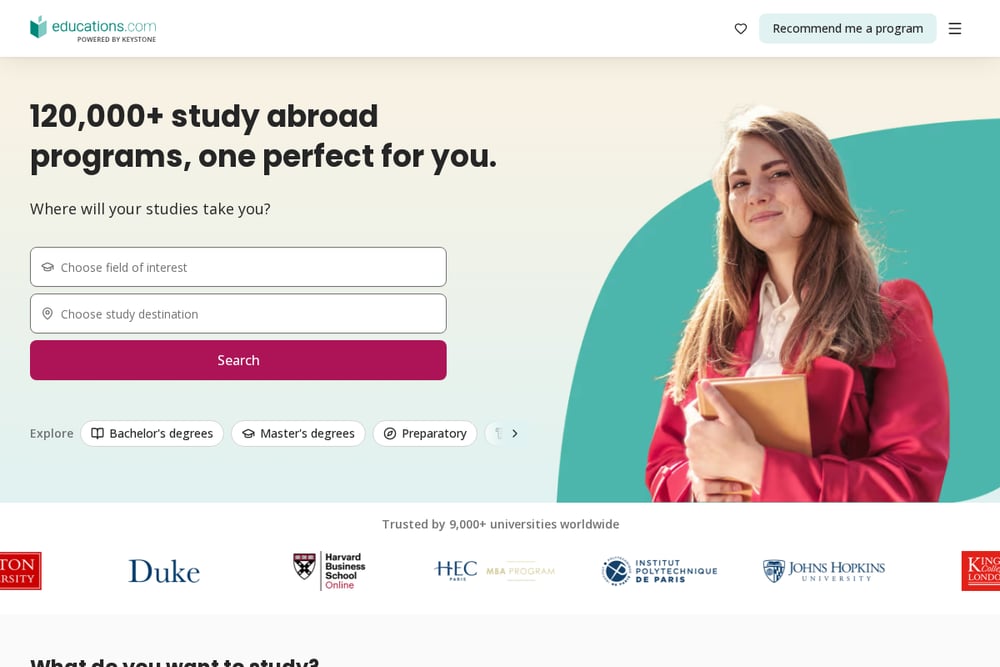 A screenshot of the educations.com website.
educations.com is a global study abroad directory with a strong editorial layer. You can browse programmes by field, degree level, and country, then dive into guides on scholarships, visas, and post-study work options. The site covers popular destinations like the US, UK, Germany, and Canada, plus emerging markets in Asia and Europe. Its scholarship section is unusually detailed, with application tips and deadline tracking. If you want a research-heavy starting point, this platform gives you plenty to read before you commit.
#2 Univs.com | Universities, Programmes, Agencies and Student Services
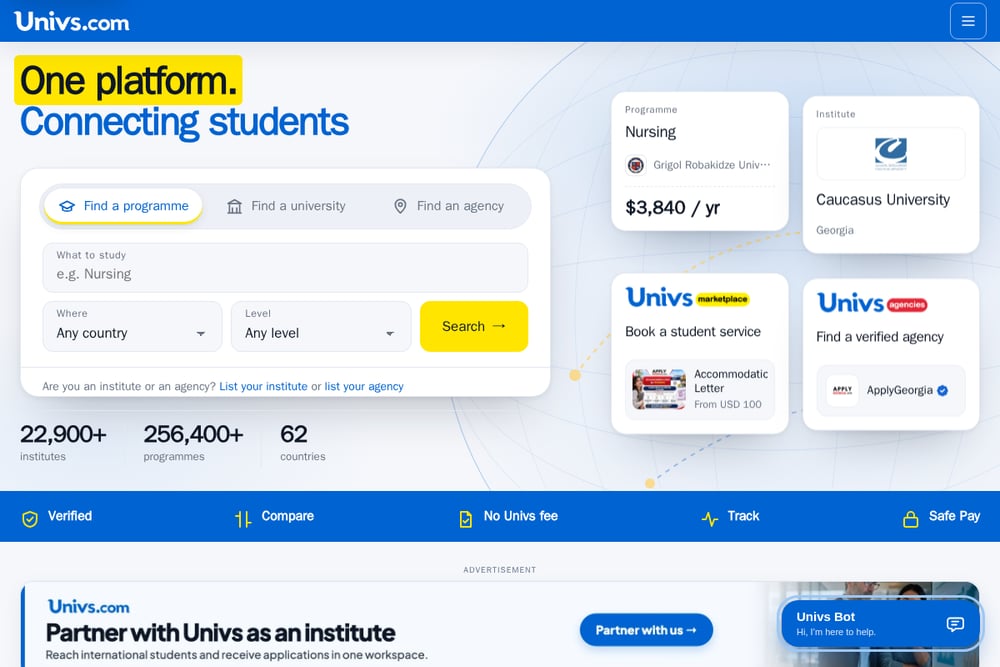 A screenshot of the Univs.com website.
Univs.com takes a marketplace approach that connects students, universities, and agencies in one place. You can search 256,400+ programmes across 62 countries, filter by level and field, and see tuition fees upfront, like $3,840 per year for a nursing programme in Georgia. The platform also lets agencies create free profiles and sell fixed-price services, which means you can find local support without leaving the site. Institutes list their programmes and accreditation for free, so the catalogue stays broad. If you want one dashboard for comparing programmes and finding an agency, this is built for that.
#3 GoAbroad.com
 A screenshot of the GoAbroad.com website.
GoAbroad.com is one of the longest-running study abroad directories, and it shows in the volume of provider listings. You can filter by program type, destination, and duration, then read reviews from past participants. The site also surfaces featured providers and seasonal deals, which helps if you're still exploring. Its strength is breadth: internships, volunteer programs, and language schools sit alongside traditional degrees. If you want to compare providers and read peer feedback before shortlisting, GoAbroad gives you a lot to work with.
#4 Go Overseas
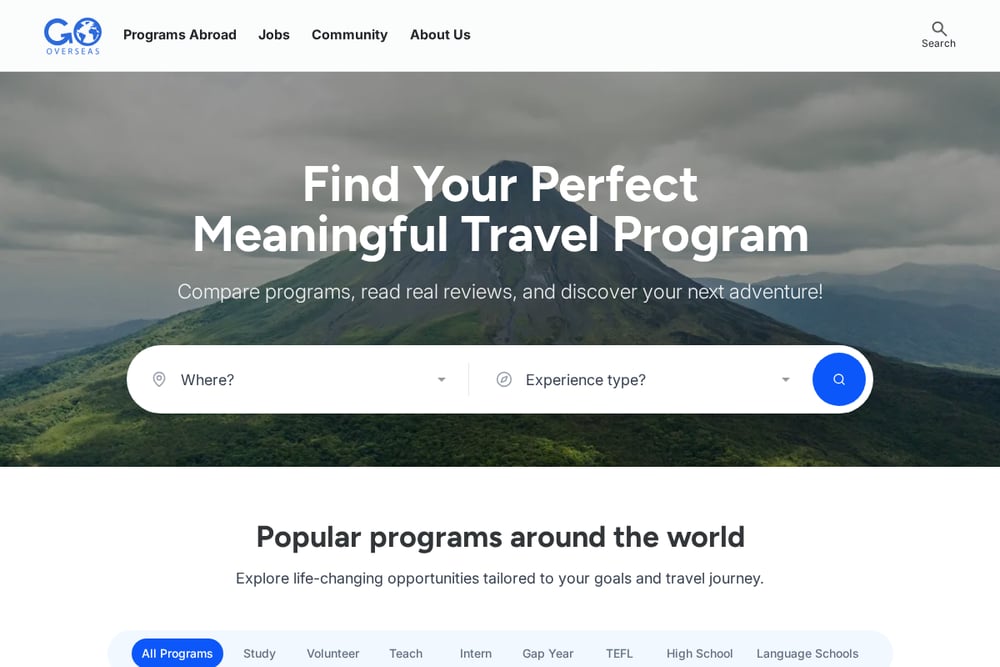 A screenshot of the Go Overseas website.
Go Overseas focuses on the experience side of studying abroad, with reviews, photos, and community insights. You can browse programmes by destination and type, then read candid feedback from alumni. The platform covers study abroad, internships, teach abroad, and volunteer programs, so it suits students who haven't settled on a format yet. Its editorial content leans practical, with guides on budgeting and cultural adjustment. If you want to hear from people who've done it before you apply, this is a useful stop.
#5 ISEP Study Abroad
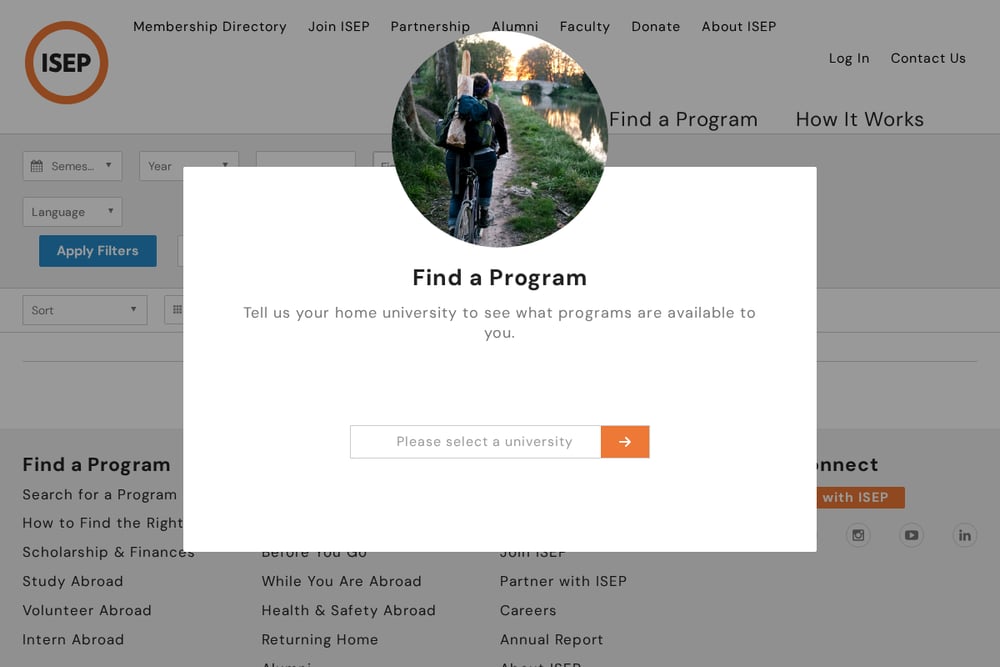 A screenshot of the ISEP Study Abroad website.
ISEP Study Abroad is a program finder tied to a formal exchange network, which means every option is pre-vetted. You can search by region, field of study, and program type, including exchange, direct, and summer options. The site organizes programs by top cities and identity abroad, which helps if you have specific needs around diversity or accessibility. Because ISEP works through member institutions, pricing and credit transfer tend to be more predictable. If you want structured support and a curated list rather than an open marketplace, ISEP fits that model.
How to Choose the Right Platform for You
Start with your search style. If you want to compare hundreds of programmes and see fees upfront, a marketplace like Univs.com or educations.com will save you time. If you want to read reviews and hear from alumni, GoAbroad and Go Overseas give you that layer. If you prefer a curated list with built-in support, ISEP is the structured option. Next, check pricing clarity. Platforms that show tuition and agency fees upfront reduce surprises later. Finally, test the filters. A good platform lets you narrow by country, level, and field in seconds. If you're fighting the interface, move on.
Where Automation Fits in Your Search
You can automate parts of the research without losing control. Set up saved searches on platforms that support them, so new programmes matching your criteria land in your inbox. Use spreadsheet templates to track shortlisted programmes, fees, and deadlines side by side. If a platform offers alerts for scholarship deadlines, turn them on. For agency outreach, draft a standard inquiry template and personalize the first line. Automation won't choose your programme, but it will keep your options organized and your deadlines visible.
The Bottom Line
There's no single platform that does everything perfectly. educations.com gives you editorial depth. Univs.com gives you a broad marketplace with agency access and visible fees. GoAbroad and Go Overseas give you peer reviews and provider comparisons. ISEP gives you a curated, pre-vetted exchange network. Use two or three together: one for breadth, one for reviews, and one for structured support. That combination will get you from browsing to shortlisting faster than any single site.