
Want to learn how markets really work before you risk real money? These five student-run trading organizations give you the tools, community, and hands-on experience to think like a professional.
The Rise of Student Trading Clubs
Student trading clubs have become a vital training ground for the next generation of traders and investors. They offer a low-risk environment to learn about futures, options, macro, and trading psychology. Unlike traditional finance clubs, these groups emphasize hands-on practice through paper trading, portfolio management, and competitions. They also provide networking opportunities and career prep for roles in proprietary trading, asset management, and fintech. As markets grow more complex, these clubs fill the gap between classroom theory and real-world execution.
How We Evaluated These Clubs
We looked at five key factors: educational scope, hands-on opportunities, community engagement, accessibility, and career support. Each club was assessed on how well it delivers practical trading knowledge, whether through workshops, market recaps, or simulated trading. We also considered how easy it is for new members to join and participate, regardless of prior experience. Finally, we examined the resources available for professional development, such as interview prep and alumni networks. No single club excels at everything, but each offers a unique blend of strengths.
Here's a quick comparison of the five clubs, highlighting what makes each one stand out.
| Provider | Best For |
|---|---|
| Undergraduate Research and Trading | Options-focused learners |
| HTC | Hedging and Trading Collective at UF | Hands-on portfolio experience |
| Trojan Futures Trading | Commodity trading aspirants |
| Algorithmic Trading | Quantitative and algo enthusiasts |
| Western Algorithmic Trading Club | Quantitative project seekers |
A Closer Look at Each Club
#1 Undergraduate Research and Trading
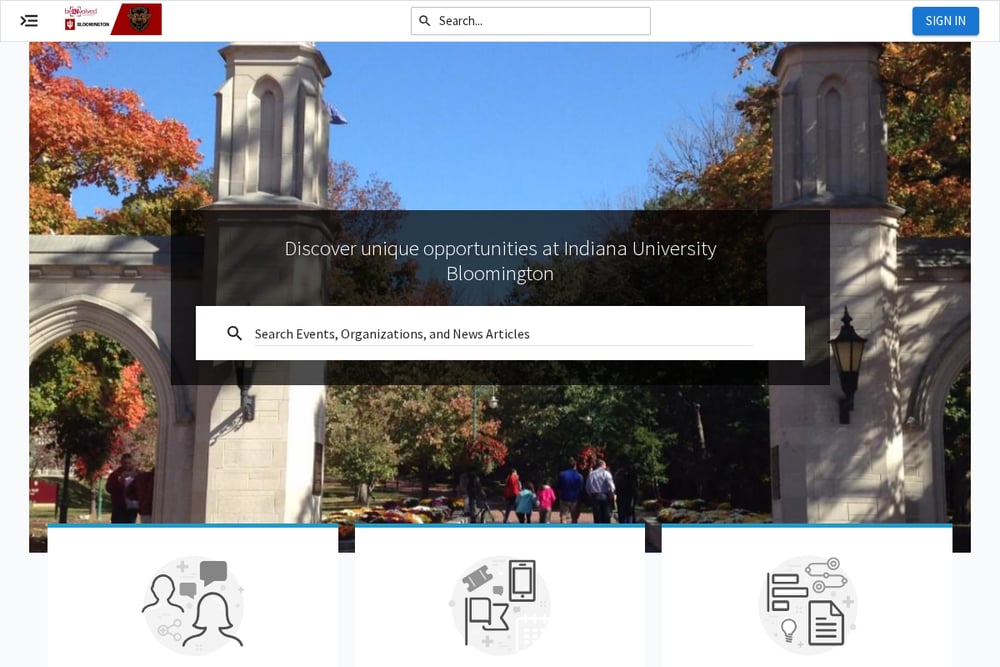 A screenshot of the Undergraduate Research and Trading website.
Undergraduate Research and Trading (URT) is the only club at Indiana University dedicated to options trading. It teaches members how to strategize and think originally about markets, covering equities, fixed income, and futures. You'll learn various options techniques and test them on a simulated platform. URT does not manage a real portfolio, but it encourages personal trading at your own risk. The club also provides career insights and networking opportunities for aspiring proprietary traders.
#2 HTC | Hedging and Trading Collective at UF
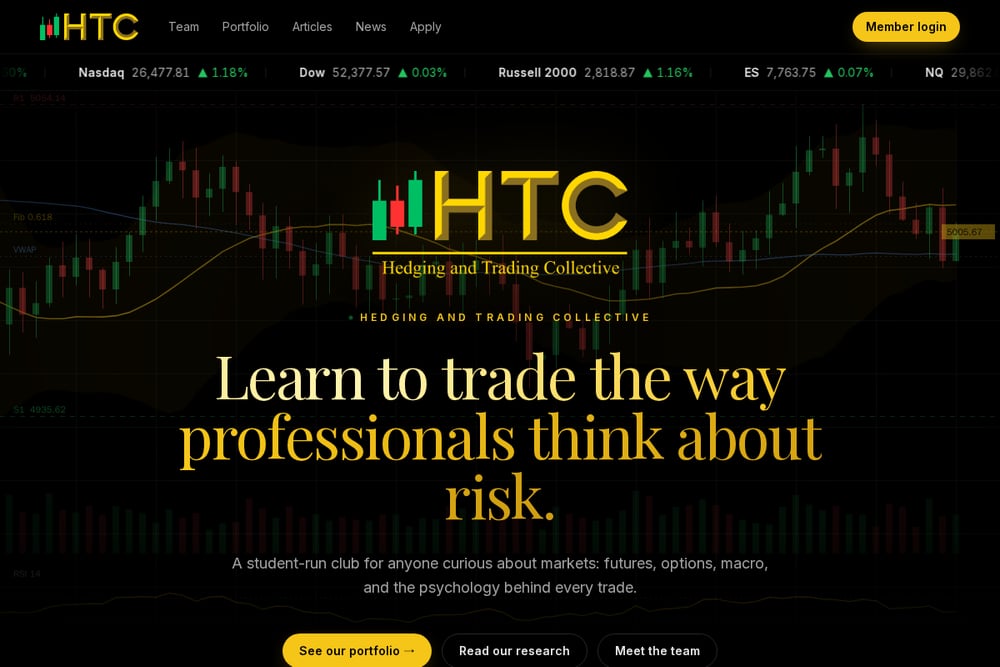 A screenshot of the HTC | Hedging and Trading Collective at UF website.
The Hedging and Trading Collective (HTC) at the University of Florida is a student-run club that teaches you how professionals think about risk. You'll explore futures, options, macro, and trading psychology through weekly meetings, morning market calls, and hands-on workshops. HTC manages a real club portfolio and publishes every position and its performance, giving you transparent, practical experience. Members also compete in a paper-trading competition across stocks, futures, forex, and crypto. Applications for Spring 2027 are closed, but you can follow HTC on Instagram and LinkedIn for updates.
#3 Trojan Futures Trading
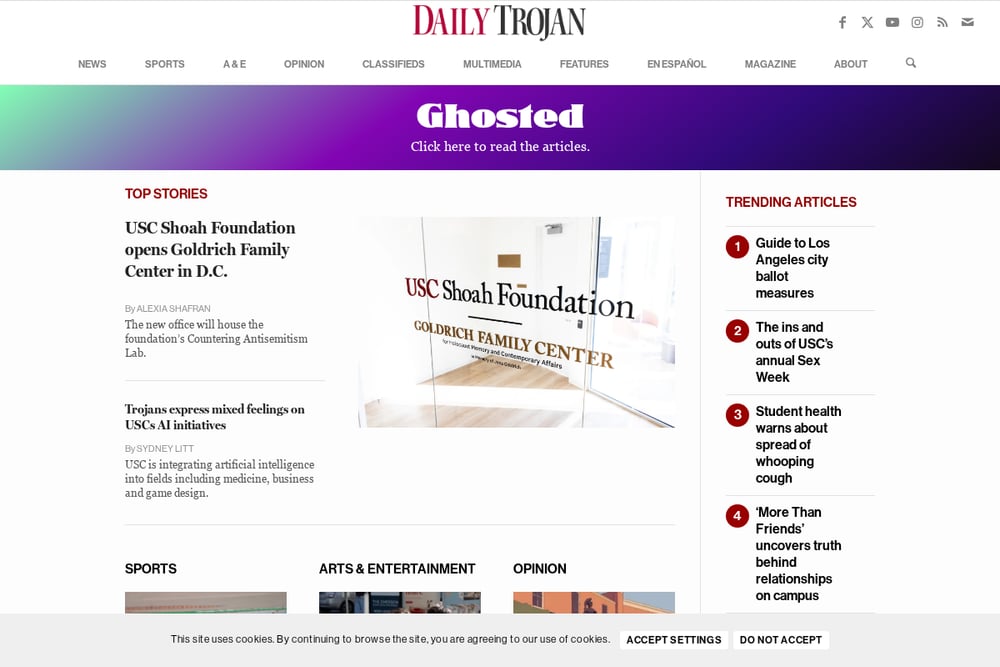 A screenshot of the Trojan Futures Trading website.
Trojan Futures Trading is the first trading club at USC focused on futures and commodity trading. It was founded to provide a formal pathway into the commodity trading industry, which many students found difficult to break into. The club offers a general membership program and competes in trading competitions. You'll gain exposure to futures markets and connect with peers who share your interest. It's a new but promising organization for anyone curious about commodities.
#4 Algorithmic Trading
 A screenshot of the Algorithmic Trading website.
Imperial College Union's Algorithmic Trading society, known as AlgoSoc, is for anyone interested in quantitative, algorithmic, or basic financial markets. It runs weekly events, including an annual inter-uni hackathon called Algothon and speaker sessions with sponsor firms. You can join an 8-week AlgoCourse to learn the basics, taught by fellow Imperial markets interns. The society also manages a student-run fund, Queen's Tower Capital, where you can create trading strategies. It's an inclusive community that welcomes all experience levels.
#5 Western Algorithmic Trading Club
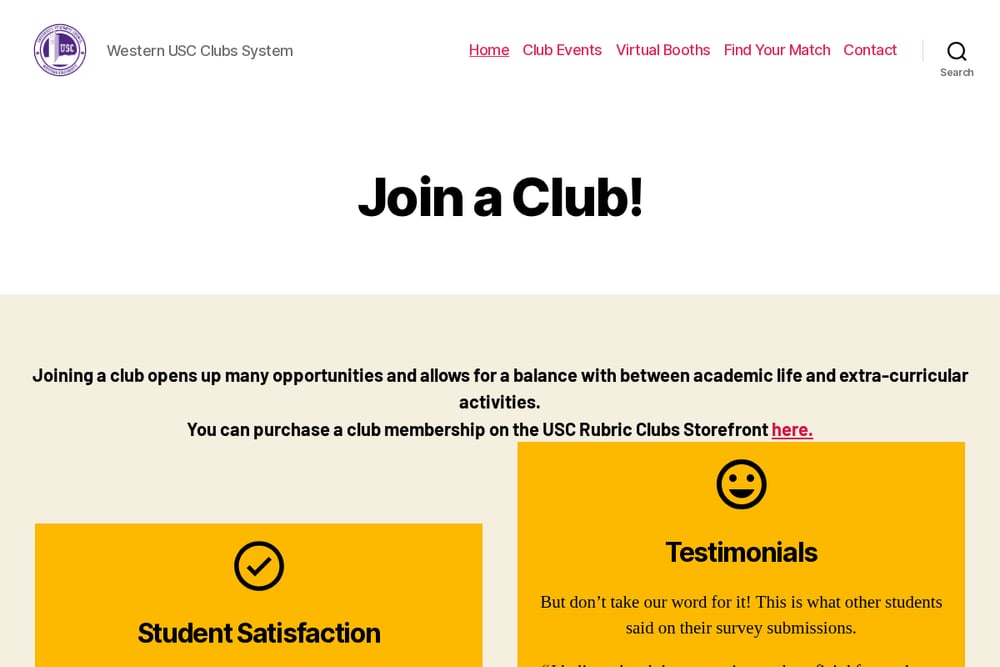 A screenshot of the Western Algorithmic Trading Club website.
Western Algorithmic Trading Club at Western University uses quantitative solutions to explore the trading industry. It prioritizes student engagement through projects, events, and seminars. You'll participate in peer-to-peer informational sessions and hands-on projects covering machine learning, valuation, and cryptocurrency. The club welcomes students from all faculties, regardless of coding proficiency. It's a great place to develop quantitative skills in a supportive environment.
How to Choose the Right Club for You
Start by identifying your interests: are you drawn to options, futures, macro, or quantitative strategies? Then consider the time commitment and format. Some clubs meet weekly with structured workshops, while others focus on competitions or projects. Check if the club manages a real portfolio or uses simulations, as this affects the hands-on experience. Finally, look at career support and alumni networks, which can help you land internships and jobs. Visit each club's website and social media to get a feel for their culture before applying.
Automating Your Trading Education
You can streamline your learning by setting up a routine: follow market news, track a few key indicators, and journal your trades. Use free tools like TradingView for charting and a spreadsheet for logging. Many clubs provide market recaps and trade reviews that you can automate into your calendar. Join online communities to discuss ideas and get feedback. The key is consistency, not complexity.
The Bottom Line
These five student trading clubs offer distinct paths into the world of markets. Whether you want to trade options, futures, or algorithms, there's a community for you. The best choice depends on your goals, experience, and willingness to engage. Remember, the real value comes from active participation, not just membership. So pick one, show up, and start learning.