
Students are waiting weeks or months for mental health support. These five platforms are closing that gap with technology that supports students and the teams who serve them.
The Student Mental Health Waiting List Problem
Universities are facing a mental health crisis. Demand for counseling services has skyrocketed, but staffing hasn't kept up. Students often wait weeks or months for an appointment, and that waiting period can be the most dangerous time. The platforms in this roundup tackle that gap from different angles. Some offer immediate teletherapy, others provide peer support, and a few focus on the operational side for university wellbeing teams. The common thread? Technology that extends care beyond the counseling center.
How We Evaluated These Platforms
We looked at five factors: service scope, pricing clarity, local fit, student experience, and staff tools. For service scope, we considered whether the platform offers direct clinical care, peer support, or operational software. Pricing clarity mattered because budget transparency is crucial for universities. Local fit meant how well the platform adapts to different campus sizes and needs. Student experience covered ease of use and privacy. Staff tools examined how well the platform supports wellbeing teams with referrals, risk management, and reporting. Each platform stood out in different areas. Sthrive impressed with its dual focus on students and staff. Uwill excelled in immediate access to licensed counselors. TimelyCare showed strength in data-driven outcomes. Togetherall offered a unique anonymous peer community. Care Solace provided robust care coordination for K-12 and higher ed.
Here's a quick look at the five platforms, ordered by their relevance to the student mental health waiting list challenge.
| Provider | Best For |
|---|---|
| Uwill | Immediate teletherapy access |
| Sthrive | Student wellbeing | Supporting students on waiting lists |
| TimelyCare | Comprehensive virtual care |
| Togetherall | Anonymous peer support |
| Care Solace | Care coordination for schools |
The 5 Platforms in Detail
#1 Uwill
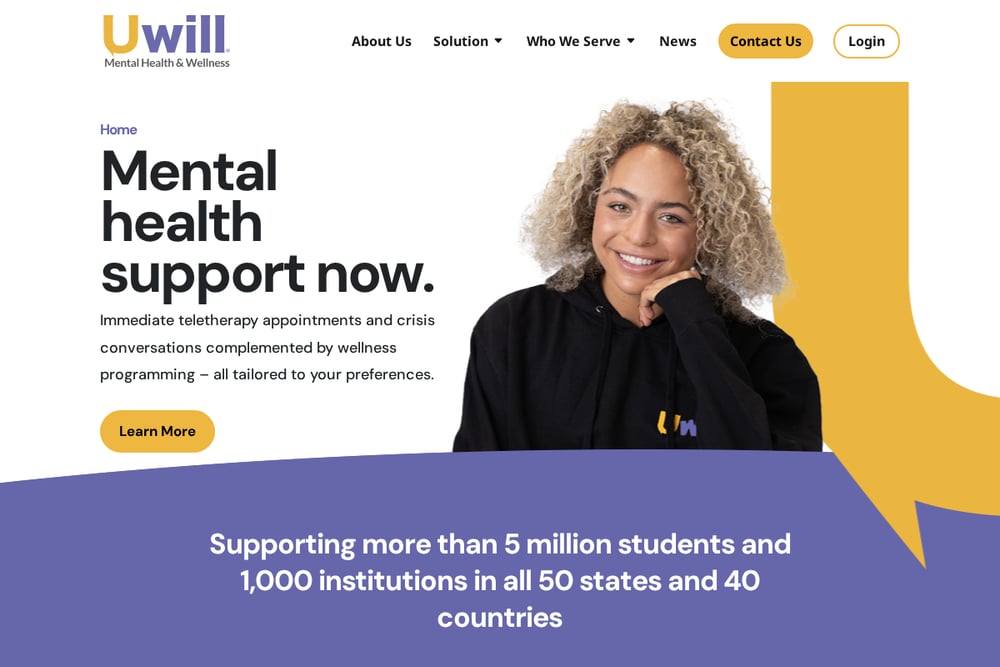 A screenshot of the Uwill website.
Uwill provides immediate teletherapy appointments and crisis support for students. With a network of licensed counselors, students can often get an appointment within five minutes. The platform also offers wellness programming tailored to student preferences. Uwill serves over 5 million students across 1,000 institutions in all 50 states and 40 countries. Their focus on speed and choice makes them a strong option for campuses needing rapid access to care. You can learn more about their solution on their website.
#2 Sthrive | Student wellbeing
 A screenshot of the Sthrive | Student wellbeing website.
Sthrive bridges the gap between asking for help and receiving support. It offers a student app with daily check-ins, goals, coping exercises, and progress tracking. For university wellbeing teams, it provides staff software to manage referrals, waiting lists, risk, drop-ins, follow-ups, and outcomes. The platform is designed to support students while they wait, without holding their wellbeing data. Sthrive is currently seeking pilot universities to explore its service model. You can explore the student app and staff software demos on their website.
#3 TimelyCare
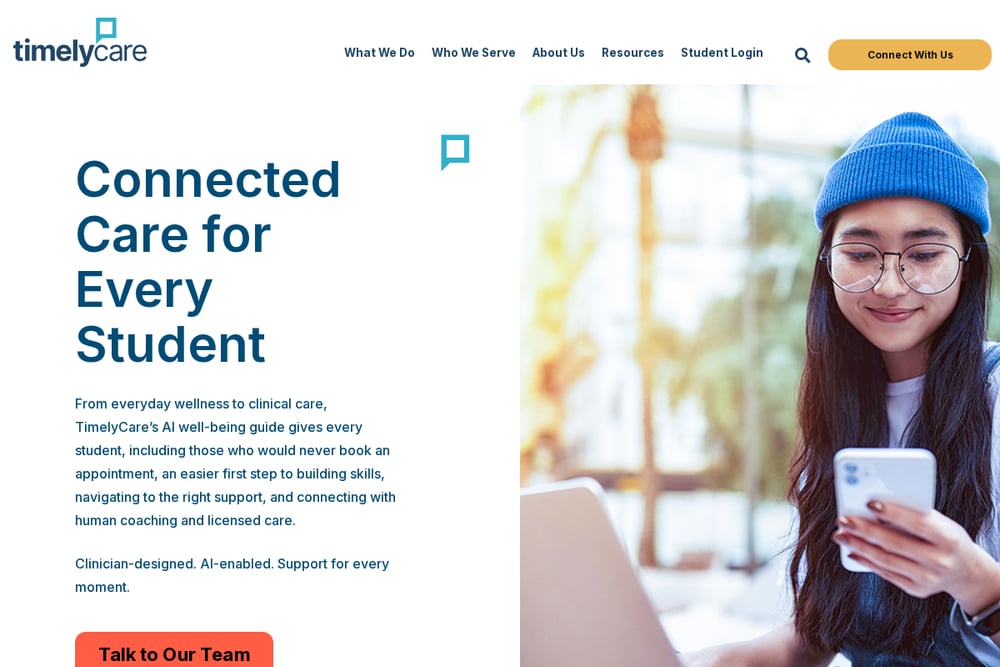 A screenshot of the TimelyCare website.
TimelyCare offers a comprehensive virtual health and well-being solution for students. Their services include TalkNow, scheduled counseling, psychiatry, and digital self-care. They also provide peer community and care navigation. TimelyCare's AI well-being guide helps students take the first step toward support. Data shows that 76% of students who use TimelyCare improve or achieve remission by their third counseling visit. They also report higher retention rates at partner campuses. You can find more details on their website.
#4 Togetherall
 A screenshot of the Togetherall website.
Togetherall provides a safe, anonymous space for students to connect with peers 24/7. It is free for students at partner universities and colleges. There is no referral, no waiting list, and no real name required. Licensed clinicians monitor the community around the clock. Students can browse or post anonymously, and support is available day or night. This platform is ideal for students who may not seek traditional counseling. You can join for free if your institution partners with Togetherall.
#5 Care Solace
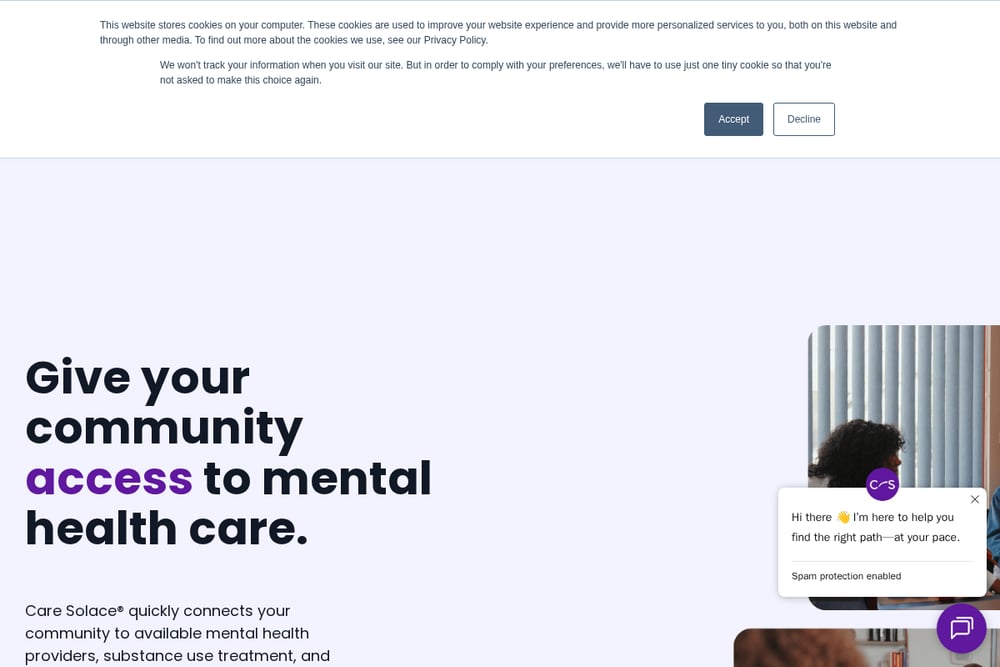 A screenshot of the Care Solace website.
Care Solace offers care coordination and a collaboration platform for schools. It helps K-12 districts and higher education institutions connect students, staff, and families to mental health and social service support. The platform includes warm handoff referrals, support tracking, and a self-service care match tool. It is designed to reduce administrative burden and provide robust reporting. Care Solace has served over 31 million students, staff, and family members across 1,100+ school systems. You can learn more about their services on their website.
How to Choose the Right Platform
Start by identifying your biggest gap. If students wait too long for counseling, prioritize platforms with immediate teletherapy like Uwill or TimelyCare. If your wellbeing team is overwhelmed by waiting list management, consider Sthrive's staff software. For students who need peer connection, Togetherall offers anonymous community support. If you need help coordinating external referrals, Care Solace is built for that. Also consider your budget, existing services, and student preferences. Many universities combine multiple solutions to cover different needs.
Automation and Workflow
Automation can streamline student support. Sthrive automates check-ins, risk flagging, and reporting for staff. TimelyCare uses AI to guide students to the right care. Care Solace automates provider matching and referral tracking. These tools reduce manual work so staff can focus on students. When evaluating platforms, look for integrations with your student information system and counseling center workflows. The right automation frees up time for human connection.
The Bottom Line
The student mental health crisis demands innovative solutions. The five platforms here offer different paths to support. Uwill and TimelyCare provide rapid access to clinical care. Sthrive focuses on the waiting period with tools for students and staff. Togetherall builds peer community. Care Solace coordinates care across systems. Your choice depends on your campus needs and resources. But one thing is clear: technology can help bridge the gap between asking for help and getting it.