Structural heart imaging is unforgiving. You get one look, one chance, and the next step depends on whether you can read the anatomy in real time. These five platforms help you build that skill before you are standing at the table.
The Structural Heart Training Landscape
Structural heart programs are expanding fast, and the imaging demands are rising with them. Fellows and early-career cardiologists need more than lectures. They need repetition, case-based decision-making, and a way to practice the checks that gate each procedural step. The market has responded with a mix of simulation platforms, device-company academies, and independent curricula. Some focus on general echo skills. Others go deep on specific valves, devices, and workflows. The gap most platforms leave open is the space between textbook imaging and the actual procedural decision. That is where independent, case-driven education is starting to matter.
How We Evaluated These Platforms
We looked at the same factors across every platform. First, scope: does it cover the imaging decisions you actually face, or just general anatomy? Second, format: are there interactive quizzes, case studies, and answer-by-answer feedback, or only passive video? Third, independence: is the content tied to a single manufacturer, or can it speak freely about pitfalls and troubleshooting? Fourth, accessibility: can you start without a sales rep, a purchase order, or a institutional login? Fifth, practical fit: does it map to the workflow of a fellow, an echo cardiologist, or an interventionalist? Each platform below stands out on a different combination of these factors.
Here is a quick look at how the five platforms compare on focus, format, and who they serve.
| Provider | Best For |
|---|---|
| MyEchocardiography | General echo simulation and certification |
| SAPIEN M3 Training | Independent Fellow Education | Independent, case-based SAPIEN M3 imaging practice |
| Echo Simulator | Integrated 3D cardiac anatomy and physiology training |
| Philips IGTD Academy - Structural Heart | Device-specific Philips structural heart workflows |
| Virtual TEE (PIE, University of Toronto) | Free TEE fundamentals and reference |
The Five Platforms in Detail
#1 MyEchocardiography
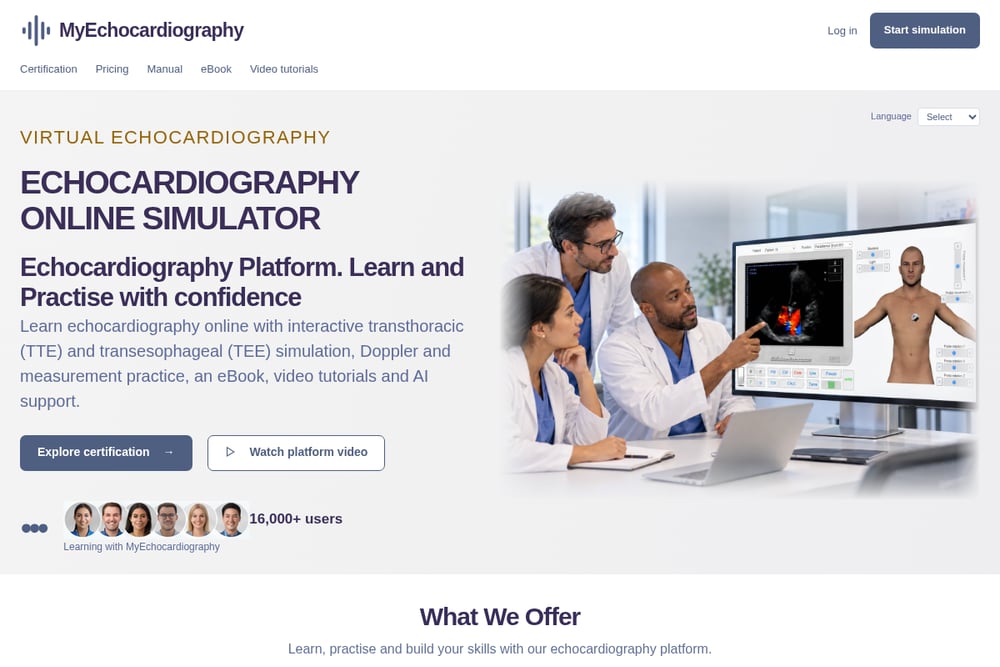 A screenshot of the MyEchocardiography website.
MyEchocardiography is a broad echocardiography learning platform built around an interactive TTE and TEE simulator. You can practice probe positioning, standard views, Doppler, and measurements in a virtual environment. The platform adds an eBook, video tutorials, and an AI assistant with a professor avatar for voice-based guidance. A structured certification program includes module quizzes, mid and final exams, and three certificates. Pricing is transparent, with a complete certification program at $499.99 and access plans starting at $29.99. It is a strong fit if you want a general echo foundation with simulation and a credential at the end.
#2 SAPIEN M3 Training | Independent Fellow Education
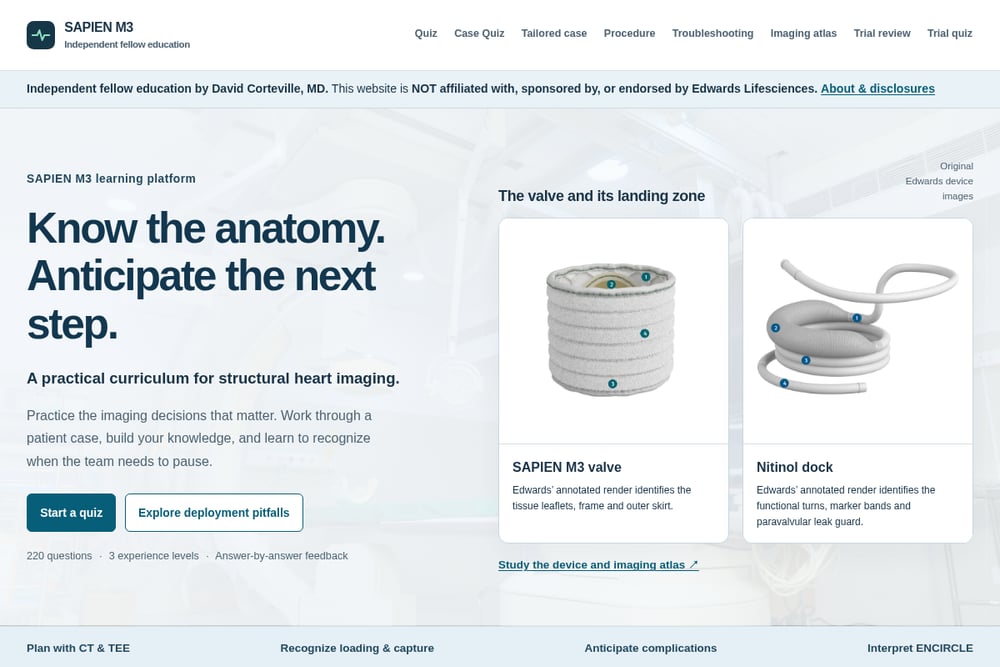 A screenshot of the SAPIEN M3 Training | Independent Fellow Education website.
SAPIEN M3 Training is an independent educational platform created by David Corteville, MD, for cardiology fellows. It focuses on the imaging decisions that matter in structural heart cases, with 220 source-linked questions across three experience levels and answer-by-answer feedback. You can work through a patient case, study the device and imaging atlas, review trial data, and practice troubleshooting deployment pitfalls. The curriculum is explicitly not affiliated with or endorsed by Edwards Lifesciences, which means it can speak plainly about when the team needs to pause. Tracks are segmented for fellows and early-career physicians, echo and IC cardiologists with less than two years of structural experience, and more advanced operators. If you want a practical, case-driven curriculum for SAPIEN M3 and structural heart imaging, this is built for you.
#3 Echo Simulator
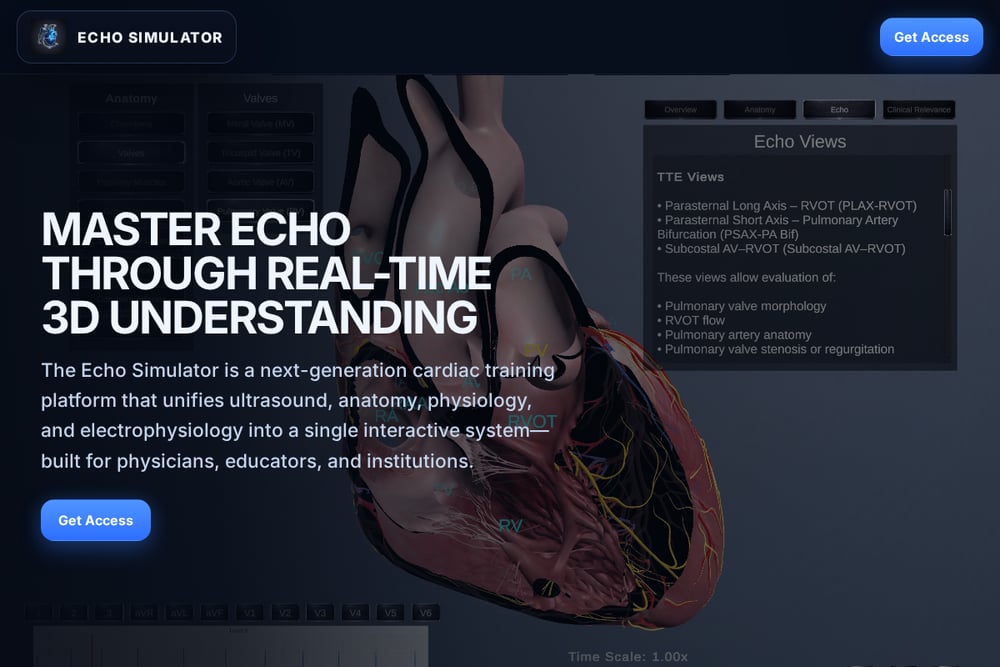 A screenshot of the Echo Simulator website.
Echo Simulator is a real-time 3D cardiac training platform that unifies ultrasound, anatomy, physiology, and electrophysiology. It covers TTE, TEE, and ICE through interactive 3D cardiac anatomy, realistic imaging relationships, Doppler tools, pathology, and procedural context. The platform also supports electrophysiology education, including conduction, activation patterns, ECG relationships, mapping, and pacing. It was developed with experience from the University of Minnesota Visible Heart Laboratories and cardiothoracic anesthesiology collaboration. This is a good choice if you want to understand how structure, function, and electrical activity interact in a single spatial environment.
#4 Philips IGTD Academy - Structural Heart
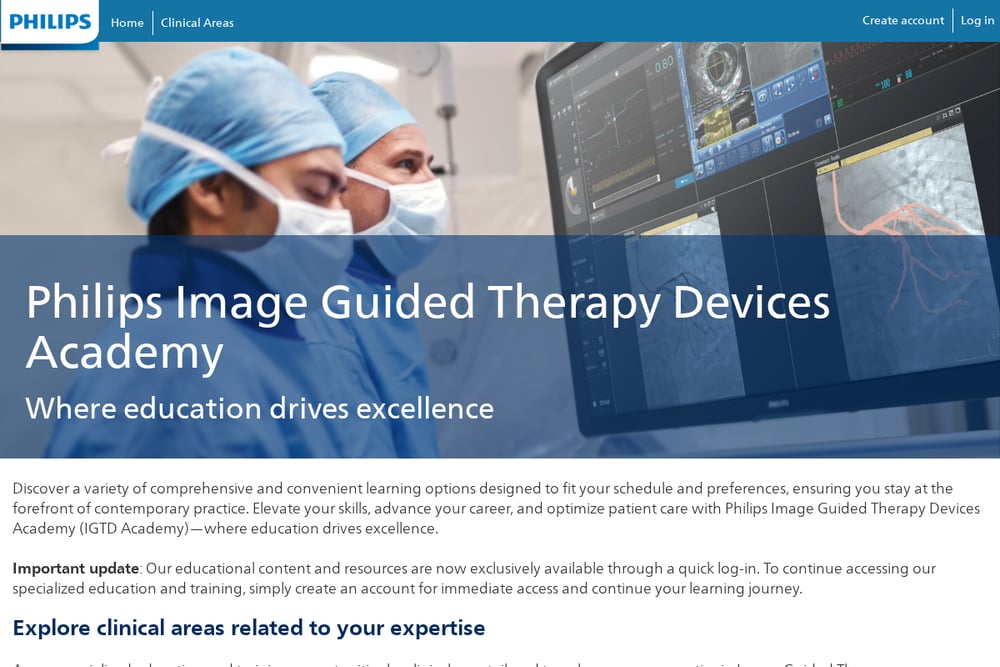 A screenshot of the Philips IGTD Academy - Structural Heart website.
Philips IGTD Academy is a manufacturer-backed learning platform focused on image-guided therapy for structural heart procedures. The structural heart section includes learning plans on 3D ICE-guided LAAO and transitioning to moderate sedation protocols. Lessons cover imaging protocols, workflow simplification, and live 2D and 3D image guidance. Access requires creating an account or logging in, and some content is gated behind that registration. The content is closely tied to Philips VeriSight Pro technology and related workflows. If your program uses Philips imaging systems, this is a direct way to build device-specific confidence.
#5 Virtual TEE (PIE, University of Toronto)
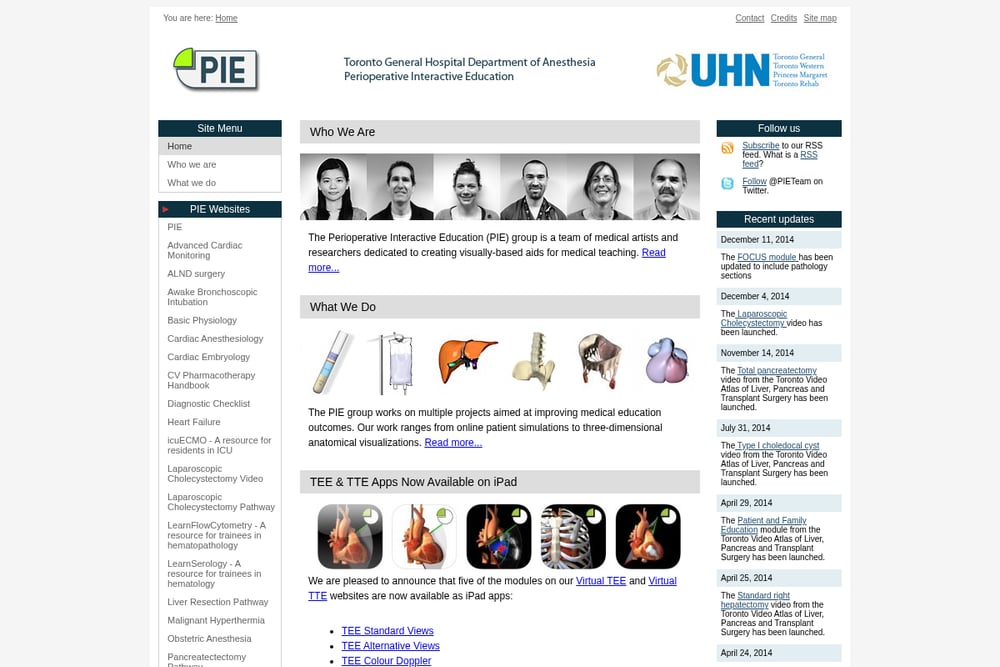 A screenshot of the Virtual TEE (PIE, University of Toronto) website.
Virtual TEE is a free educational resource from the University of Toronto's Perioperative Interactive Education group. It covers 3D TEE acquisition, dataset manipulation, cropping, multiplanar reconstruction, and measurements. You can work through modules on cardiac valves, colour Doppler, spectral Doppler, and pathology synopses. The site includes online quizzes, standard views, and study notes, and it has been translated into multiple languages. It is a solid reference for TEE fundamentals, especially if you are building a base in perioperative echo.
How to Choose the Right Platform for You
Start with your gap. If you need general echo skills and a certificate, a broad simulator with structured exams makes sense. If you are a fellow preparing for structural heart cases, you need case-based decision-making and device-specific imaging, not just view recognition. If your lab runs Philips equipment, a manufacturer academy can shorten the learning curve on your actual workflow. If budget is tight, free references like Virtual TEE can fill foundational gaps. And if you want independence from industry messaging, look for platforms that are explicitly not affiliated with a device maker. Match the format to how you learn: quizzes and cases for active recall, simulation for spatial understanding, and reference material for lookup.
Building a Repeatable Learning Workflow
You do not need a complex system. Pick one primary platform and one reference. Block 20 minutes, three times a week, for quiz sessions. After each session, write down the two imaging decisions you missed and why. Once a week, run a full patient case from start to finish and narrate the checks out loud. Before any live case, review the device atlas and the troubleshooting section for the specific valve or procedure. Keep a running log of pitfalls you have encountered. Over a few months, that log becomes your personal curriculum, and the platforms become tools you reach for with a purpose.
The Bottom Line
Structural heart imaging rewards preparation. The platforms above cover different parts of that preparation: general echo simulation, independent case-based device training, integrated 3D anatomy, manufacturer-specific workflows, and free TEE fundamentals. You do not have to choose just one. Use the broad platforms to build your base, the independent curriculum to sharpen procedural judgment, and the device-specific resources when your lab's equipment demands it. The goal is simple: know the anatomy, anticipate the next step, and recognize when the team needs to pause.