You want science that feels like a story, not a textbook. These five programs put reading, experiments, and real discovery at the center of your homeschool week.
The story-led science shift
Homeschool science is moving away from dry workbooks. Parents want narrative-driven lessons that give reading a purpose and experiments a reason. Story-led curricula wrap scientific thinking inside a mystery or a problem, so kids ages 8–10 read for clues, test ideas, and explain what they found. The result is less guessing and more evidence-based reasoning.
How we looked at each program
We compared each option on curriculum scope, how clearly the parent guide supports you, the quality of hands-on experiments, age fit for 8–10, and how easy it is to try before you buy. We also weighed pricing clarity and whether the program works for a single child or a co-op. No single factor decides it; the right fit depends on your family's rhythm.
Here is a quick look at the five programs, ordered for this roundup. Each one takes a different angle on story-led science, so you can match the approach to your child's learning style.
| Provider | Best For |
|---|---|
| Elemental Science | Families planning a multi-year science path |
| Clues & Chapters | Story-led science for curious homeschoolers | Parents who want a ready-to-run story-led week |
| Beyond the Page | Interdisciplinary, project-heavy learning |
| Science Unlocked (Home Science Tools) | Kit-based, modular hands-on science |
| Little Monsters Universe | Low-risk sampling and younger siblings |
The five programs in detail
#1 Elemental Science
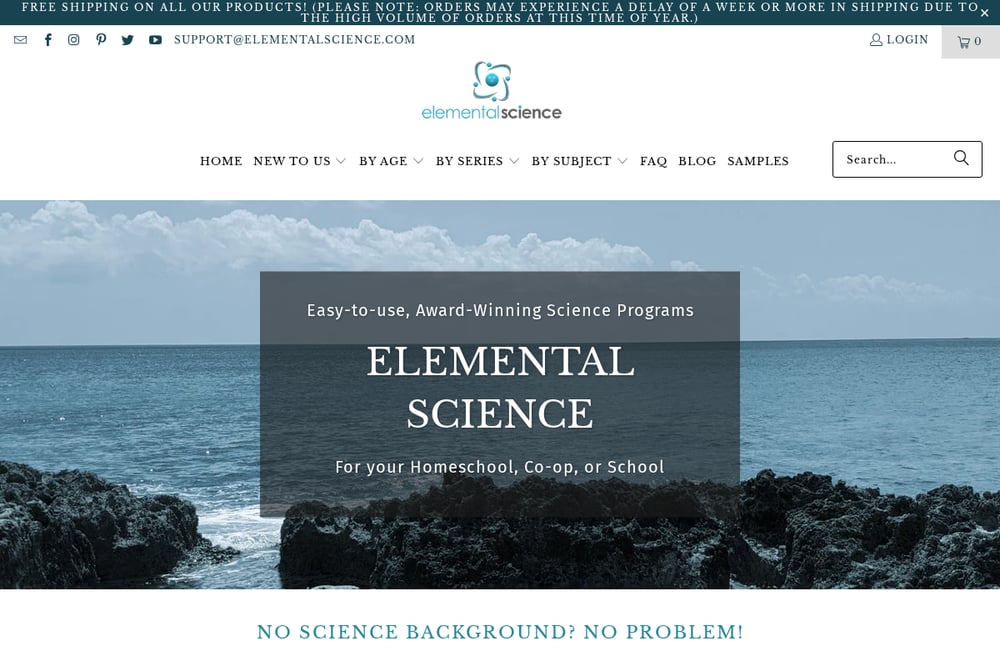 A screenshot of the Elemental Science website.
Elemental Science offers a dedicated story-based science line alongside its classical curriculum. You get structured programs by age, from preschool through high school, with samples available before you commit. The Sassafras Science series uses narrative to carry science concepts, which fits kids who learn through characters and plot. Shipping and order notes are clearly posted, and the site makes it easy to see where to start. It is a strong pick if you want a long runway from elementary into upper grades.
#2 Clues & Chapters | Story-led science for curious homeschoolers
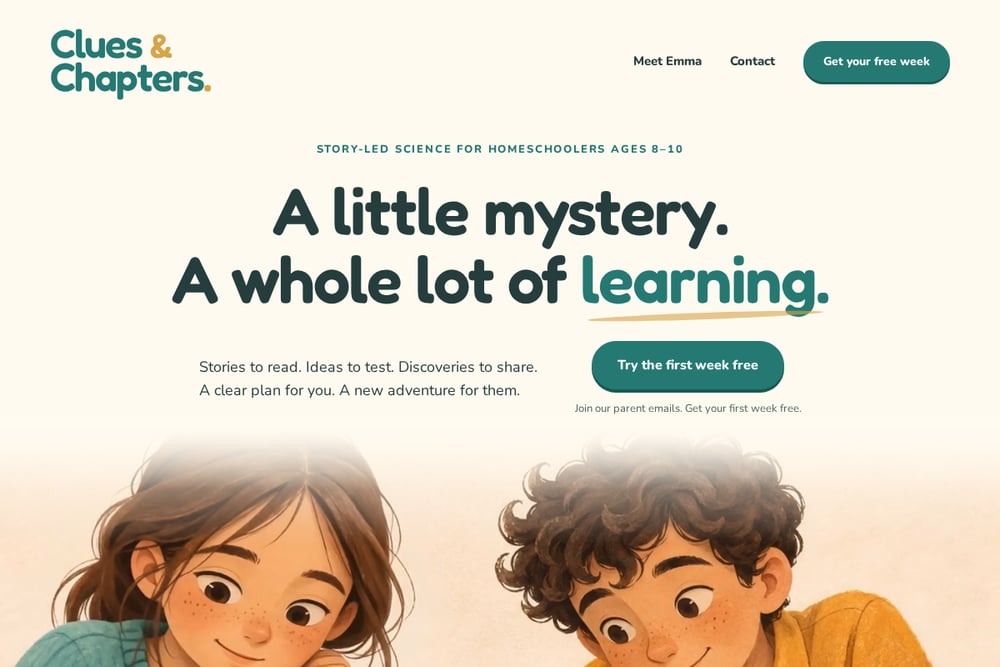 A screenshot of the Clues & Chapters website.
Clues & Chapters is built around a simple loop: read a story, test an idea, make a discovery. Emma designs each week for ages 8–10, with a learner workbook that moves from noticing clues to building a fair test to explaining the evidence. The Bridge at Willow Creek week shows the pattern clearly: kids read about two paper bridges, run a comparison, then advise the village with evidence. A parent guide sits beside every lesson, and you can try the first week free by email. It is the most focused option here if you want story-led science without assembling a full-year plan.
#3 Beyond the Page
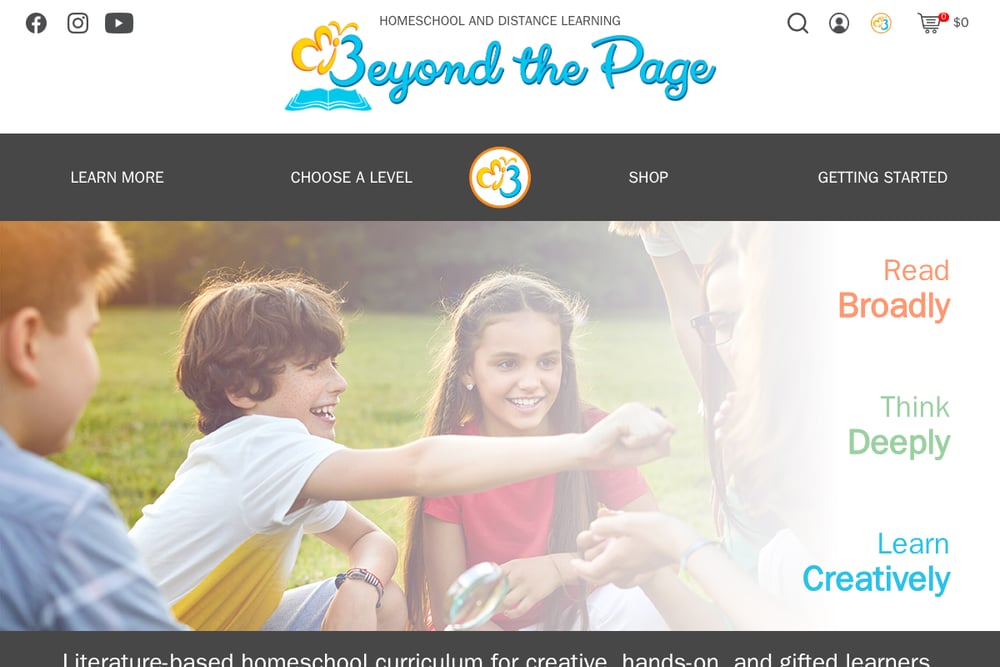 A screenshot of the Beyond the Page website.
Beyond the Page takes an interdisciplinary, constructivist approach. Science is learned through messy experiments and projects, and it is tied to other subjects like language arts. The elementary program spirals through biology, chemistry, physics, and earth science each year, going deeper as kids grow. That means your 8–10 year old meets weather, for example, at multiple levels rather than waiting a year for a new topic. It suits families who want science woven into the whole school day.
#4 Science Unlocked (Home Science Tools)
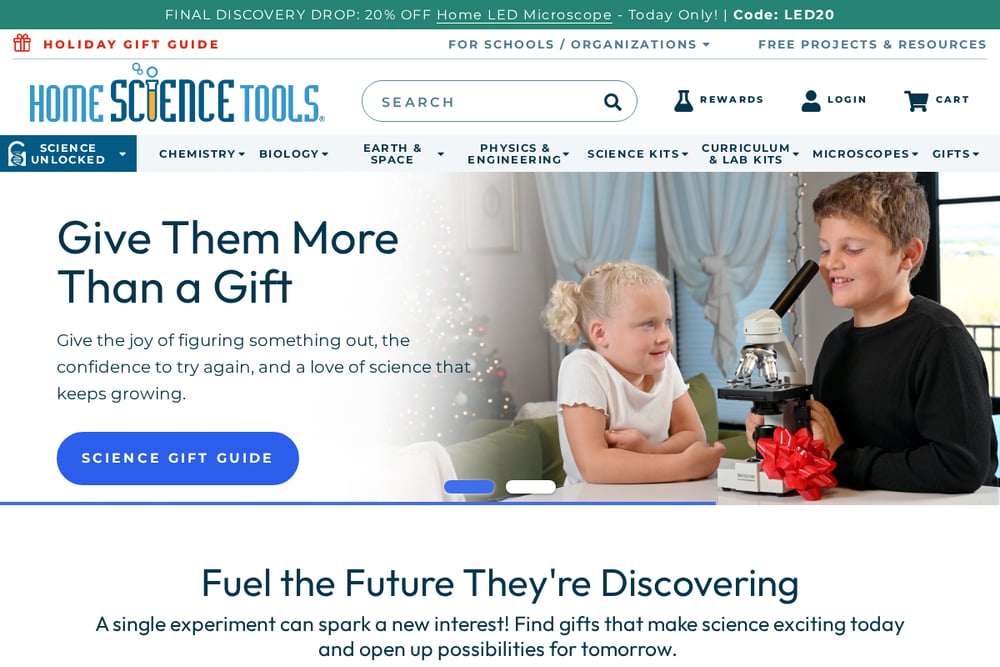 A screenshot of the Science Unlocked (Home Science Tools) website.
Science Unlocked is a flexible learning system from Home Science Tools, organized by grade bands including Grades 3–7. You can shop single modules or a full curriculum, which makes it easy to fill a specific gap. The program leans on kits and supplies, so experiments arrive ready to run. It is less narrative than the story-first options, but the hands-on depth is strong. Choose it if your child learns best by doing and you want modular flexibility.
#5 Little Monsters Universe
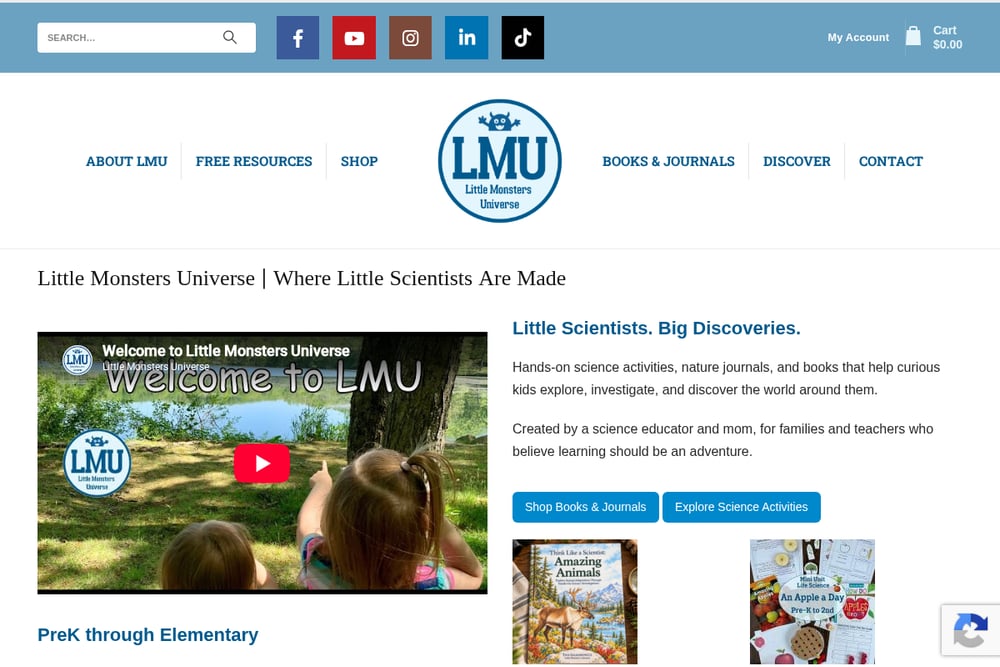 A screenshot of the Little Monsters Universe website.
Little Monsters Universe offers downloadable science lessons, K–2 units, and free samples you can test drive. The style is playful and curiosity-led, with nature journaling and video resources alongside lesson plans. It is lighter on narrative structure than the top picks, but the free samples lower the risk of trying it. The focus skews younger, so it works best as a supplement or for a sibling pair. If you want low-cost exploration before committing, start here.
How to choose your science fit
Start with your child, not the catalog. If your kid asks 'why' during read-alouds, a story-led program like Clues & Chapters gives that reading a purpose. If they want to build and tinker first, a kit-based option like Science Unlocked may click faster. Check the parent guide before you buy; you need clear prep steps and timing. Then use free samples to test one week in real life. A program that fits your table beats one that looks impressive online.
A simple weekly workflow
Pick one story-led lesson per week. Read the story together on day one and let your child make a prediction. Set aside 30–45 minutes for the experiment, with materials gathered the night before. On day three, have them explain or draw their conclusion using evidence. Keep a one-page log of what worked and what surprised them. Repeat the loop, and let the parent guide handle the planning so you can stay present at the table.
The bottom line
Story-led science works because it gives kids a reason to read and a reason to test. Clues & Chapters is the tightest fit for ages 8–10 with its read-test-explain loop and free first week. Elemental Science offers the longest runway, Beyond the Page weaves science across subjects, Science Unlocked brings the kits, and Little Monsters Universe lets you sample cheaply. Try one week with your child and let the evidence decide.