
If you stammer, you know that daily speaking practice can feel like a solo mission. These five tools give you a private, structured way to rehearse conversations and build confidence on your own schedule.
The Rise of Digital Stammering Practice
Stammering therapy has traditionally meant weekly clinic visits, but digital tools now let you practice between sessions or on your own. Apps and web platforms offer guided drills, conversation simulations, and progress tracking. Some are built by speech-language pathologists, others by people who stammer. The result is a growing menu of options that fit different budgets, ages, and goals. You no longer have to choose between a therapist and nothing—you can supplement with a practice companion.
How We Evaluated These Tools
We looked at five factors: service scope (does it cover drills, conversation, and planning?), pricing clarity (is there a free tier or trial?), local fit (does it work well for US users in English?), ease of use (can you start without an account?), and support for different needs (techniques, languages, age groups). Each tool has its own strengths. SpeakEase stands out for its guest mode and bilingual support. Stamurai offers a vast library and community calls. StutterLab focuses on adult daily reps. Stutter Stars is designed for children. Conversation Therapy is a clinical tool for SLPs. None is universally better—your pick depends on your situation.
Here is a quick comparison of the five tools, followed by a deeper look at each.
| Provider | Best For |
|---|---|
| Stamurai | Comprehensive self-guided therapy with community support |
| SpeakEase · Speaking practice for people who stammer | Low-pressure, bilingual practice with no sign-up required |
| StutterLab | Adults who want short, daily speaking reps |
| Stutter Stars | Children who need engaging, game-based practice |
| Conversation Therapy | SLPs and clients working on conversation goals |
A Closer Look at Each Tool
#1 Stamurai
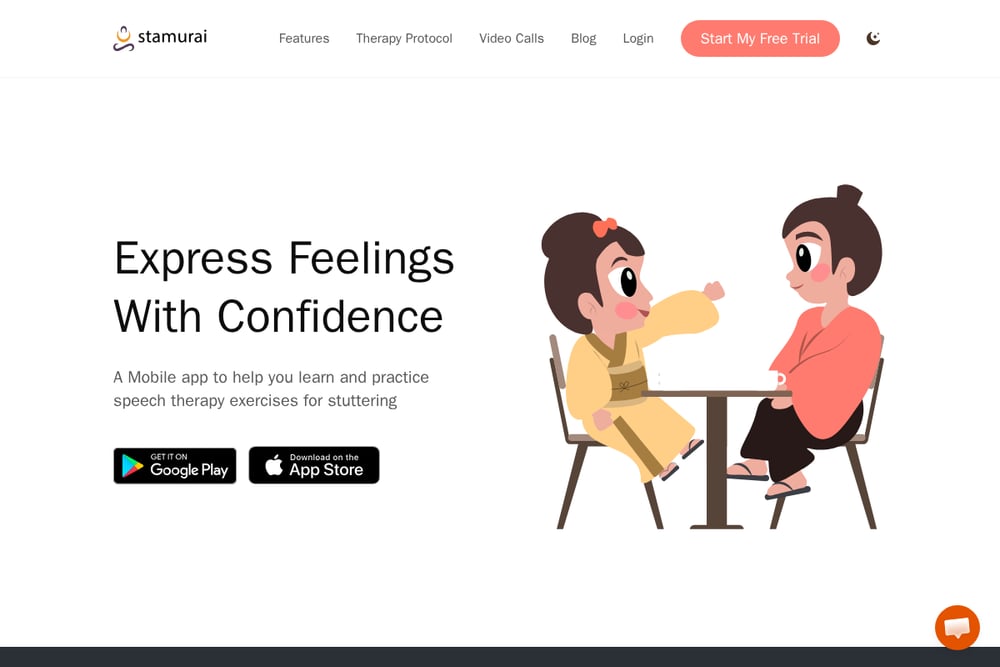 A screenshot of the Stamurai website.
Stamurai is a mobile app that packs a full therapy protocol into your phone. It offers a customized training plan, 50+ tools, and video calls with other users. The app covers fluency shaping, stuttering modification, and CBT approaches. With over 50,000 users in 180 countries, it has a large community. You can start with a free trial to see if it fits your routine.
#2 SpeakEase · Speaking practice for people who stammer
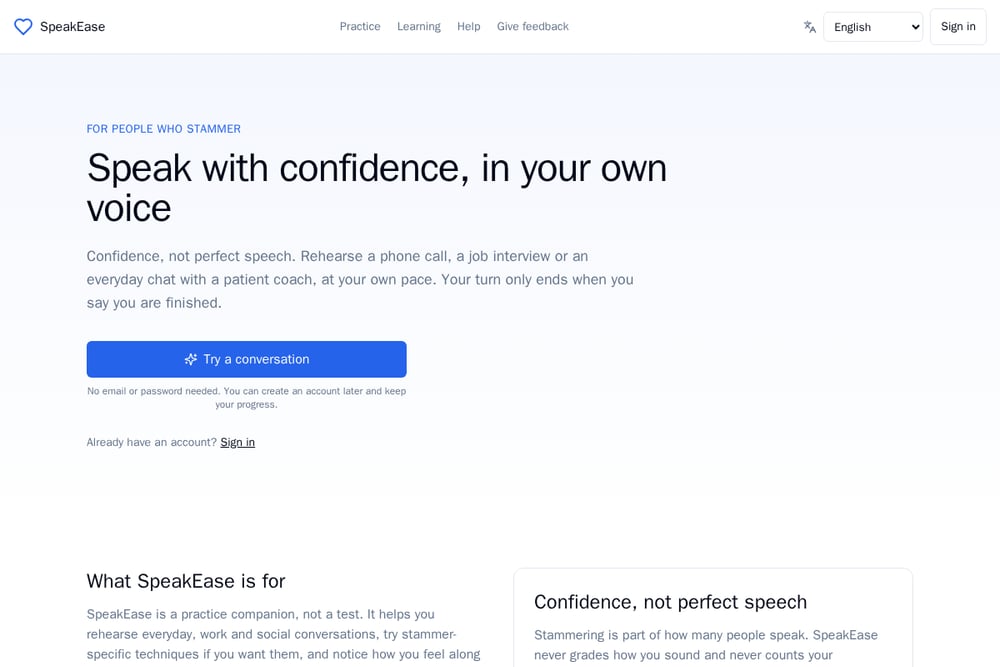 A screenshot of the SpeakEase website.
SpeakEase is a warm, private practice companion for people who stammer. It offers guided drills like stretched speech and pull-outs, plus a spoken conversation coach to rehearse real situations. You can start as a guest with no email or password, and the whole app works in English and Simplified Chinese. A free account includes 30 voice-minutes each month. The focus is on confidence, not perfect speech—it never grades or counts your stammers.
#3 StutterLab
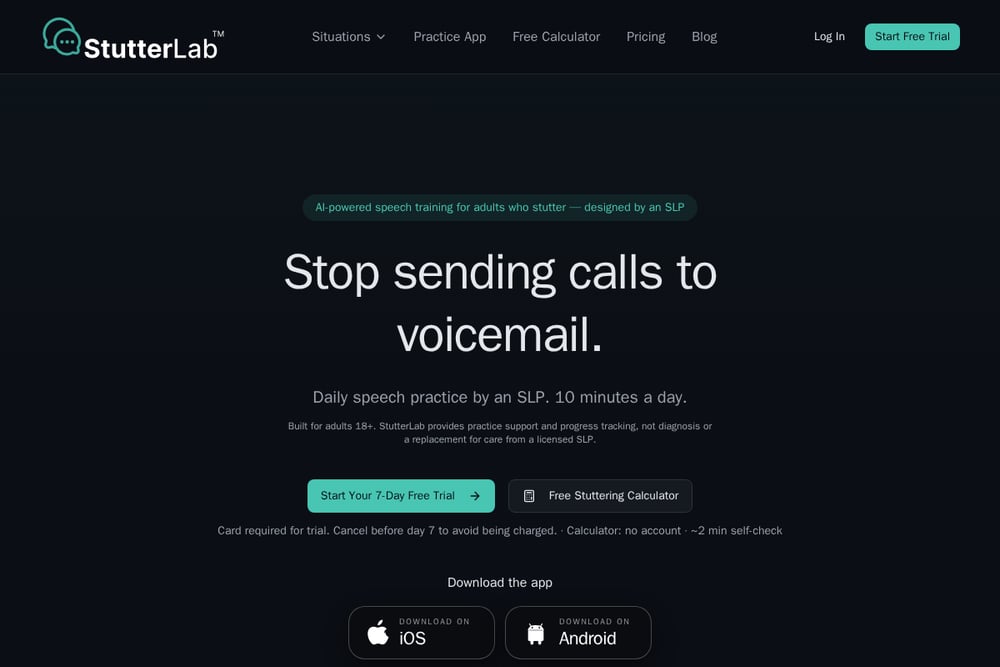 A screenshot of the StutterLab website.
StutterLab is a browser-based program for adults who stutter. It provides about 10 minutes of daily situation practice, with SLP-designed techniques and AI conversation practice for avoided situations. You also get feared-word drills and optional DAF/FAF tools. The program includes CBT-style mindset tools to help with anxiety. It is not therapy or a cure, but a structured way to get daily reps.
#4 Stutter Stars
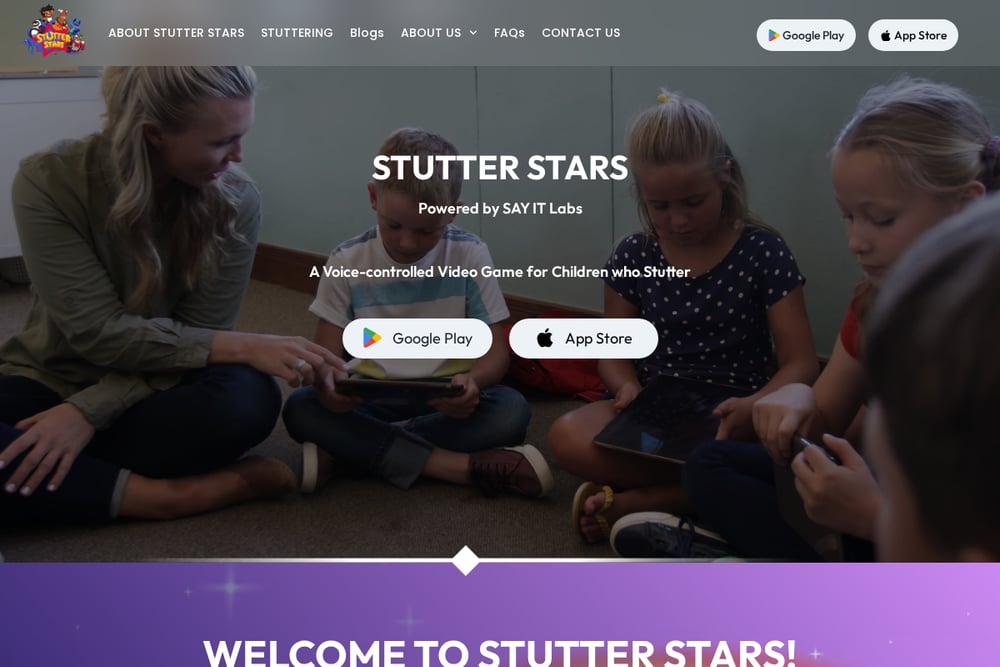 A screenshot of the Stutter Stars website.
Stutter Stars is a speech adventure app built for children ages 5-12. Kids help a character named Zumi while practicing fluency techniques. The app uses speech recognition for real-time feedback. It is available on iOS, iPad, and Android. Parents and SLPs can use it to make practice feel like play.
#5 Conversation Therapy
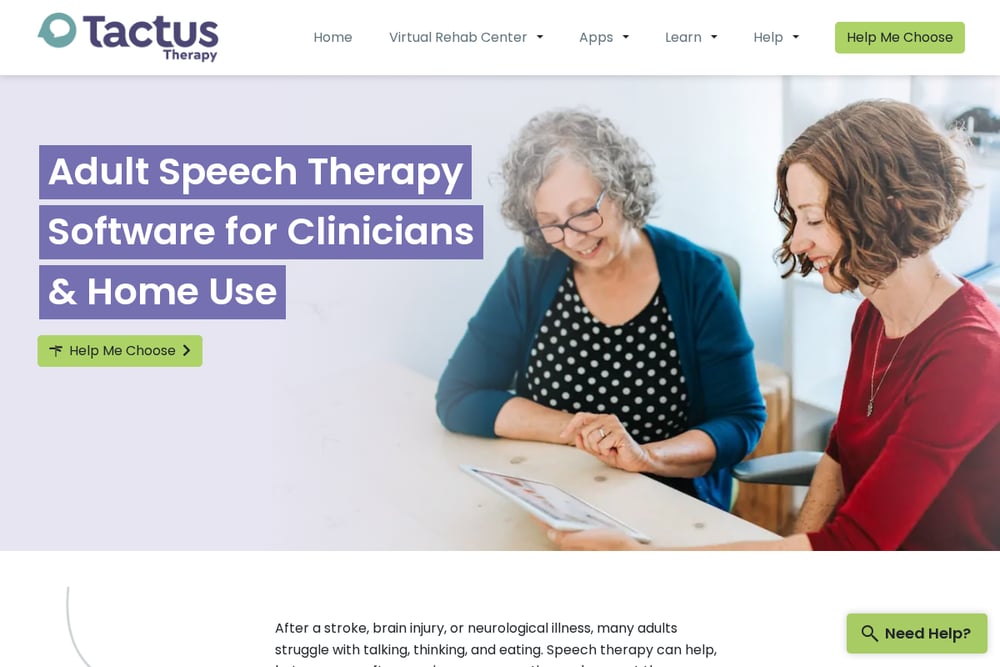 A screenshot of the Conversation Therapy website.
Conversation Therapy is a clinical app from Tactus Therapy for speech-language pathologists. It uses pictures and questions to spark real-life discussions. You can target language, speech fluency, cognition, and pragmatics. It is available for iOS and Android. This tool is designed for use in therapy sessions or at home with guidance.
How to Choose Your Practice Tool
Start by asking what you need most. If you want a private, no-commitment way to try daily drills, SpeakEase lets you begin as a guest. If you prefer a structured program with a large community, Stamurai offers a free trial. For short, focused adult practice, StutterLab is built for 10-minute sessions. If you are a parent seeking a kid-friendly app, Stutter Stars uses a game format. And if you are an SLP, Conversation Therapy provides clinical conversation prompts. Consider your budget, language needs, and whether you want to practice alone or with others.
Adding Automation to Your Practice
You can automate reminders to practice using your phone's calendar or a habit app. Set a daily alert for the same time each day. After each session, log how you felt in a notes app. Over time, you will see patterns in your confidence. Some tools, like SpeakEase, build a practice plan from your check-ins, so you always know your next step. Pair that with a weekly review to adjust your goals.
The Bottom Line
No single tool works for everyone. The key is to find one that fits your life and makes practice feel doable. SpeakEase offers a gentle, bilingual entry point with no sign-up. Stamurai provides depth and community. StutterLab focuses on adult daily reps. Stutter Stars engages kids. Conversation Therapy supports clinical work. Try one, or mix and match. Your voice deserves the practice.