Finding a room that understands your music is harder than finding a room with a good console. These five St. Louis studios each bring something different to the table, and knowing the difference can save you months of trial and error.
The St. Louis Recording Studio Landscape
St. Louis has quietly built one of the more interesting recording scenes in the Midwest. You get legacy rooms that have hosted national acts, boutique spaces built around specific consoles, and independent studios run by working musicians who still play shows on the weekend. That mix matters. It means you can choose a room based on the record you want to make rather than whatever happens to be closest to you. The market splits roughly into three lanes: large commercial facilities with multiple studios and deep gear inventories, mid-sized rooms focused on tracking and mixing, and independent studios where the engineer-producer is also the person answering your email. Pricing is rarely published, so the real differentiator becomes how clearly a studio communicates its process, its people, and its fit for your genre. If you are an artist, a band, or a business needing voice and audio work, the right question is not which studio is biggest. It is which studio's people understand what you are trying to make.
How We Evaluated These Studios
We looked at the same factors for every studio on this list. First, service scope: does the studio cover recording, mixing, mastering, production, and live or video work, or is it narrower by design? Second, team transparency: are the engineers and producers named and described, so you know who you will actually work with? Third, local fit and track record: how long the studio has operated in St. Louis and what kind of artists and projects it serves. Fourth, clarity of process: how easy it is to understand what a session includes and how to book it. Fifth, creative range: whether the room can handle a solo acoustic project and a full band with equal confidence. Blackwall Sounds stands out for naming every team member and pairing audio with filmed live sessions. Suburban Pro stands out for a detailed, multi-room facility and clearly separated booking options. Shock City Studios stands out for a deep roster of engineers and a long list of recognizable clients. Midtown Sound House stands out for console-specific rooms and immersive audio capability. Clayton Studios stands out for decades of operation and a broad production and preservation service menu.
Here is a quick look at how these five studios compare on the things that usually decide where an artist books. Use it as a starting point, then dig into the full write-ups below.
| Provider | Best For |
|---|---|
| Shock City Studios | Artists who want a proven, high-profile commercial room |
| BLACKWALL SOUNDS — St. Louis Recording Studio | Independent artists who want a hands-on, collaborative production team |
| Suburban Pro | Artists who want clear, modular booking options in a multi-room facility |
| Midtown Sound House | Immersive audio, film work, and console-specific recording |
| Clayton Studios | Voice, post-production, and archiving alongside music recording |
The Five Studios in Detail
#1 Shock City Studios
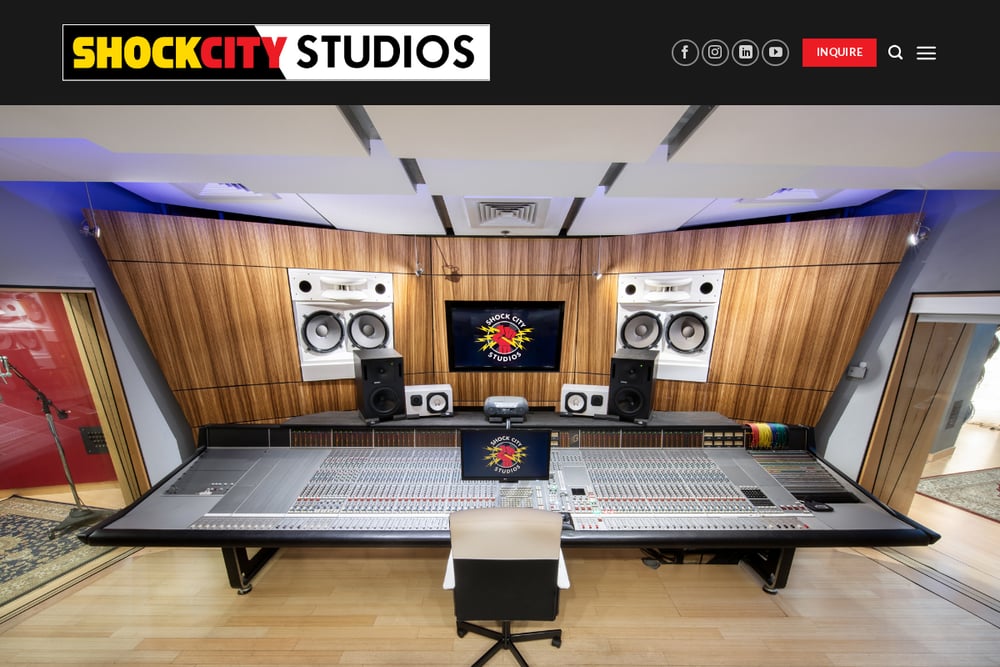 A screenshot of the Shock City Studios website.
Shock City Studios has built a reputation that most independent rooms can only aspire to, with a client list that includes SZA, Pitbull, Future, Tech N9ne, and Big Boi. That kind of traffic tells you the room can handle high-stakes sessions without flinching. The studio separates its offerings into music services, production services, and video services, covering vocal and band recording, mixing and mastering, stem separation, sound design, film scoring, and podcast production. You also get a named team with clear roles, from the general manager to the chief audio engineer to a full bench of staff engineers. If you want to record in a room where national releases have been mixed on a custom SSL console, this is the one. Visit Shock City Studios to see the full service breakdown and the artist roster.
#2 BLACKWALL SOUNDS — St. Louis Recording Studio
 A screenshot of the BLACKWALL SOUNDS — St. Louis Recording Studio website.
Blackwall Sounds is the independent studio on this list that feels most like a band of collaborators rather than a facility you rent by the hour. The team page names every person and what they bring: Mick Brick writing, recording, and producing since 2003 across guitar, bass, drums, and vocals; Scott Pinkston with 12-plus years spanning rock and metal, Foley, and film sound effects; Jamie LaRose composing and mixing after a decade in nationally touring bands and running live venues. That mix of live-room instincts and studio discipline is rare. The studio also runs Blackwall Sessions, a live band recording and filming series led by Matt Yates on camera, which means your performance can become both audio and video content. Session drummer Jake Whelchel and studio technician Austin Armer round out a crew built to keep sessions moving. Start your project at Blackwall Sounds and you are working with people who understand your music, not just your file format.
#3 Suburban Pro
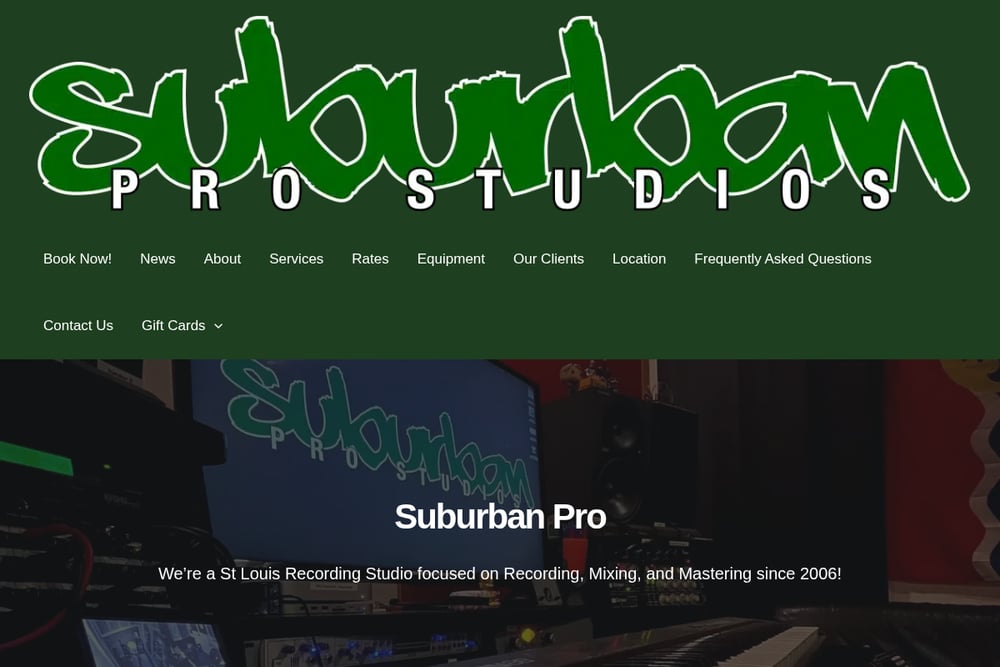 A screenshot of the Suburban Pro website.
Suburban Pro has been recording, mixing, and mastering in St. Louis since 2006, and the facility shows it. The 2,000 square foot space holds two control rooms, two live rooms, and two vocal booths, all acoustically treated and designed for everything from vocal tracking to full live instrument sessions. What makes it easy to work with is how clearly the booking options are separated: book a session with an engineer, rent the studio without one, order per-song mixing, or get professional mastering. That structure removes a lot of the guesswork for first-time clients. If you already know what you need and just want a well-equipped room with experienced engineers, Suburban Pro is a straightforward fit. Check Suburban Pro's rates and booking options before you commit to a session.
#4 Midtown Sound House
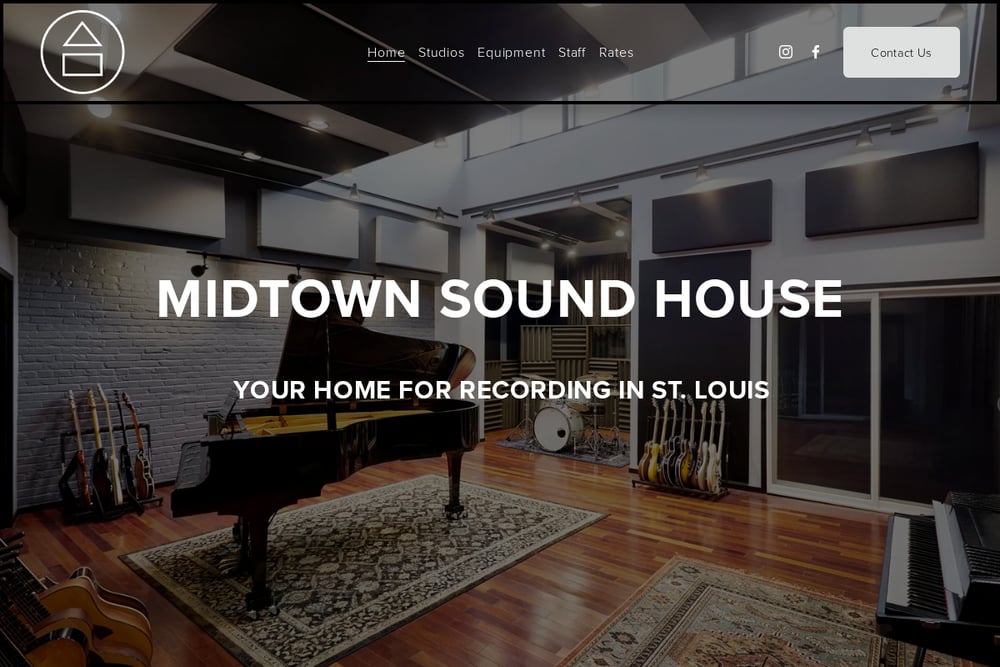 A screenshot of the Midtown Sound House website.
Midtown Sound House is the gear-forward choice, and it is not subtle about it. Studio A centers on a 40-input, 48-output API 1608 console with a large live room, a Yamaha C7 grand piano, and two isolation booths with sight lines into the control room. Studio B is the only Dolby-certified Atmos room in the St. Louis area, built for immersive audio, film and video screening, Foley, voice-over, and smaller recording projects. There is also a dedicated mastering suite built around a Dangerous Music analog system and Ex Machina Quasar monitors. The rooms can be linked for large live sessions across up to six separate recording areas. If your project involves surround sound, film work, or a specific console sound, this is where you go. Explore Midtown Sound House's studio pages to match a room to your project.
#5 Clayton Studios
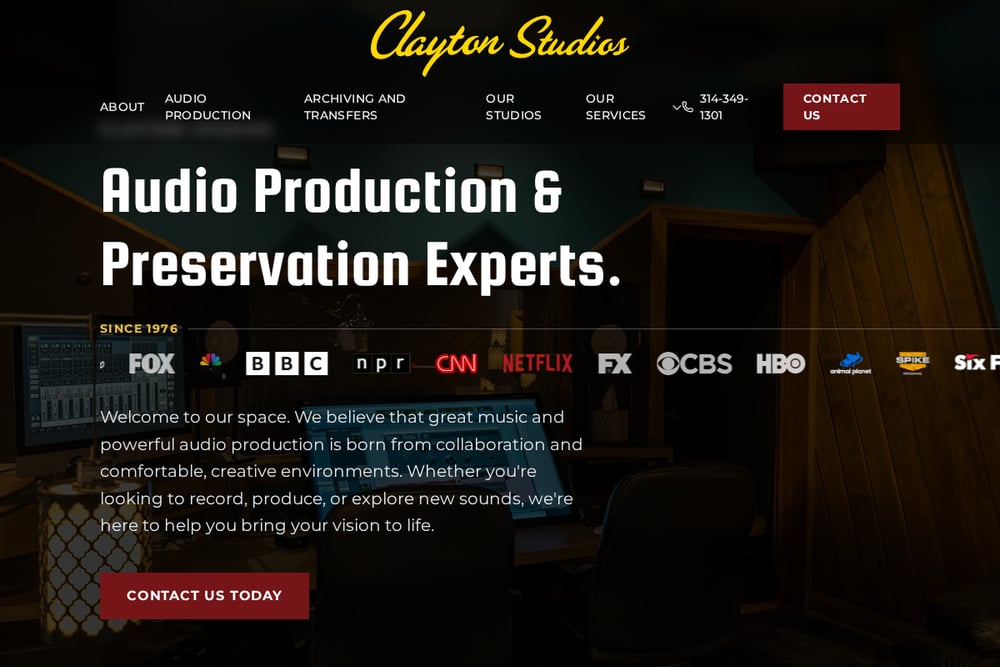 A screenshot of the Clayton Studios website.
Clayton Studios has been doing audio production and preservation work since 1976, which gives it a depth of experience few rooms can match. The client list reads like a history of American music, with names like Willie Nelson, Bonnie Raitt, Brian Setzer Orchestra, and John Patitucci passing through. Beyond music recording, the studio covers ADR, Source-Connect, voiceover training and talent development, podcasting, archiving and format transfers, photo digitization, and CD/DVD duplication. That breadth makes it a practical choice for clients who need more than a tracking room, such as theaters needing backing tracks or organizations digitizing a media archive. If your project blends music, voice, and preservation, Clayton Studios can handle all of it under one roof. Visit Clayton Studios to see the full service menu and studio spaces.
How to Choose the Right St. Louis Studio
Start with the record, not the room. Ask yourself what the finished project should sound like, then find the engineer whose past work matches that. If you are a rock or metal band, look for producers with credits in those genres rather than assuming any good engineer can do it. If you need video or live session content, confirm the studio actually films and records performances, as Blackwall Sounds does with its Sessions series. Next, clarify what is included. Some studios quote tracking only, while others bundle mixing and mastering. Ask whether an engineer is included in the rate or whether studio rental is separate, since that single question changes your budget significantly. Then consider the room itself. A large live room with a grand piano suits full-band tracking, while a smaller treated booth suits vocals and voice-over. Finally, talk to the people. A short call tells you whether the engineer listens to your references and asks questions, or just quotes an hourly rate. The studio that engages with your vision is usually the one that delivers.
A Simple Workflow for Booking Your Session
You can streamline the whole process without overcomplicating it. First, write a one-page project brief covering genre, reference tracks, instrumentation, and deadline, then send it to two or three studios from this list. Second, compare responses on three things: whether they addressed your references, what the rate includes, and who specifically will engineer the session. Third, book a short studio visit or call before committing, and ask to hear a recent project in your genre. Fourth, once booked, send stems, charts, and lyric sheets ahead of time so the engineer can prepare the room. Fifth, after tracking, confirm the mixing and mastering timeline in writing, including revision rounds. Keep all of this in a shared document so nothing gets lost between emails. That five-step loop turns a stressful booking into a predictable process, and it works whether you are recording a single or a full album.
The Bottom Line
St. Louis gives you real options, and that is a good problem to have. Shock City Studios offers a proven commercial room with national credits. Blackwall Sounds offers a named, collaborative team and a live session series that turns your performance into content. Suburban Pro offers a well-equipped multi-room facility with clear booking paths. Midtown Sound House offers console-specific rooms and the region's only Dolby Atmos space. Clayton Studios offers decades of experience across music, voice, and preservation. Pick the studio whose people and process match your project, not the one with the longest gear list. Your record will sound better for it.