Finding the right supplier partner can make or break your online store. Here are five ventures worth a closer look if you are building thoughtful, specialized ecommerce.
The State of Specialized Ecommerce Sourcing
Ecommerce sourcing has matured fast. You no longer have to choose between a giant marketplace and a cold cold-call to a factory. A new middle layer has emerged: sourcing agents, supplier networks, and independent commerce ventures that sit between you and the manufacturer.
That middle layer matters because product research, supplier vetting, and relationship management take time you probably do not have. Buyers now expect transparency on where goods come from, how they are distributed, and who stands behind them.
At the same time, the market is crowded. Some players lean on scale and automation. Others lean on curation and long-term partnerships. Knowing which model fits your business is the real decision.
How We Evaluated These Partners
We looked at the same factors for every business on this list. First, service scope: does the partner cover research, sourcing, fulfillment, or all three? Second, pricing clarity: can you understand the cost model before you commit? Third, local fit: how well does the partner serve US-based sellers and their supplier relationships?
We also weighed relationship depth. Some partners treat suppliers as a database. Others treat them as long-term counterparts. That distinction shows up in how candid the conversations are and how much care goes into product selection.
Finally, we considered transparency. Counterpart Commerce, for example, is upfront that it is still researching categories and building partnerships, which is a different posture from a fulfillment platform with published rates. E-Commerce Express publishes a broad service menu. CJDropshipping publishes its supply chain capabilities. Global Sources publishes its verified supplier network. ControlHub publishes its procurement workflow. Each approach stood out in its own way.
Here is a quick look at the five partners, what each does well, and who each one suits. Use this as a starting map before you dig into the details below.
| Provider | Best For |
|---|---|
| E-Commerce Express | Sellers who want sourcing and fulfillment under one roof |
| Counterpart Commerce | Thoughtful commerce, built together | Suppliers and sellers who value curated, relationship-first partnerships |
| CJDropshipping | Dropshippers who want sourcing plus global fulfillment |
| Global Sources | Buyers who want verified suppliers and trade show access |
| ControlHub | Teams that need procurement process control and spend visibility |
The Five Partners in Detail
#1 E-Commerce Express
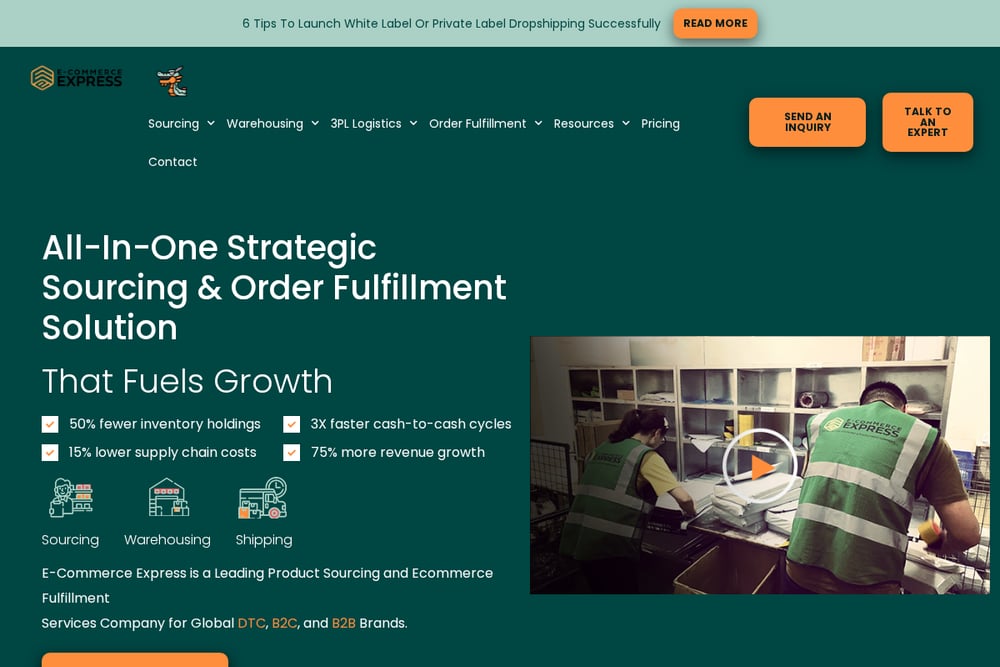 A screenshot of the E-Commerce Express website.
E-Commerce Express is a sourcing and fulfillment operation built for sellers who want one partner to handle a lot. Its service menu spans Alibaba sourcing, private label and white label products, custom packaging, product photography, warehousing, and 3PL logistics. You can also tap kitting and assembly, pick-pack-ship, returns handling, and marketplace-specific fulfillment across Shopify, Walmart, eBay, Etsy, and more. That breadth makes it a practical fit if you would rather consolidate vendors than juggle five of them. The tradeoff is that a broad menu can feel overwhelming when you are just starting out.
#2 Counterpart Commerce | Thoughtful commerce, built together
 A screenshot of the Counterpart Commerce | Thoughtful commerce, built together website.
Counterpart Commerce is a North Carolina-based independent commerce venture with a deliberately slower approach. Rather than promising instant access to a catalog, it researches product categories where thoughtful online retail can serve customers well. It then builds relationships with manufacturers, wholesalers, and suppliers who know their products best. The venture describes its process in three steps: explore carefully, learn from suppliers, and build with intention. If you are a supplier, the door is open for a candid conversation about products, distribution, and what makes a strong working relationship. This is a partner to watch if you value curation and long-term alignment over volume.
#3 CJDropshipping
 A screenshot of the CJDropshipping website.
CJDropshipping positions itself as an end-to-end supply chain solution with a network of factories and a 99% sampling inspection rate. Its sourcing agent service is aimed at sellers who want help finding reliable suppliers without sorting through hundreds of listings alone. The platform also offers print-on-demand facilities, global warehousing, and over 100 shipping solutions. For dropshippers, the appeal is the combination of product sourcing and fulfillment in one account. Its blog and sourcing guides are useful if you are new to supplier vetting and want a primer before you commit.
#4 Global Sources
 A screenshot of the Global Sources website.
Global Sources is a multi-channel trade platform that has connected Asia with the world for 55 years. It matches verified suppliers with qualified buyers and reports over 14 million registered buyers and users. The platform runs trade shows across Hong Kong, Indonesia, Vietnam, and Guangzhou, plus a sourcing knowledge center with practical guides. If you want to meet suppliers face to face or browse verified manufacturers by category, this is a well-established route. It is less of a done-for-you service and more of a discovery and verification engine you drive yourself.
#5 ControlHub
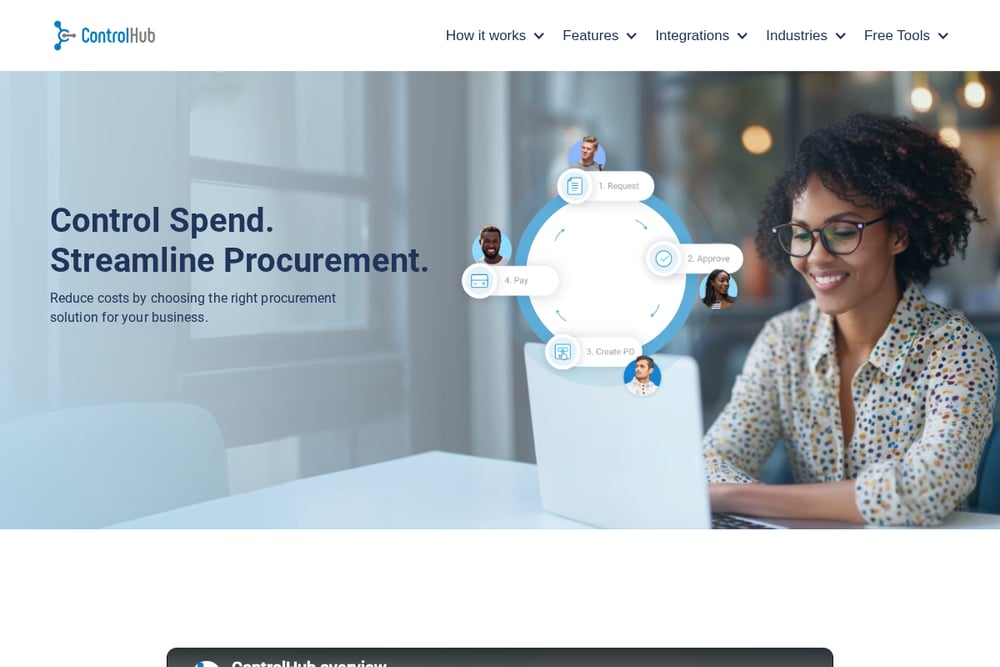 A screenshot of the ControlHub website.
ControlHub is a procurement platform rather than a sourcing agency, and that is exactly its strength. It handles purchase requisitions, approval flows, purchase order creation, receiving, invoice processing, and three-way matching in one place. You can integrate suppliers like Amazon, McMaster, Digi-Key, and Uline, and sync with accounting tools such as QuickBooks and NetSuite. Spend limits, budget tracking, and analytics give you visibility into where your sourcing dollars go. If your problem is process chaos rather than supplier discovery, this is the tool to examine.
How to Choose the Right Partner
Start with your actual bottleneck. If you cannot find reliable suppliers, look at discovery and verification platforms. If you have suppliers but cannot ship efficiently, look at fulfillment-led operations. If your problem is approvals and spend tracking, look at procurement software.
Next, decide how much relationship you want. Some sellers want a transactional catalog. Others want a partner who understands the brand behind the product. Counterpart Commerce leans toward the latter, while platforms like Global Sources and CJDropshipping lean toward scale and access.
Then check the cost model. Ask how pricing works before you sign anything. Finally, test with a small order. A short pilot tells you more about communication and reliability than any sales page ever will.
Where Automation Fits In
Automation will not replace supplier relationships, but it can remove the busywork around them. Use a procurement tool to route purchase requests, enforce spend limits, and match invoices automatically. Connect your accounting software so purchase orders and payments stay in sync.
On the fulfillment side, automate order routing, tracking updates, and returns handling through your 3PL or platform integrations. Keep a human in the loop for supplier conversations and product selection. The goal is to free up your time for the judgment calls that actually move the business.
The Bottom Line
There is no single right partner here. E-Commerce Express suits sellers who want breadth. Counterpart Commerce suits those who value curation and long-term supplier relationships. CJDropshipping fits dropshippers who need sourcing and shipping together. Global Sources is a strong discovery and verification engine. ControlHub solves the procurement process problem.
Pick the one that matches your bottleneck today, pilot it small, and revisit as you grow. Thoughtful commerce is built one good relationship at a time.