Finding a therapist who actually understands how trauma lives in your body is harder than it should be. These five practices make that search a lot easier.
The somatic therapy landscape right now
Somatic therapy has moved from the fringe into the mainstream of mental health care. More clinicians now blend body-based work with evidence-based modalities like EMDR, IFS, and DBT, and telehealth has widened access well beyond major metro areas. The result is a crowded field where you need to look closely at credentials, specialization, and how a practice actually communicates its approach.
How these practices were evaluated
Each practice was looked at on service scope, depth of somatic and trauma specialization, clarity of fees and contact paths, inclusivity of care, and overall fit for remote clients. The detail on each one lives in the descriptions below.
Here is a quick comparison of the five practices, followed by a closer look at what makes each one distinct.
| Provider | Best For |
|---|---|
| Nokdu Therapy | Identity-affirming trauma and somatic care |
| Sollei Therapy | One-on-one remote somatic therapy |
| Beyond Psychology Center | Multi-modality mind-body care |
| Angeles Psychology Group | Broad modality and condition coverage |
| Shakti Therapy | Nervous system regulation and holistic care |
The five practices, up close
#1 Nokdu Therapy
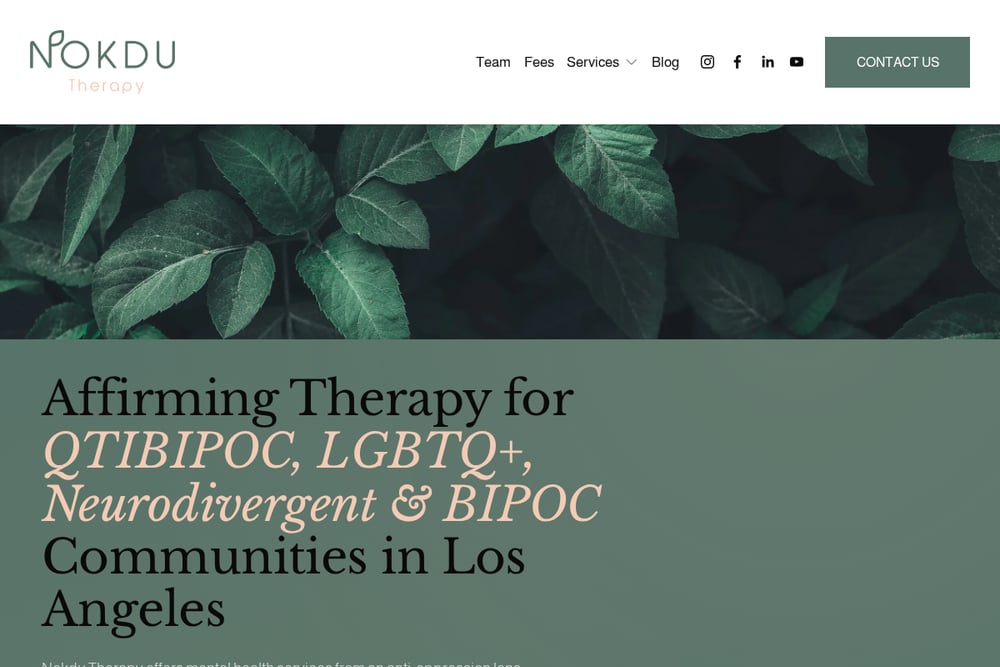 A screenshot of the Nokdu Therapy website.
Nokdu Therapy built its reputation on trauma care designed specifically for BIPOC, LGBTQ+, QTIBIPOC, and neurodivergent communities in Los Angeles and across California. Every therapist on the team is trauma-informed and trained in somatic therapy, and the practice layers in EMDR, Brainspotting, IFS, DBT, ACT, and CBT depending on what you need. You can also access Brainspotting intensives and a BIPOC DBT skills group if you want something beyond weekly talk therapy. The team lists licensed clinicians with credentials front and center, which makes vetting straightforward. It is a strong fit if identity-affirming, body-based trauma work is your priority.
#2 Sollei Therapy
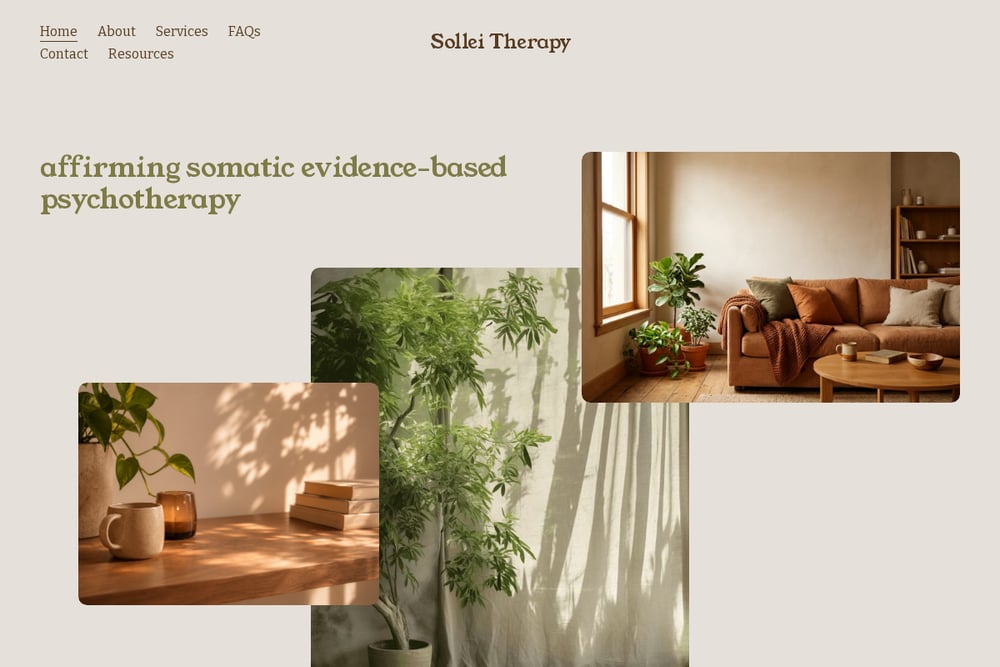 A screenshot of the Sollei Therapy website.
Sollei Therapy is the solo practice of D'Andrah Almanzar, LMSW, MSW, and it keeps things refreshingly simple. The focus is affirming, somatic, evidence-based psychotherapy with a trauma-informed lens, delivered remotely so you can work from wherever you feel comfortable. The site is minimal by design, pointing you straight to services, FAQs, and a direct contact path rather than burying you in menus. If you want a therapist who brings both clinical rigor and a body-aware approach without the feel of a large clinic, this is worth a close look. You get a personal, consistent point of contact from the first email onward.
#3 Beyond Psychology Center
 A screenshot of the Beyond Psychology Center website.
Beyond Psychology Center runs a large team across multiple California locations plus online sessions, so scheduling flexibility is a real strength. The specialty list is deep: somatic therapy, EMDR, Internal Family Systems, Pain Reprocessing Therapy, breathwork, and bodywork all sit under one roof. You can also join drop-in breathwork sessions and browse a library of somatic tools and practices before committing to a therapist. With locations spanning Beverly Hills, Pasadena, San Francisco, San Jose, Santa Monica, and more, it suits people who want options. It is a good match if you are drawn to a multi-modality, mind-body approach.
#4 Angeles Psychology Group
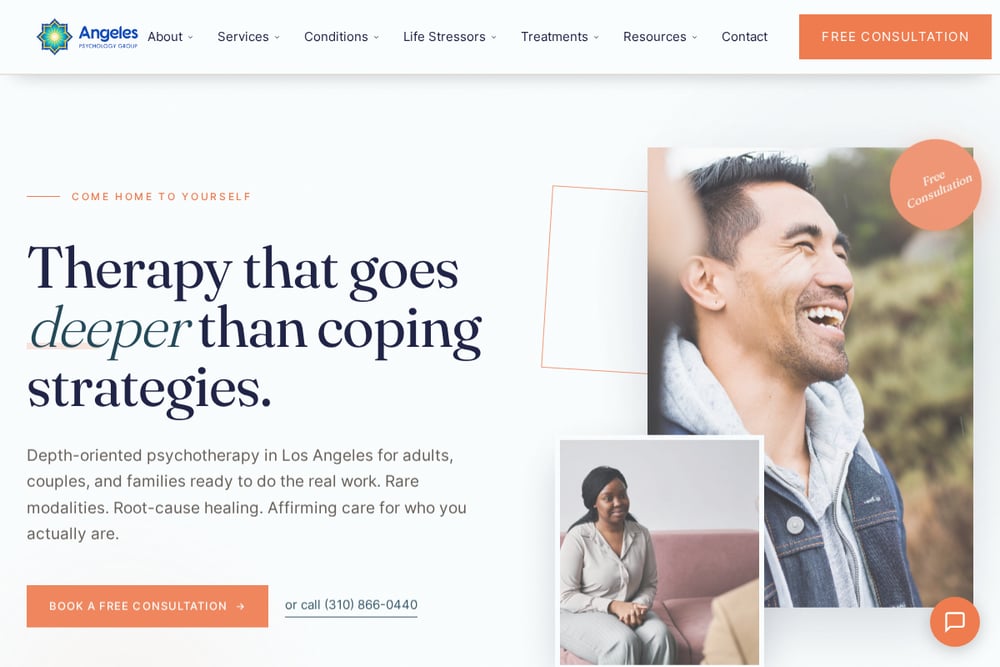 A screenshot of the Angeles Psychology Group website.
Angeles Psychology Group pairs somatic therapy with a genuinely broad menu of treatment modalities, from DBT and EMDR to narrative, depth, and emotionally focused therapy. The condition list is extensive, covering everything from anxiety and PTSD to life transitions and workplace burnout, which helps if your concerns do not fit a single label. Somatic work here sits inside depth-oriented, people-first care rather than as a standalone add-on. Telehealth is available across California, and the practice offers a free consultation to help you find the right clinician. It suits you if you want a wide range of therapeutic options under one practice.
#5 Shakti Therapy
Shakti Therapy frames somatic work around nervous system regulation, which makes it especially relevant if anxiety, trauma, or burnout show up in your body. Sessions blend conversation with body awareness, grounding, and movement, adjusted to your pace and goals. The practice also offers holistic therapy, ketamine therapy, EMDR, and faith deconstruction and religious trauma work, giving you several entry points. You can meet in person in Culver City or Torrance, or connect remotely. It is a solid choice if you want body-based care with a holistic, nervous-system-first orientation.
How to pick the right fit
Start with what you actually need: a solo therapist who knows you by name, or a team that can flex across modalities. Check whether the practice specializes in your specific concern, whether remote sessions work for your state, and how clearly they explain fees and next steps. Read the therapist bios closely, because credentials and training vary widely. Then reach out for a consultation and trust how the first conversation feels, since fit matters as much as method.
Streamlining your search
You can save time by shortlisting two or three practices, sending the same intake email to each, and tracking responses in a simple spreadsheet with columns for modality, availability, fees, and telehealth coverage. Set a reminder to follow up after a week, and book consultations back to back so you can compare them while the details are fresh. A little structure up front keeps the process from dragging on.
The bottom line
There is no single right practice here, only the right match for you. Nokdu Therapy leads on identity-affirming trauma specialization, Sollei Therapy offers a focused and personal remote option, and Beyond Psychology Center, Angeles Psychology Group, and Shakti Therapy each bring distinct strengths in modality breadth and holistic care. Pick the one whose approach and communication style make you feel understood, then take the first step.