You need a partner who can build it, test it, and prove it works in the field. These five firms each bring a different mix of software, quality, and network expertise to that challenge.
The Blurred Lines Between Software, Quality, and Telecom
Modern delivery teams no longer treat development, testing, and network performance as separate conversations. You ship faster when the people who write the code understand how it will be validated, and when the people who test it understand the conditions it will run in. That shift has created demand for firms that can span software engineering, quality assurance, and telecom performance under one roof. Some providers lean heavily into QA outsourcing, others into network engineering for carriers and ISPs, and a few connect the full chain from first build to field verification. The right fit depends on where your biggest gaps sit today.
How We Evaluated These Firms
We looked at service scope, depth of QA and testing coverage, telecom and network performance capabilities, engagement flexibility, and how clearly each firm explains what it does. We also considered local fit for US-based teams and the practical evidence each site provides about delivery approach. MobbiTech stood out for connecting software development, QA, and telecom performance in a single engineering mindset. DeviQA stood out for its structured QA engagement models and broad testing coverage. QAwerk stood out for its independent testing agency model and AI-focused testing services. QualityLogic stood out for its long US track record and specialized interoperability and accessibility testing. Mercury Z stood out for carrier-grade network engineering and nationwide field services.
Here is a quick comparison of the five firms, followed by a deeper look at what each one does well.
| Provider | Best For |
|---|---|
| DeviQA | Teams that want flexible QA engagement models |
| MobbiTech | Software, QA & Telecom Engineering | End-to-end delivery from build to field verification |
| QAwerk | Independent testing with AI and emerging tech coverage |
| QualityLogic | Standards, interoperability, and accessibility testing |
| Mercury Z | Carrier-grade network engineering and field services |
The Five Firms in Detail
#1 DeviQA
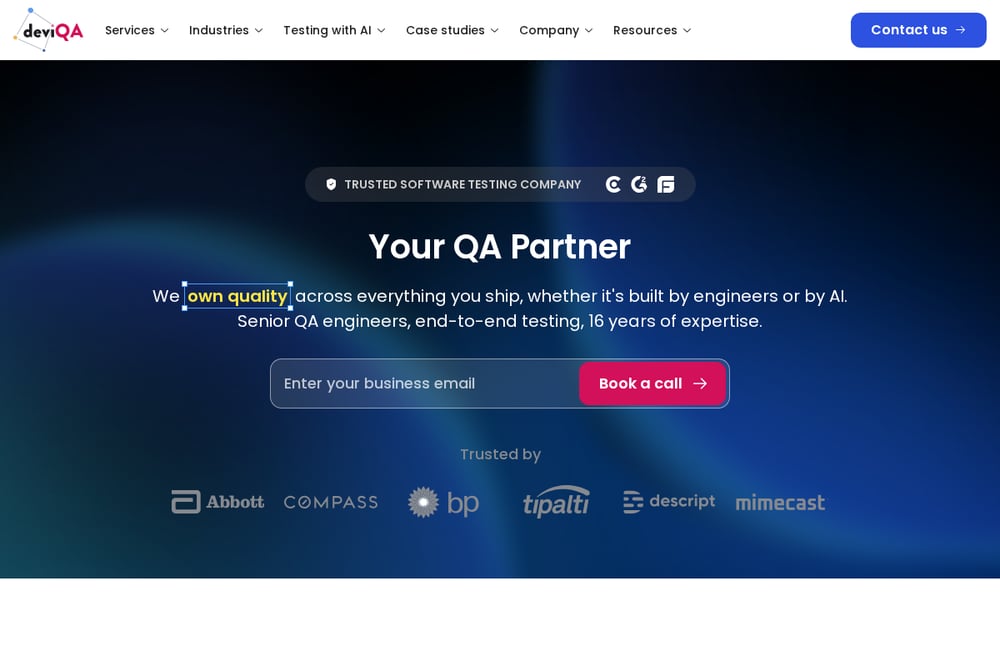 A screenshot of the DeviQA website.
DeviQA positions itself as a software testing and QA services company with a strong menu of engagement models. You can hand over your entire QA function through managed QA, add flexible capacity with QA engineers for hire, embed dedicated teams, or outsource end-to-end delivery. Its testing coverage spans regression, functional, integration, end-to-end, compatibility, performance, and security testing. The firm also lists frameworks like Playwright, Cypress, Selenium, Appium, and k6, which helps you map its tooling to your stack. If QA is the center of your problem, DeviQA gives you several ways to plug it in.
#2 MobbiTech | Software, QA & Telecom Engineering
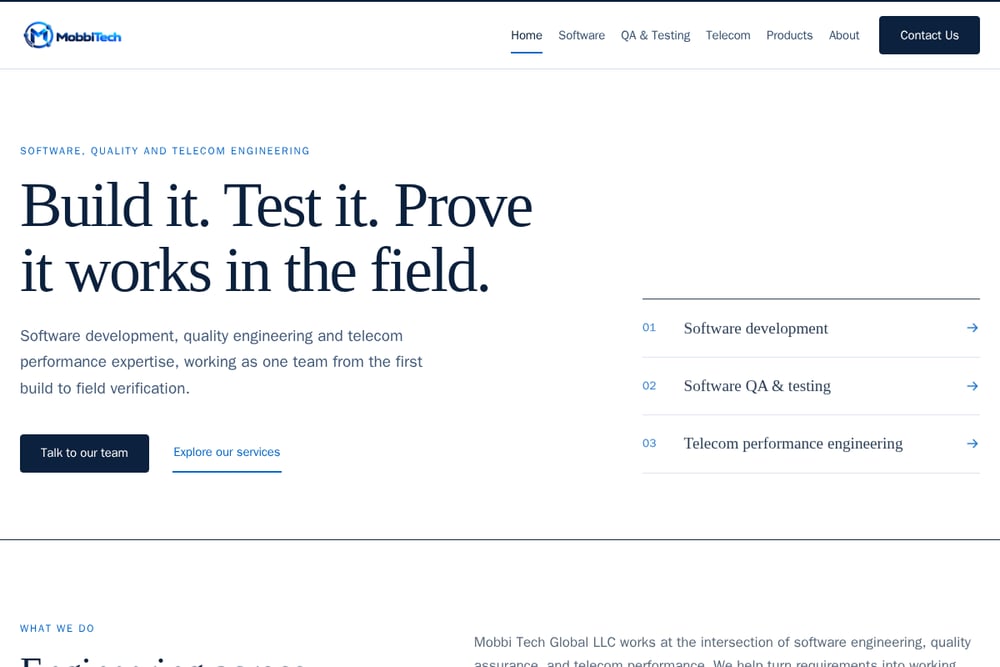 A screenshot of the MobbiTech | Software, QA & Telecom Engineering website.
MobbiTech works at the intersection of software engineering, quality assurance, and telecom performance. Its pitch is simple: build it, test it, prove it works in the field. You get software development for web applications, internal tools, automation, dashboards, and digital products, plus structured QA and testing that exposes functional issues, usability gaps, regression risk, and release concerns before users see them. On the telecom side, it offers field-focused performance engineering for wireless networks, connectivity, voice, data, and service experience. The through-line is connected delivery, so development, testing, and performance are examined as parts of the same problem rather than separate handoffs.
#3 QAwerk
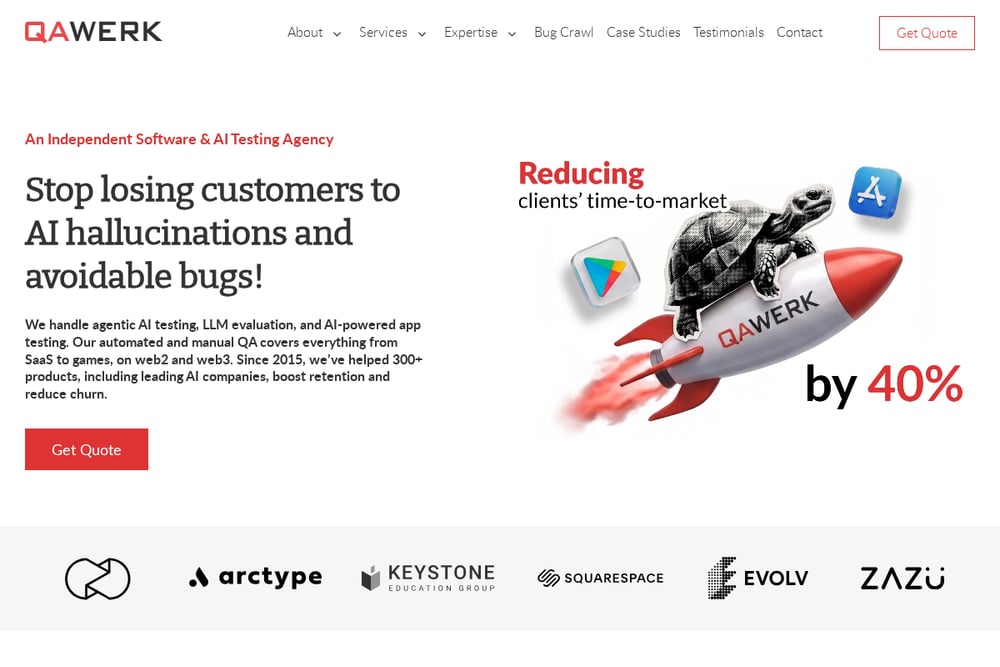 A screenshot of the QAwerk website.
QAwerk is an independent software and AI testing agency that has been operating since 2015 and reports work with more than 300 products. Its service list is unusually broad, covering web, mobile, desktop, game, AR and VR, blockchain, accessibility, localization, and automotive software testing. It also handles agentic AI testing, LLM evaluation, and AI-powered app testing, which matters if you are shipping AI features and need someone who understands the failure modes. You can choose manual or automated testing, or a dedicated QA team. The agency model means testing is the core business, not a side service.
#4 QualityLogic
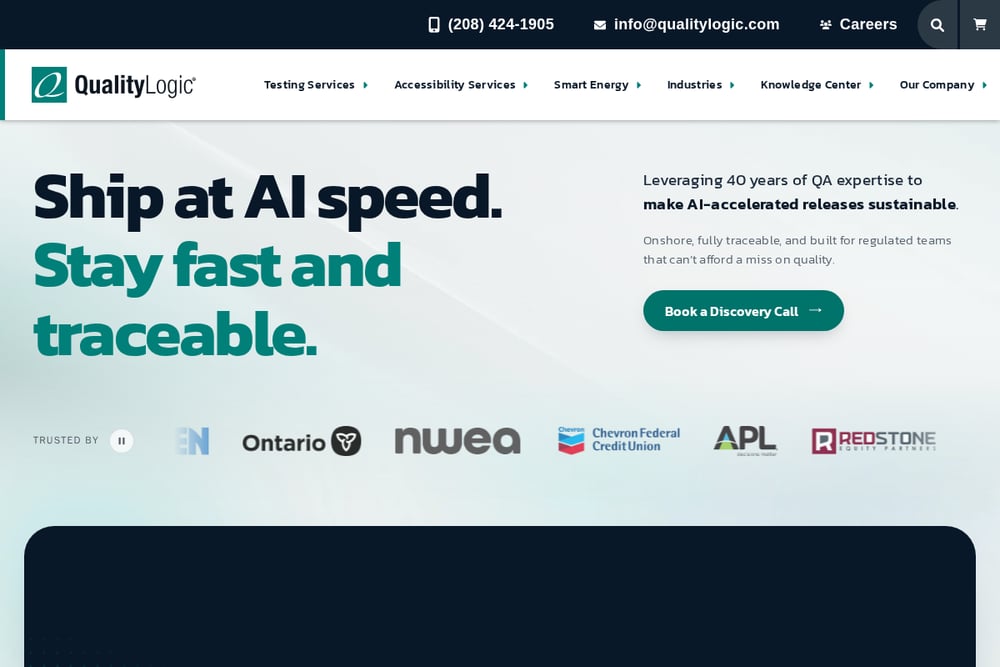 A screenshot of the QualityLogic website.
QualityLogic is a US software testing company with a long history and a notably specialized portfolio. Its testing services include full-service QA, WCAG compliance certification, manual and functional testing, test automation, load and performance testing, usability testing, and interoperability testing. It also runs dedicated practices for smart energy test tools, print systems, fax and telecom testing, and digital accessibility. That makes it a strong fit when your product has to interoperate with standards, devices, or regulated ecosystems. If you need conformance reports, VPATs, or WCAG certification, QualityLogic speaks that language fluently.
#5 Mercury Z
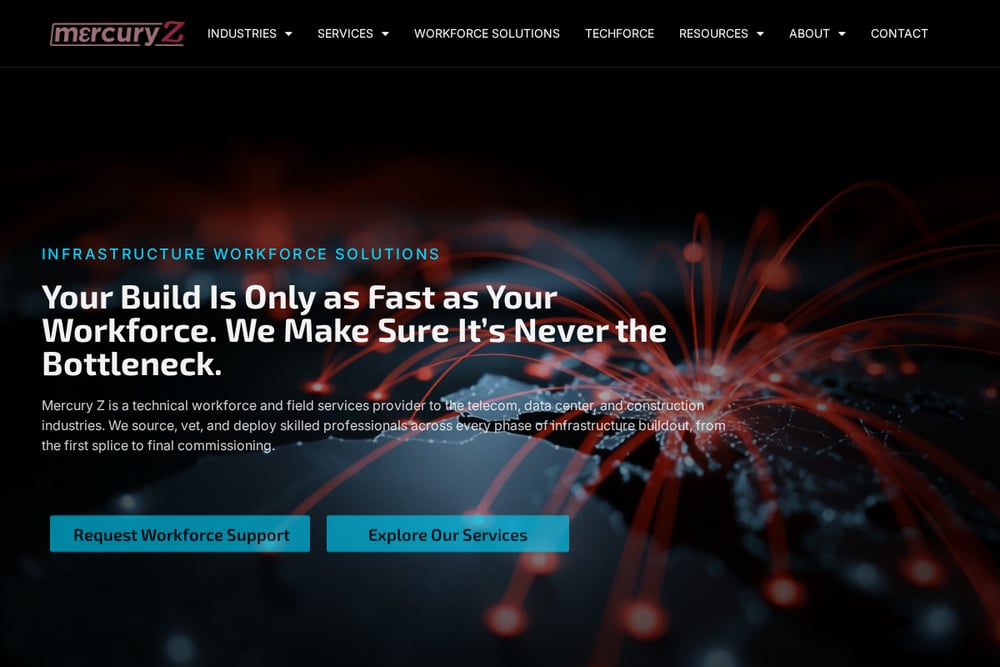 A screenshot of the Mercury Z website.
Mercury Z focuses on network engineering services for telecom, with end-to-end work across IP, Ethernet, broadband, and next-gen access networks. It supports carriers, ISPs, broadband providers, managed service providers, and data center builds, from core to edge. Beyond design and planning, it offers nationwide field service, field assessments, audits and surveys, DWDM and optical transport engineering, NOC support, and workforce solutions. If your challenge is infrastructure rather than application code, Mercury Z brings the technical depth and operational reach to design, deploy, and optimize carrier-grade networks.
How to Choose the Right Partner
Start with the gap that is costing you the most. If releases keep slipping because testing is thin, look at firms with deep QA engagement models and broad coverage. If you are building something new and need someone to own the path from code to field, prioritize a partner that connects development, quality, and performance. If your product must interoperate with standards or pass accessibility audits, choose a specialist with the certifications and tooling already in place. And if the problem is network infrastructure, go with a firm that lives in carriers, ISPs, and field operations. Ask each candidate how they hand off work between disciplines, because that seam is where projects usually break.
Where Automation Fits
Automation is not a substitute for judgment, but it changes the economics of verification. A practical workflow starts with identifying the checks you repeat every release, then building automated coverage around those paths using frameworks your team can maintain. From there, you layer performance and field-condition testing so you learn how the system behaves under real network and device conditions, not just in a clean lab. The firms above approach this differently: some lead with test automation frameworks, others with field verification and network performance. The right sequence is to automate the stable, high-frequency checks first, then use manual and exploratory testing where human judgment adds the most value.
The Bottom Line
You do not need five partners. You need one that matches the shape of your problem. DeviQA gives you flexible QA capacity, MobbiTech connects build, test, and field proof, QAwerk brings independent testing depth including AI, QualityLogic specializes in standards and accessibility, and Mercury Z owns the network layer. Pick the firm whose center of gravity sits closest to your biggest risk, and you will spend less time managing handoffs and more time shipping systems that hold up in the real world.