
Social anxiety can make everyday moments feel impossible. These five apps offer science-backed tools to help you break the cycle.
The Rise of Digital Mental Health Tools
Social anxiety affects millions of adults in the US, and digital tools are increasingly filling the gap between self-help books and therapy. Apps now offer structured exercises, AI coaching, and gamified challenges—all designed to make evidence-based techniques more accessible. The market is crowded, but the best options share a foundation in cognitive behavioral therapy and exposure work. Whether you want a daily nudge or a full program, there’s an app for that.
How We Evaluated These Apps
We looked at five factors: scientific grounding, ease of use, feature depth, pricing transparency, and user feedback. Each app was assessed on how clearly it explains its methods and what you get for free versus paid. We also considered whether the app offers real-world practice, not just theory. No single app wins on every metric—your needs will determine the right fit.
Here’s a quick look at the five apps that stood out for their approach to social anxiety.
| Provider | Best For |
|---|---|
| FACING IT: Social Anxiety | Daily structured challenges |
| Make Me Social | Science-backed social skills |
| charisme | Gamified learning |
| MindShift CBT | Clinically proven CBT |
| tonen | Conversation scripts |
The 5 Apps in Detail
#1 FACING IT: Social Anxiety
 A screenshot of the FACING IT: Social Anxiety website.
FACING IT is an AI coach built with Ph.D. psychologists that combines CBT, ACT, and exposure therapy. You get daily challenges to break the cycle of anxiety, plus tools for public speaking, assertiveness, and dating. The app tracks your progress and sends reminders to keep you accountable. It’s only for iPhone, but the depth of content makes it a strong choice for structured self-help. As one of the few apps with a 4.7 rating from 41 users, it’s clearly resonating.
#2 Make Me Social
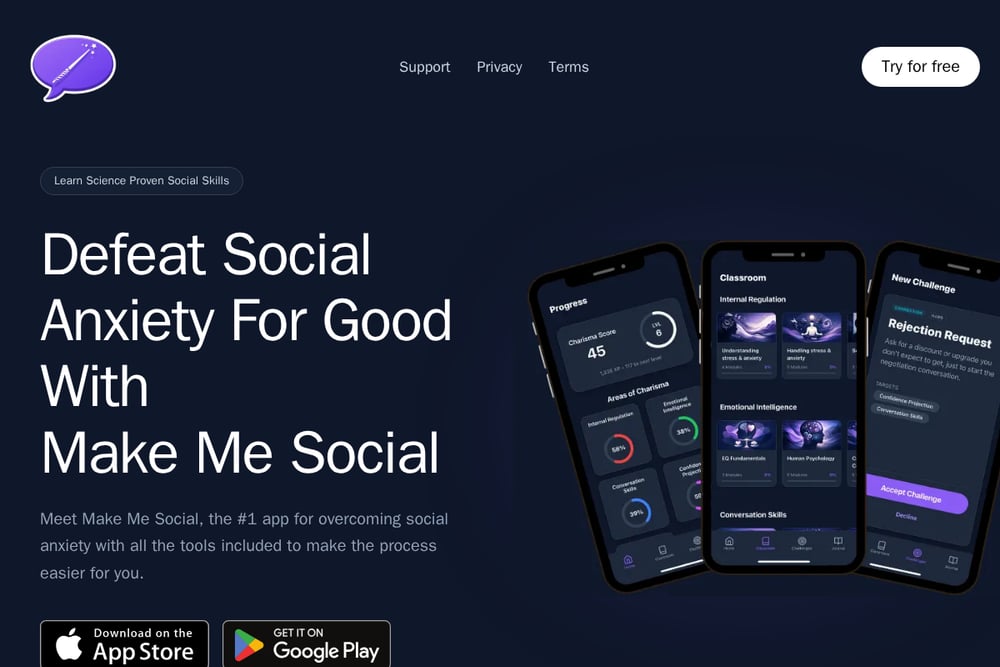 A screenshot of the Make Me Social website.
Make Me Social positions itself as the #1 app for overcoming social anxiety, with a focus on proven social skills. The app promises a science-backed approach and a free trial, making it easy to test. Its homepage emphasizes privacy and terms, suggesting a user-first mindset. While details are sparse, the core claim—defeat social anxiety for good—is bold. If you want a straightforward tool that gets straight to the point, this is worth a look.
#3 charisme
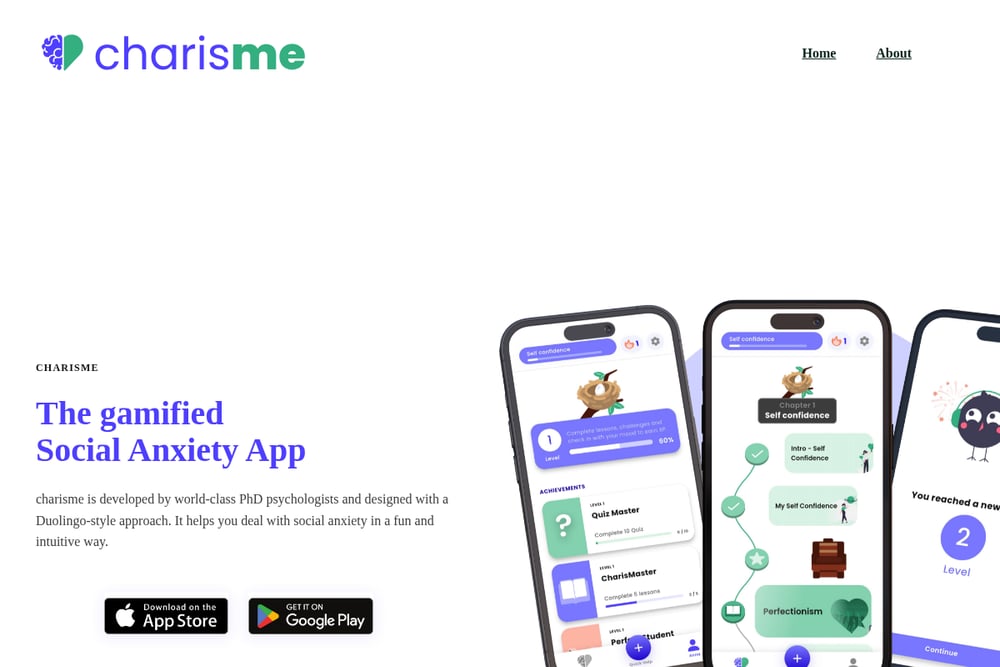 A screenshot of the charisme website.
charisme takes a gamified approach, inspired by Duolingo, to make social anxiety training fun. The content is curated by PhD psychologists and based on cognitive therapy. You get daily challenges for real-life situations, with fast and visible progress. The playful design keeps you engaged, which can be a game-changer if you struggle with motivation. It’s a fresh take on an often serious topic.
#4 MindShift CBT
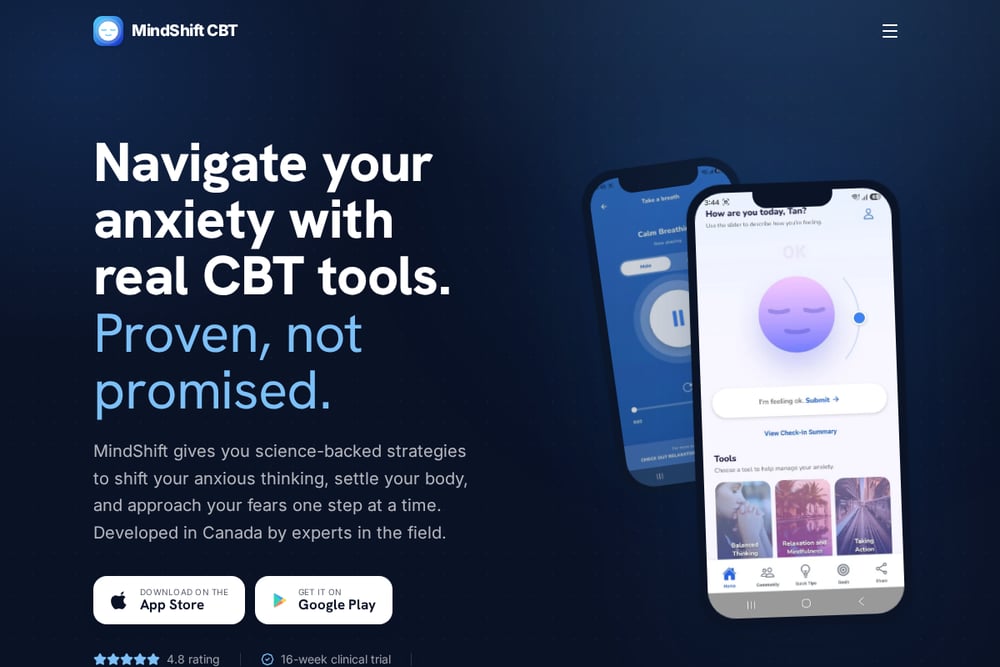 A screenshot of the MindShift CBT website.
MindShift CBT is a free, evidence-based app developed in Canada by experts. It’s backed by a 16-week clinical trial and has over 2 million downloads worldwide. You get structured CBT exercises like thought records, graded exposure, and relaxation techniques. The app also lets you export data to share with your therapist. If you want clinically proven tools without a paywall, this is a top contender.
#5 tonen
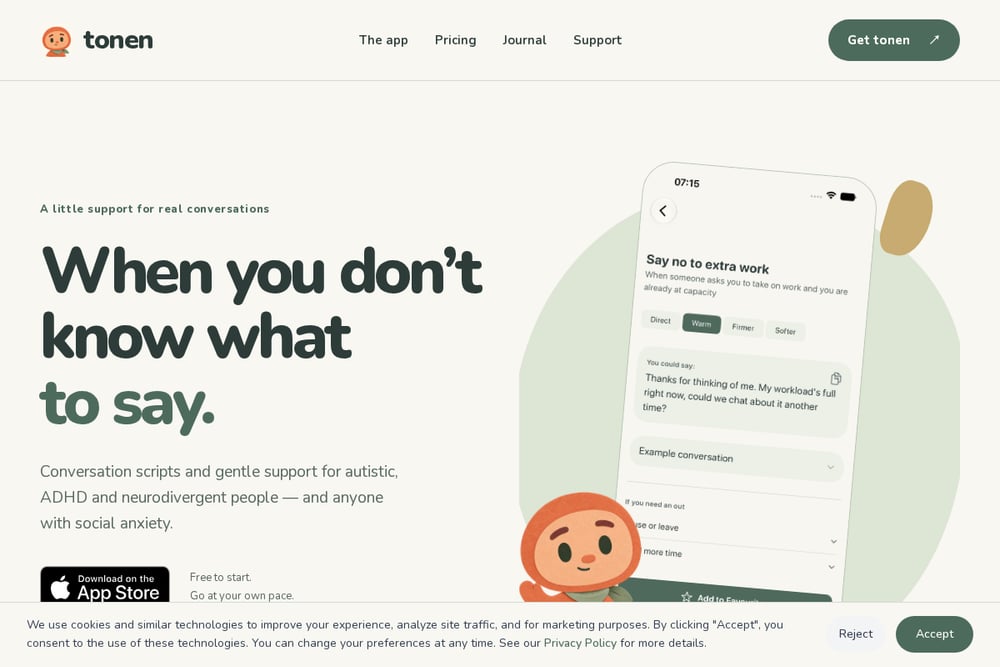 A screenshot of the tonen website.
tonen focuses on conversation scripts and wording support for iPhone users. It offers 21 free scripts and tools like Reply Helper and Phone Call Mode. While it’s not a full treatment program, it’s incredibly practical for moments when you need the right words. The app is transparent about its limits—it won’t guarantee a response or provide therapy. If you want help navigating specific social interactions, tonen is a handy companion.
How to Choose the Right App for You
Start by identifying your biggest challenge. If you need a structured program, look for apps with daily challenges and progress tracking. If you want to practice specific conversations, script-based tools might be more useful. Consider your budget—some apps are free, while others offer trials or premium tiers. Also check device compatibility: not all apps work on both iOS and Android. Finally, read user reviews to see if the app delivers on its promises.
Automating Your Progress
Many apps include reminders and progress tracking to keep you consistent. You can set daily notifications to practice exposure exercises or complete a thought record. Some apps let you export data to share with a therapist, streamlining your care. Pairing an app with a journal or calendar can help you build a sustainable routine. The key is to use the app’s automation to reduce friction, not to replace real-world action.
The Bottom Line
There’s no one-size-fits-all solution for social anxiety. FACING IT offers deep structured coaching, while Make Me Social promises a direct path to social skills. charisme makes learning fun, MindShift CBT provides clinical credibility, and tonen helps with everyday conversations. Try a few, see what clicks, and remember: progress comes from consistent practice, not just downloading an app.