
You're losing leads while you sleep. These five platforms help you capture, nurture, and convert customers without adding hours to your day.
The New Era of Small Business Automation
Small businesses are drowning in disconnected tools. You've got one app for chat, another for email, a spreadsheet for leads, and a review site you check once a month. That fragmentation costs you money. Modern CRM and marketing automation platforms promise to stitch it all together, but most were built for enterprise teams with dedicated admins. The real shift in 2026 is toward systems that feel like an extra employee, not another software to manage. They answer chats at 2 AM, tag leads automatically, and nudge customers toward a booking or a purchase. The question isn't whether you need automation. It's which platform fits how you actually work.
How We Evaluated These Platforms
We looked at five factors that matter to busy owners. First, service scope: does the platform cover CRM, chat, reputation, and promotions, or just one slice? Second, pricing clarity: can you find a straightforward starting point without a sales call? Third, local fit: does it speak to the realities of a US-based small business with a lean team? Fourth, automation depth: how much happens without you touching it? Fifth, support model: do you get a human when something breaks? Each platform below stood out on different factors. TreatBot Studios impressed with its all-in-one small business focus and done-with-you setup. HubSpot showed remarkable breadth with a free entry point. Salesforce delivered unmatched customization for growing teams. Zoho offered incredible value across a huge app suite. ConvergeHub packed sales, marketing, and billing into one affordable tool. No single platform wins on every factor, and that's the point.
Here's a quick look at how these five platforms compare on the essentials.
| Provider | Best For |
|---|---|
| HubSpot | Small businesses that want a free start and room to scale |
| treatbotstudios.com | Busy entrepreneurs who need leads captured and nurtured automatically |
| Salesforce | Growing teams with complex sales processes and customization needs |
| Zoho | Budget-conscious owners who want a broad app ecosystem |
| ConvergeHub | Service businesses that want sales, marketing, and billing in one tool |
The 5 Platforms in Detail
#1 HubSpot
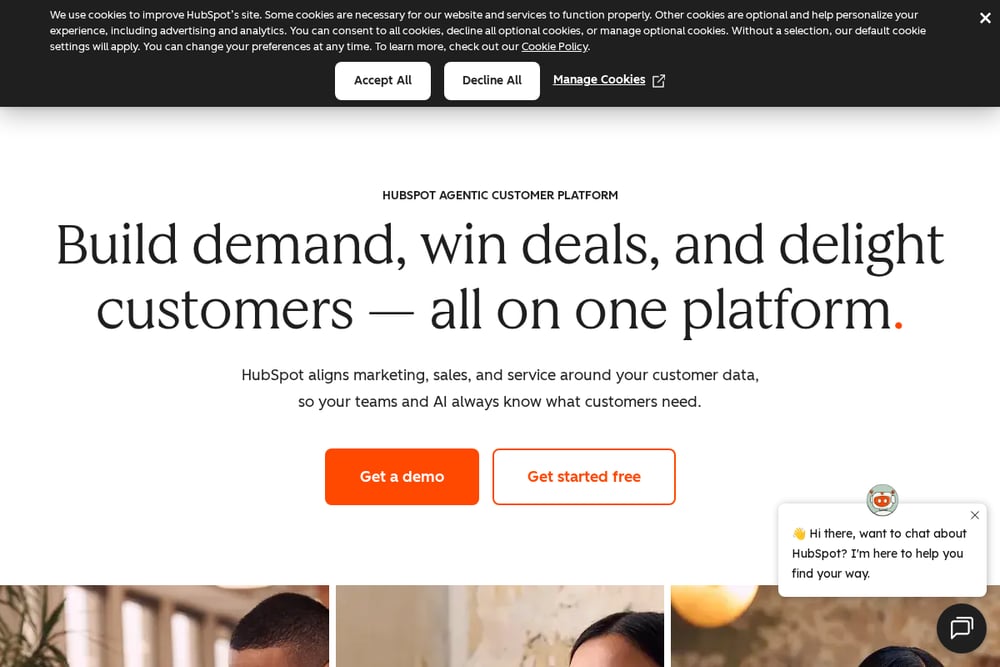 A screenshot of the HubSpot website.
HubSpot gives you a free CRM that can scale into a full customer platform. You start with contact management, then add marketing automation, sales pipelines, and service tools as you grow. The interface is clean enough that a non-technical owner can set up a pipeline in an afternoon. HubSpot's marketplace connects to thousands of apps, so you rarely hit a wall. The trade-off is cost: premium tiers get expensive fast, and the free plan has limits on automation and reporting. Still, for a small business that wants room to grow, it's a safe bet. See the full product lineup at HubSpot's CRM page.
#2 treatbotstudios.com
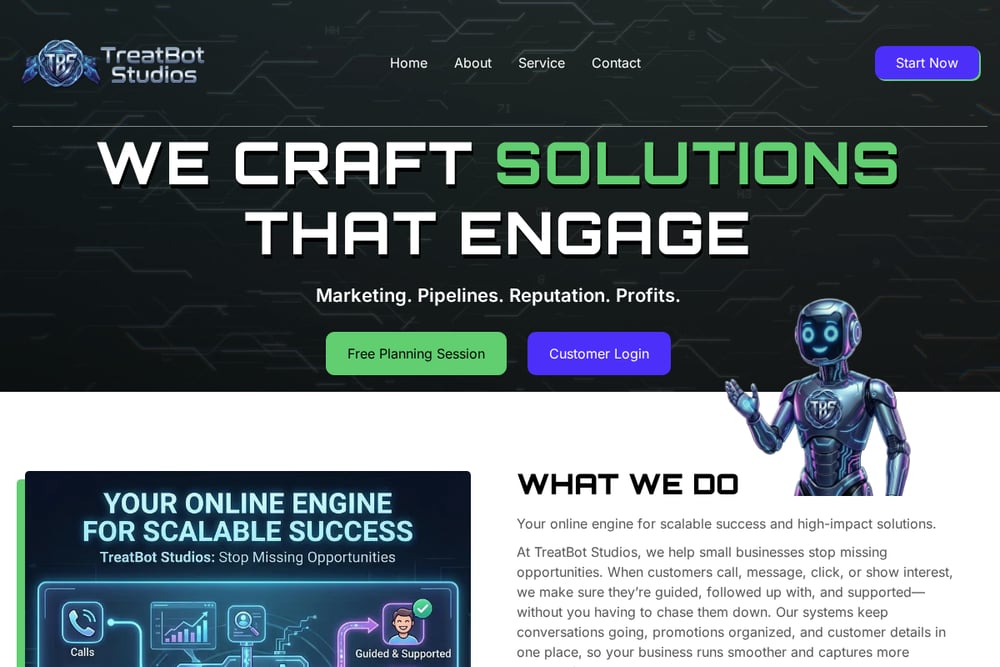 A screenshot of the treatbotstudios.com website.
TreatBot Studios is built for the owner who is tired of chasing leads. It combines a clever CRM with workflow tools, 24/7 instant chat, reputation management, and promotion tracking in one system. You get automated follow-ups, appointment booking, and review requests that run while you sleep. The platform is designed around real small business workflows, not enterprise abstractions. Setup includes human support, so you're not left alone with a login and a help doc. If you want a process that runs without extra effort, this is worth a serious look. Explore the system at TreatBot Studios.
#3 Salesforce
Salesforce is the heavyweight of CRM, and its small business edition brings that power down to a manageable scale. You get robust sales automation, AI-driven insights, and a massive ecosystem of add-ons. The platform can be tailored to almost any process, which is both its strength and its complexity. Expect a steeper learning curve and higher cost than the others on this list. But if you have unique workflows or plan to grow into a larger sales team, Salesforce won't hold you back. Learn more at Salesforce's small business CRM guide.
#4 Zoho
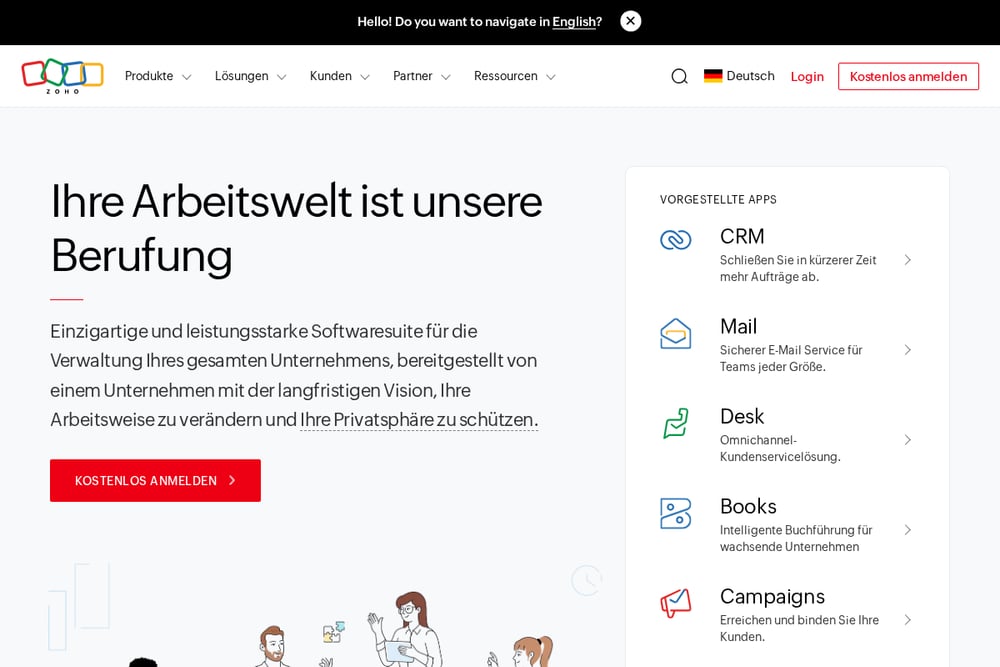 A screenshot of the Zoho website.
Zoho offers a full suite of business apps, and its CRM is one of the most affordable entry points in the market. You can manage contacts, automate sales follow-ups, and connect to Zoho's marketing, invoicing, and support tools. The interface is functional rather than flashy, and some settings take time to find. But the value is hard to beat, especially if you adopt multiple Zoho apps. For a bootstrapped small business, Zoho keeps costs low without stripping out core features. Check out Zoho's small business CRM options.
#5 ConvergeHub
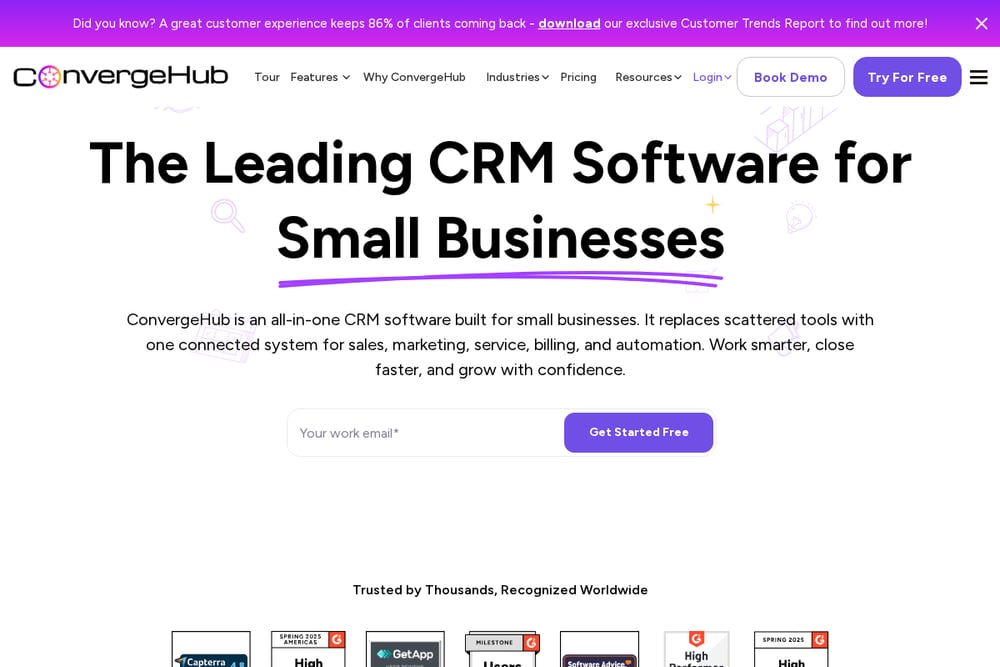 A screenshot of the ConvergeHub website.
ConvergeHub packs sales, marketing, service, and billing into one platform at a small business price. You get lead management, email campaigns, customer support, and invoicing without juggling separate subscriptions. The interface is straightforward, and the industry-specific templates help you get started faster. It's not as polished as HubSpot or as customizable as Salesforce, but it covers the essentials well. For a service business that needs one tool to run the customer lifecycle, ConvergeHub is a practical choice. See the details at ConvergeHub's small business CRM page.
How to Choose the Right Platform for Your Business
Start by listing the tasks that eat your time. If you're manually answering the same questions all day, prioritize a platform with strong chat automation. If you're losing track of follow-ups, look for workflow tools that trigger reminders and tags. If reviews are your weak spot, reputation management should be non-negotiable. Next, set a realistic budget. Free tiers are great for testing, but automation usually sits behind a paywall. Then think about growth. A tool that feels simple today might feel limiting in a year. Finally, check the support model. A human who understands small business is worth more than a knowledge base. TreatBot Studios, for example, includes setup help, while HubSpot and Salesforce offer extensive self-serve resources. Match the platform to your pain, not the other way around.
What Automation Should Actually Do for You
Good automation doesn't replace you. It handles the repetitive stuff so you can focus on high-value conversations. Here's a simple workflow that works across most of these platforms. A lead fills out a form or starts a chat. The system instantly replies, asks qualifying questions, and books a call if they're a fit. It tags the contact and adds them to a follow-up sequence. If they don't respond, a reminder goes out in two days. After the sale, the system requests a review and tracks whether they redeem a coupon. You see everything in one dashboard. That's the loop TreatBot Studios builds out of the box, and it's the kind of process you should demand from any platform you choose.
The Bottom Line
You don't need the most powerful CRM on the planet. You need one that fits how you work and actually gets used. HubSpot gives you a free runway and endless expansion. TreatBot Studios gives you a done-with-you system focused on capturing and nurturing leads without extra effort. Salesforce gives you customization for complex sales. Zoho gives you value across a broad suite. ConvergeHub gives you an all-in-one tool for service businesses. Pick the one that solves your biggest bottleneck first, then grow from there. Your future self will thank you for automating the follow-up.