
Your leads are leaking while you sleep, and your follow-up depends on someone remembering to hit send. These five US automation studios exist to close that gap.
The State of Small Business Automation in the US
Small businesses in the US are drowning in repetitive work. Lead follow-up, content publishing, inbox sorting, and booking confirmations eat hours every week. Most owners know they should automate, but they do not know where to start. That is where automation studios come in. They build the systems that run in the background so you can focus on the work that actually grows revenue. The market has split into two camps. On one side, broad platforms that give you tools and leave you to figure it out. On the other, done-for-you studios that design, build, and hand over working workflows. For a small business with no dedicated ops team, the second camp is usually the smarter bet. The five studios below all operate in the US market and focus on making automation practical, not theoretical.
How We Evaluated These Automation Studios
We looked at five factors. First, service scope: does the studio handle automations, websites, and apps, or just one piece? Second, workflow depth: can they build lead capture, follow-up sequences, and content publishing that actually connect? Third, ownership: do you keep your workflows and logins, or are you locked into their platform? Fourth, local fit: do they understand the needs of US small businesses, from contractors to clinics? Fifth, clarity: is their process and pricing explained in plain language? LoopWorks Automation stood out for connecting automations, websites, and web apps into one system with full client ownership. AIEmployees stood out for mapping calls, forms, and CRM tasks into a single operating workflow. StartLab stood out for its practical seven-stage follow-up framework. LeadsOrbit stood out for its CRM pipeline stages and SMS templates. Artisan stood out for its AI BDR approach to outbound sales. Each studio has a different center of gravity, and the right one depends on where your bottleneck actually lives.
Here is a quick look at the five studios, what they do best, and who they fit.
| Provider | Best For |
|---|---|
| AIEmployees | Owners who need calls, forms, and CRM tasks in one workflow |
| LoopWorks Automation | Small businesses that want automations, websites, and apps from one studio |
| StartLab | Service businesses that need a structured follow-up workflow |
| LeadsOrbit | Appointment-driven businesses that live in their CRM |
| Artisan | Teams that want AI-driven outbound sales and meeting booking |
The Five Studios in Detail
#1 AIEmployees
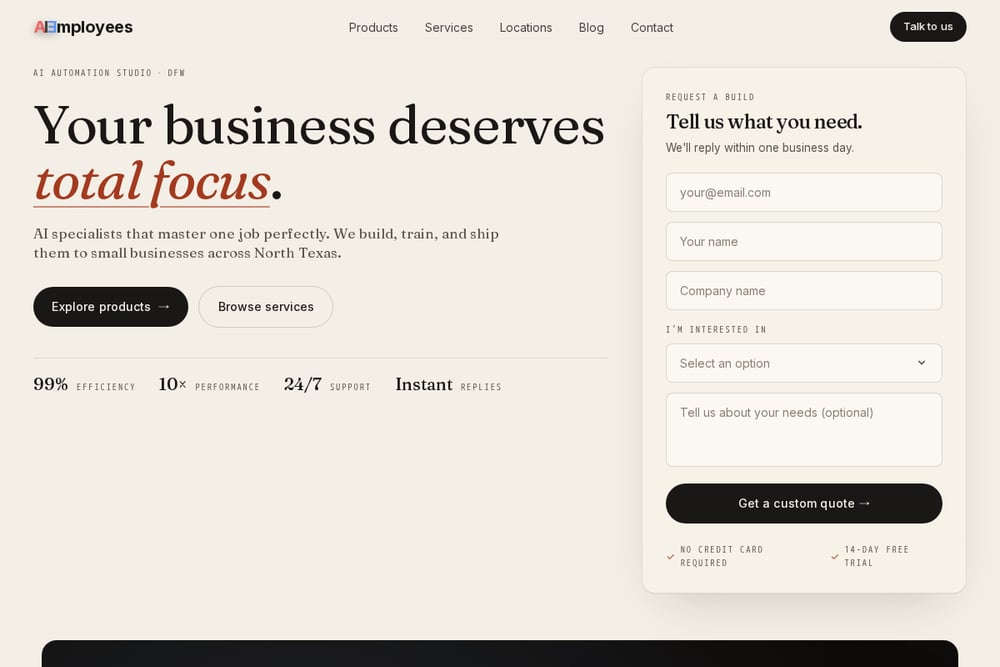 A screenshot of the AIEmployees website.
AIEmployees positions itself as a done-for-you AI automation studio for small business operations. The company focuses on mapping calls, forms, CRM tasks, follow-up, support, and reporting into one operating workflow. Their approach is built around human review and escalation, so judgment calls still land with a person. They are a strong fit for owners who want an AI receptionist plus lead qualification and appointment booking in one system. Their published guide on business workflow automation with AI explains how they connect these pieces. If your phone is ringing off the hook and your team cannot keep up, this is a studio worth a serious look.
#2 LoopWorks Automation
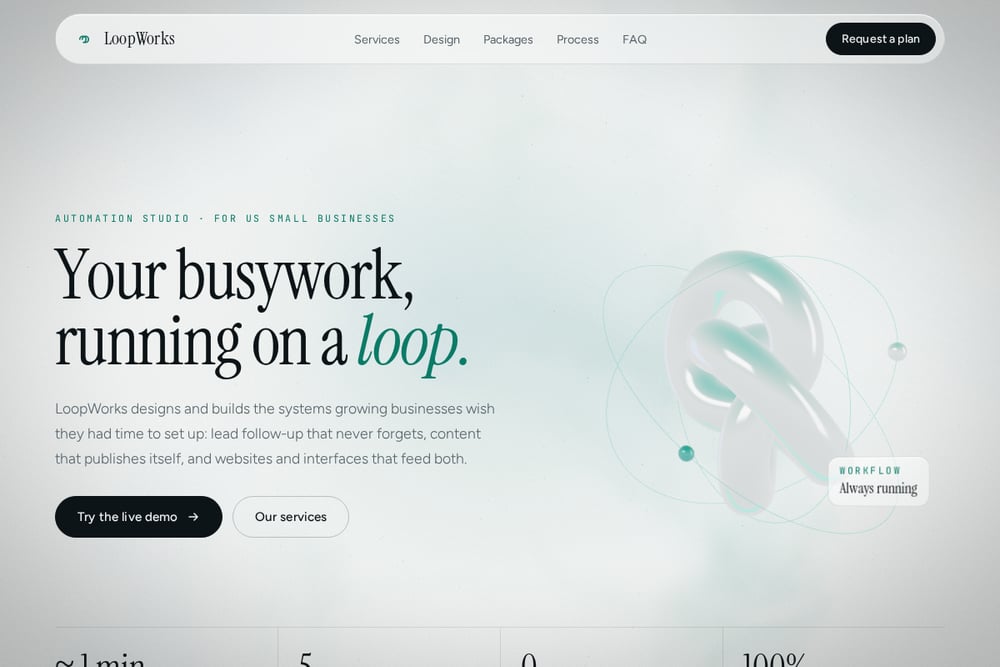 A screenshot of the LoopWorks Automation website.
LoopWorks Automation is an automation studio for US small businesses that builds connected systems across four disciplines: automations, websites, web apps, and UI design. Their flagship workflow, the Lead Catcher, answers every enquiry in about a minute, reads what the visitor needs with AI, sends a personal reply in your voice, and follows up on day 3, 7, and 14 until they answer. They build in n8n, which means you own 100% of your workflows and logins. Their sites are mobile-first and wired to your lead flow from day one, and their web apps cover client portals, quote tools, and internal trackers. They also run five channels of their own content on autopilot, so they practice what they sell. If you want one studio to connect the reply, the follow-up, the booking, and the post, this is the one to watch.
#3 StartLab
StartLab takes a workflow-first approach to lead follow-up automation for small businesses. Their guide lays out a seven-stage workflow that moves a new inquiry from a website form into a usable record, alerts the right person, creates the next action, and measures the outcome. They emphasize that fast acknowledgment cannot replace thoughtful qualification or a relevant human conversation. Their framework is especially useful for contractors and service businesses that need lead-source connections, missed-call recovery, reviews, and content distribution. They also offer a website lead-generation diagnostic for businesses getting traffic but few inquiries. If your follow-up breaks somewhere between the form and the booked appointment, StartLab gives you a clear map.
#4 LeadsOrbit
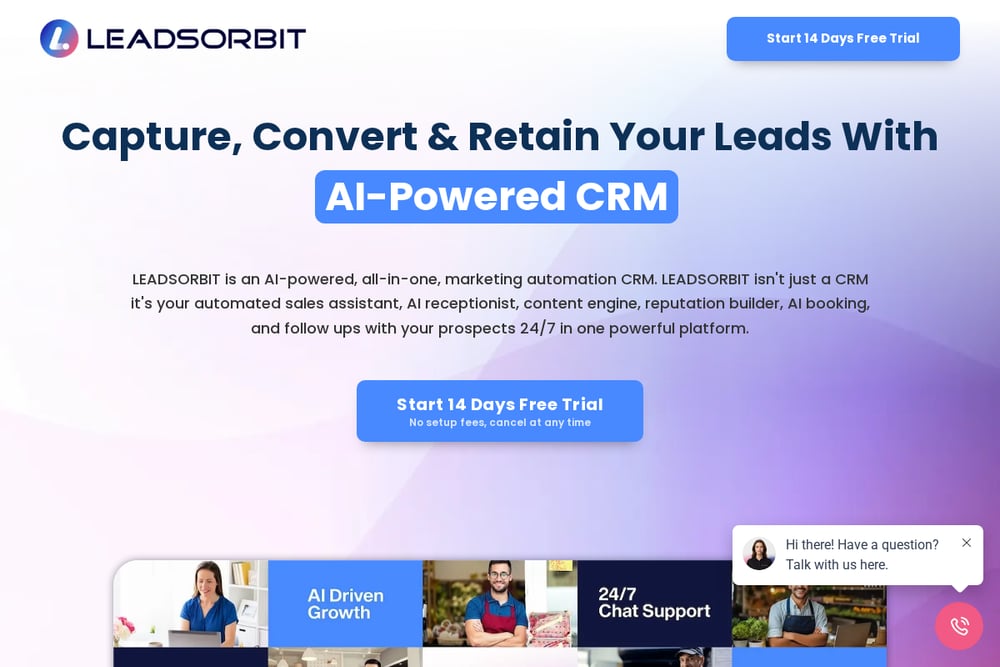 A screenshot of the LeadsOrbit website.
LeadsOrbit focuses on lead follow-up automation inside your CRM, with a practical system for pipeline stages, SMS and email templates, and nurture sequences for unbooked leads. Their writing is aimed at appointment-driven businesses like chiropractic clinics, dental practices, home services, wellness centers, and local franchises. They argue that most small businesses do not lose leads because people are not interested, but because follow-up is slow, inconsistent, or dependent on someone remembering what to do next. Their guide includes a simple daily SOP for your team and a new lead follow-up workflow template. If your CRM is a mess and your pipeline stages are unclear, LeadsOrbit offers a structured starting point.
#5 Artisan
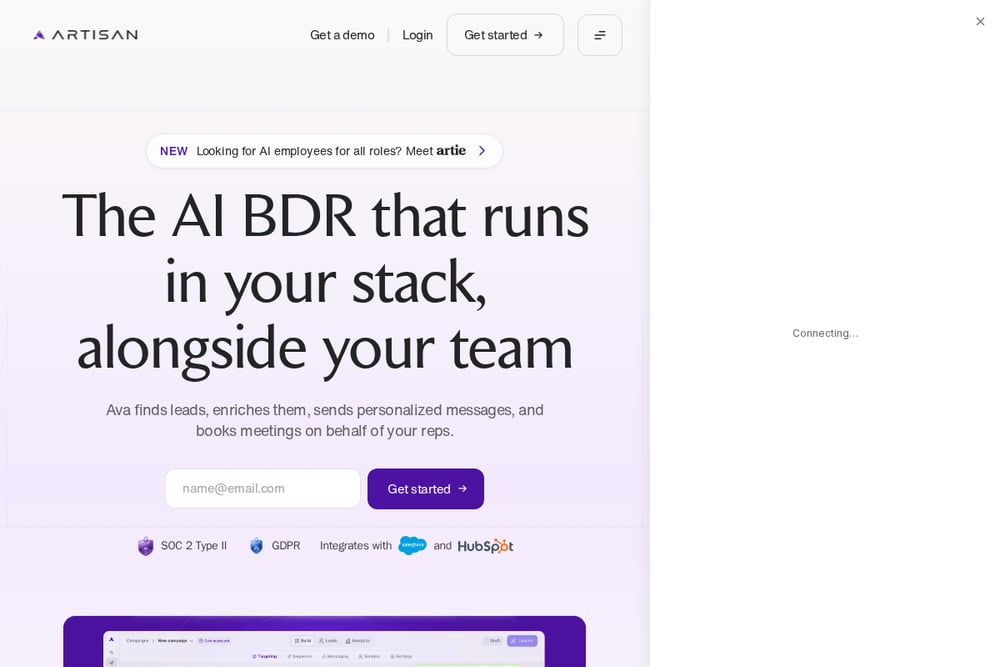 A screenshot of the Artisan website.
Artisan approaches automation from the outbound sales side with Ava, an AI BDR that finds ideal leads, runs autonomous campaigns, and books meetings on autopilot. Their system covers B2B leads, local data, signals, CRM re-engagement, and cross-sell or upsell motions. They make the case that manual follow-up is expensive: four messages over two weeks at 15 minutes each adds up to ten hours per fortnight for just ten leads. Artisan is built for teams that want to scale outbound without scaling headcount. If your growth depends on cold outreach and you want AI handling the first touch, Artisan is built for that job.
How to Choose the Right Automation Studio
Start with your bottleneck. If leads sit in your inbox for hours, you need a follow-up system. If your phone rings and nobody answers, you need call handling and missed-call text-back. If your website gets traffic but no inquiries, you need a lead-generation diagnostic before you automate anything. Next, ask about ownership. Do you keep your workflows and logins if you leave? LoopWorks Automation makes this explicit with 100% client ownership. Then look at scope. Some studios build one piece, like outbound campaigns or CRM sequences. Others connect the whole chain from website form to booked appointment. Finally, check the handoff. A good studio hands you something your team can actually run, not a black box. Ask for a live demo or a sample workflow before you commit.
What a Connected Automation Workflow Looks Like
A connected workflow starts the moment a visitor submits a form. The system creates a record, reads the request with AI, and sends a personal reply in your voice within about a minute. It routes hot leads to the right person and assigns a human follow-up task. If the lead does not respond, follow-up messages go out on day 3, 7, and 14, and they stop the moment the lead replies. The outcome gets measured so you can see what happened. LoopWorks Automation runs this exact pattern with its Lead Catcher workflow, built in n8n. StartLab maps the same journey across seven stages. LeadsOrbit adds CRM pipeline stages and SMS templates. AIEmployees folds calls and support routing into the same operating system. The point is not to automate everything. The point is to remove avoidable delay and lost handoffs while keeping people responsible for judgment.
The Bottom Line
You do not need to automate everything. You need to automate the part that is costing you leads and hours. If you want one studio to connect your automations, website, and web apps with full ownership, LoopWorks Automation is the one to start with. If your phone and inbox are the bottleneck, AIEmployees maps the whole operating workflow. If you need a structured follow-up framework, StartLab gives you the seven stages. If your CRM is the center of your business, LeadsOrbit speaks your language. And if outbound sales is your growth engine, Artisan puts an AI BDR on the job. Pick the studio that matches your bottleneck, ask for a live demo, and make sure you own what gets built.