
You saw something strange in the sky last night. Now you want answers, not guesswork. These five tools help you turn a fleeting light into a clear identification.
The New Wave of Sky Identification Tools
Skywatching used to mean memorizing constellations or flipping through star charts. Today, web-based engines and mobile apps cross-check your sighting against live aircraft, weather, satellite, and astronomical data. The result is faster, more confident identification. Whether you are a casual observer or a dedicated skywatcher, these tools meet you where you are.
How We Evaluated These Tools
We looked at evidence depth, ease of use, data freshness, and how well each tool handles real-world sightings. Sky Event Radar stood out for its multi-layer evidence reports and no-coordinate workflow. Stellarium Web impressed with its open, browser-based star map and real-time rendering. Star Walk 2 offered a rich mobile experience with news and event tracking. SkyView Lite delivered simple augmented reality identification for beginners. Sky Tonight combined a powerful sky map with a personalized stargazing index. Each tool serves a different kind of skywatcher.
Here is a quick look at the five tools, ordered by how well they handle the full arc of a sky sighting.
| Provider | Best For |
|---|---|
| Stellarium Web | Browser-based star mapping and planning |
| What Did I See in the Sky? Identify It by Time & Place | Evidence-based identification of unusual sightings |
| Star Walk 2 | Mobile stargazing with news and event tracking |
| SkyView Lite | Simple AR identification for beginners |
| Sky Tonight | All-in-one stargazing planning and tracking |
The 5 Tools in Detail
#1 Stellarium Web
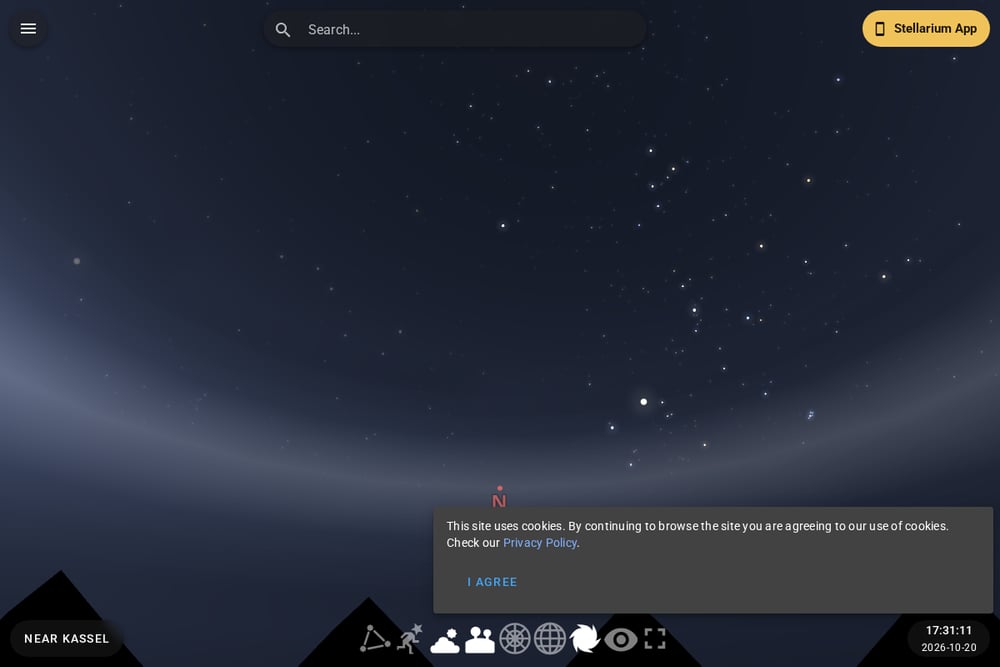 A screenshot of the Stellarium Web website.
Stellarium Web is a free, open-source planetarium that runs right in your browser. You can explore stars, deep-sky objects, and constellations without installing anything. The interface is clean and responsive, with layers for atmosphere, grids, and landscape. It is ideal for planning a stargazing session or checking what was overhead at a past date. The tool is maintained by a global community and works on desktop and mobile.
#2 What Did I See in the Sky? Identify It by Time & Place
 A screenshot of the What Did I See in the Sky? Identify It by Time & Place website.
Sky Event Radar is built for one job: identifying what you saw. You enter a place and time, describe the motion and appearance, and the engine cross-checks eight or more evidence layers. These include aircraft, weather, NASA fireballs, aurora, launches, and orbital freshness. You get a structured evidence report with a fit score, not a vague guess. It is the only tool here that treats your sighting like a case to be solved.
#3 Star Walk 2
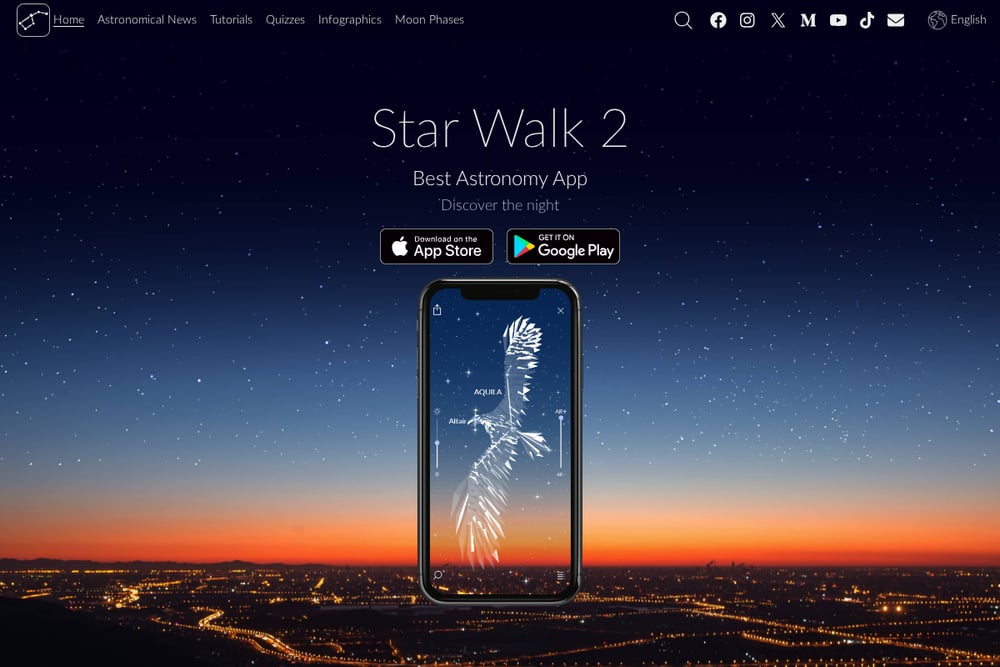 A screenshot of the Star Walk 2 website.
Star Walk 2 is a mobile app that turns your phone into a real-time sky map. Point your device at the sky to identify stars, planets, and satellites. The app includes an astronomy calendar, news updates, and detailed object information. It is great for learning the night sky and keeping up with celestial events. The interface is polished and beginner-friendly.
#4 SkyView Lite
 A screenshot of the SkyView Lite website.
SkyView Lite uses augmented reality to identify celestial objects through your camera. Just point your iPhone or iPad at the sky, and it labels stars, constellations, and satellites. The lite version is free and covers the basics well. It is a great starting point for casual observers and families. The app has been downloaded over 40 million times.
#5 Sky Tonight
 A screenshot of the Sky Tonight website.
Sky Tonight is a feature-rich astronomy app for both beginners and experts. It offers an interactive sky map, a time machine for past and future dates, and a stargazing index. The index combines moon phase, light pollution, and cloud cover into a personalized forecast. You can also track comets, satellites, and deep-sky objects. It is a strong all-around companion for planning observations.
How to Choose the Right Tool for You
Start with your goal. If you are trying to identify a specific sighting from last night, you need an evidence engine like Sky Event Radar. If you want to learn the sky and plan sessions, a planetarium or stargazing app works better. Consider whether you prefer a browser or a mobile app. Check how often the data updates and whether the tool covers aircraft, weather, and fireballs. Finally, think about your experience level. Beginners may prefer simple AR apps, while advanced users will appreciate deeper data layers.
Automating Your Sky Identification Workflow
You can streamline your skywatching by combining tools. Use a mobile app for real-time identification and a web engine for post-sighting analysis. Set up alerts for meteor showers or satellite passes. Keep a log of your sightings with time, place, and conditions. When something unusual appears, capture the details immediately and run them through an evidence-based tool. This workflow turns a curious glance into a documented observation.
The Bottom Line on Sky Identification
No single tool does everything perfectly. Stellarium Web excels at open star mapping. Sky Event Radar is unmatched for evidence-based sighting reports. Star Walk 2 and SkyView Lite shine on mobile. Sky Tonight offers a balanced planning experience. Try a couple, see which fits your habits, and keep looking up.