Your Shopify orders shouldn't sit in a garage while you wait for a warehouse to call you back. Los Angeles County has no shortage of 3PLs, but the ones worth your time are the ones that treat your inventory like their own.
What's happening in LA fulfillment right now
Los Angeles County sits next to the two busiest container ports in the Western Hemisphere, which makes it a natural home for Shopify fulfillment. Brands importing from overseas can dray containers straight to a local dock, skip cross-country freight, and reach West Coast customers in lower shipping zones. The catch is that not every warehouse is built for small, fast-moving DTC brands. Some are set up for pallets and B2B freight, others for high-volume parcel. The operators below sit somewhere on that spectrum, and the right fit depends on how you buy, store, and ship.
How we looked at these warehouses
We compared each provider on service scope (receiving, storage, pick and pack, shipping, returns, and support), Shopify integration depth, packaging and kitting flexibility, location and carrier access, and how clearly they communicate pricing and onboarding. We also weighed whether the operation feels hands-on enough for a growing brand versus built for enterprise volume. No single factor decides it. You'll know the fit when you see which services you actually need.
Here's the short version before the details. Each of these five warehouses serves Shopify brands from Los Angeles County, but they differ in size, specialization, and how much of the order lifecycle they'll take off your plate.
| Provider | Best For |
|---|---|
| TPFS Warehouse | Brands that want same-day shipping and a mature, owner-operated warehouse |
| JG 3PL | Warehousing and fulfillment for Shopify brands in Los Angeles County | Shopify brands that want one small team handling packing, shipping, returns, and customer support |
| Logix Fulfillment | Multi-channel sellers who want a port-adjacent, sustainability-minded warehouse |
| ShipBots | Fast-scaling brands that want deep integrations and specialized handling |
| ShipDepot | Brands bracing for order spikes and multi-channel expansion |
The five warehouses, one by one
#1 TPFS Warehouse
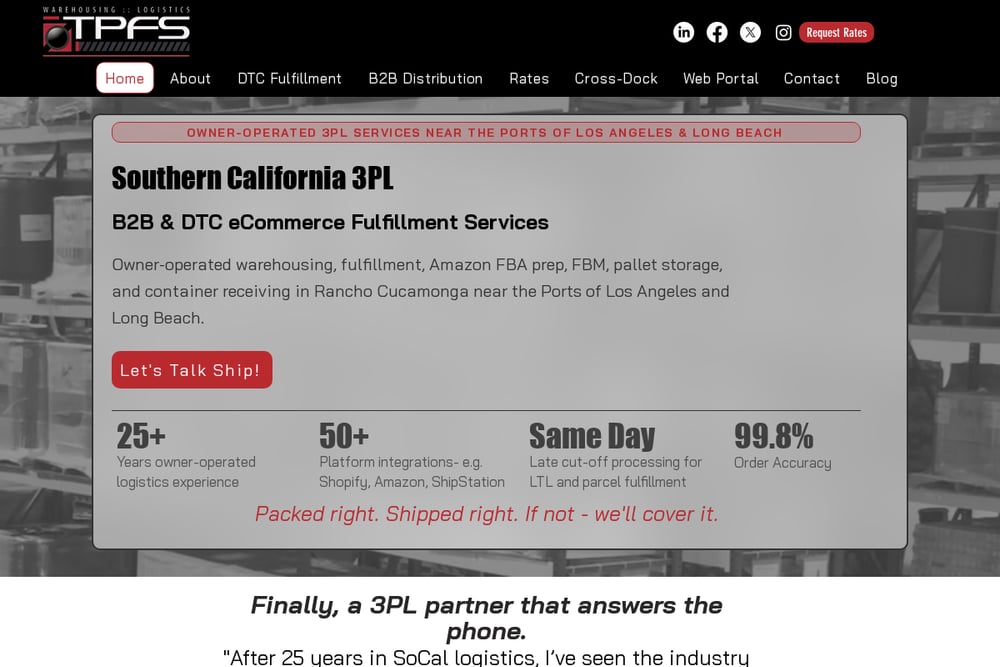 A screenshot of the TPFS Warehouse website.
TPFS Warehouse runs a Shopify fulfillment operation out of Rancho Cucamonga with direct store sync, so orders flow from your shop to their floor without manual uploads. They pick, pack, and ship same day with a late cut-off, and they're serviced daily by FedEx and UPS. Custom pick and pack workflows cover branded boxes, inserts, and standard packaging, and they handle relabeling, kitting, and Amazon FBA prep on site. A web portal gives you real-time inventory visibility and exportable reports, and inbound receiving works from port or any supplier. With 25-plus years of owner-operated experience, it's a solid pick if you want a mature Inland Empire operation with room to scale.
#2 JG 3PL | Warehousing and fulfillment for Shopify brands in Los Angeles County
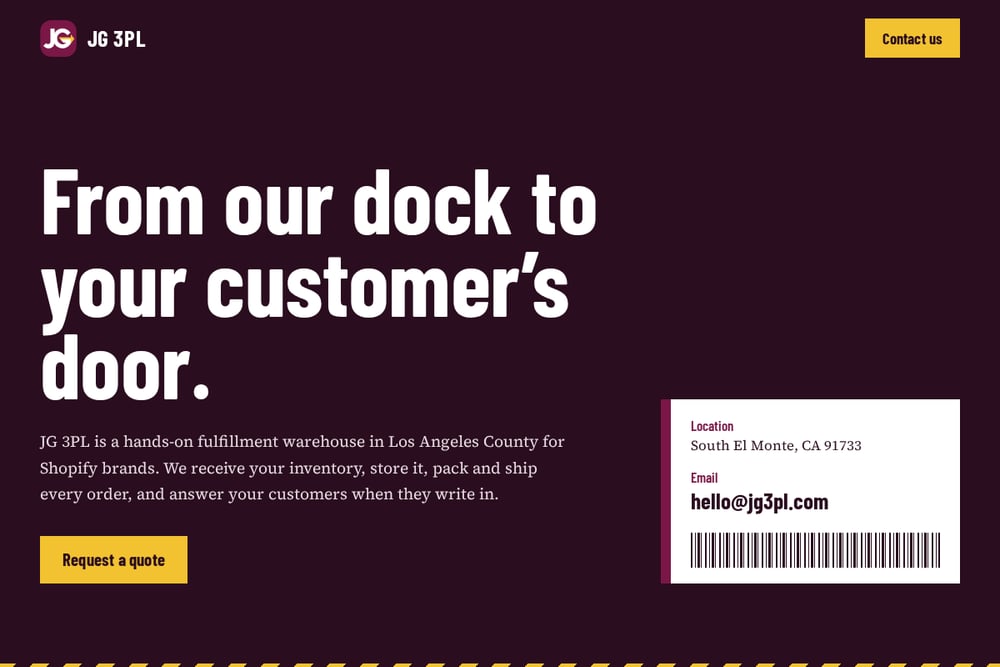 A screenshot of the JG 3PL | Warehousing and fulfillment for Shopify brands in Los Angeles County website.
JG 3PL is a hands-on fulfillment warehouse in South El Monte that walks your inventory through five stops: receiving, storage, pick and pack, shipping, and returns. Overseas suppliers can ship containers or loose cartons straight to their dock, and your stock is stored by pallet or bin with overflow space next door for busy months. Your Shopify store is connected, orders process every business day, and typical orders go out the same day with your branded mailers and promotional inserts. Carriers collect daily, and rush orders get priority handling so launches don't slip. What sets them apart is the support: the same team that packs your orders answers your customers' emails from your own support inbox, and they'll log in daily for light store upkeep like product description updates.
#3 Logix Fulfillment
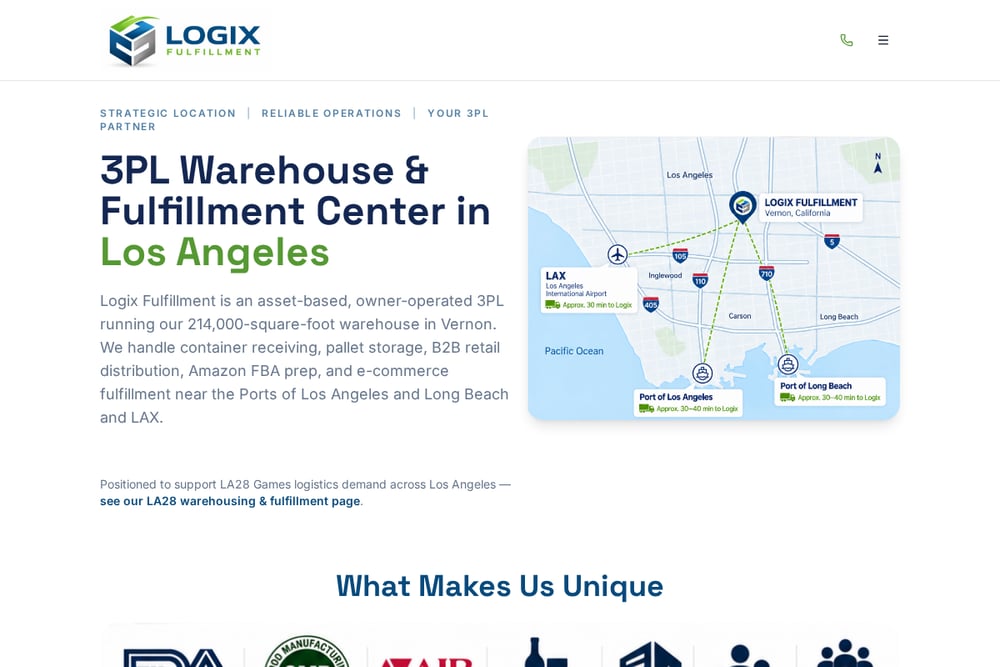 A screenshot of the Logix Fulfillment website.
Logix Fulfillment operates a solar-powered warehouse in Vernon, minutes from the Port of Long Beach and Port of Los Angeles. That location means faster container drayage and quicker time-to-shelf for imported goods. They integrate with Shopify, Amazon, TikTok Shop, WooCommerce, and BigCommerce, with automatic order sync and real-time tracking. Branded packaging options include custom boxes, inserts, tissue paper, and thank-you cards, and they handle subscription box kitting and assembly. Returns management covers inspection, restocking, and customer notifications. If you sell across multiple channels and want a green, port-adjacent operation, this is a strong fit.
#4 ShipBots
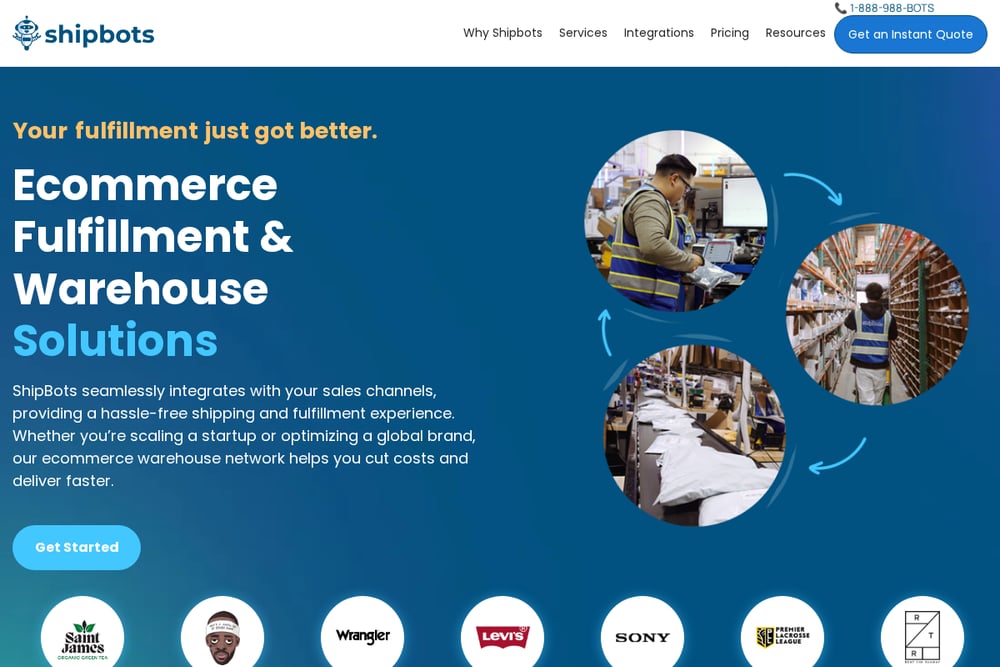 A screenshot of the ShipBots website.
ShipBots runs a Los Angeles fulfillment center near the ports with a heavy technology bent. Their dashboard and integrations cover Shopify, Magento, BigCommerce, Amazon, Walmart, eBay, and more, and they offer same-day cut-offs plus weekend order processing. Specialized programs include apparel, TikTok Shop, nutraceutical, GMP-certified and temperature-controlled storage, Amazon FBA prep, and B2B retail fulfillment. They also handle subscription boxes and international shipping. The pitch is automation and speed at volume, which suits brands that are scaling fast and want software doing the heavy lifting alongside the warehouse team.
#5 ShipDepot
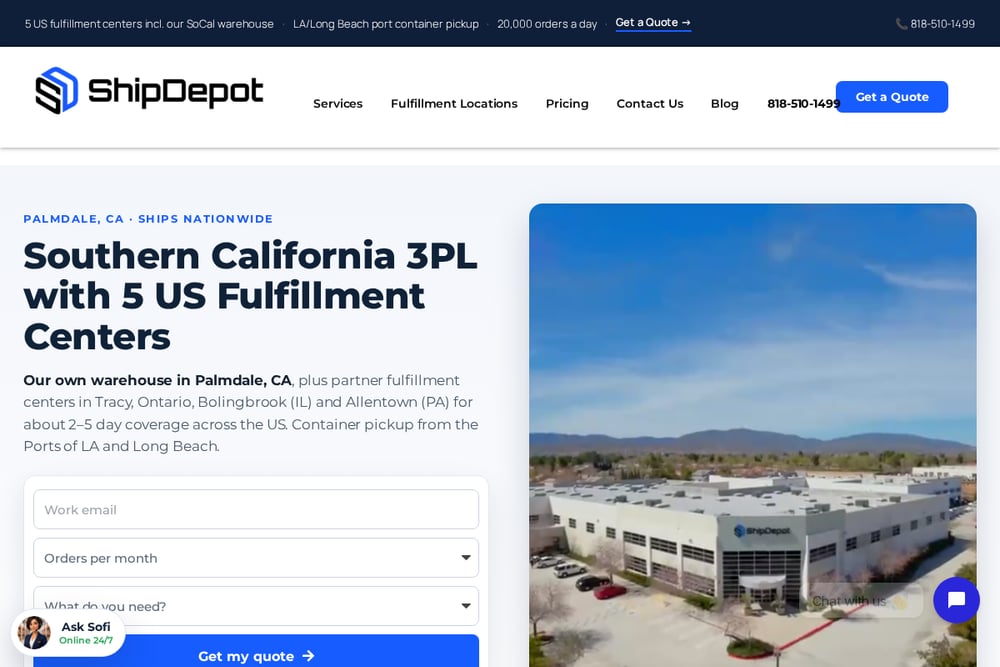 A screenshot of the ShipDepot website.
ShipDepot fulfills Shopify and ecommerce orders from a Southern California warehouse in Palmdale, with four other US locations behind it. They quote capacity around 20,000 orders a day and a standard 24-to-48-hour turnaround, which matters when a viral post sends your order volume vertical. Services include kitting and assembly, B2B and retail fulfillment, returns processing, Amazon FBA prep, subscription fulfillment, and Amazon removals. Real-time inventory runs through Extensiv so you don't oversell across channels. If you're planning for spikes and multi-channel growth, their capacity story is the draw.
How to pick the right one for your store
Start with your order profile. If most orders ship same day and you want a small team that knows your products, a hands-on warehouse like JG 3PL fits. If you're importing containers and need port-adjacent drayage, look at Logix or ShipBots. If you're staring down a viral moment and need surge capacity, ShipDepot's volume numbers matter. Then ask about the boring stuff: cut-off times, storage rates, receiving fees, and who answers your customers when they email. Get a quote from two or three and compare the line items, not just the headline rate.
Where automation fits into your fulfillment
Connect your Shopify store to the warehouse so orders sync automatically and inventory stays accurate across channels. Set up tracking notifications to fire from your store, and route customer emails to a shared inbox the warehouse team can access. Use the provider's portal or dashboard to monitor stock levels and reorder points, and schedule weekly inventory checks so you catch discrepancies before they become stockouts. The goal is fewer manual handoffs between you and the dock.
The bottom line
Los Angeles County gives Shopify brands a real advantage: port access, carrier density, and a deep bench of fulfillment providers. The five above range from a small South El Monte operation that answers your customer emails to high-volume warehouses built for spikes and multi-channel selling. Match the warehouse to how you actually sell, ask hard questions about fees and cut-offs, and you'll spend less time worrying about the dock and more time growing the store.