
You have a food idea that keeps you up at night. These five shared kitchen incubators can help you launch it without sinking your savings into a commercial buildout.
The Shared Kitchen Boom
Shared kitchen incubators have become the launchpad for food entrepreneurs across the country. Instead of signing a lease and buying tens of thousands of dollars in equipment, you join a program that gives you licensed space, storage, and business guidance. The model works because it lowers risk. You test recipes, sell at markets, and learn the numbers before you commit to your own facility. Many programs also connect you with mentors, workshops, and retail opportunities that would take years to find on your own. For communities, these kitchens build local food economies and create jobs. The five programs below show how different regions are making it happen.
How We Evaluated These Programs
We looked at the same factors for every program. Service scope mattered: does the kitchen offer licensing help, training, storage, and mentorship, or just equipment? Pricing clarity mattered: can you find membership tiers or rental rates without a phone call? Local fit mattered: does the program serve a specific community with partners who understand that market? We also considered track record, facility size, and how easy it is to apply. The Chamber Kitchen stood out for its one-on-one licensing assistance and 24/7 access. Hazleton Kitchen Incubator impressed with its bilingual training and educational partnerships. Entrepreneur Space showed a long history and retail connections. Laurel Kitchen Incubator offered evening and weekend access through a technical institute. Gather Kitchen Incubator focused on community engagement and food truck support. Each program has a different strength, and your best fit depends on your stage and location.
Here is a quick look at the five programs, from a county-focused incubator to a citywide kitchen with hundreds of alumni.
| Provider | Best For |
|---|---|
| Hazleton Kitchen Incubator | Entrepreneurs who want bilingual training and educational partnerships |
| Home | Chamberkitchen | Cameron County food entrepreneurs who need licensing help and flexible access |
| Entrepreneur Space | NYC food businesses that want retail and market access |
| Laurel Kitchen Incubator & Commissary Kitchen | Food trucks and mobile vendors needing evening and weekend commissary access |
| Gather Kitchen Incubator | Food entrepreneurs who want flexible memberships and community events |
The Five Programs in Detail
#1 Hazleton Kitchen Incubator
The Hazleton Kitchen Incubator gives you a low-risk way to start, test, and scale without buying your own commercial facility. Powered by THInC, it focuses on regional food and beverage businesses, including entrepreneurs for whom English is a second language. You get hands-on training, access to commercial equipment, and mentorship from industry experts. The program also connects you with educational partners like Hazleton Launchbox, PA SBDC, and Lackawanna College for courses in food safety and business planning. If you want a structured program with strong community roots, this one deserves a close look.
#2 Home | Chamberkitchen
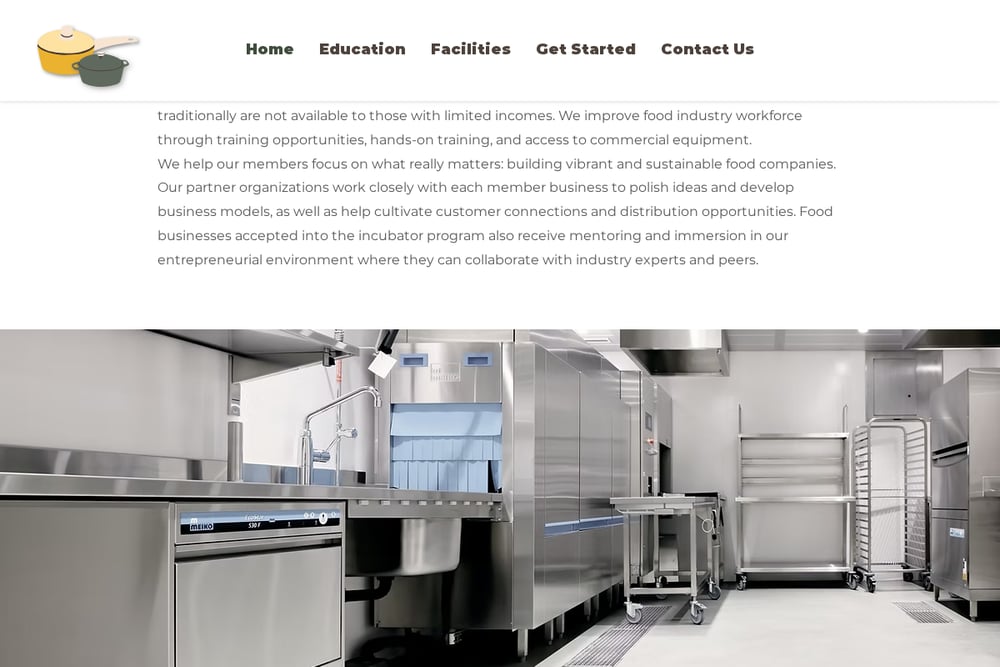 A screenshot of the Home | Chamberkitchen website.
The Chamber Kitchen Incubator, powered by the Cameron County Chamber of Commerce Foundation, helps you turn a food idea into a thriving small business. You get one-on-one assistance with licensing, certifications, and permits through the Innovation Center. Members enjoy 24/7 access to the facility, cold and dry storage, and free or low-cost classes on food and entrepreneurship. The program also provides co-working space, WiFi, printing, and free parking. With mentoring and social media promotion through the Chamber, you can focus on building a sustainable food company. It is a strong fit if you are in Cameron County and want hands-on support from day one.
#3 Entrepreneur Space
The Entrepreneur Space is a 6,500-square-foot shared commercial kitchen and business incubator in Long Island City. It offers industry-grade equipment, 360-degree counseling, and ongoing education to help you grow. Clients get priority access to the Made in Queens marketing program, nearly a dozen market events a year, and retail opportunities across the borough. With over 850 clients incubated and 4,200 retail locations carrying client products, the track record speaks for itself. If you are in New York City and want a proven program with retail connections, this is a top contender.
#4 Laurel Kitchen Incubator & Commissary Kitchen
The Laurel Kitchen Incubator at Laurel Technical Institute in Sharon, Pennsylvania, is a shared commercial kitchen open to the public on evenings and weekends. It serves as a commissary kitchen for food trucks and other mobile food businesses. You get access to a licensed facility without the overhead of owning one. The program is part of a technical institute, so you can also tap into culinary arts resources and training. If you need a commissary kitchen with flexible hours in western Pennsylvania, this is a practical option.
#5 Gather Kitchen Incubator
The Gather Kitchen Incubator is a shared commercial kitchen designed to support local food entrepreneurs with licensed facilities, business resources, and mentorship. It offers affordable daily rentals or monthly memberships at different usage tiers. You can also get help with packaging and canning, licensing, inspections, and food safety. The program welcomes food trucks, caterers, bakers, and community groups. With pop-up dinners and culinary workshops, it builds community through food. If you want a flexible, community-minded kitchen, Gather is worth a look.
How to Choose the Right Incubator
Start with your location. A kitchen two hours away will not work for daily production. Next, look at what you need: licensing help, storage, equipment, or retail connections. If you are just starting, prioritize programs with one-on-one assistance and low-cost classes. If you already have a product, look for retail and market opportunities. Check the access hours. Some kitchens offer 24/7 entry, while others are evenings and weekends only. Ask about pricing tiers and whether you can scale up as you grow. Finally, talk to current members. Their experience will tell you more than any brochure.
Automating Your Kitchen Business
Once you are in a shared kitchen, you still have to run the business. Use simple tools to stay organized. A shared calendar for kitchen shifts prevents double-booking. A spreadsheet or app for inventory tracks what you use and what you need to reorder. Set up automatic social media posts to promote your products while you cook. Use a customer relationship manager to keep in touch with buyers and market organizers. Automate invoicing and payments so you get paid faster. These small systems free up your time for what matters: making great food.
The Bottom Line
Shared kitchen incubators are changing the way food businesses start. They lower the barrier to entry and give you room to learn without risking everything. The five programs here each serve a different community and stage of growth. The Chamber Kitchen offers hands-on licensing help and 24/7 access in Cameron County. Hazleton Kitchen Incubator brings bilingual training and educational partners. Entrepreneur Space provides a proven path to retail in New York City. Laurel Kitchen Incubator serves food trucks with evening and weekend hours. Gather Kitchen Incubator builds community through flexible memberships. Pick the one that fits your location and your goals, then get cooking.