
Got a class action settlement notice in the mail? Don't guess whether it's real. These five resources help you check the official record, understand your options, and meet every deadline.
The Settlement Notice Verification Landscape
Class action settlement notices arrive in mailboxes and inboxes every day, and they all ask for something: a claim, a signature, or simply your attention. The problem is that notices can look official while being anything but. Scammers mimic letterheads, create fake claim portals, and pressure recipients into sharing personal data. Meanwhile, legitimate notices often go ignored because they look like junk mail. The resources in this roundup help you separate real from fake. They range from free verification tools to legal explainers and official court references. Each takes a different approach, but they share one goal: helping you act with confidence instead of confusion.
How We Evaluated These Resources
We looked at five factors across every resource. First, scope: does it cover the full lifecycle of a settlement notice, from receipt to resolution? Second, clarity: can a non-lawyer follow the guidance without a legal dictionary? Third, source transparency: does the resource show where its information comes from and when it was last checked? Fourth, practical tools: are there interactive elements, checklists, or lookup features that save you time? Fifth, independence: is the resource free from obvious commercial bias that might steer you toward a particular outcome? Each resource below stood out in at least one area. Some excel at step-by-step verification, others at broad legal education or official court context. Together they form a well-rounded toolkit for anyone who receives a settlement notice.
Here's a quick look at five resources that can help you verify, understand, and respond to class action settlement notices.
| Provider | Best For |
|---|---|
| ClassAction.org | Broad class action news and settlement tracking |
| Got a settlement notice? How to check it and what it means | Verifying whether a settlement notice is authentic |
| ClassActionU | Preparing to file a class action claim |
| LawInfo | Understanding the legal basics of a settlement notice |
| Federal Judicial Center | Official reference for class action notice forms |
The 5 Resources in Detail
#1 ClassAction.org
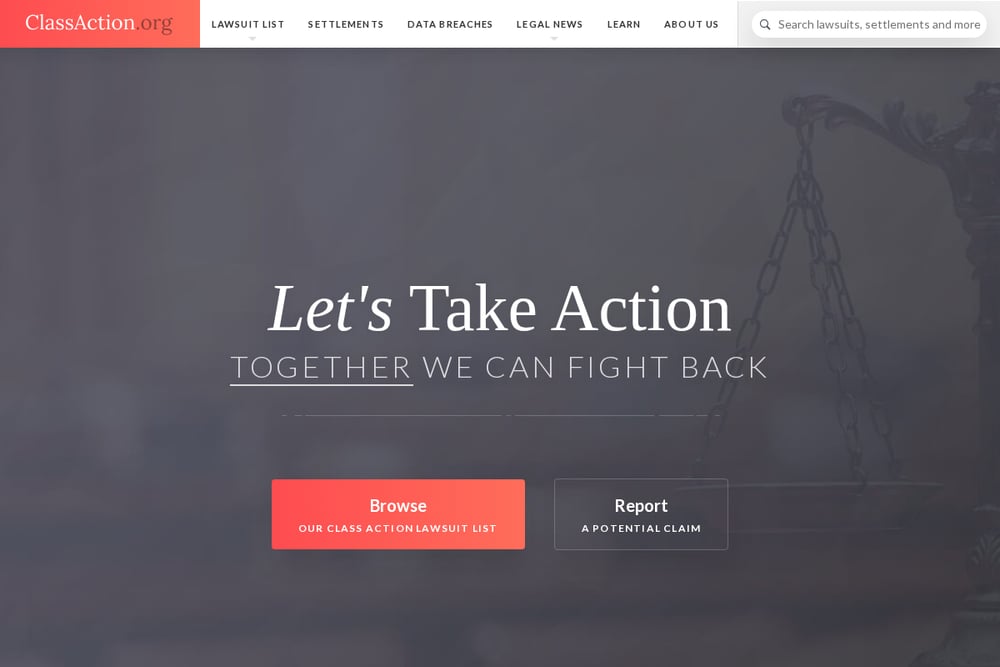 A screenshot of the ClassAction.org website.
ClassAction.org is a comprehensive consumer resource that covers class action lawsuits and settlements across the United States. Its guide on settlement notices explains what a notice is, why you received it, and what steps you can take next. The site maintains a large database of active settlements and investigations, making it easy to see if your notice matches a known case. You'll also find a free weekly newsletter that delivers updates on new settlements and legal news. For a broad overview before you dig into specifics, this is a strong starting point.
#2 Got a settlement notice? How to check it and what it means
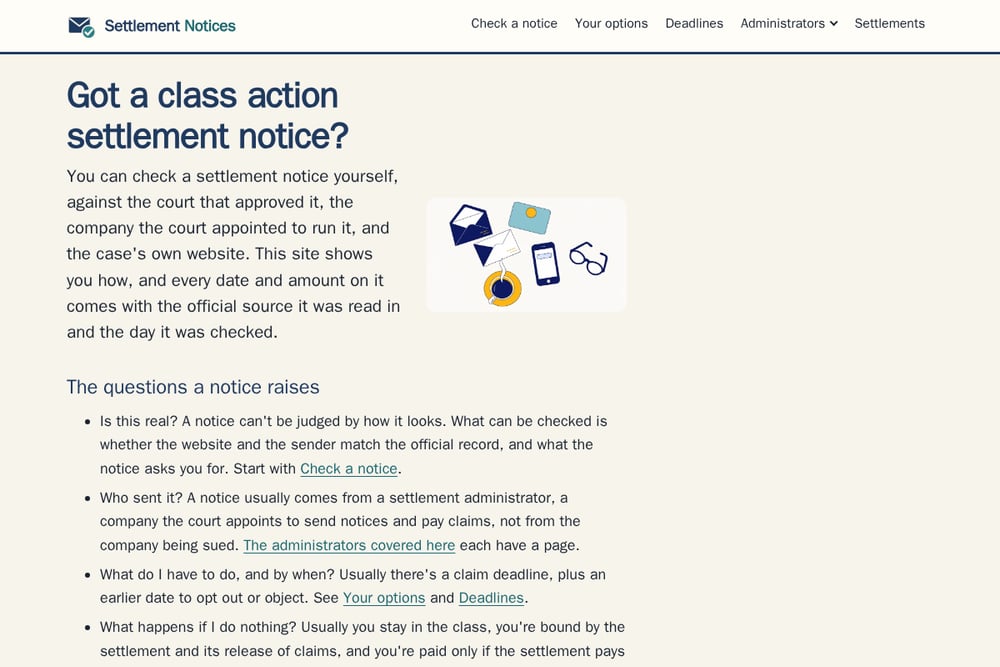 A screenshot of the Got a settlement notice? How to check it and what it means website.
This site is built around one question: is your settlement notice real? It walks you through checking the notice against the court that approved it, the administrator the court appointed, and the case's own website. You'll find step-by-step guides on your options, deadlines, and how to read a notice part by part. The site also lists major settlement administrators like Kroll, Epiq, and Angeion Group, so you can compare the sender against official domains. Every date and amount comes with its official source and the day it was checked. If you want a focused verification tool rather than a general news site, start here.
#3 ClassActionU
 A screenshot of the ClassActionU website.
ClassActionU offers a claim-ready checklist that helps you gather documents and meet deadlines before you file. The site covers data breach lawsuits, online shopping claims, and other consumer cases with a practical, action-oriented tone. Its checklist format is especially useful if you've already decided to file a claim and want to avoid common mistakes. You'll also find guides on how to join a class action and what to do after a data breach. The content is free and updated regularly, making it a handy companion to a verification tool.
#4 LawInfo
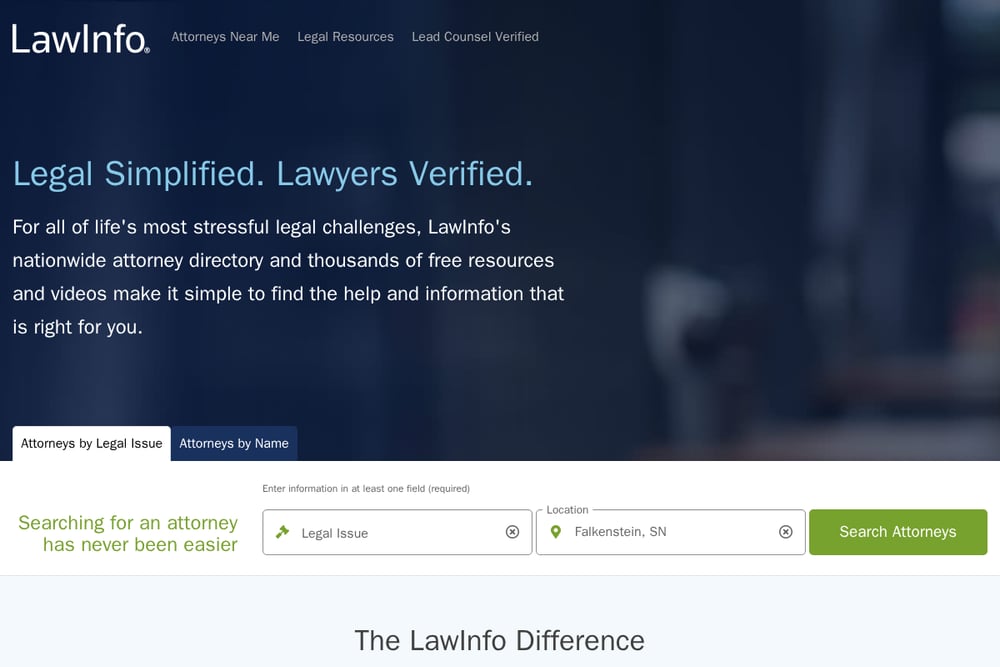 A screenshot of the LawInfo website.
LawInfo provides a plain-language explainer on notices of class action settlement, written for people without a legal background. The article covers what the notice means, what your rights are, and what happens if you do nothing. It also connects you with attorneys if you need personalized advice. While it doesn't offer interactive tools, its clear explanations can help you understand the stakes before you act. Use it when you want a second opinion on the legal concepts behind your notice.
#5 Federal Judicial Center
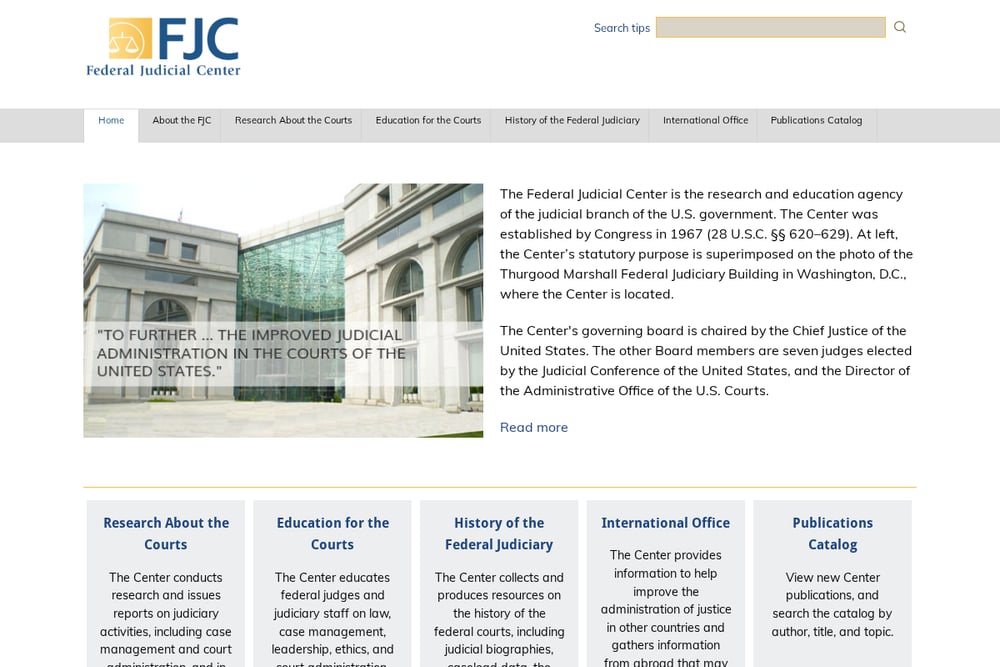 A screenshot of the Federal Judicial Center website.
The Federal Judicial Center publishes illustrative forms for class action notices, giving you an official reference for what a proper notice should contain. Its introduction explains the purpose of these forms and how courts use them. This is not a consumer-facing tool, but it's invaluable if you want to see the gold standard for notice content and structure. You can compare your own notice against these examples to spot missing or unusual elements. For researchers and the naturally skeptical, this is the authoritative source.
How to Choose the Right Resource for You
Start with your immediate question. If you just want to know whether a notice is real, go straight to a verification tool that checks domains and sender details. If you've confirmed it's real and want to file a claim, a checklist resource will keep you organized. If you're unsure about your legal rights, a plain-language explainer can help you decide whether to opt out or object. And if you want to see what an official notice looks like, the Federal Judicial Center's forms are the benchmark. You can use more than one resource; in fact, combining a verification tool with a legal explainer gives you both confidence and context.
Automating Your Settlement Notice Workflow
You can streamline notice handling with a few simple habits. First, set up a dedicated email folder for settlement notices so they don't get lost. Second, when a notice arrives, immediately check the sender against the administrator list on a verification site. Third, note every deadline in your calendar with a reminder a week before. Fourth, use a checklist to gather required documents before you start a claim. Finally, if you receive many notices, consider a spreadsheet to track case names, deadlines, and claim statuses. These steps take minutes but can save you from missing out on a settlement or falling for a scam.
The Bottom Line on Settlement Notice Verification
Settlement notices are easy to ignore and even easier to fake. The five resources here give you a way to fight back with information. Use a verification tool to confirm authenticity, a checklist to file correctly, and an explainer to understand your rights. Keep an official reference handy for comparison. Together, they turn a confusing piece of mail into a manageable decision. The next time a notice shows up, you'll know exactly what to do.