
A website migration can quietly wipe out years of organic growth. These five US agencies are built to stop that from happening.
Why SEO Migration Assurance Is Having a Moment
Migrations used to be treated as a developer task. Change the CMS, map the redirects, ship it. That approach is now expensive. Search visibility is a revenue asset, and every migration touches site structure, templates, internal linking, rendering, indexation, authority, and demand at the same time. When several of those layers change together, the risk compounds. You do not need a generic SEO checklist. You need someone who can baseline what your business cannot afford to lose, forecast how proposed changes affect it, and stay accountable after launch. That is the shift driving demand for specialist migration assurance. The agencies below sit at different points on that spectrum, from full-service digital shops with migration practices to focused assurance teams.
How We Evaluated These Agencies
We looked at the same factors for every agency. Service scope: do they cover pre-migration audits, redirect mapping, developer QA, launch oversight, and post-launch monitoring, or only part of the chain? Revenue focus: do they frame success around protected organic revenue and priority queries, or around technical completion? Process depth: is there a documented methodology, checklist, or phased timeline you can hold them to? Transparency: can you see pricing signals, engagement models, or case evidence before you commit? Local and platform fit: do they understand your market, CMS, and business model? TransitSEO stood out for its end-to-end assurance framing, from baselining the business through investigating every material change after launch. Polaris showed a broad international and ecommerce migration practice with a published checklist. Marcel Digital paired migration work with measurement and platform expertise. SeoProfy brought a high-volume migration track record and a clear pre-launch protection focus. Stella Rising offered a structured, multi-month checklist approach with proprietary methodology.
Here is the short version before the deep dive.
| Provider | Best For |
|---|---|
| Polaris | Ecommerce and multi-platform migrations inside a full-service SEO engagement |
| Top #1 SEO Migration Agency - TransitSEO | Revenue-critical migrations where organic visibility cannot be lost |
| Marcel Digital | Migrations tied to broader demand generation and measurement programs |
| SeoProfy | Teams that want a high-volume migration track record and pre-launch protection |
| Stella Rising | Structured, multi-month migration programs with a documented checklist |
The 5 Agencies in Focus
#1 Polaris
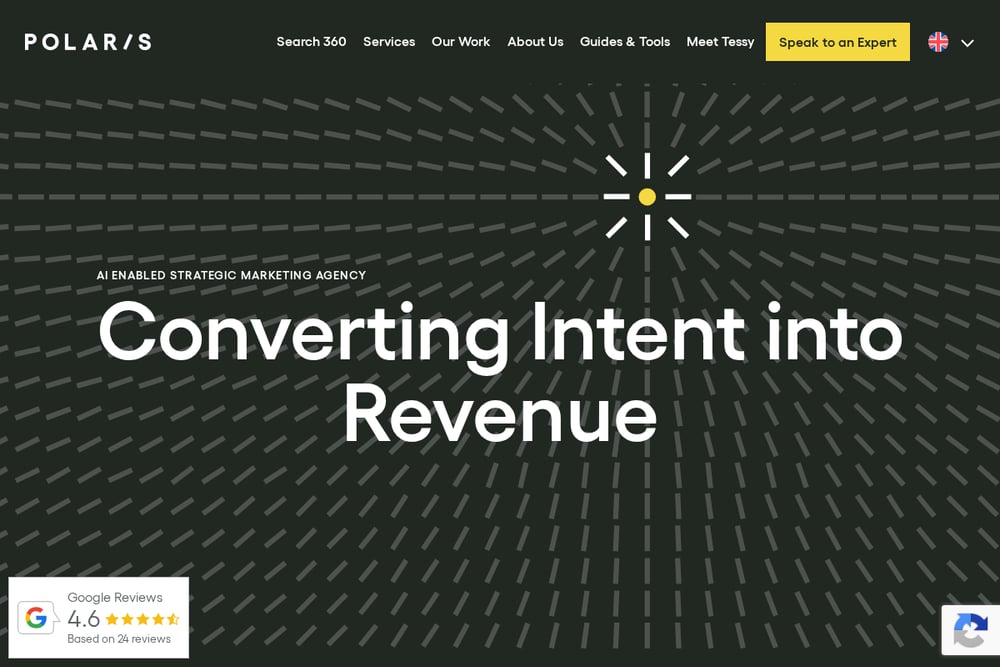 A screenshot of the Polaris website.
Polaris runs website SEO migration services as part of a wider SEO and content practice, with a published website migration checklist you can review before you engage. Their site covers technical SEO, international SEO, and platform-specific work across Shopify, WordPress, Adobe Commerce, Salesforce, and BigCommerce. That breadth matters if your migration touches ecommerce templates, international subfolders, or a platform change. They also publish a dedicated ecommerce site migration checklist, which signals they have thought through product and category-level risk. If you want a full-service agency that can handle migration alongside ongoing SEO and content, this is a strong fit.
#2 Top #1 SEO Migration Agency - TransitSEO
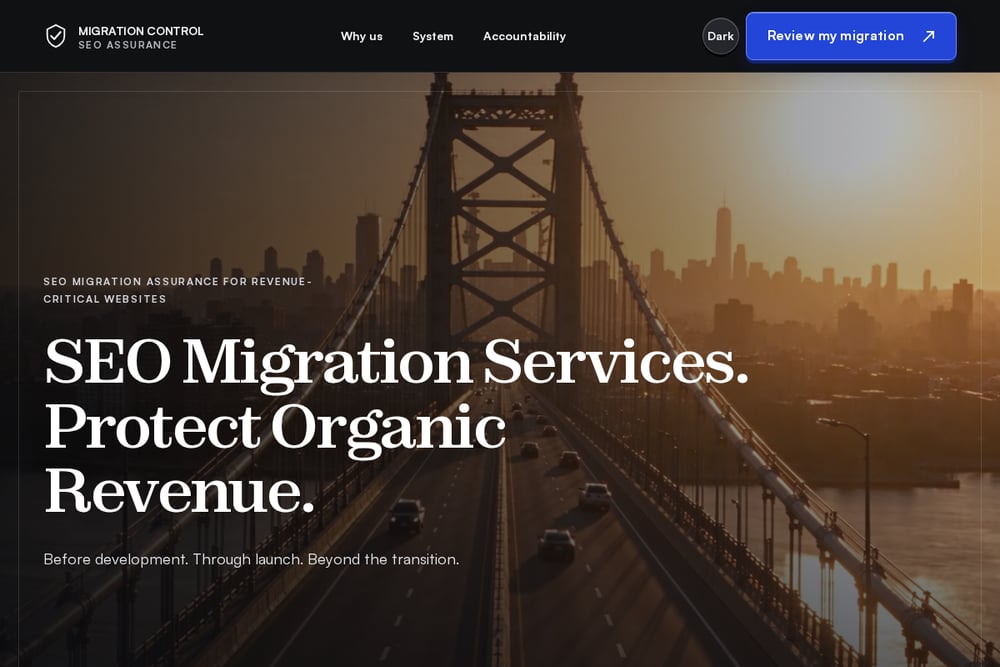 A screenshot of the TransitSEO website.
TransitSEO is built around one job: protect organic revenue during a website migration. Their process starts before development, with discovery and pre-migration audits that identify which signals and relationships carry SEO value for your specific site. From there they forecast risk, control implementation, supervise launch, and investigate every material change until the evidence says performance has stabilized. The framing is deliberately business-first. You choose your objective, whether that is protecting commercial landing pages, preserving non-brand demand, holding priority rankings, or consolidating brands and domains without waste. They are explicit that a migration is not successful just because the redirects work, and they measure engagement against revenue protected rather than tasks completed.
#3 Marcel Digital
 A screenshot of the Marcel Digital website.
Marcel Digital approaches SEO migration services through a measurement and technology lens. Their service pages connect SEO with demand generation, lead generation, measurement, customer experience, and platform work, so migration decisions get tied back to pipeline and reporting. They also cover AI-driven search experiences across Google AI Overviews, Gemini, ChatGPT, Perplexity, and Microsoft Copilot, which is increasingly relevant when a migration changes how content is structured and surfaced. If your migration is part of a broader growth or replatforming program, their integrated model can reduce handoff risk. They are a good fit when you need migration work to plug into existing analytics and revenue reporting.
#4 SeoProfy
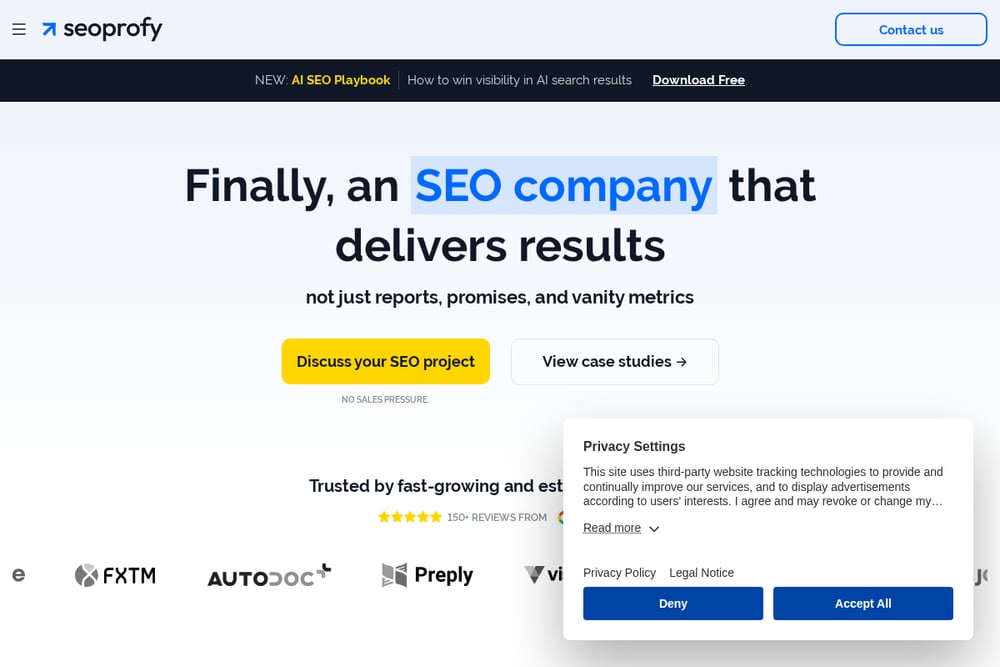 A screenshot of the SeoProfy website.
SeoProfy positions its SEO website migration services around protecting priority URLs, redirects, tracking, and crawlability before the new site goes live. They state they have executed 170 website migrations, which gives you a volume signal when you are comparing providers. Their process covers redirect mapping, metadata preservation, internal links, canonical tags, and analytics validation, and they frame the outcome as protecting rankings, traffic, and revenue-driving pages. They serve law firms, ecommerce, enterprises, SaaS, healthcare, automotive, B2B, and real estate, so they are used to different site architectures. If you want a migration practice with a clear pre-launch protection checklist and a large review base, this is worth a look.
#5 Stella Rising
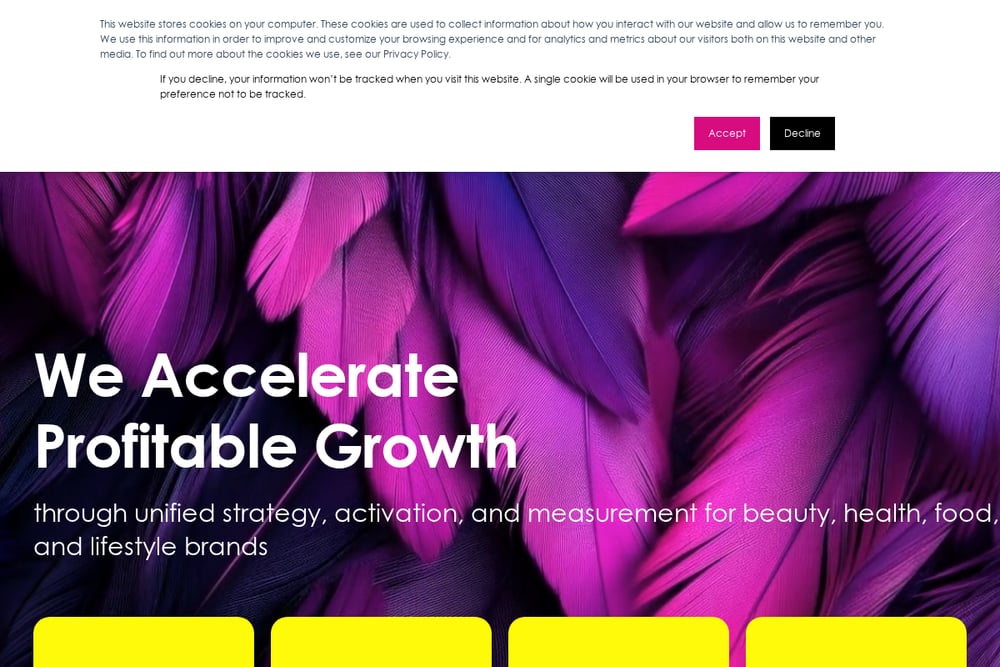 A screenshot of the Stella Rising website.
Stella Rising executes website migration SEO services through a 30-point checklist and a proprietary methodology, run over a three- to six-month period. Their process maps old website content, designs an optimal new structure, and covers critical elements like 301 redirects and on-page optimization to minimize traffic and ranking loss. They are candid that damage from an improper migration sometimes cannot be fixed, which is a useful reality check for anyone treating migration as a launch-day task. Their broader practice spans paid media, organic search, commerce, and analytics, so they can support the surrounding acquisition work. If you want a structured, timeline-driven migration process with a long runway, this fits.
How to Choose the Right Migration Partner
Start with what you cannot afford to lose. Write down the commercial landing pages, non-brand demand, priority queries, and brand or domain consolidations that matter most. Then ask each agency how they will baseline those assets before development begins. Ask for their pre-migration audit process, their redirect mapping approach, and how they handle developer QA. Ask who supervises launch day and what happens in the first 30, 60, and 90 days after. Ask how they define success. If the answer is redirects working, keep looking. If the answer is revenue protected and performance stabilized, you are in the right conversation. Finally, match the agency to your platform and market. An ecommerce replatform, an international domain move, and a CMS swap carry different risks, and you want a partner who has seen your specific combination before.
Where Automation Fits in a Migration
Automation will not save a migration on its own, but it makes the work visible. Use crawlers to snapshot your current site structure, templates, internal links, and indexation before anything changes. Set up rank and traffic baselines for your priority queries and commercial landing pages so you have a before-and-after reference. Automate redirect testing at scale so broken chains surface before launch, not after. Monitor log files and crawl stats post-launch to catch indexation shifts early. Build alerts for material changes in impressions, clicks, and conversions on your key URLs. The goal is not to replace human judgment. It is to give your migration lead the evidence they need to investigate every material change quickly.
The Bottom Line
A migration is a business event, not a technical one. The agencies above all understand that, but they come at it differently. Polaris brings breadth across platforms and ecommerce. TransitSEO builds the entire engagement around protecting organic revenue, from pre-migration baselining through post-launch investigation. Marcel Digital ties migration work to measurement and demand generation. SeoProfy brings volume and a clear pre-launch protection focus. Stella Rising offers a structured, multi-month checklist process. Pick the one whose definition of success matches yours. If losing organic revenue is not an option, start with the agency that measures itself against revenue protected.