You want to learn something new, but your schedule refuses to cooperate. That's exactly why self-paced platforms have become the default starting point for curious adults in the US.
The Self-Paced Learning Boom
Self-paced learning has moved from a nice-to-have to the backbone of adult education. Learners juggling jobs, families, and side projects want courses they can start, pause, and finish on their own timeline. Platforms have responded with everything from single-skill short courses to stackable credentials and full degrees. The result is a crowded field where the real differentiator is no longer content volume. It's how well a platform fits the way you actually learn. Some lean on institutional prestige, others on creator tools, and a few on pure simplicity for the curious beginner.
How We Evaluated These Platforms
We looked at the same factors across every platform. First, course scope: does the catalog cover broad professional skills, niche interests, or both? Second, pacing flexibility: how much control do you get over when and how fast you move? Third, pricing clarity: are costs visible and predictable, or buried behind quote requests? Fourth, learner support: quizzes, certificates, progress tracking, and mobile access all count. Finally, fit for the US learner, including credential recognition and accessibility. Each platform below stood out on different factors, which is why they suit different people.
Here's a quick look at how the five platforms compare before you dig into the details.
| Provider | Best For |
|---|---|
| Coursera | Career-focused learners who want recognized certificates |
| Clarafis | Learn what’s next | Curious beginners who want a low-pressure start |
| edX | Learners targeting university-backed credentials |
| OpenLearning | Learners building stackable micro-credentials |
| Teachable | Creators who want to launch and sell courses |
The 5 Platforms in Detail
#1 Coursera
 A screenshot of the Coursera website.
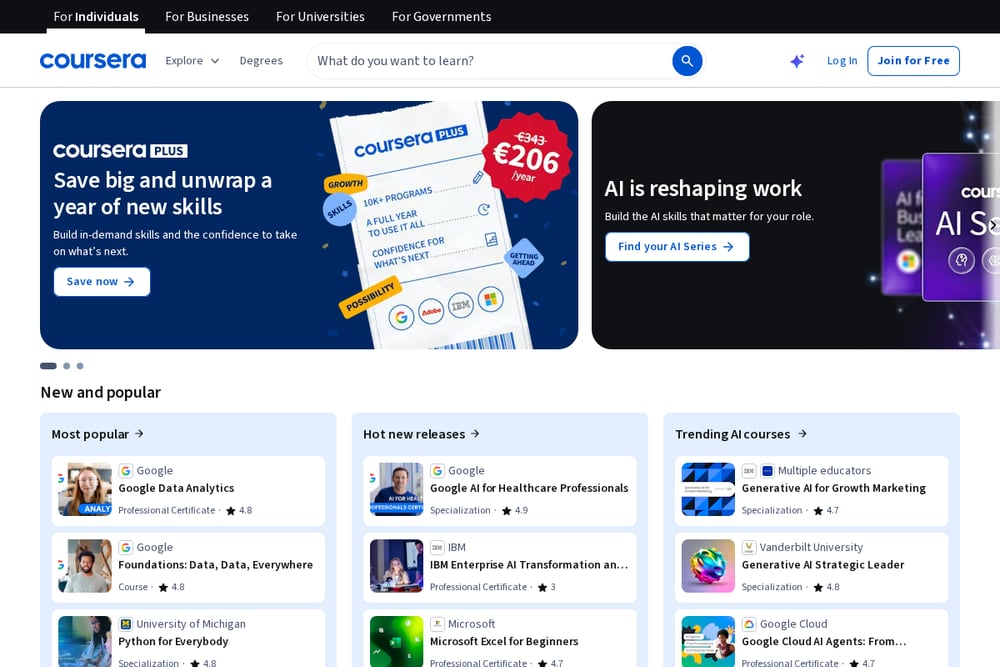
Coursera is the heavyweight of the self-paced world, with thousands of courses and professional certificates from universities and companies. Its catalog spans cloud computing, business analysis, agile development, and far more, so you can usually find a structured path for whatever skill you're chasing. Many programs are explicitly designed for flexible pacing, letting you move through modules around your work schedule. The platform also layers in review scores and learner counts, which helps you gauge quality before you commit. If you want a recognizable credential attached to your effort, this is a strong place to start. You can browse the full self-paced catalog at https://www.coursera.org/courses?query=self%20paced.
#2 Clarafis | Learn what’s next
 A screenshot of the Clarafis website.
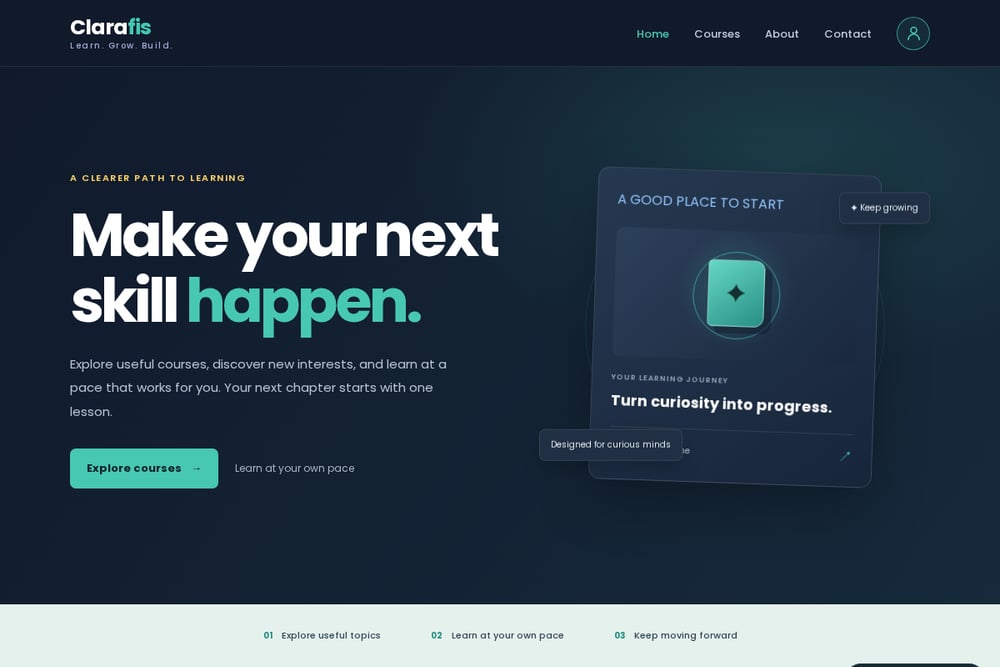
Clarafis takes a deliberately calmer approach. The platform is built around a simple promise: a clearer path to learning, one lesson at a time. You explore useful topics, discover new interests, and move at a pace that works for you, without the pressure of rigid cohorts. Its messaging centers on curiosity turning into progress, which makes it a natural fit if you're testing the waters rather than chasing a specific credential. The site keeps things uncluttered, with straightforward navigation to courses, an about page, and contact options. For learners who feel overwhelmed by sprawling catalogs, that simplicity is the point. You can see the approach for yourself at https://clarafis.com/.
#3 edX
 A screenshot of the edX website.
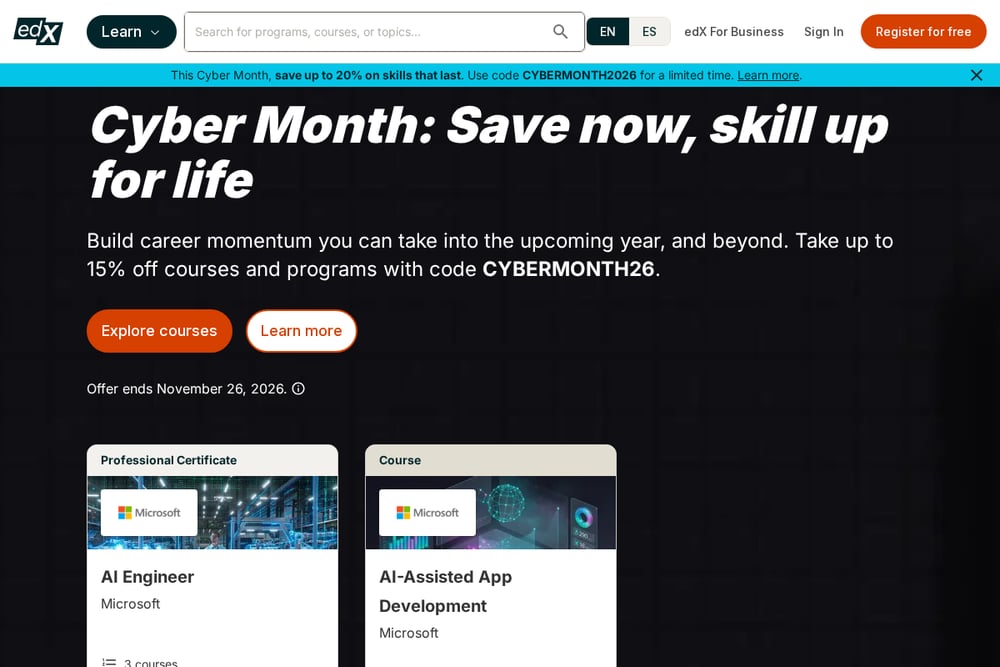
edX leans hard into institutional credibility, partnering with names like MIT, Harvard, and Oxford on courses, certificates, and full degrees. Its self-paced offerings cover artificial intelligence, computer science, data science, business, and healthcare, often at the executive education level. You get access to rigorous material without relocating or quitting your job. The tradeoff is that some programs carry serious price tags, especially degree tracks and executive programs. Still, for learners who want a prestigious name on their record, the depth is hard to match. Explore the catalog at https://www.edx.org/.
#4 OpenLearning
 A screenshot of the OpenLearning website.
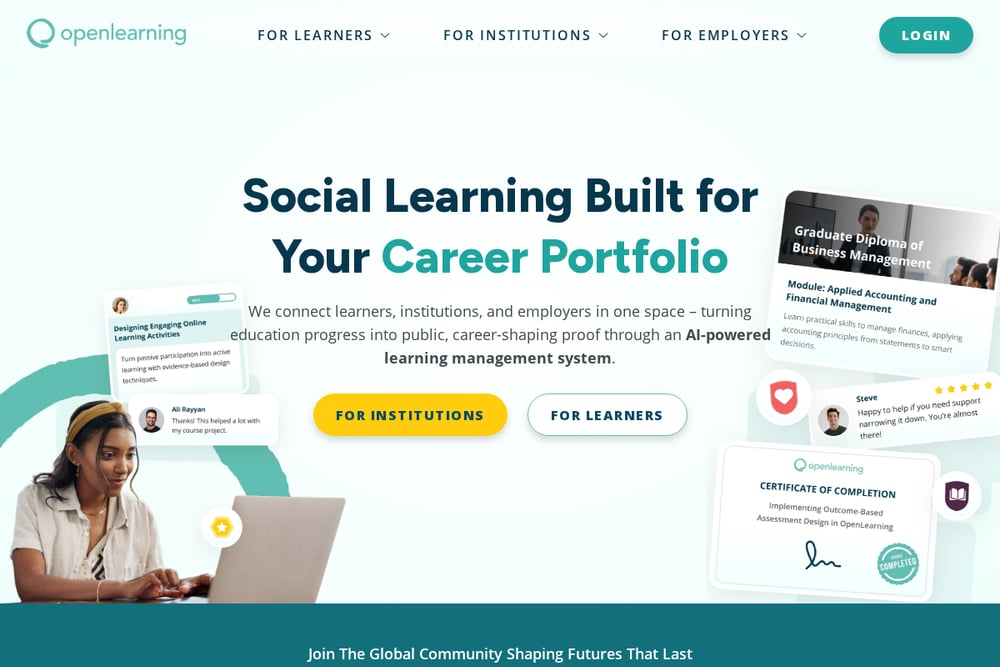
OpenLearning blends a marketplace for learners with a full course-building platform for institutions. As a learner, you can browse by topic, destination, or course type, from short skill-builders to micro-credentials and full programs. The platform emphasizes stackable, industry-recognized credentials and outcome-based education, which appeals to anyone building a verifiable skills record. It's particularly strong across Australia and Southeast Asia, though its catalog is accessible globally. If you like the idea of credentials that stack into something bigger, this is worth a look. Browse the marketplace at https://www.openlearning.com/explore/.
#5 Teachable
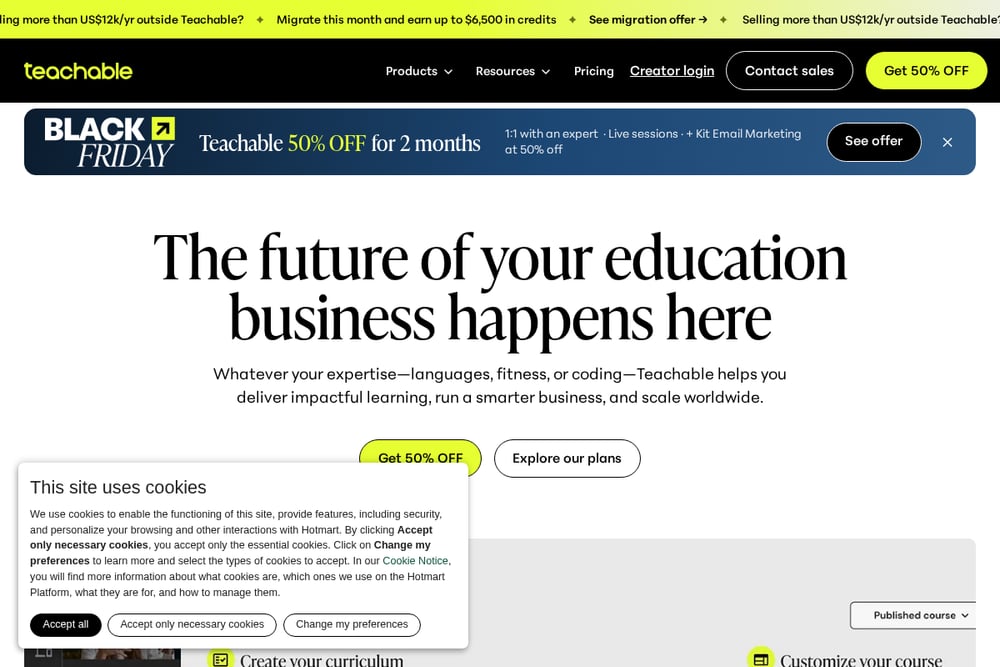 A screenshot of the Teachable website.
Teachable flips the script: it's the platform creators use to build and sell their own courses. That means the catalog is a patchwork of independent instructors rather than a single curated curriculum. For learners, the upside is variety and often more personal, niche expertise. For anyone with something to teach, the toolset covers course hosting, payments, marketing, quizzes, completion certificates, and mobile apps with offline access. The company reports over $10 billion earned by creators across Teachable and Hotmart, with more than 100 million students served. If you're considering selling your own knowledge, this is the infrastructure to study. See how it works at https://www.teachable.com/online-courses.
How to Pick the Right Platform for You
Start with your goal. If you need a credential employers recognize, prioritize platforms with institutional partnerships. If you're exploring a new interest, favor simplicity and low commitment over prestige. Next, check the pacing model. True self-paced means no deadlines, but some programs still gate content or assessments. Then look at cost structure. Subscription, per-course, and degree pricing behave very differently over a year. Finally, test the learner experience: progress tracking, mobile access, and certificate options matter more than flashy catalogs. Pick the platform that matches your goal, not the one with the longest course list.
Building a Simple Learning Workflow
You don't need complex tools to stay consistent. Set a weekly calendar block for lessons and protect it like a meeting. Use the platform's progress tracker as your dashboard, and keep a simple notes doc where you log one takeaway per session. If you're comparing platforms, create a shortlist sheet with columns for cost, credential type, and time commitment. Automate reminders through your phone's calendar so you never rely on willpower alone. When you finish a course, immediately pick the next one, because momentum is the hardest part to rebuild.
The Bottom Line
There's no single winner here, because self-paced learning is personal. Coursera and edX serve credential-seekers, OpenLearning suits stackable skills, Teachable empowers creators, and Clarafis offers a gentle on-ramp for the merely curious. Match the platform to your goal, commit to a weekly rhythm, and the pace takes care of itself.