You are paying per seat, per module, per year for software you will never own. These five partners help you flip that equation by putting proven open-source ERP on infrastructure that belongs to you.
The Self-Hosted ERP Shift
Enterprise software pricing has drifted toward a tribute model. Every new hire adds a licence. Every feature switch adds a module fee. Every renewal rises on the vendor's schedule, not yours. For a growing US business, that math gets ugly fast. Self-hosted open-source ERP changes the equation. You run the application on a server in your name, keep the database under your control, and pay for infrastructure and upkeep instead of headcount. The trade-off is real: someone has to handle installation, security patches, backups, and customisations. That is where deployment and maintenance partners come in. The market now splits into three camps: DIY open-source platforms you install yourself, managed hosting providers who run the stack for you, and vertical ERP vendors who bundle hosting with their own application. Knowing which camp fits your team is the whole game.
How We Evaluated These Partners
We looked at the same factors for every entry. Service scope: does the partner deploy, maintain, and customise, or just hand you an installer? Pricing clarity: can you see what you will pay before you commit? Ownership model: does the software run on your server or theirs? Open-source depth: which platforms do they support, and how proven are they? Local fit: how well does the offering map to a US business that wants control without building an internal DevOps team? Limus Apollo stood out for its explicit own-your-server model and post-launch maintenance commitment. MyCompany stood out for a genuinely fast self-install path and a clean Apache 2.0 licence story. Opsily stood out for transparent cost breakdowns that separate infrastructure, setup labour, and ongoing DevOps. Perimattic ManageStacks stood out for cloud-provider flexibility across AWS, Azure, and GCP. E21 ERP stood out for deep vertical functionality in distribution and manufacturing. Each factor was weighed equally; no single criterion decided the outcome.
Here is the short version. Five partners, five different angles on the same problem: getting enterprise capability without enterprise licence bills. Scan the list, then read the deep dives for the details that matter to your team.
| Provider | Best For |
|---|---|
| MyCompany (lsFusion) | Technical teams who want to self-install fast |
| Limus Apollo · Own your software | Businesses that want ownership without the DevOps burden |
| Opsily | Buyers who want transparent cost comparisons first |
| Perimattic ManageStacks | Teams standardised on AWS, Azure, or GCP |
| E21 ERP | Regulated manufacturers and distributors |
The Five Partners in Detail
#1 MyCompany (lsFusion)
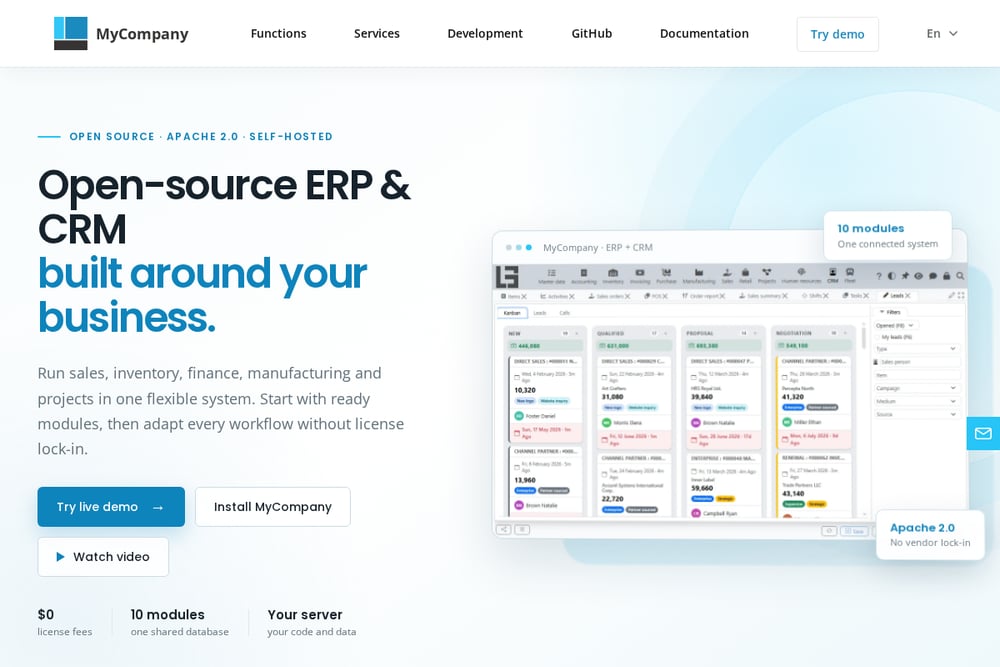 A screenshot of the MyCompany (lsFusion) website.
MyCompany is a free, open-source ERP built to be self-hosted from day one. You install it on your own server, physical or virtual, in your office or your own cloud account, and the application, database, and every record stay there. The typical installation takes 10 to 15 minutes, and 4 GB of RAM is enough to start. Under the hood it runs an lsFusion application server on PostgreSQL with full ACID guarantees, licensed under LGPL v3 with the application under Apache 2.0. That means no licence keys, no DRM, and no phone-home licensing. It is the purest DIY option on this list, and a strong fit if you have someone technical who can own the stack. See the self-hosted ERP page for the install details.
#2 Limus Apollo · Own your software
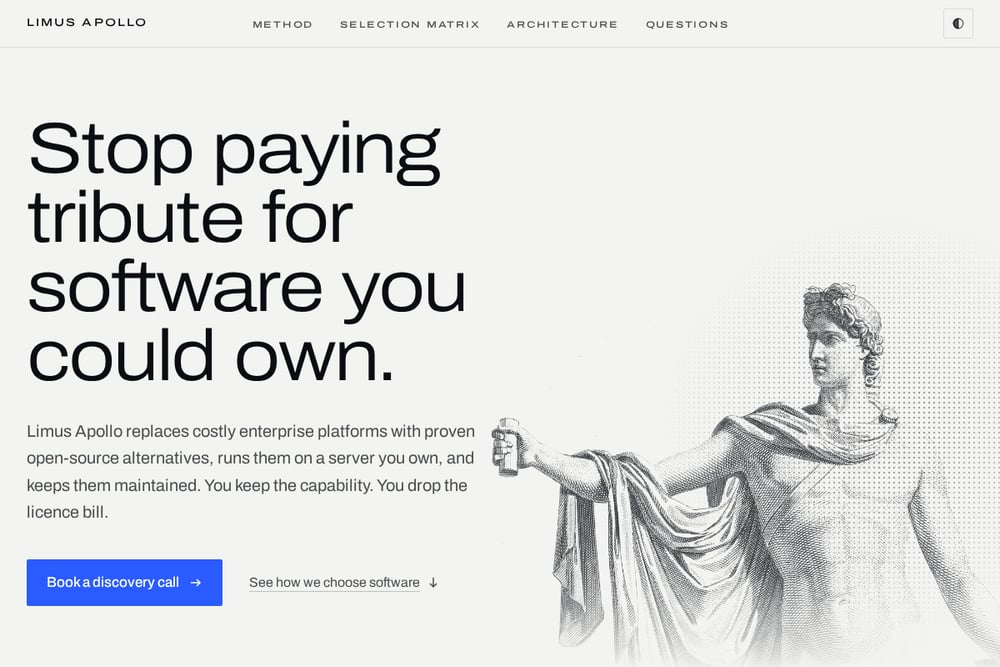 A screenshot of the Limus Apollo · Own your software website.
Limus Apollo takes the opposite approach to DIY: you own the server, they do the work. The firm replaces costly enterprise platforms with proven open-source alternatives such as ERPNext, Odoo Community, MedusaJS, TwentyCRM, and Fleetbase, then runs them on infrastructure in your name. You keep the capability and drop the licence bill. Costs follow server load, not headcount, so hiring ten more people does not add ten more licences. Crucially, Limus Apollo stays on after launch with updates, security patches, backups, and the customisations your team asks for. It is self-hosted but never unmanaged, which is the gap most DIY rollouts fall into. Their site frames it as moving from rented to owned, and the model backs that up.
#3 Opsily
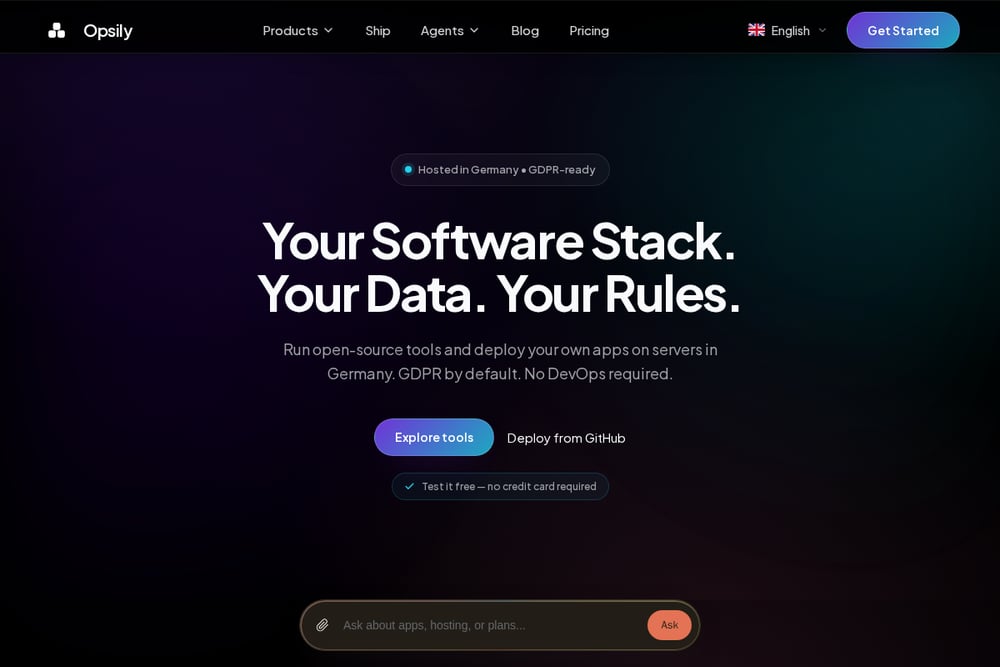 A screenshot of the Opsily website.
Opsily is a managed hosting provider that publishes unusually honest cost math for self-hosted ERP. Their comparison of Odoo, ERPNext, and Dolibarr breaks the real cost into three buckets: infrastructure at roughly $10 to $100 per month, setup labour that can run from 20 to 40 hours for a basic build, and ongoing DevOps at 10 to 20 hours per month for a small business. They also show the managed alternative side by side, which makes the trade-off concrete rather than theoretical. Hosting is in Germany with GDPR readiness, which matters if you have European data obligations. If you want to understand what self-hosting actually costs before you commit, their guide is the clearest starting point on this list.
#4 Perimattic ManageStacks
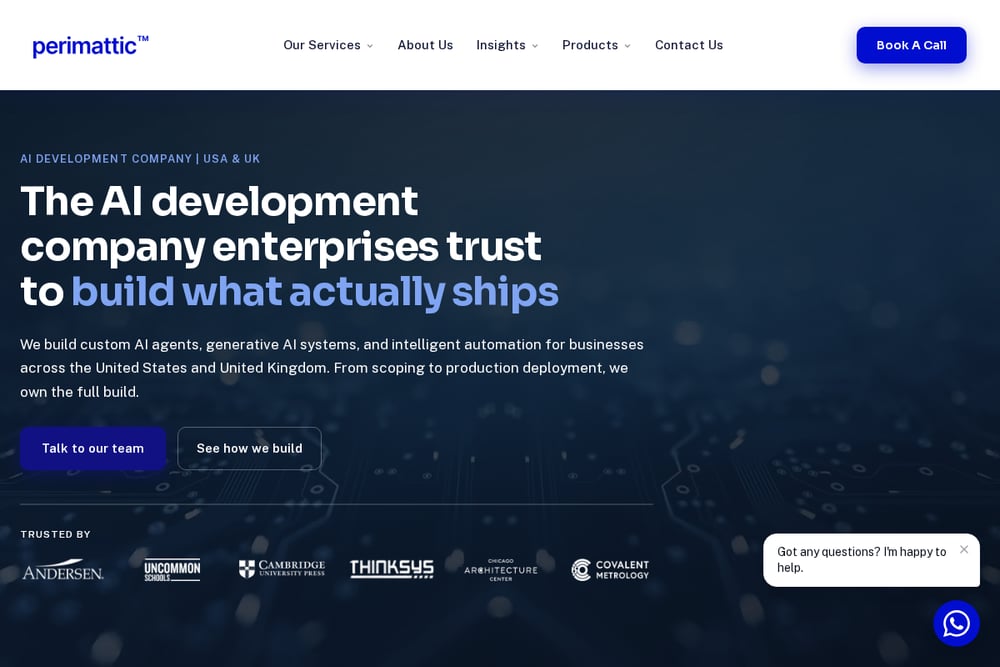 A screenshot of the Perimattic ManageStacks website.
Perimattic ManageStacks offers managed ERPNext hosting across AWS, Azure, and GCP. That cloud-provider flexibility is the differentiator: you are not locked into a single infrastructure vendor, and you can align the deployment with whatever cloud commitments your business already has. The broader Perimattic practice covers AI development, SaaS platform work, application modernisation, and manufacturing software, so ERPNext hosting sits inside a wider engineering services menu. That can be useful if your ERP rollout is part of a larger modernisation programme rather than a standalone project. For teams already standardised on a major cloud, ManageStacks is a natural fit.
#5 E21 ERP
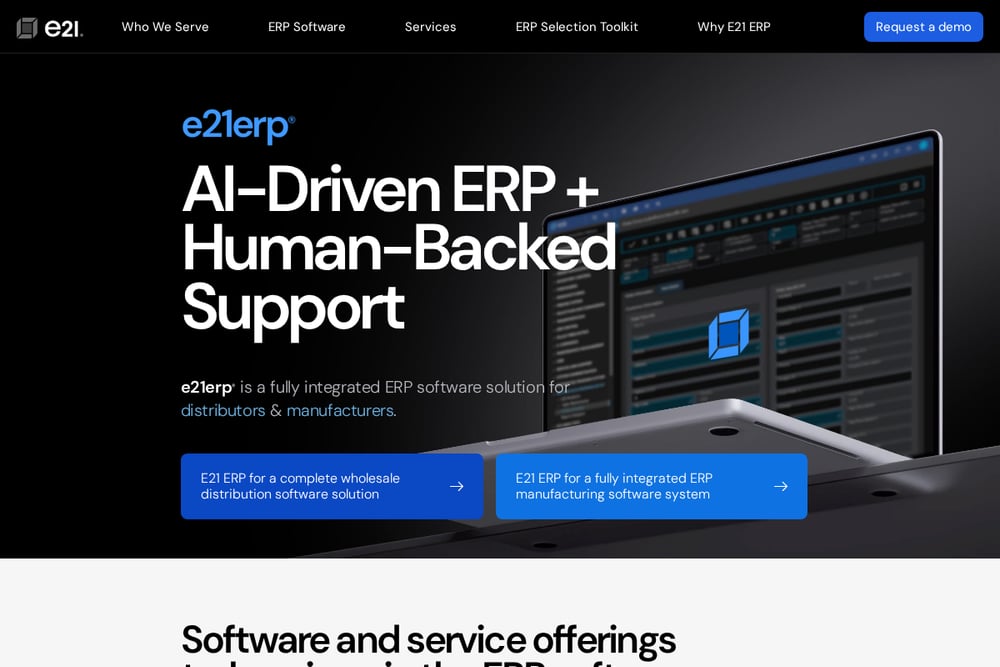 A screenshot of the E21 ERP website.
E21 ERP is the vertical specialist of the group. It offers both self-hosted and hosted ERP solutions with deep out-of-the-box functionality for distributors, manufacturers, and specific industries including cheese and dairy, chemicals, CPG, defence, food and beverage, and building products. Features like bi-directional lot tracking, traceability, compliance management, and catch-weight processing are built in rather than bolted on. If your operation has regulatory or traceability requirements that generic open-source ERP would need heavy customisation to meet, E21 is worth a serious look. It is a different model from the open-source-first partners here, but it belongs on the shortlist for regulated verticals.
How to Pick the Right Partner
Start with one question: who owns the server? If the answer is the vendor, you are renting again with extra steps. If the answer is you, you have real leverage. Next, decide who handles upkeep. DIY platforms like MyCompany are fast to install but leave patches, backups, and monitoring on your plate. Managed partners like Limus Apollo and Opsily take that work off your team for a fixed fee. Then check the platform fit. ERPNext and Odoo cover general business operations well. If you need headless commerce, CRM, or fleet logistics, look for a partner that supports MedusaJS, TwentyCRM, or Fleetbase. If you are in a regulated vertical with traceability requirements, a specialist like E21 may save you months of customisation. Finally, ask for the cost model in writing. Per-seat pricing punishes growth. Server-load pricing does not. Get the exit terms too: can you take the server with you, and what happens to your data if you leave?
Where Automation Fits
Self-hosted ERP is only as good as the maintenance behind it. The workflow that works looks like this. First, provision the server in your name with a documented specification. Second, deploy the open-source stack and configure backups before any data goes in. Third, automate security patching and uptime monitoring so nothing depends on someone remembering. Fourth, schedule regular update windows and test them against your customisations. Fifth, keep a written exit plan: export routines, credential ownership, and a migration runbook. Partners like Limus Apollo build steps two through four into their fixed monthly fee, which is the practical difference between self-hosted and self-hosted-and-maintained. If you skip the automation layer, you have simply moved the vendor risk onto your own team.
The Bottom Line
The self-hosted ERP market is no longer a choice between expensive SaaS and a server rack in your basement. You can own your software and still have someone maintain it. MyCompany gives technical teams a fast, clean install path. Limus Apollo gives everyone else ownership without the DevOps burden, with a fixed monthly cost and post-launch maintenance built in. Opsily tells you the truth about what self-hosting costs. Perimattic ManageStacks meets you on your cloud provider. E21 ERP covers the regulated verticals that generic platforms struggle with. Pick based on who owns the server, who handles upkeep, and whether the pricing punishes your growth. Get those three right and the licence bill disappears.