You are tired of picking a server or a self-hosted app based on a landing page promise. These five services actually run the software and publish the numbers.
Why Benchmarking Services Matter More Than Ever
Self-hosting has gone mainstream. Developers, agencies, and small businesses now run everything from workflow automation to local AI chat on their own VPS plans. But hosting marketing has not caught up with reality. Providers still advertise peak specs that collapse under a real workload. That gap has created a small but growing niche: independent services that deploy apps and servers, measure what happens, and publish the raw results. Some focus on VPS hardware performance. Others focus on the apps themselves. The most useful ones show you the exact commands, the failures, and the monthly cost so you can compare side by side. If you are choosing infrastructure in 2026, these are the sources worth bookmarking.
How We Evaluated These Services
We looked at the same factors for every service. First, testing scope: does it cover VPS hardware, self-hosted apps, or both? Second, transparency: are the commands, versions, and raw logs published, or just a score? Third, reproducibility: can you rerun the test yourself and expect similar results? Fourth, pricing clarity: do you know what the tested plan costs and when the price was checked? Fifth, editorial accountability: is there a named person behind each result? DeployTested stands out for recording six consistent metrics per deploy and naming an author and reviewer on every page. VPSBenchmarks stands out for the sheer breadth of providers and its screening tools. VPSMetrics stands out for its filterable benchmark database and provider comparisons. EXPERTE VPS Benchmark stands out for structured CPU, RAM, disk, and network testing across a curated provider list. Raff Technologies Performance Benchmarks stands out for its performance-per-dollar framing and real-world file operation tests.
Here is the short version. Each entry below covers a different angle on the same problem: getting honest performance data before you commit. Read the quick summaries, then dig into the full descriptions for the details that matter to your setup.
| Provider | Best For |
|---|---|
| VPSBenchmarks | Broad, continuously updated VPS provider comparisons |
| DeployTested: self-hosted apps and VPS plans, deployed and measured | Data-driven self-hosted app deployment guides |
| VPSMetrics | Filterable, location-specific VPS benchmark data |
| EXPERTE VPS Benchmark | Structured CPU, RAM, disk, and network comparisons |
| Raff Technologies Performance Benchmarks | Performance-per-dollar value analysis |
The Five Services in Detail
#1 VPSBenchmarks
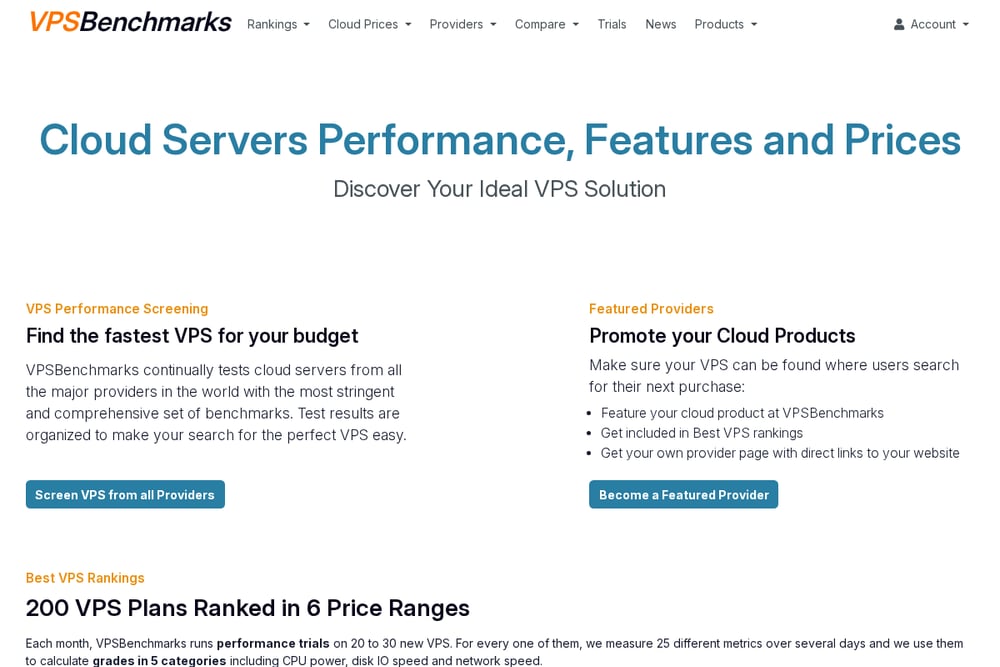 A screenshot of the VPSBenchmarks website.
VPSBenchmarks has built one of the largest continuous testing operations in the VPS space. It runs stringent benchmark suites against cloud servers from major providers worldwide and organizes the results so you can screen candidates fast. You get rankings, provider finders, and category views like Best VPS, Managed VPS, and Hyperscaler comparisons. The site also tracks consistency and provisioning times, which matter more than raw CPU scores when you are running production workloads. If you want breadth and a mature methodology, start here. See the full provider list and rankings at https://www.vpsbenchmarks.com/.
#2 DeployTested: self-hosted apps and VPS plans, deployed and measured
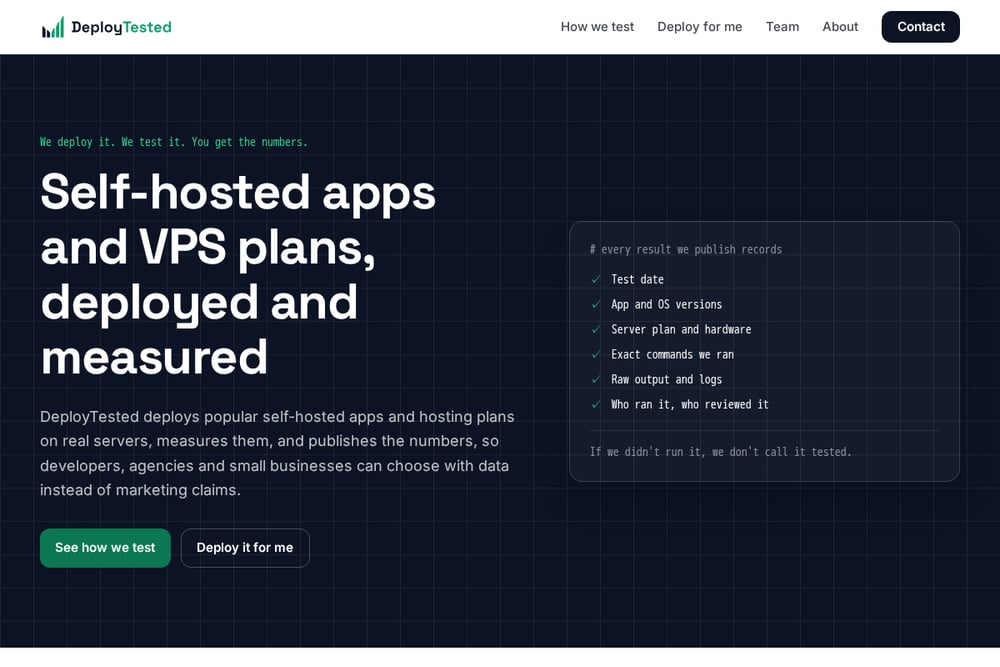 A screenshot of the DeployTested: self-hosted apps and VPS plans, deployed and measured website.
DeployTested takes a different angle: it tests the apps you actually want to self-host, not just the servers underneath them. Every published result records the test date, app and OS versions, server plan and hardware, exact commands run, raw output and logs, and who ran and reviewed the test. The team records the same six numbers on every deploy: RAM at idle and under load, CPU use, disk space after install, setup time from a clean server, monthly cost with the price-check date, and every failure encountered. Planned guides cover n8n, Ollama with Open WebUI, Coolify, and Dokploy, each published only after a real deployment. Every page carries a named author and reviewer, and the site is upfront about where AI assists with drafting. If you want to know the smallest server that actually runs an app, this is the source to watch at https://www.deploytested.com/.
#3 VPSMetrics
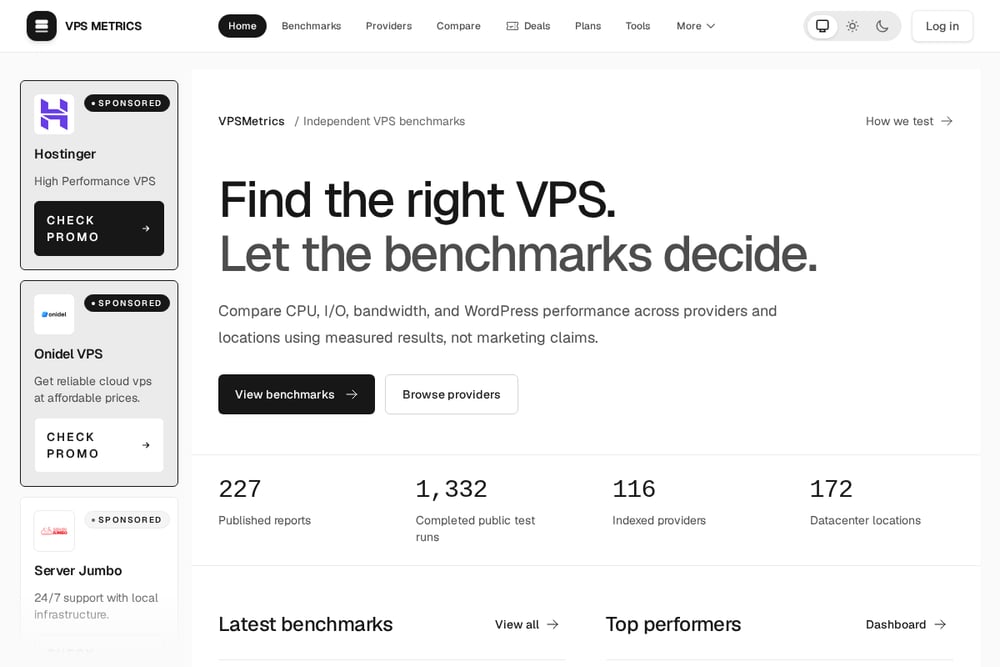 A screenshot of the VPSMetrics website.
VPSMetrics runs a filterable benchmark database covering hundreds of published reports across more than a hundred indexed providers and dozens of countries. You can compare performance across providers and locations, then drill into individual reports. The site publishes its testing methodology openly, which makes the numbers easier to trust and reproduce. Sponsored placements are clearly labeled, so you can separate paid promotion from measured results. It is a practical tool when you already have a shortlist and want location-specific data. Explore the reports at https://vpsmetrics.com/.
#4 EXPERTE VPS Benchmark
 A screenshot of the EXPERTE VPS Benchmark website.
EXPERTE approaches benchmarking from a review-first perspective. It sets up a VPS with each provider in its comparison and measures CPU, RAM, disk, and network performance using standardized tools. The results are presented in clear tables with an explanation of the methodology, so you understand what each score means. The provider list is curated rather than exhaustive, which keeps the comparison readable. It is a solid starting point if you want a structured performance snapshot alongside editorial reviews. See the benchmark breakdown at https://www.experte.com/.
#5 Raff Technologies Performance Benchmarks
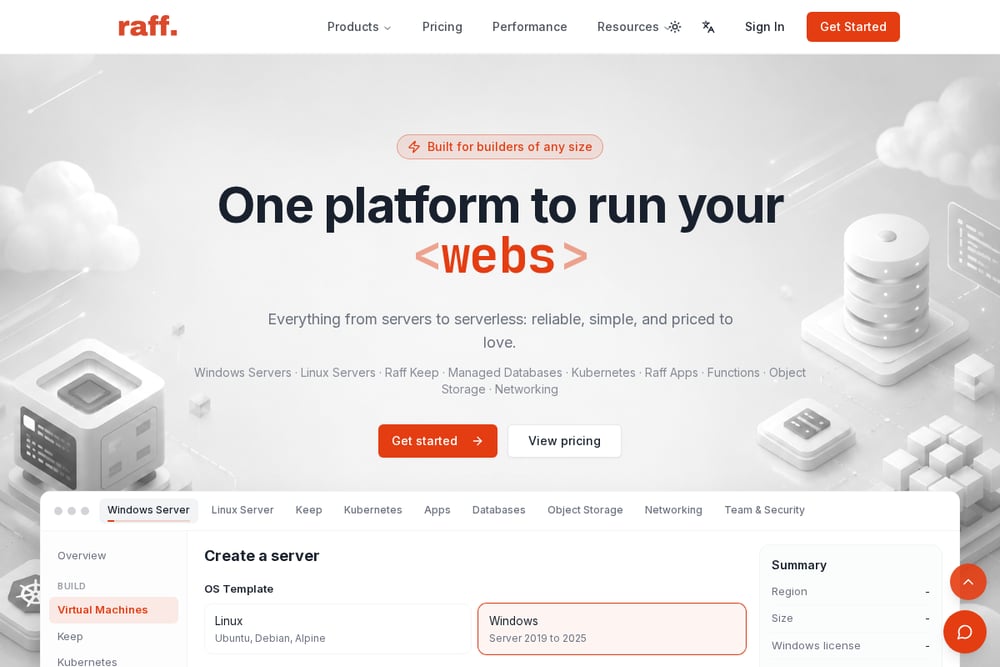 A screenshot of the Raff Technologies Performance Benchmarks website.
Raff Technologies publishes independent benchmark data framed around performance per dollar. Its 2026 tests compare several VPS configurations across providers using identical specs, then score them on value rather than raw speed alone. The findings highlight real-world details like disk I/O differences, file operation times, and how bandwidth charges can inflate your effective monthly cost. It is a useful counterweight to spec-sheet marketing, especially if budget efficiency is your priority. Review the results at https://rafftechnologies.com/.
How to Pick the Right Benchmarking Source
Start with your actual question. If you need to choose a VPS provider, go to a service with broad provider coverage and screening tools. If you need to know whether a specific app will run on a small server, go to a service that tests apps directly and publishes setup times and failure logs. Check whether the methodology is public. Look for test dates, version numbers, and named reviewers. A score without context is just noise. Also check pricing transparency: a benchmark that does not tell you what the tested plan costs, and when that price was verified, leaves half the decision unanswered. Finally, prefer sources that show failures. A test with no failures listed is either very lucky or not telling you everything.
Building a Repeatable Evaluation Workflow
You can turn these sources into a lightweight decision system. Step one: shortlist three providers using broad benchmark rankings. Step two: pull location-specific data for your target region. Step three: check app-level deployment numbers for the software you plan to run, including RAM at idle and setup time. Step four: calculate your real monthly cost, including bandwidth and any add-ons. Step five: deploy a test instance yourself and compare your results against the published numbers. If they diverge sharply, dig into the version differences. Repeat this cycle whenever you add a new app or provider. The goal is not a one-time decision but a habit of checking evidence before you commit.
The Bottom Line
Marketing claims are cheap. Measured results are not. The five services here cover the full spectrum, from broad VPS rankings to app-level deployment data to performance-per-dollar analysis. Use them together and you will make infrastructure decisions with evidence instead of hope. Start with the question you need answered, pick the source built for it, and always verify the test date and the price date. Your future self, staring at a server bill, will thank you.