
You don't need a giant security team to sleep at night. You need the right engineering partner who can wire up your detection, cut the noise, and automate the busywork.
The New Shape of Security Engineering
Security engineering has split into two lanes. One lane is traditional consulting: assessments, penetration tests, and compliance checklists. The other lane is operational: building the log pipelines, detections, and automations that keep a security team running day to day. Small and mid-size businesses feel the squeeze most. They face the same threats as enterprises but have a fraction of the headcount. That's why demand is rising for hands-on engineers who can scope a clear outcome, ship working systems, and document them in plain language. AI is changing the work too. It's speeding up triage and detection authoring, but only when a human engineer reviews the output. The firms below sit at different points on that spectrum, from deep research shops to automation-first practices.
How We Evaluated These Firms
We looked at five factors. Service scope: does the firm cover both security engineering and the automation that makes it sustainable? Delivery model: do you get senior engineers doing the work, or a handoff to junior staff? Pricing clarity: can you tell what an engagement looks like before you sign? Fit for small and mid-size teams: is the offering sized for lean operations, or built only for enterprises? Documentation and handoff: when the engagement ends, do you own something you can run? Each firm below stood out on different factors. Independent Security Evaluators brings deep adversarial research and assessment rigor. OpenAna leans hard into autonomous remediation and tool integrations. Centric Consulting pairs cybersecurity with broad IT and business consulting. RSM US offers security engineering inside a large advisory and managed services footprint. Lundbrook stands out for scoped, independent engineering with automation baked into every engagement.
Here's a quick look at the five firms, ordered for this roundup. Each one fits a different kind of buyer.
| Provider | Best For |
|---|---|
| Independent Security Evaluators | Deep adversarial testing and secure design review |
| Lundbrook — Independent security engineering and practical automation | Lean teams that need detection, SOC, and automation built end to end |
| OpenAna | Automated vulnerability remediation at scale |
| Centric Consulting | Security work tied to broader IT and business transformation |
| RSM US | Large organizations wanting security inside a full advisory relationship |
The Five Firms in Detail
#1 Independent Security Evaluators
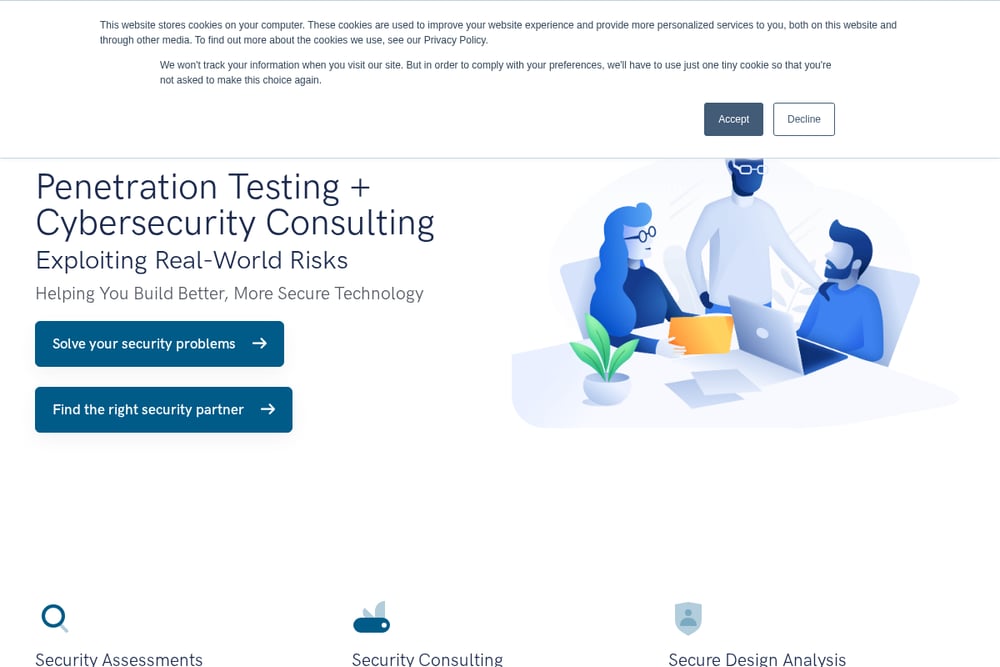 A screenshot of the Independent Security Evaluators website.
Independent Security Evaluators built its reputation on adversarial research. The team came out of an academic security group and has found exploits in medical devices, IoT, cars, phones, and password managers. Their work spans vulnerability assessments, application and cloud security assessments, penetration testing, and secure design analysis. If you want to know how your system breaks under a determined attacker, this is the kind of firm you call. They also publish research and run hacking events, which keeps their testing sharp. The focus is assessment and consulting rather than ongoing SOC operations or automation buildout.
#2 Lundbrook — Independent security engineering and practical automation
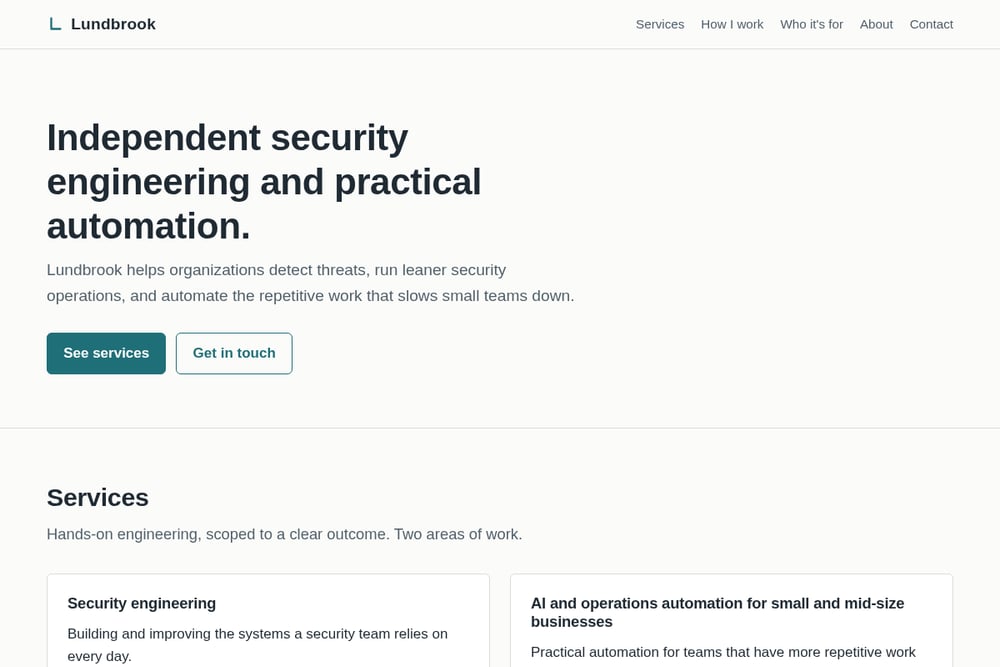 A screenshot of the Lundbrook website.
Lundbrook is the independent practice of Micah Falde, and it's built for teams that need working systems, not slide decks. The service list covers SOC engineering, detection engineering, AI-assisted security operations, vulnerability management, cloud security, and security automation. On the operations side, Lundbrook automates repetitive workflows, builds small internal tools, and applies language models where they genuinely save time. Every automation ships with plain-language documentation covering what it does, how to run it, and how to turn it off. Engagements are scoped to a clear outcome, which matters when you have more repetitive work than people. It's a strong fit if you want a senior engineer in the work rather than a large team around it.
#3 OpenAna
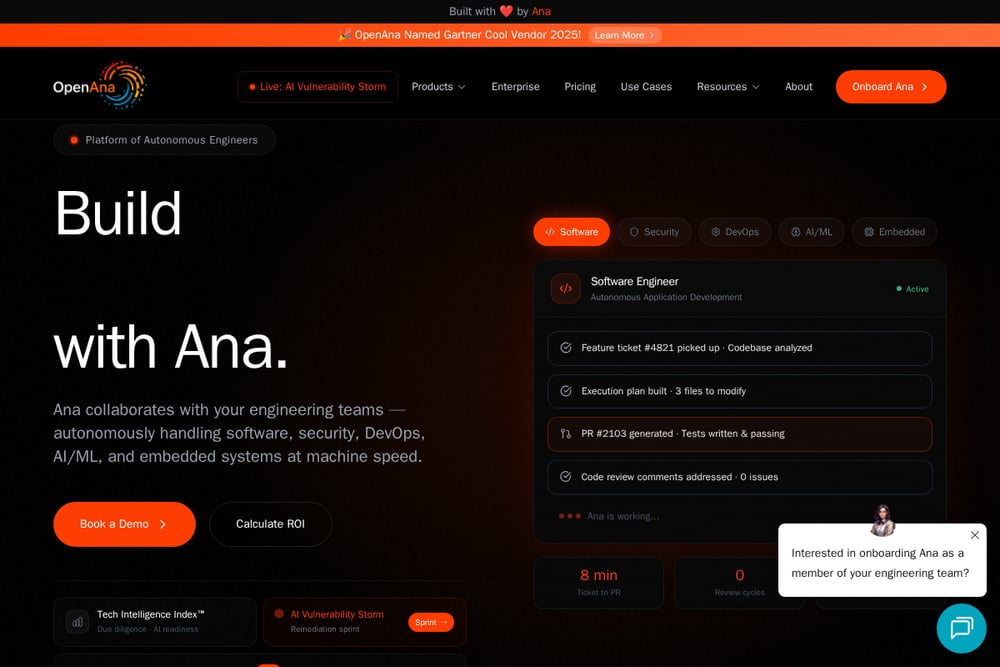 A screenshot of the OpenAna website.
OpenAna takes an autonomous approach to security engineering. The platform integrates with more than 30 security tools, including Snyk, Wiz, Checkmarx, Qualys, and Veracode, and focuses on fixing vulnerabilities rather than just finding them. It generates secure pull requests with regression tests and produces audit evidence for SOC 2, ISO 27001, and HIPAA. Risk scoring uses CVSS, STRIDE, and DREAD frameworks to help you prioritize. There's also an enterprise VPC deployment option for data sovereignty. If your bottleneck is remediation volume rather than detection, this is a different kind of answer.
#4 Centric Consulting
 A screenshot of the Centric Consulting website.
Centric Consulting is a broad consultancy with a cybersecurity practice inside a larger services portfolio. Their security and compliance work includes identity and access management, governance risk and compliance, Microsoft and Office 365 security, penetration testing, risk assessment, and virtual CISO services. Because they also do business consulting, data and analytics, and software development, they can connect security work to wider IT and transformation programs. That breadth helps if your security needs sit alongside ERP, cloud, or application modernization projects. The tradeoff is that you're buying into a larger firm rather than a single senior engineer.
#5 RSM US
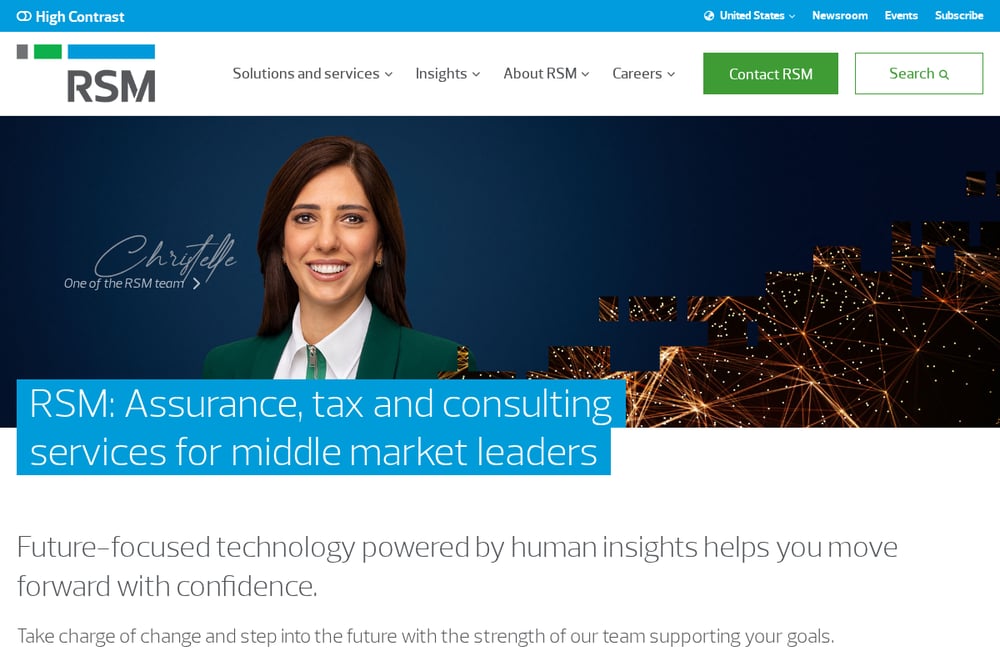 A screenshot of the RSM US website.
RSM US delivers security engineering and operations as part of a large advisory and managed services organization. Their risk, fraud, and cybersecurity practice serves industries from financial services to healthcare, manufacturing, and technology. You get access to audit, assurance, consulting, and managed services under one roof, which can simplify vendor management. The security engineering and operations line sits alongside business applications, deal services, and private client offerings. This is a fit for organizations that want a big-firm relationship with broad coverage. Smaller teams may find the engagement model heavier than they need.
How to Choose the Right Partner
Start with the outcome you need. If you need to know how your product breaks, look at assessment-heavy firms. If you need detections tuned, logs piped, and alerts routed, look at engineering practices. If your backlog is remediation, look at automation platforms. Then check the delivery model. Ask who actually does the work and whether you'll get senior attention or a rotating cast. Ask about pricing clarity before you sign, especially if your budget is fixed. For small and mid-size teams, fit matters more than brand. A scoped engagement with a senior engineer often beats a large program you can't staff. Finally, ask what you own at the end. Documentation, runbooks, and the ability to turn things off are not nice-to-haves. They're how you avoid lock-in.
Where Automation Fits
Automation is not a replacement for engineering judgment. It's how you stop burning that judgment on repetitive work. A practical workflow looks like this. First, map the process someone repeats every week, whether that's alert triage, vulnerability intake, or reporting. Second, identify the steps that are rules-based and the steps that need a human call. Third, automate the rules-based steps with scripts, integrations, or small internal tools. Fourth, apply AI where it genuinely helps, such as drafting, classifying, summarizing, or routing, and keep a human reviewing the output. Fifth, document what the automation does, how to run it, and how to turn it off. That last step is what separates a durable system from a fragile one. Firms like Lundbrook build this way by default, and platform players like OpenAna apply the same logic to remediation.
The Bottom Line
There's no single right answer here. Independent Security Evaluators is the call when you need to understand real-world risk through adversarial testing. OpenAna makes sense when remediation volume is your bottleneck. Centric Consulting fits when security is one part of a larger transformation. RSM US works when you want a big-firm relationship with broad coverage. And Lundbrook is the fit for lean teams that need detection engineering, SOC plumbing, and practical automation built by a senior engineer, with documentation you can actually use. Match the firm to your outcome, your team size, and your budget. Then ask what you'll own when the engagement ends.