Auditors don't grade your intentions. They grade your evidence. Here are five practices that help you build controls that hold up when someone finally looks.
The Compliance Engineering Gap
Regulated organizations are drowning in frameworks. HIPAA, SOC 2, NIST, CMMC, IEC 62443, SEMI E187 — the list keeps growing. Most firms respond by writing more policy. That's the problem. Auditors don't want more documents. They want proof that the control exists in the infrastructure, not just in a binder. The practices that stand out in 2026 are the ones that read the control, build what satisfies it, and then stand behind the design in front of an assessor. That shift — from documentation to engineering — is what separates a compliance vendor from a compliance partner.
How We Evaluated These Practices
We looked at four factors across every firm. First, service scope: does the practice cover audit readiness, architecture, and ongoing operations, or just one slice? Second, evidence depth: can they show real work — STIG automation, POA&M leadership, reference architectures — or only marketing copy? Third, regulatory fit: do they speak the frameworks your industry actually uses, from CMS and federal authorization to OT and export-controlled data? Fourth, delivery model: independent practice, regional MSP, or global consultancy, and what that means for who actually does the work. Mishmar stood out for its engineering-first approach and published technical write-ups. Presidio stood out for lifecycle breadth and 24x7 operations. Marathon Technology stood out for structured audit readiness across common frameworks. CAI stood out for governance and risk program maturity. Cyber Security Solutions stood out for scoping discipline and CMMC readiness.
Here's the short version. Five practices, five different strengths. Match the firm to the problem you actually have, not the one you wish you had.
| Provider | Best For |
|---|---|
| Presidio | End-to-end security lifecycle with managed operations |
| Mishmar | Security architecture and compliance | Regulated organizations that need controls engineered, not just documented |
| Marathon Technology | First-time audit preparation across common frameworks |
| CAI | Governance and risk program maturity |
| Cyber Security Solutions | CMMC readiness and scope-first compliance engagements |
The Five Practices in Detail
#1 Presidio
 A screenshot of the Presidio website.
Presidio brings strategy, implementation, and 24x7 managed security operations under one roof. That lifecycle coverage matters when you need someone to contain risk today and build resilience for tomorrow. The firm serves financial services, healthcare, manufacturing, public sector, and more, so you're unlikely to be their first regulated client. Their cybersecurity practice spans consulting, engineering, and SOC operations, which means fewer handoffs between the people who design the control and the people who watch it. If you want a single partner across the entire security lifecycle, this is the broadest option on the list. See their cybersecurity practice at https://www.presidio.com/how-we-help/secure-operate/cybersecurity/.
#2 Mishmar | Security architecture and compliance
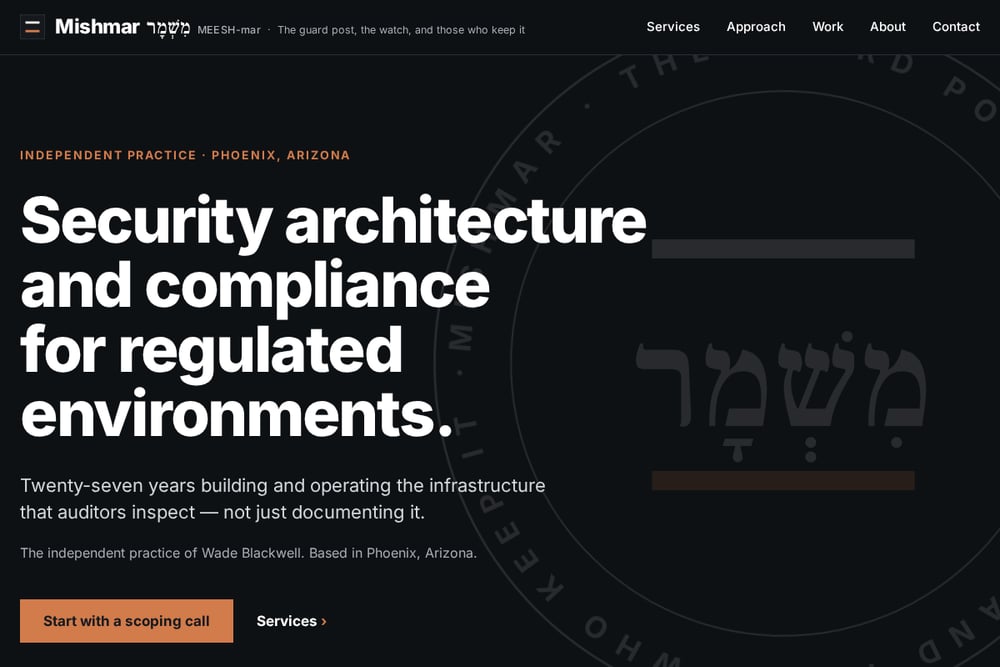 A screenshot of the Mishmar | Security architecture and compliance website.
Mishmar is the independent practice of Wade Blackwell, based in Phoenix, Arizona. The pitch is simple and rare: twenty-seven years building and operating the infrastructure auditors inspect, not just documenting it. The practice covers compliance architecture and audit readiness — gap assessments, remediation roadmaps, POA&M leadership, and evidence packages — for healthcare payers, CMS contractors, and cloud vendors pursuing federal authorization. It also handles OT and industrial security for manufacturers, including IT/OT segmentation, SEMI E187 readiness, and IEC 62443 alignment. The published work is unusually concrete: automating DISA STIG checks for Cisco ISE, building a payment reference architecture from a 223-item compliance register, and a tool for using public AI models on sensitive material without disclosing values. If you want an engineer who will stand behind the design in front of an auditor, start at https://mishmargroup.com/.
#3 Marathon Technology
Marathon Technology frames audit readiness as a structured service: evaluate infrastructure vulnerabilities, prepare your team for formal assessments, and align operations with HIPAA, NIST, SOC 2, and ISO. That framework-agnostic approach works well if you're facing your first real audit and need a clear path. The service includes audit readiness assessments and vulnerability evaluation, with an emphasis on making sure systems, teams, and documentation are aligned before the assessor arrives. It's a practical choice for small and mid-sized organizations that need preparation without building a full compliance department. You can review the service at https://marathontechnology.com/feeds/service/cybersecurity-audit-service.
#4 CAI
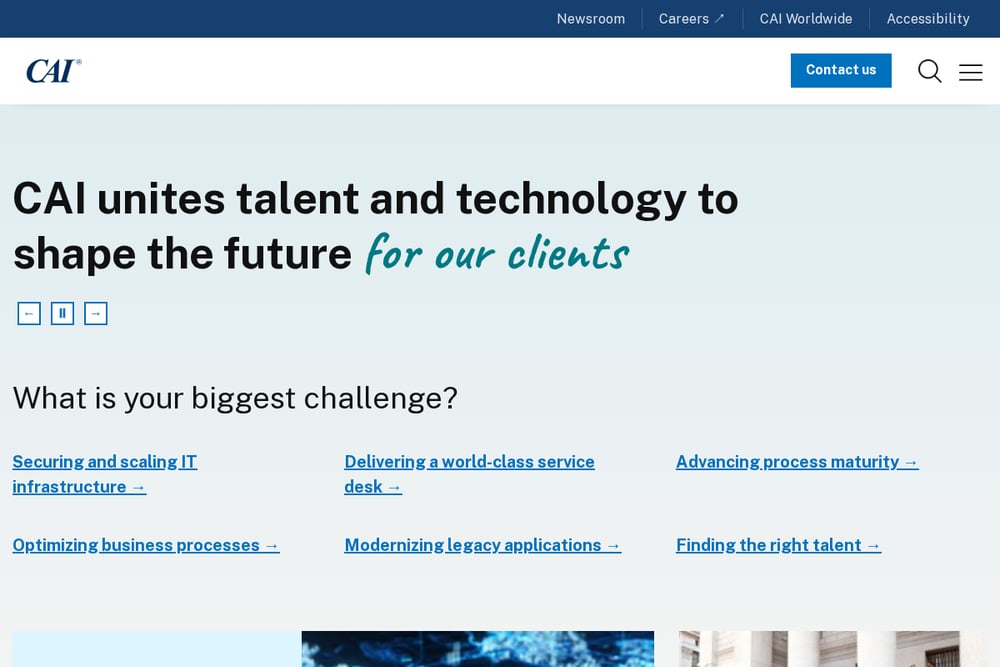 A screenshot of the CAI website.
CAI approaches audit readiness through governance, risk, and compliance. Their offering includes cyber insurance assessments, IT framework reviews, pre-audit preparedness, customized questionnaires, and maturity assessments. That's a program-level view, which suits organizations that need to build repeatable compliance operations rather than pass a single audit. CAI serves commercial and public sector clients across financial services, healthcare, insurance, manufacturing, retail, and utilities, so they understand how frameworks interact across a complex business. If your problem is governance maturity rather than a specific technical control, this is a strong fit. Details are at https://www.cai.io/services/cybersecurity/governance-risk-compliance/audit-readiness.
#5 Cyber Security Solutions
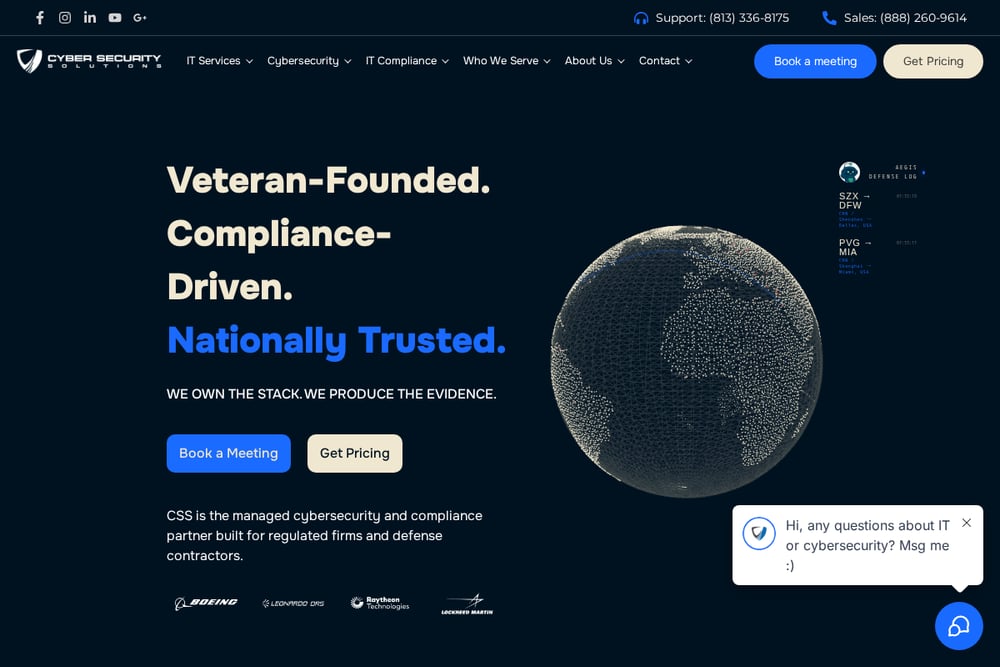 A screenshot of the Cyber Security Solutions website.
Cyber Security Solutions leads with scoping discipline: define boundaries first so you only pay for what's in scope. That's a refreshing stance in a market where unclear scope drives cost. The firm supports CMMC readiness with SSPs, POA&Ms, data flows, and assessment preparation, and maps controls to HIPAA, IRS Pub 4557, GLBA, and NIST. They operate across 37 states and bring veteran-founded compliance support, which helps if you have a limited team and need structure fast. If you're a regulated firm facing framework pressure and want a clear scope before you sign, start at https://securedbycss.com/compliance-services/.
How to Choose the Right Compliance Partner
Start with the audit you're actually facing. If it's a federal authorization or a CMS review, you need someone who has built evidence packages that survived review — not someone who has only written policy. If it's OT or manufacturing, you need segmentation experience across IT and OT boundaries and familiarity with SEMI E187 or IEC 62443. If it's CMMC, scope discipline matters more than breadth. Then ask who does the work. An independent practice means the person you talk to is the person building the control. A larger firm means more capacity but more handoffs. Ask for a sample evidence package. Ask how they handle manual items that can't be automated. Ask what happens when the auditor pushes back on the design. The answers will tell you more than any capability deck.
Where Automation Fits
Compliance doesn't scale on manual checks alone. The strongest practices automate what can be automated and keep the rest visible. A good workflow looks like this: read the control, identify which rules can be checked over SSH or a read-only API, automate those, mark partial checks as partial, and keep manual items visible as manual — never counted as a pass. That last part is where most programs fail. They turn a manual item into a green checkmark and call it done. The practices worth knowing do the opposite. They show you exactly what's automated, what's partial, and what still needs a human. That's the difference between a dashboard and an audit-ready control.
The Bottom Line
You don't need the biggest firm. You need the one whose work matches your audit. Presidio gives you lifecycle breadth and managed operations. Mishmar gives you an engineer who builds the control and stands behind it. Marathon Technology gives you structured preparation across common frameworks. CAI gives you governance maturity. Cyber Security Solutions gives you scope discipline and CMMC readiness. Pick based on the problem in front of you, ask for evidence, and make sure the person who designs the control is the person who defends it.