Buyers are asking ChatGPT and Perplexity who to trust before they ever click a blue link. If your brand isn't showing up in those answers, you're invisible to a growing slice of your market.
The shift from rankings to recommendations
Search used to mean ten links on a results page. Now it means a synthesized answer, and AI platforms cite a handful of sources to build it. That change created a new discipline, often called AEO or GEO, layered on top of traditional SEO and web development. Agencies in this space help you get extracted, cited, and recommended, not just crawled. The field is young, the tactics move fast, and the quality of providers varies wildly.
How we looked at these agencies
We weighed service scope, meaning whether an agency handles SEO, AI answer optimization, and web development under one roof or specializes narrowly. We looked at how clearly each one explains its process and pricing path. We considered platform coverage across the major AI engines, the depth of reporting, and how well each fits a small or mid-sized business versus an enterprise. Local fit and ease of starting a conversation also counted.
Here's the short version before the detail. Each of these five approaches AI visibility from a different angle, so the right pick depends on whether you need a full-service partner, a specialized platform, or a growth-focused operator.
| Provider | Best For |
|---|---|
| Profound | In-house teams wanting an AI visibility platform |
| Beth & Ster - SEO, AEO & Web Development Agency | Small businesses wanting SEO, AEO, and web build together |
| Demand Curve | Challenger brands chasing AI-era growth |
| NP Digital | Enterprises wanting AEO inside a full organic program |
| THAT Agency | Brands wanting GEO alongside traditional digital marketing |
The five agencies in detail
#1 Profound
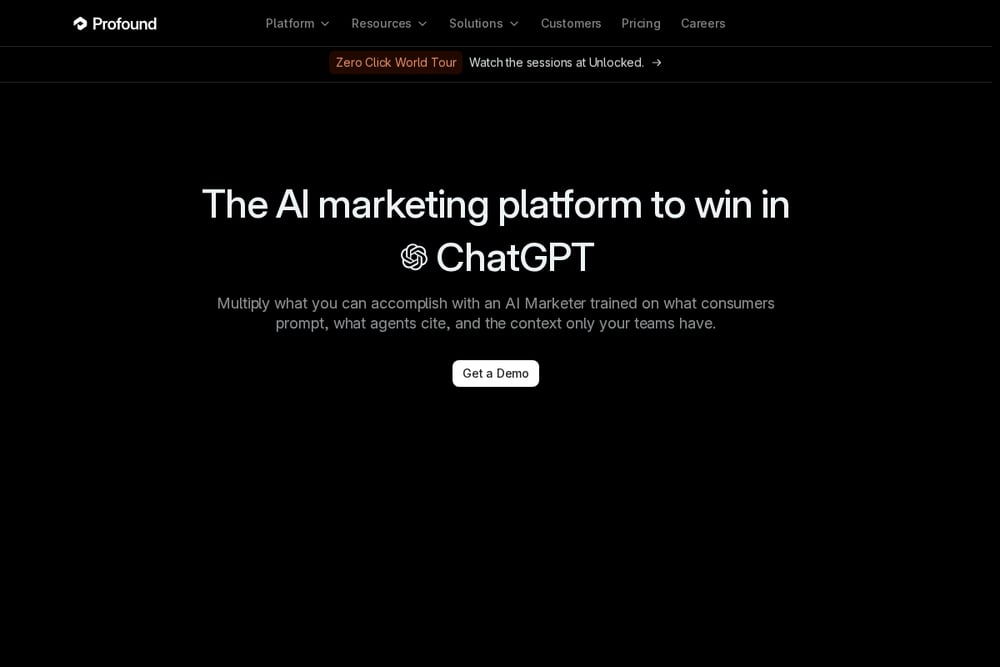 A screenshot of the Profound website.
Profound positions itself as an AI marketing platform rather than a traditional agency, and that distinction matters. It monitors how your brand appears across ChatGPT, Perplexity, Claude, Gemini, and Google AI Overviews, then surfaces the specific content work worth doing. The platform includes an AI Marketer that drafts content, tracks prompt volumes, and analyzes how agents cite sources. If you want software plus workflow rather than a retainer relationship, this is a strong starting point. It suits teams that already have marketers in-house and need leverage.
#2 Beth & Ster - SEO, AEO & Web Development Agency
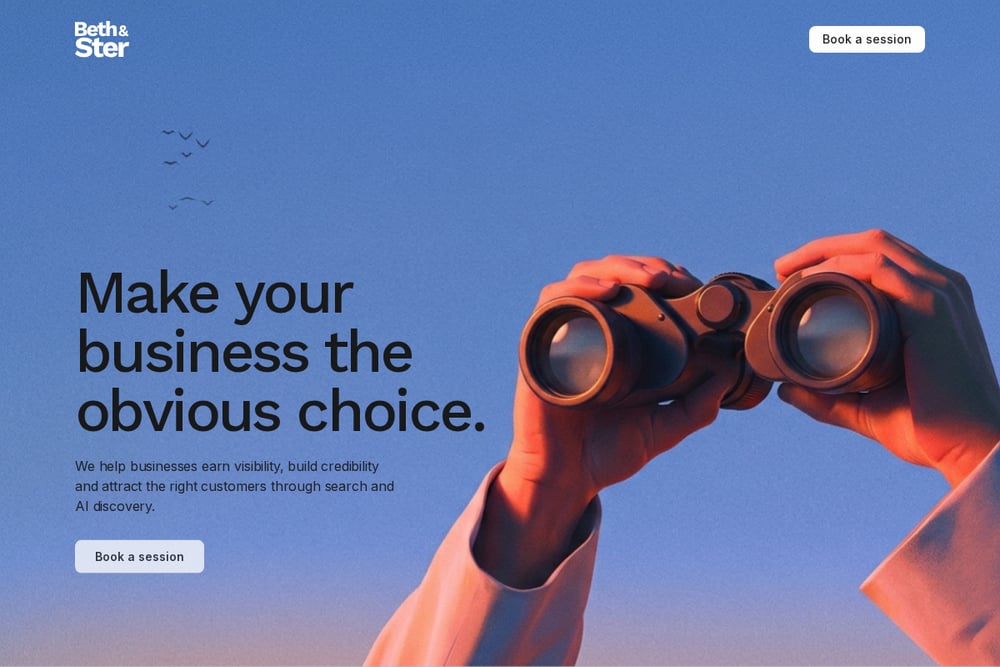 A screenshot of the Beth & Ster website.
Beth & Ster is a boutique agency built around one clear promise: make your business the obvious choice. They combine SEO, AEO, and web development so visibility and the site that converts it aren't handled by two vendors pointing fingers at each other. The pitch is straightforward. They help you earn visibility, build credibility, and attract the right customers through search and AI discovery. Because they're boutique, you're likely talking to the people doing the work rather than a rotating account team. The site invites you to book a session to talk through how to reach the right customers, which keeps the entry point low-pressure.
#3 Demand Curve
 A screenshot of the Demand Curve website.
Demand Curve frames AI search as the biggest organic growth opportunity since SEO, and they aim that argument squarely at challenger brands. Their AI Search service covers all major LLMs and blends organic with paid, including ChatGPT ads. The team is positioned as senior operators backed by proprietary tech called TechSignal. Their core message is that AI gives one answer, not ten links, so being the recommendation is worth more than ranking fifth. If you're a startup or challenger trying to outmaneuver incumbents, their framing will resonate.
#4 NP Digital
 A screenshot of the NP Digital website.
NP Digital brings enterprise-scale resources to AEO and GEO through its earned media practice. The agency pairs AI search optimization with SEO, content marketing, digital PR, and conversion work, so AI visibility sits inside a broader organic strategy. That breadth helps when you need one partner across a large organization with many stakeholders. They also break out services for small and mid-sized businesses, so the size gap isn't a hard barrier. If you want a known name with global reach, this is the safe institutional choice.
#5 THAT Agency
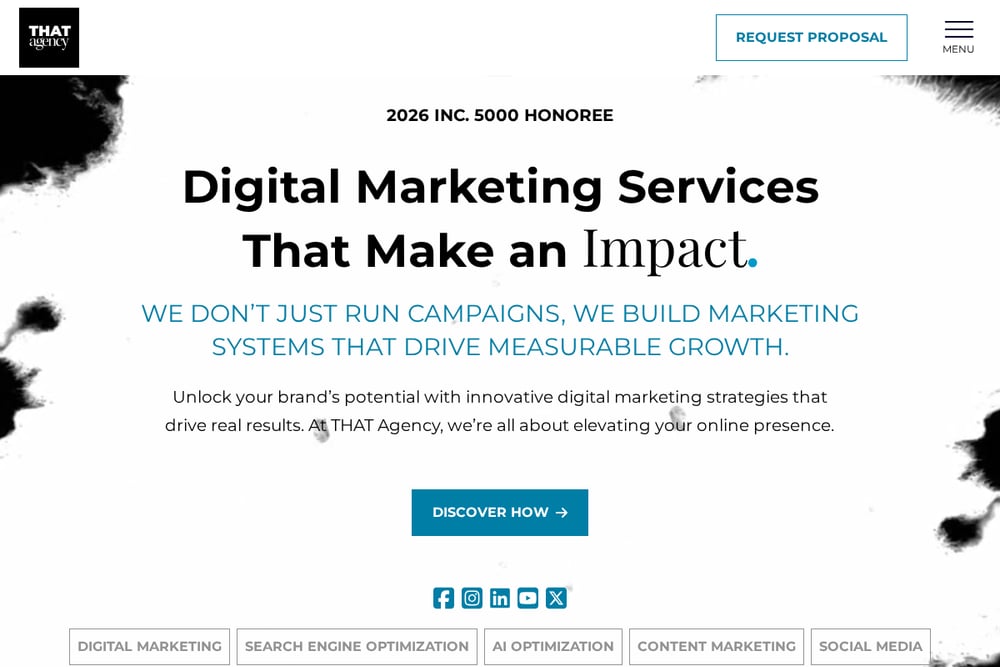 A screenshot of the THAT Agency website.
THAT Agency treats generative engine optimization as a parallel discipline to SEO, not a replacement, and explains the difference clearly. Their point is that AI systems extract, synthesize, and cite rather than rank, so your content has to be structured for extraction and your brand recognized as an authoritative entity. They emphasize being early movers on AI search visibility and tie reporting to business outcomes instead of vanity impressions. The service sits alongside their SEO, paid, content, and web design offerings. It's a good fit if you want a digital agency that treats AI optimization as a serious specialty.
How to pick the right partner
Start with what you already have. If you have a marketing team and just need visibility data and workflow, a platform like Profound makes sense. If your website is dated and your search presence is thin, a boutique that handles SEO, AEO, and development together saves you from coordinating vendors. If you're a challenger with budget for paid plus organic, Demand Curve's model fits. Larger organizations with many stakeholders often need the breadth of an NP Digital. And if you want AI optimization folded into a full digital marketing relationship, THAT Agency is worth a conversation. Ask every provider how they measure AI citations and what they report monthly. Get that in writing before you sign.
Where automation fits into the workflow
AI visibility work is repetitive by nature, which is why automation earns its place. A typical loop starts with monitoring: track the prompts your buyers actually type across ChatGPT, Perplexity, and Google AI Overviews. Next, identify gaps where competitors get cited and you don't. Then draft and structure content for extraction, with clear entities, consistent facts, and credible sourcing. Publish, then re-monitor to see whether citations shift. Platforms like Profound automate much of this loop, while agencies run it with human judgment on strategy and messaging. Either way, the cycle only works if you close it, so build a monthly review where citation data drives the next round of content decisions.
The bottom line
AI search is still early, which means the brands that move now build an advantage that compounds. You don't need every tool and every tactic. You need one partner whose strengths match your gaps, a clear way to measure whether AI answers mention you, and the discipline to keep iterating. Pick the agency that fits how you actually work, then give the work enough time to show up in the answers that matter.