The nightly fight over the phone is not a discipline problem you can out-shout. It is a system problem, and a handful of online courses now teach you how to rebuild that system without losing your temper.
Where screen time parenting is heading
Parents are no longer short on advice, they are short on plans. The market has shifted from generic screen time rules toward structured, self-paced courses that pair short video lessons with tools you can actually use at the kitchen table. Most programs now lean on the same promise: fewer negotiations, clearer boundaries, and a written agreement the whole family signs off on. The differences come down to depth, age focus, and whether the course is built for a quick reset or a long-term tech plan.
How these courses were compared
Every program was looked at on the same factors: how practical the lessons are, how clearly the price and format are stated, how well the material fits different ages, and whether you walk away with something usable like an agreement or a family plan. Delivery matters too, from lesson length to whether you can jump straight to the module you need. The detail on each course sits in the descriptions below.
Here is the short version before the deep dive: five courses, five different approaches to the same problem, and one of them is built to be finished in a single evening.
| Provider | Best For |
|---|---|
| Better Screen Time | Families building a long-term tech plan |
| Screen Off Method | Parents who want a fast, practical reset |
| Digital Parenting Coach | Parents of tweens aged 9 to 12 |
| Tech Without Stress | Parents who want research-backed guidance |
| Flourish | A quick, low-cost introduction |
The five courses, one by one
#1 Better Screen Time
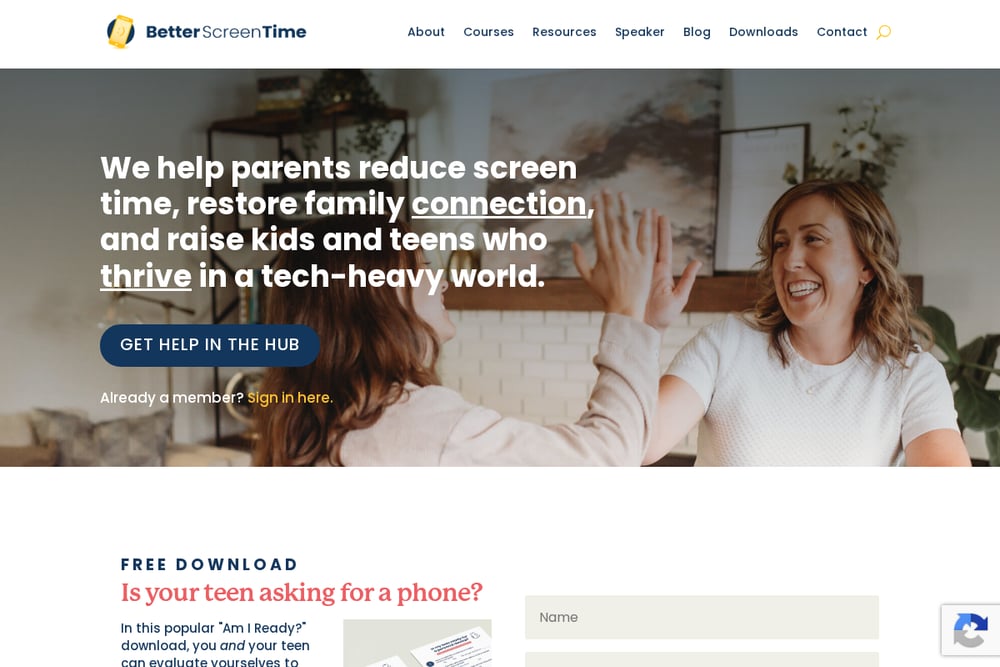 A screenshot of the Better Screen Time website.
Better Screen Time runs a collection of self-paced courses built around one idea: prioritize the relationship instead of laying down tech laws. The flagship tracks, Creating a Tech-Healthy Family and Untangling Teens & Tech, walk you through aligning with your partner, setting personal tech habits, and helping teens spot the pull of social media and pornography. The tone is deliberately judgment-free, which matters if you have already tried strict rules and watched them collapse. Over 1,000 parents have used the courses, and the site is upfront that this is not a quick fix. If you want a long-term family tech plan rather than a one-night reset, start here.
#2 Screen Off Method
 A screenshot of the Screen Off Method website.
Screen Off Method is the tightest, most focused option on this list. For a one-time €39 payment you get ten short video lessons totaling about 60 minutes, plus a Family Screen-Time Agreement you can put into practice the same week. The lessons split into three phases: understand why screens are so hard to put down, reset how you respond to resistance, and reconnect through boundaries your family can actually keep. Specific modules cover dopamine hijacking, brain development stages, the Adapted, Free and Rebellious Child, and the question of whether you are a police officer, an ostrich, or a bargainer. It is built for parents of children and teens who are tired of the same argument every night and want a plan for before, during, and after a limit is set.
#3 Digital Parenting Coach
 A screenshot of the Digital Parenting Coach website.
Digital Parenting Coach takes an age-specific route, with a dedicated course for tweens aged 9 to 12. That focus is useful if your child is right at the point where devices become a daily fixture and you want guidance tuned to that exact stage. The curriculum covers responsible use of smartphones, tablets, and computers, video gaming, cyberbullying, peer pressure, and setting healthy digital boundaries. You also get access to a digital community, which adds ongoing support beyond the video lessons. It is a solid fit if you prefer a stage-by-stage approach over a single all-ages program.
#4 Tech Without Stress
 A screenshot of the Tech Without Stress website.
Tech Without Stress is led by Dr. Jacqueline Nesi and Dr. Emily Weinstein, psychologists and researchers who study families and technology. The catalog splits cleanly by age, with Little Kids, Big Tech for ages 0 to 6 and Tech Parenting 101 for ages 10 to 17. Lessons are bite-size and packed with actionable steps, so you can put new skills to work in your own household right away. The research background is the selling point here, and the free downloads, including a First Phone Guide and a screen time guide for younger kids, let you sample the approach before buying. Choose this if you want evidence-based guidance and a calmer, less guilt-driven tone.
#5 Flourish
 A screenshot of the Flourish website.
Flourish offers Screen Smart: Managing Your Child's Screen Time, a short course that runs roughly 30 minutes to an hour. It is the lightest commitment on this list, which makes it a reasonable starting point if you are not ready to invest in a full program. The course is created by sector experts and updated regularly alongside regulation and compliance changes, and it sits inside a wider parenting bundle alongside attachment and trauma training. An accessibility tool supports more than 100 languages, which is unusual in this category. Pick it if you want a quick, low-cost introduction before committing to something deeper.
How to pick the right course for your house
Start with your child's age. A tween-focused course will not help much with a four-year-old, and a program built for little kids will feel thin once your teenager is on social media. Next, decide how much time you can honestly give. If you know you will not finish a multi-module program, a 60-minute course with a written agreement is worth more than a comprehensive one you abandon. Then check what you walk away with. A family agreement, a tech plan, or a set of scripts for the hard moments all beat general theory. Finally, look at price clarity. A one-time payment is easier to justify than a subscription you forget to cancel.
A simple workflow to put any of these into practice
Pick one course and block a single evening to watch it end to end. The next morning, write your household's screen time agreement using the course template, and keep it to three or four rules you can actually enforce. Set a recurring calendar reminder for a weekly ten-minute family check-in so the agreement gets reviewed instead of quietly ignored. Log each argument over screen time in a shared note for two weeks, then look for the pattern, whether it is bedtime, homework, or the moment a device comes off. Use that pattern to adjust one rule at a time rather than rewriting everything at once.
The bottom line
There is no shortage of screen time advice, but the courses that work are the ones you actually finish. Screen Off Method earns its place near the top because it respects your time, costs €39 once, and hands you an agreement you can use this week. Better Screen Time is the deeper investment for families planning years ahead, while Digital Parenting Coach, Tech Without Stress, and Flourish each serve a narrower need well. Pick the one that matches your child's age and your real schedule, then commit to the weekly check-in. That habit, more than any single lesson, is what quiets the nightly argument.