You want to dig for rocks, gems, fossils, or gold this weekend, and the last thing you need is a trespassing ticket. These five resources help you find legal ground and know the rules before you load the truck.
Where rockhounds actually get their site information
Rockhounding information has split into two camps. One camp is fee-dig directories, which list pay-to-dig mines and ranches where access is settled by a ticket. The other camp is public-land guides, which explain what BLM, national forest, and state agencies allow. The gap between them is verification. Fees, hours, and claim status change constantly, and a stale listing can send you to a locked gate or an active claim. The resources below handle that gap in very different ways.
How these five were compared
Each resource was weighed on four things: how many sites it covers, whether it shows the source and check date behind each fact, how clearly it separates public land from fee digs and permission-only sites, and how well it handles state-level collecting rules. Pricing transparency and mobile usability also counted, since most of you plan trips from a phone in the field.
Here is the short version before the detail. Two of these lean on verified, sourced records. Two are broad directories built for browsing. One is a single working mine you can book directly.
| Provider | Best For |
|---|---|
| RockHoundR | Mapping pay-to-dig mines with coordinates |
| Rockhounding Atlas: verified places to collect rocks, gems, fossils and gold | Verifying land status and rules before you drive |
| Rockhounding.org | Cross-checking claims and browsing by stone |
| RockTumbler | Filtering out salted fee digs |
| Hogg Mine | Booking a single, well-documented dig day |
The five resources, one by one
#1 RockHoundR
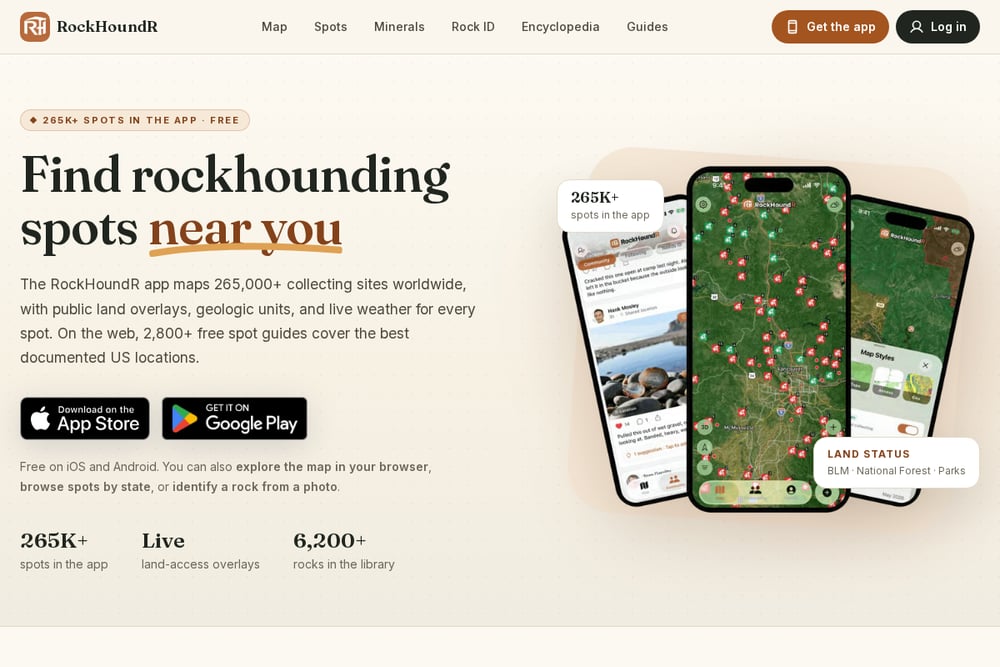 A screenshot of the RockHoundR website.
RockHoundR runs a fee-dig map covering 112 pay-to-dig gem mines, ranches, and sluice operations across 28 states, each plotted with coordinates. You pay for access and keep what you find, which removes the land-ownership question entirely. The site also bundles a mineral encyclopedia, rock ID tools, and guides, so it works as a general companion app rather than a single-purpose map. Its fee-dig focus is narrow by design, and it tells you plainly to confirm fees and seasons with operators because those details shift. If your trip is built around a paid mine, this is a fast way to see what exists near your route.
#2 Rockhounding Atlas: verified places to collect rocks, gems, fossils and gold
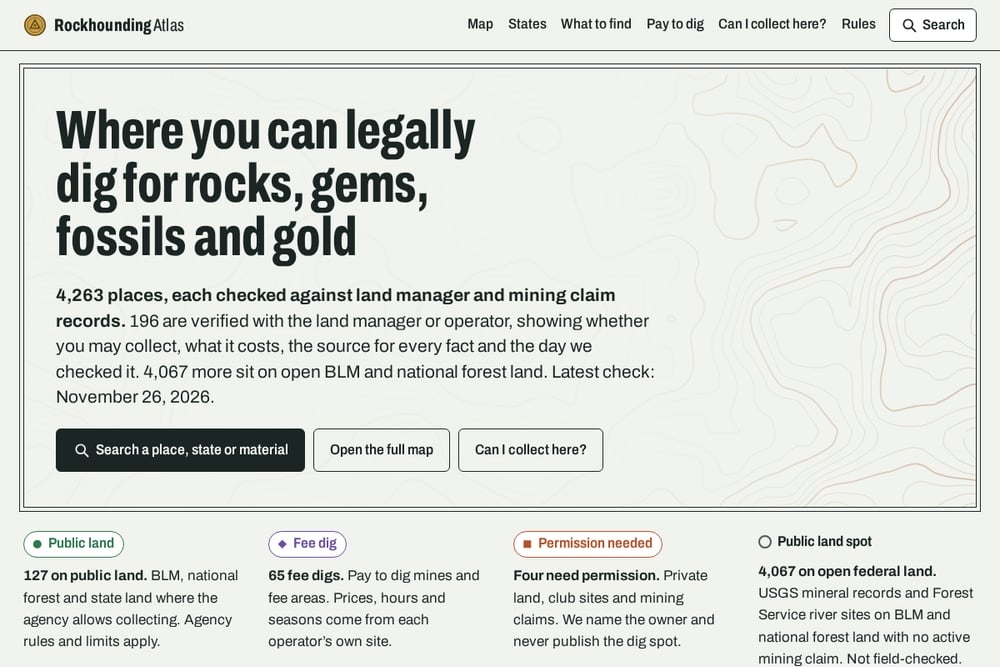 A screenshot of the Rockhounding Atlas: verified places to collect rocks, gems, fossils and gold website.
Rockhounding Atlas lists 4,263 places where you can legally dig for rocks, gems, fossils, and gold, and it checks each one against land manager and mining claim records. Of those, 196 are verified directly with the land manager or operator, showing whether collecting is allowed, what it costs, the source for every fact, and the date it was checked, with the latest check dated November 26, 2026. The rest are 4,067 public land spots drawn from USGS mineral records and Forest Service river sites on BLM and national forest land with no active mining claim, clearly flagged as not field-checked. It splits places into public land, fee digs, and permission-needed sites, and names private owners without publishing dig spots. State pages carry each state's own collecting rules, and material pages break down finds like gold, garnet, and quartz crystals. You can search by place, state, or material, or start from the pay-to-dig and can-I-collect-here sections.
#3 Rockhounding.org
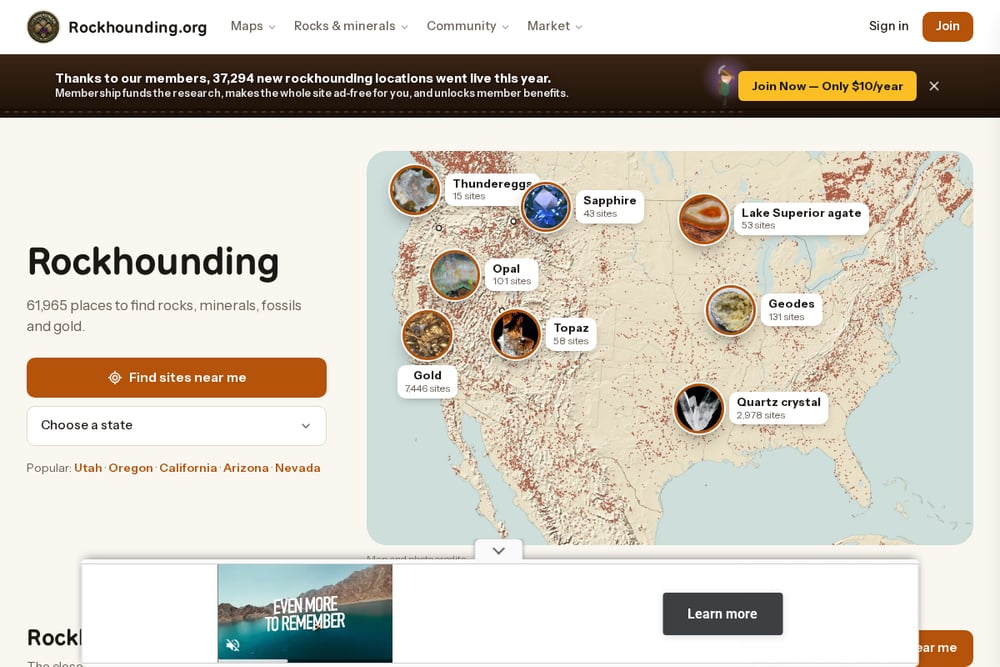 A screenshot of the Rockhounding.org website.
Rockhounding.org organizes gem mines and pay-to-dig sites alongside maps by state, maps by stone, gold panning locations, and active BLM mining claims. That combination is useful because you can check a claim layer before you commit to a spot. It also carries rock shops by state, a best-states ranking, a trip planner that routes a day around five stones, and beginner identification lessons. The site is broad, covering Canada and worldwide locations too, so it rewards browsing rather than quick lookups. Think of it as a hub you explore when you are still deciding where to go.
#4 RockTumbler
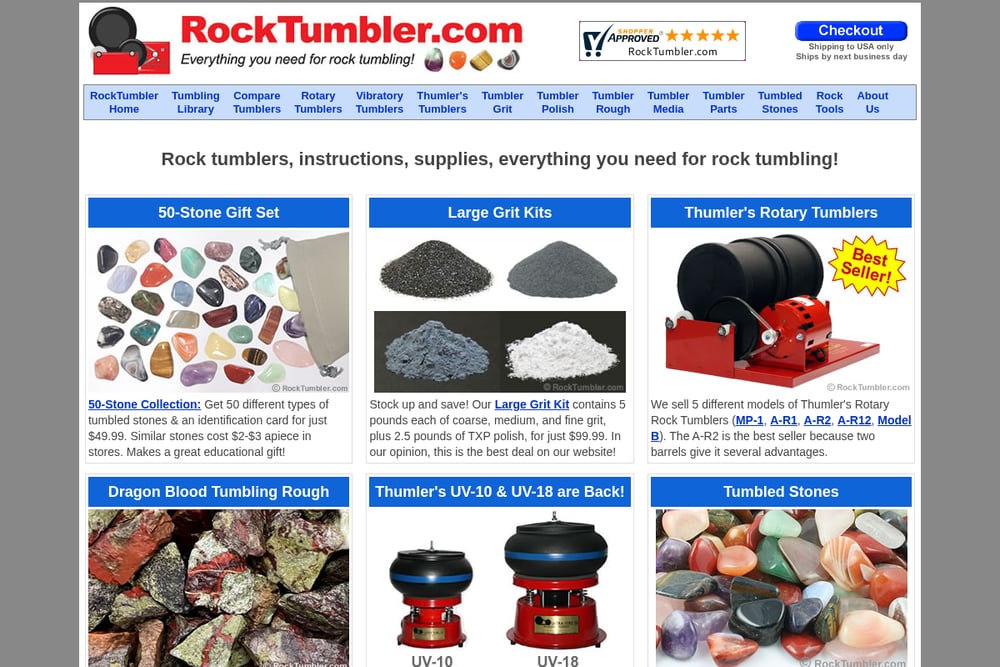 A screenshot of the RockTumbler website.
RockTumbler's fee mining library is an editorial list of places where you pay to dig, pan, or search and keep what you find. The site states its listing standard openly: a site needs its own website and must pass review, and salted sites or material hauled in from elsewhere are excluded. That filter saves you from paying for a pile of pre-planted gravel. Entries are organized by state with notes on what each site produces, from Herkimer diamonds in New York to tourmaline near San Diego. It is a curated starting point rather than a live database, so treat fees and hours as a lead to confirm.
#5 Hogg Mine
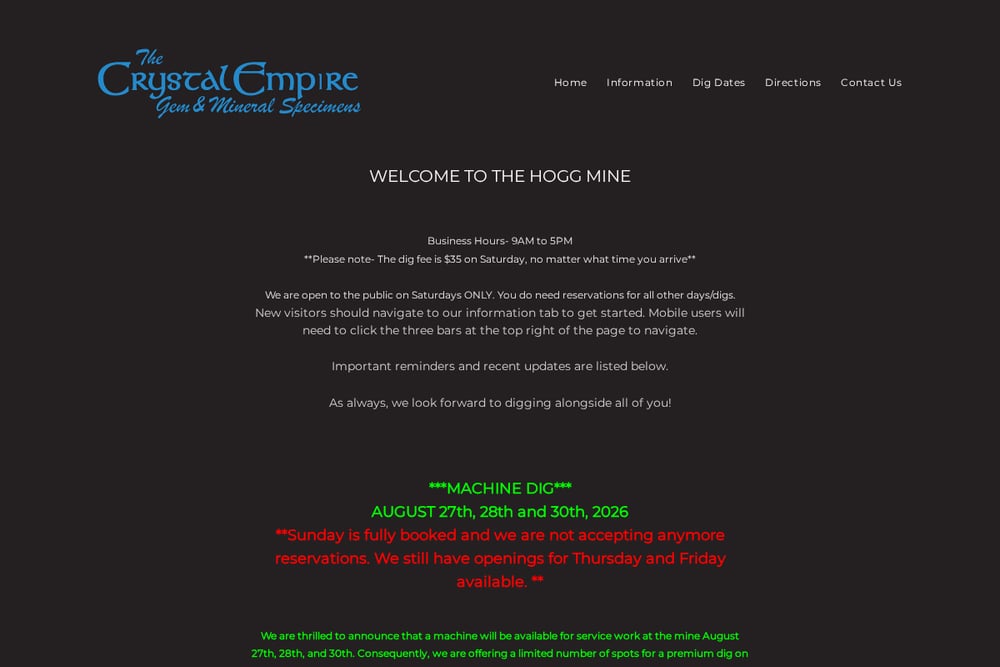 A screenshot of the Hogg Mine website.
Hogg Mine is a working pay-to-dig site rather than a directory, and it shows what operator-level detail looks like. Public digs run Saturdays only, no reservation needed, with arrival between 8 and 9 AM Eastern at $35 per adult and kids 16 and under free with a paying adult. Guide digs Sunday through Friday cost $35 per adult plus a $100 guide fee, and you bring your own hand tools, with no power tools allowed and a limit of one five-gallon bucket of material per person. The FAQ answers the practical questions directly, including the rule that at least one paying adult must stay with any kids. Use it as a benchmark for what a well-run fee dig should tell you up front.
Match the resource to the trip you are planning
Start with the legal question. If you are heading to federal ground, you need a resource that names the land manager and the claim status, not just a pin on a map. If you are booking a family Saturday, a fee-dig directory or an operator page is enough. Check whether the site tells you when its facts were last confirmed, and whether it separates verified entries from unverified ones. Then look at state rules, because beaches, parks, and streams each have their own limits. Finally, test the search with a real query like a town name or a material you actually want to find.
A simple pre-trip check you can repeat
Pick your target material and state, then pull the matching entries from a verified source and note the check date on each. Cross-reference any public-land spot against current BLM claim records before you go. Confirm fee, hours, and season directly with the operator for any pay-to-dig site. Save the land manager name, the collection limit, and the source link in one note you can open offline. Repeat the same three steps for every site on your route, and you will never arrive at a closed gate or an active claim again.
The bottom line
Breadth is easy to find and verification is not. RockHoundR gives you the deepest fee-dig map, Rockhounding.org gives you the widest browsing surface, and RockTumbler filters out the salted operations. Hogg Mine shows how clear an operator can be about price and rules. Rockhounding Atlas sits in the middle of all of it, pairing a large site count with sourced, dated verification and state-level rules, which is exactly what you need before you spend a tank of gas on a maybe.