
Someone may be selling your design. You need to find out before it costs you sales. These five tools help you track down possible copies across marketplaces and the wider web.
The copycat problem is growing
Independent designers and small shops face a constant threat from copycats. Your product photos can be scraped and reused on marketplaces like AliExpress, Shein, Amazon, and Etsy within days. Traditional reverse image search tools cast a wide net, but they often miss marketplace-specific listings or bury you in irrelevant results. That is where specialized services come in. They combine image recognition with marketplace scanning and evidence collection. The tools below take different approaches, from broad web indexing to focused copycat detection with takedown support.
How we evaluated these tools
We looked at service scope, pricing clarity, and local fit for US-based designers. Service scope covers which marketplaces and image types are searched, plus any extra features like evidence reports or takedown worksheets. Pricing clarity means you can easily understand what you pay and when. Local fit considers whether the tool supports US legal processes and marketplace policies. Each tool has strengths: DupeHound focuses on marketplace copycat detection with a pay-only-if-found model. TinEye offers a massive web index and privacy-first searches. Pic Detective provides free, no-signup reverse image search. Reversely.ai adds AI-powered face and people search. Decopy combines multiple search engines for broader coverage.
Here is a quick look at the five tools, ordered by their relevance to product copycat detection for US designers and small shops.
| Provider | Best For |
|---|---|
| TinEye | Broad web image tracking and privacy |
| DupeHound | Find possible copies of your product | Marketplace copycat detection with evidence |
| Pic Detective | Free, no-account reverse image search |
| Reversely.ai | AI-powered people and face search |
| Decopy | Multi-engine reverse image search |
The 5 tools in detail
#1 TinEye
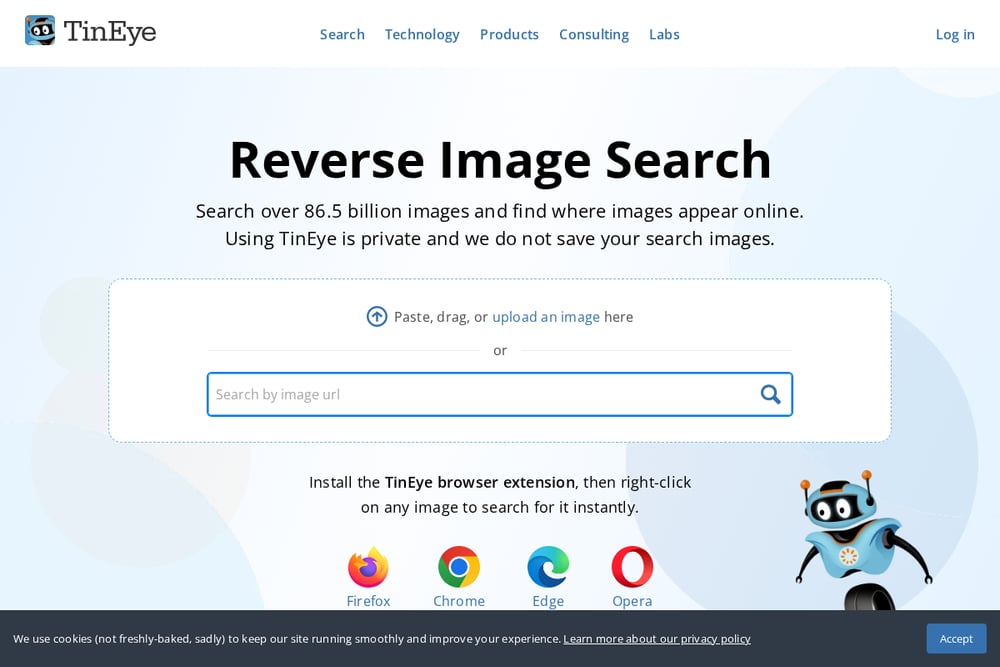 A screenshot of the TinEye website.
TinEye is a veteran in reverse image search, with an index of over 86.5 billion images. You can upload an image or paste a URL, and it will find where that image appears online. It is private: your search images are not saved. For designers, TinEye can help you spot unauthorized use of your product photos across the web. However, it does not specifically scan marketplaces like AliExpress or Shein for copycat listings. You get raw results and must interpret them yourself. TinEye also offers business solutions like MatchEngine and Alerts for automated tracking.
#2 DupeHound | Find possible copies of your product
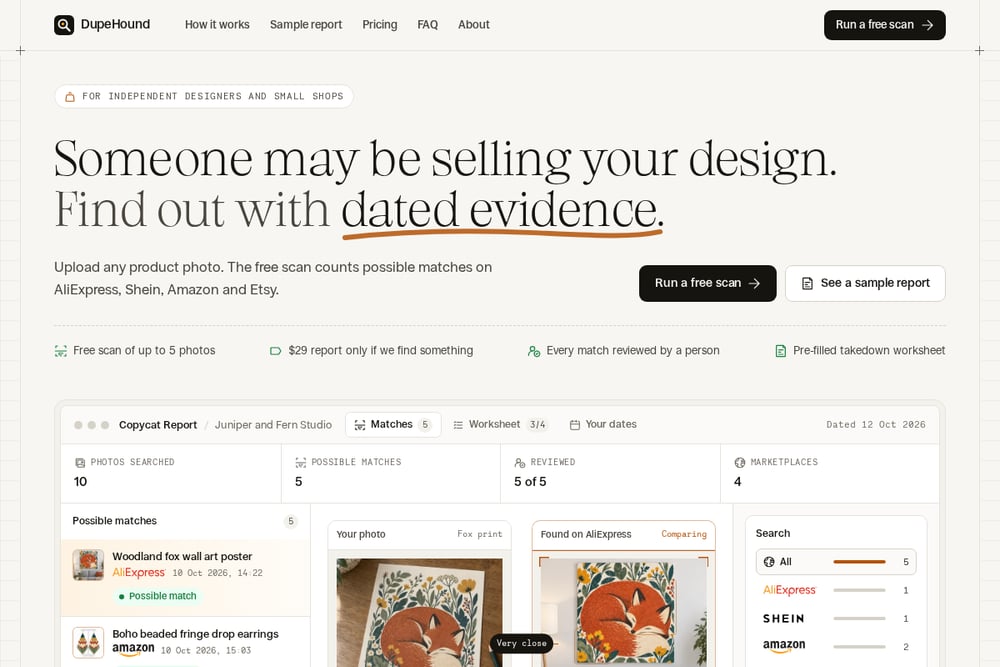 A screenshot of the DupeHound | Find possible copies of your product website.
DupeHound is built specifically for independent designers and small shops worried about copycats. You upload up to five product photos for a free scan. It then searches major marketplaces like AliExpress, Shein, Amazon, and Etsy for possible matches. If it finds something, you pay $29 for a dated evidence report and a pre-filled takedown worksheet. Every match is reviewed by a person, so you get human-verified results. The report includes your original photo, the listing link, the date captured, and your own listing date. This makes it easy to file takedown requests.
#3 Pic Detective
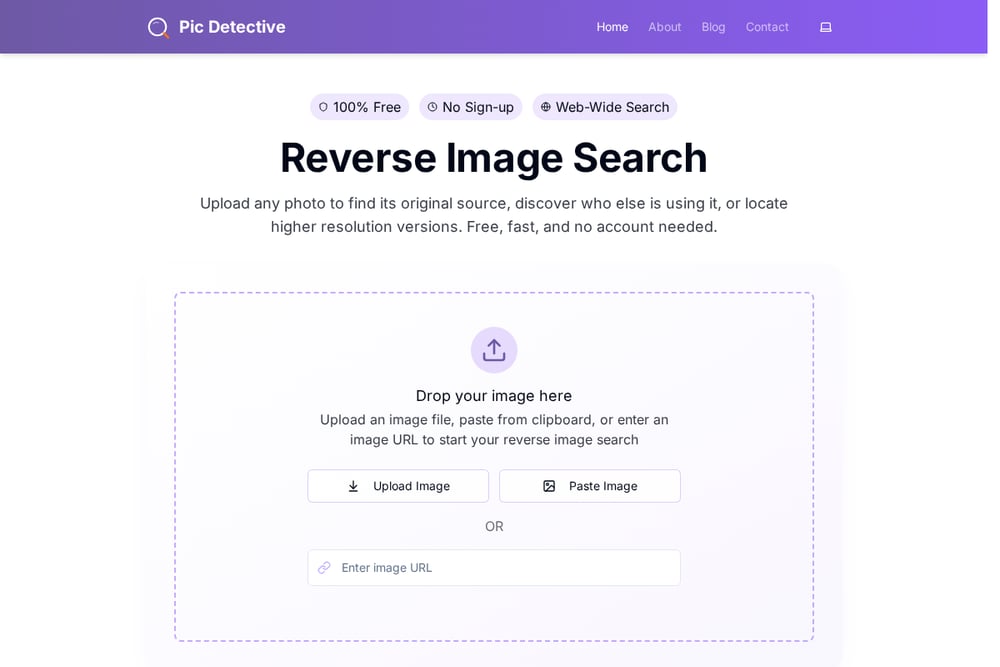 A screenshot of the Pic Detective website.
Pic Detective is a free reverse image search tool with no sign-up required. You can upload an image, paste from clipboard, or enter an image URL. It finds exact copies, modified versions, and visually similar photos across the web. It is privacy-focused: images are processed only for the search and then removed. For designers, it is a quick way to check if your product photos are being used elsewhere. However, it does not specialize in marketplace scanning or provide takedown documentation. It is best for ad-hoc checks and initial discovery.
#4 Reversely.ai
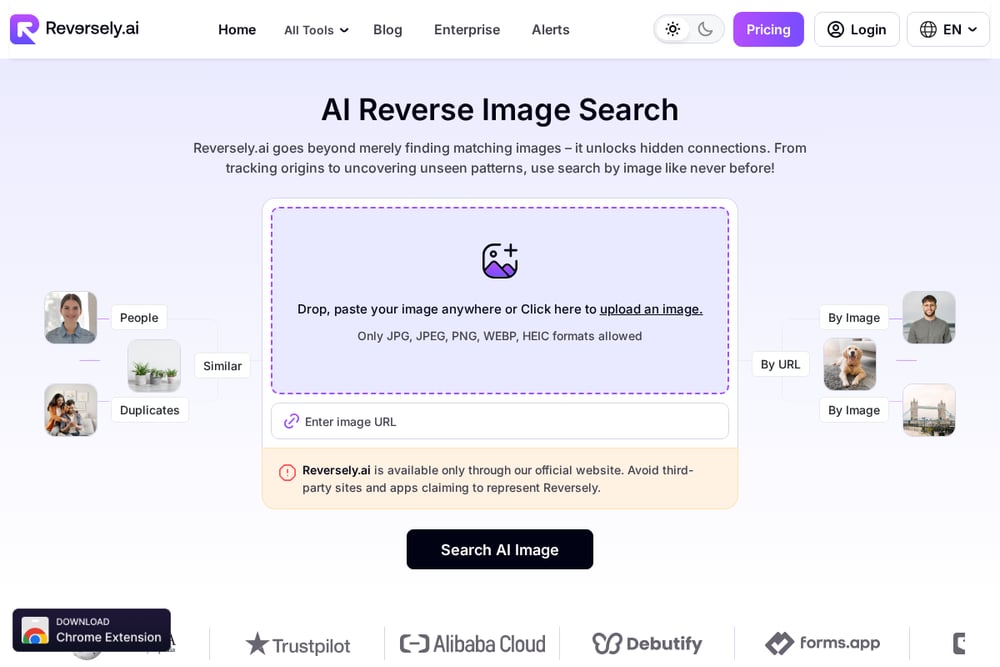 A screenshot of the Reversely.ai website.
Reversely.ai uses AI to go beyond simple image matching. It offers reverse image search for people, similar images, and duplicates. You can also use it for face search and AI image detection. For designers, it might help identify if someone is using your model's photos or your own likeness without permission. However, it is not tailored to product copycat detection on marketplaces. The pricing is per search, and you may need to unlock results for a fee. It is a versatile tool for broader image investigations.
#5 Decopy
 A screenshot of the Decopy website.
Decopy combines multiple reverse image search engines, including Google, Yandex, TinEye, and SauceNAO, to give you broader coverage. You can upload an image, paste a URL, or use keyword-assisted search. It also offers face search and AI image detection. For designers, this means you can cast a wide net to find where your product photos appear. However, it does not focus on marketplace-specific copycat detection or provide legal evidence reports. It is a good starting point for general image tracking.
How to choose the right tool for your shop
Start by defining your goal. If you need to find copycats on marketplaces like AliExpress or Shein and want evidence for takedowns, DupeHound is built for that. If you want a free, quick check across the web, Pic Detective works well. For broad web tracking with a huge index, TinEye is reliable. If you need to search for people or faces, Reversely.ai adds that capability. And if you want to combine multiple engines in one search, Decopy is a solid choice. Consider your budget, time, and whether you need documentation for legal action.
Automating your copycat monitoring
Manual checks are time-consuming. You can set up a simple workflow: run a free scan with DupeHound on new product photos as soon as you list them. If matches appear, order the report and file takedowns. For ongoing monitoring, use TinEye Alerts to track where your images appear. Combine with Pic Detective for quick spot checks. This layered approach helps you catch copycats early without spending hours searching.
The bottom line
Copycats are a real threat, but you have options. DupeHound gives you marketplace-specific detection with evidence. TinEye offers broad web coverage. Pic Detective is free and fast. Reversely.ai adds AI people search. Decopy combines engines for wider reach. Pick the tool that matches your biggest pain point. For most independent designers, starting with DupeHound's free scan is a smart first step.